
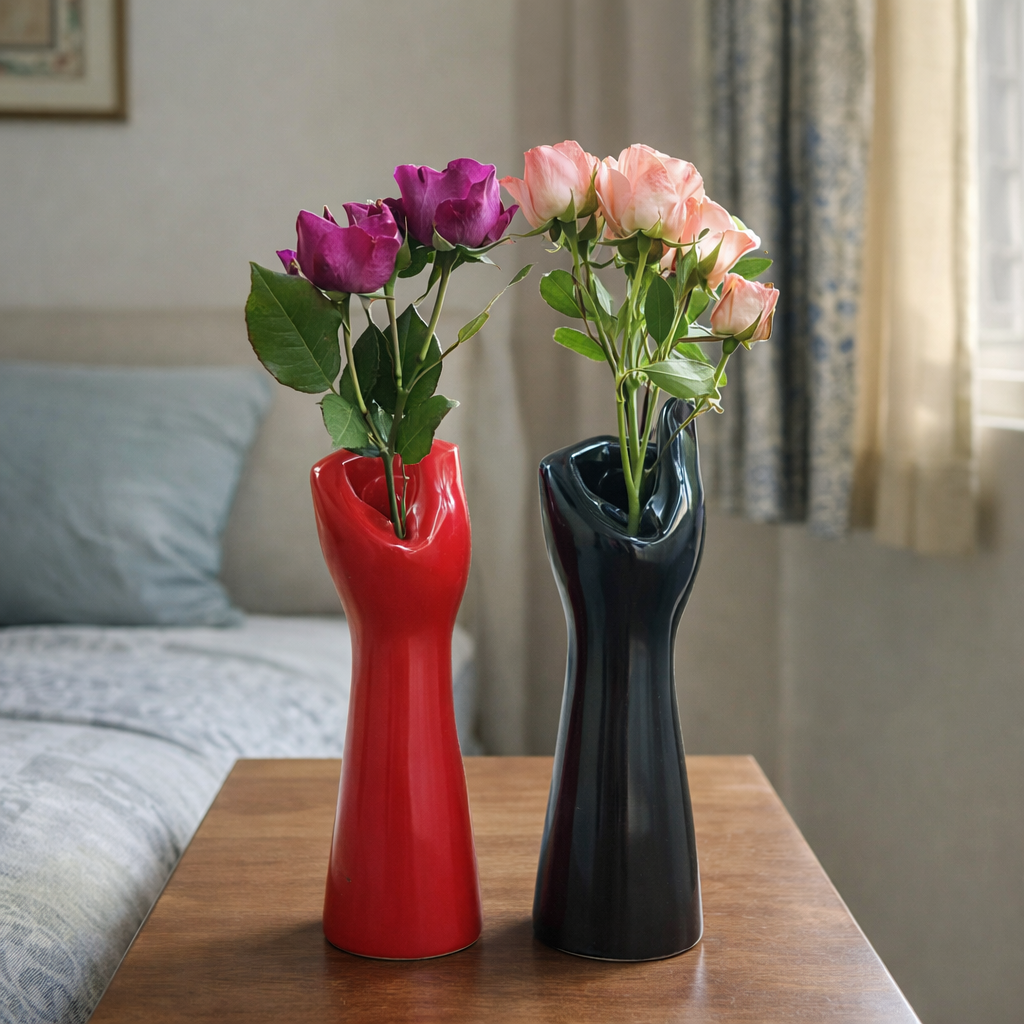
How to Make Your Home Look Professionally Decorated?
Most Indian homes that look "designer" are not expensively furnished — they are purposefully edited. Every object has a defined role: anchor, accent, or texture. When you understand that formula, you stop buying décor randomly and start curating with confidence. At Moolwan, we help design-conscious Indian homeowners achieve that polished, cohesive look without hiring an interior designer or overspending on imported pieces.
The 3-Layer System Professionals Actually Use
Interior designers do not furnish a room in one trip. They build in three distinct layers, and each layer earns its place before the next is added. Understanding this sequence is the single fastest upgrade you can make to how your home looks.
Layer 1 — Anchor Pieces (the room's focal point)
An anchor is the first thing the eye lands on. In a living room, this is typically a large wall art piece, a sculptural showpiece on a central shelf, or a statement centrepiece on the coffee table. The anchor sets the room's mood — everything else responds to it. Moolwan's Large-format showpieces (25–34 cm) are specifically sized for this role: substantial enough to command a room without overwhelming an Indian apartment's proportions.
Layer 2 — Supporting Accents (the context givers)
Accents reinforce the visual story the anchor started. These are medium-sized objects (16–21 cm) placed on display cabinets, sideboards, or shelving units — ceramic sculptures, textured resin objects, or framed prints that share a colour story with the anchor. The rule professionals follow: no more than three accent objects per surface. Any more and the eye cannot rest.
Layer 3 — Texture and Fill (the invisible glue)
Small objects (10–16 cm) — a ceramic bud vase, a small resin figurine, a decorative tray — fill negative space without competing for attention. These are the details that make a room feel "finished." They should share finish consistency: all matte, all glazed, or deliberately mixed as one deliberate contrast, not because they happened to be available.
Material Matters: What Works in Indian Homes
One reason Indian homes can look cluttered despite decent furniture is material inconsistency. A plastic showpiece next to a wooden frame next to a synthetic fabric throw creates visual noise your brain processes as "cheap" — even if individual items cost a fair amount. Professional decorators curate within 2–3 material families per room.
India's climate also demands materials that perform, not just photograph well. Monsoon humidity (often 80–90% RH in coastal and central cities), summer heat up to 45°C, and temperature cycling stress-test every object in your home. This is why Moolwan engineers material specs specifically for Indian conditions:
| Material | Moolwan Spec | Indian Climate Tolerance | Best Placement |
|---|---|---|---|
| Ceramic Showpieces | 92% clay composition, heat-resistant to 60°C, 15 cm drop-resistant | Up to 85% RH humidity | Living rooms, open shelves, entryways |
| Resin Showpieces | 94% epoxy purity, 3H pencil scratch hardness | Up to 60% RH, 15–35°C range | Air-conditioned rooms, study, bedroom |
| Canvas Wall Art | 340 GSM cotton canvas, eco-solvent UV-resistant inks, moisture-resistant coating | Low-humidity indoor rooms; keep away from direct steam | Living room walls, bedroom feature walls |
Choosing material-appropriate décor for each room — rather than placing the same type of object everywhere — is one of the smallest moves that delivers the biggest visual upgrade. Explore Moolwan's modern home décor items, all manufactured with climate-specific tolerances built in.
The Rule of Odd Numbers and Visual Weight
Professional stylists almost always group objects in odd numbers — 3 or 5 per cluster — because odd groupings feel dynamic rather than symmetrical and rigid. Within each grouping, vary the heights: one tall piece, one medium, one low. This creates a visual rhythm the eye finds naturally pleasing.
Visual weight is equally important. A heavy-looking object (dark colour, matte finish, large form) needs to be balanced across the room — not isolated on one side. If your main showpiece is dark and substantial, introduce a lighter, smaller piece across the room to balance the visual load. This is the principle behind every living room you have seen in a design magazine that "just feels right."
For bedroom spaces, the same logic applies at a smaller scale. A well-curated bedside table — one framed print, one small ceramic piece, one plant or book — reads as intentional. Five mismatched objects read as a surface dump. Browse Moolwan's bedroom décor collection to find pieces sized and styled for Indian bedroom proportions.
Colour Consistency: The Shortcut Decorators Swear By
You do not need a monochromatic room to look designed. You need a colour story. Professionals pick two to three anchor colours and pull them through the room in different proportions and materials. For example: warm ivory walls, dusty terracotta as the dominant accent, and gold-bronze as the metallic highlight. Every object in the room should contain at least one of those three colours.
This is where Indian homes often go wrong: mixing four or five unrelated accent colours because each individual piece looked beautiful in isolation. Individually beautiful ≠ collectively coherent. The fix is simple: before buying any new piece, hold it next to the room's existing palette. If it shares a colour family, it belongs. If it doesn't, it competes.
Moolwan's showpieces are designed in curated colourways — earthy neutrals, soft sage, warm ivory, and deep navy — that are specifically chosen to pair with the white and off-white walls most Indian apartments feature. This is not a coincidence; it is a design decision made at the manufacturing stage.
Wall Art: The Fastest Room Transformation Available
Nothing changes a room's feel faster than what is on the walls. Empty walls make even well-furnished rooms look unfinished. The wrong wall art — too small, wrong proportion, wrong frame — can make an otherwise beautiful room feel cheap. The right piece, hung at the right height, acts as a design anchor for the entire wall.
The professional rule: the bottom of wall art should hang approximately 145–152 cm from the floor (eye level for the average person). Art hung too high is a near-universal mistake in Indian homes. The second rule: art should span at least 60–70% of the width of the furniture below it. A small canvas above a large sofa looks like a postage stamp.
Moolwan's canvas wall art is printed on 340 GSM cotton canvas with eco-solvent UV-resistant inks and stretched on 1.5-inch kiln-dried pine frames. The moisture-resistant coating ensures colour stability through Indian monsoon humidity — an engineering detail most imported or mass-market prints do not address. See the full range when you browse Moolwan's home décor items, including wall art suited for Indian living rooms, dining areas, and bedrooms.
Ready to Curate, Not Just Decorate?
Every piece in the Moolwan collection is sized, finished, and climate-tested for Indian homes — so you can style with confidence, not guesswork.
Shop Modern Home Décor by Moolwan →What to Declutter Before You Decorate
Professional-looking rooms always have more negative space than most people expect. Negative space — empty wall, clear shelf area, bare counter — is not wasted space. It is breathing room that lets your intentional pieces be seen clearly. The single most effective thing you can do before buying any new décor is remove 30% of what is currently displayed.
Run this filter on every object currently on your shelves and surfaces:
- Does it have a clear visual role (anchor, accent, or texture)?
- Does it share the room's colour story?
- Is it in good condition — no chips, fading, or grime?
- Did you choose it intentionally, or did it arrive by default?
Anything that fails two or more of these filters is visual noise. Remove it. What remains will immediately look more curated — before you spend a single rupee on new pieces. Then, once you have edited down, you can identify the precise gaps: which layer is missing, which colour family is underrepresented, which surface needs an anchor. Shopping from this position is how professionals shop.
Size Ratios for Indian Apartments: A Practical Guide
Indian apartments — particularly 1BHK and 2BHK flats in Tier 1 and Tier 2 cities — are designed at tighter square footage than European or North American homes. This changes the sizing rules for décor. Objects that look proportionate in a large Western room can overwhelm a compact Indian living room. Objects appropriately sized for Indian spaces look sparse in photographs taken in larger rooms — which is why buying based on online photos alone leads to so many sizing regrets.
| Room / Surface | Recommended Object Size | Moolwan Size Category | Role |
|---|---|---|---|
| Desk / Bathroom shelf / Compact side table | 10–16 cm | Small | Texture and fill |
| Display cabinet / Coffee table / Bookshelf | 16–21 cm | Medium | Supporting accent |
| Mantle / TV unit / Living room focal shelf | 25–34 cm | Large | Room anchor |
Moolwan's three-tier sizing system (Small 10–16 cm, Medium 16–21 cm, Large 25–34 cm) was developed specifically for Indian apartment dimensions. All pieces weigh between 150 g and 600 g — light enough for Indian walls and shelves built to standard load tolerances, unlike heavier imported alternatives.
Frequently Asked Questions
How do I make a small Indian apartment look designer without spending a lot?
Edit before you add. Remove objects that do not serve a clear visual role. Then invest in one strong anchor piece per room — a large ceramic showpiece or a quality canvas print — and let it lead the space. A single well-chosen anchor does more visual work than ten random accents. Moolwan's manufacturer-direct pricing means you get premium materials without the retail markup.
What is the most common decorating mistake Indian homeowners make?
Buying individual pieces that look beautiful in isolation without checking how they relate to each other. Décor that does not share a colour story, material family, or size proportion creates visual clutter — even when every piece is high quality on its own. The fix is to define your room's colour palette first, then shop to it.
How high should I hang wall art in an Indian home?
The bottom edge of any wall art frame should be approximately 145–152 cm from the floor — eye level for the average Indian adult. Art hung above this height disconnects visually from the furniture below and makes ceilings look lower. If hanging above a sofa or console, leave 15–20 cm of gap between the furniture top and the frame bottom.
Are ceramic showpieces safe in humid Indian cities like Mumbai or Chennai?
Moolwan's ceramic showpieces are manufactured with 92% clay composition and tested to tolerate up to 85% RH humidity — which comfortably covers the humidity peaks of coastal Indian cities. They are also heat-resistant to 60°C and drop-resistant from 15 cm. For resin pieces, keep them in air-conditioned spaces where humidity stays below 60% RH for best longevity.
How do I return a Moolwan product if it does not fit my space?
Moolwan accepts returns within 24 hours of delivery, provided the item is unused and in its original packaging. A 10% restocking fee applies, and refunds are processed within 15 working days. To avoid returns, use Moolwan's three-tier size guide (10–16 cm / 16–21 cm / 25–34 cm) to match object dimensions to your specific surface before ordering.
Your Home Already Has Good Bones. Give It the Right Décor.
Moolwan manufactures every piece in-house and sells direct — which means premium quality, Indian-climate engineering, and honest prices reach your door without a middleman margin.
Browse All Home Décor at Moolwan →


