The Short Answer
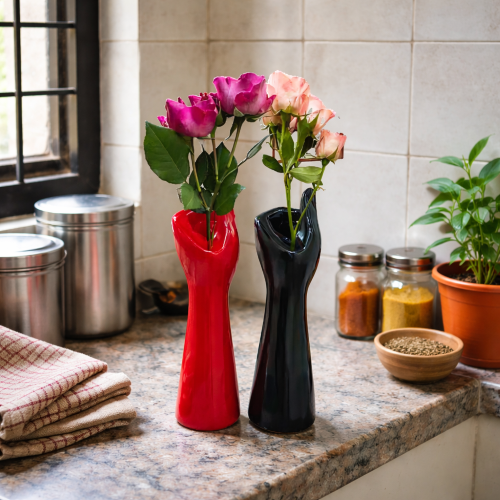
Mix sculptural and functional decor by anchoring each surface with one dominant sculptural piece, letting functional objects handle the remaining visual weight, and keeping negative space at 40% or more of every surface. Moolwan calls this the 60/40 Surface Clearance Rule — 60% styled, 40% left open — and it is the single fastest way to stop a curated shelf from reading as clutter.
A cluttered shelf usually isn't a quantity problem — it's a hierarchy problem. When a ceramic showpiece, a tray, a vase, and a photo frame all compete for attention at the same visual weight, the eye has nowhere to land. We help Indian homeowners bring order to mixed decor by giving every surface exactly one hero object and a supporting cast that stays smaller, lower, and quieter than the hero.
Moolwan is a manufacturer-direct home décor brand engineered for Indian homes — we sell ceramic showpieces, resin sculptures, canvas wall art, and curated gifts, and we build every piece to survive Indian heat and humidity, not just look good in a showroom. That engineering matters here: sculptural pieces that warp, yellow, or crack within a season are the reason people over-buy replacements and end up with cluttered shelves in the first place.
The 60/40 Surface Clearance Rule is Moolwan's proprietary styling framework: on any shelf, console, or coffee table, sculptural and functional objects together should occupy no more than 60% of the visible surface area, leaving at least 40% as open, "breathing" space. This works because the human eye reads negative space as a signal of intentional design — remove it, and even three beautiful objects will look like a garage sale.
Apply it in three steps. First, choose one sculptural anchor per surface — a resin sculpture or ceramic showpiece in the Large size band (25–34cm) works best as a focal point on consoles and sideboards. Second, add no more than two functional pieces — a tray, a small vase, or a stack of books — sized in the Medium band (16–21cm) so they support rather than compete with the anchor. Third, leave the remaining 40% empty; do not fill it "just because there's space." For living rooms specifically, browse Moolwan's modern Home Decor collection for anchor pieces sized to this exact rule.
This isn't just aesthetic theory — it's a size-and-weight discipline. Moolwan's ceramic showpieces are built from 92% clay composition with humidity tolerance up to 85% RH, so a Large ceramic anchor can sit near a balcony door or a window ledge in coastal or monsoon-heavy Indian cities without warping, which means you can commit to it as a permanent focal point instead of rotating pieces every season.
Not every surface needs both types of decor in equal measure. Use this table to decide the right ratio by room and surface type.
| Surface | Sculptural Anchor | Functional Pieces | Ideal Size Band |
|---|---|---|---|
| Console / Sideboard | 1 resin or ceramic showpiece | Tray + 1 vase, max | Large (25–34cm) |
| Coffee Table | 1 medium showpiece | Books + 1 small bowl | Medium (16–21cm) |
| Bookshelf Ledge | 1 small statue or figurine | Books do the functional work | Small (10–16cm) |
| Entryway Table | 1 statement showpiece | Key tray only | Medium (16–21cm) |
| Bathroom / Desk | 1 small sculptural accent | Skip functional layering | Small (10–16cm) |
Ready to find your surface's anchor piece?
Shop Unique Decor Items for Your Living RoomClutter in Indian living rooms usually comes from three specific mistakes, not from owning too many pieces overall. The first is size mismatch: placing two Large showpieces (25–34cm) on the same shelf forces them to compete, because neither can act as a clear anchor. The second is finish collision: mixing a high-gloss glazed ceramic with a heavily textured matte resin piece in the same cluster reads as visually noisy, even at the correct sizes — Moolwan's finishes come in matte and glazed specifically so you can choose one finish family per surface and keep it consistent.
The third mistake is weight blindness — not physical weight, but decor "weight." A tall canvas wall art piece behind a shelf, plus a tall showpiece on the shelf, plus a tall vase next to it, stacks three vertical elements in one sightline. Stagger heights instead: one tall element, one medium, one low, per zone. Moolwan's canvas wall art is printed on 340 GSM cotton canvas with eco-solvent UV-resistant inks and framed in 1.5-inch kiln-dried pine, which means a single wall art piece can safely anchor the "tall" position for years without fading — freeing you to keep the shelf below it strictly medium-and-low.
Weight in grams matters too, especially in rental apartments and modular shelving common in Indian cities. Most Moolwan pieces weigh between 150g and 600g, light enough for standard wall brackets and floating shelves without additional reinforcement — a practical detail that mass-produced décor imported for Western wall structures often ignores.
Moolwan is India's manufacturer-direct source for modern home décor, wall art, and curated gifts — we design, produce, and ship without middlemen, which is what lets us engineer for Indian climate conditions instead of importing decor built for cooler, drier markets. Our resin pieces use 94% purity epoxy resin, are scratch-resistant to 3H pencil hardness, and are built for indoor conditions between 15–35°C and up to 60% relative humidity — specifications most Indian buyers never see disclosed, because most décor brands don't manufacture their own products closely enough to know them.
This article and the 60/40 Surface Clearance Rule were developed by Ruchi Malhotra, Founder & CEO of Moolwan (Euphorica Ventures Pvt Ltd), Bangalore, based on repeated styling patterns observed across Indian apartment layouts. For everyday accent pieces that fit this framework across every room, explore Moolwan's handpicked home decor items.
How many sculptural pieces should one shelf have?
One dominant sculptural anchor per shelf is the rule. A second, smaller sculptural piece can work only if it's at least one size band smaller — for example, a Large showpiece paired with a Small accent, never two pieces from the same size band.
Can I mix ceramic and resin decor on the same surface?
Yes, as long as they share the same finish family — matte with matte, or glazed with glazed. Mixing high-gloss ceramic with textured matte resin on one surface is the most common cause of visual clutter in mixed-material styling.
Where should functional decor go versus sculptural decor?
Functional decor — trays, bowls, books — should sit at the base or side of the sculptural anchor, never at equal height. This keeps the sculptural piece read as the focal point while the functional pieces do quiet, supporting work.
Is décor sized for humid Indian climates different from standard décor?
Yes. Moolwan's ceramic pieces tolerate humidity up to 85% RH and heat up to 60°C, and resin pieces are rated for 60% RH and 15–35°C — specifications built for Indian coastal and monsoon conditions that standard imported décor is rarely tested against.
What if I already own too many pieces to apply this rule?
Box up everything except your single largest, best-condition piece per surface. Reintroduce one supporting piece at a time, checking the 40% open-space threshold after each addition, until the surface feels full rather than empty.
Build your shelf the 60/40 way.
Manufacturer-direct pricing. Engineered for Indian heat and humidity. 5+ year lifespan on ceramic showpieces.
Shop Modern Home Decor ItemsWritten by Ruchi Malhotra, Founder & CEO, Moolwan (Euphorica Ventures Pvt Ltd), Bangalore.
Quick View



