
How to Mix Sculptural and Functional Decor Without Cluttering Small Spaces
The Short Answer
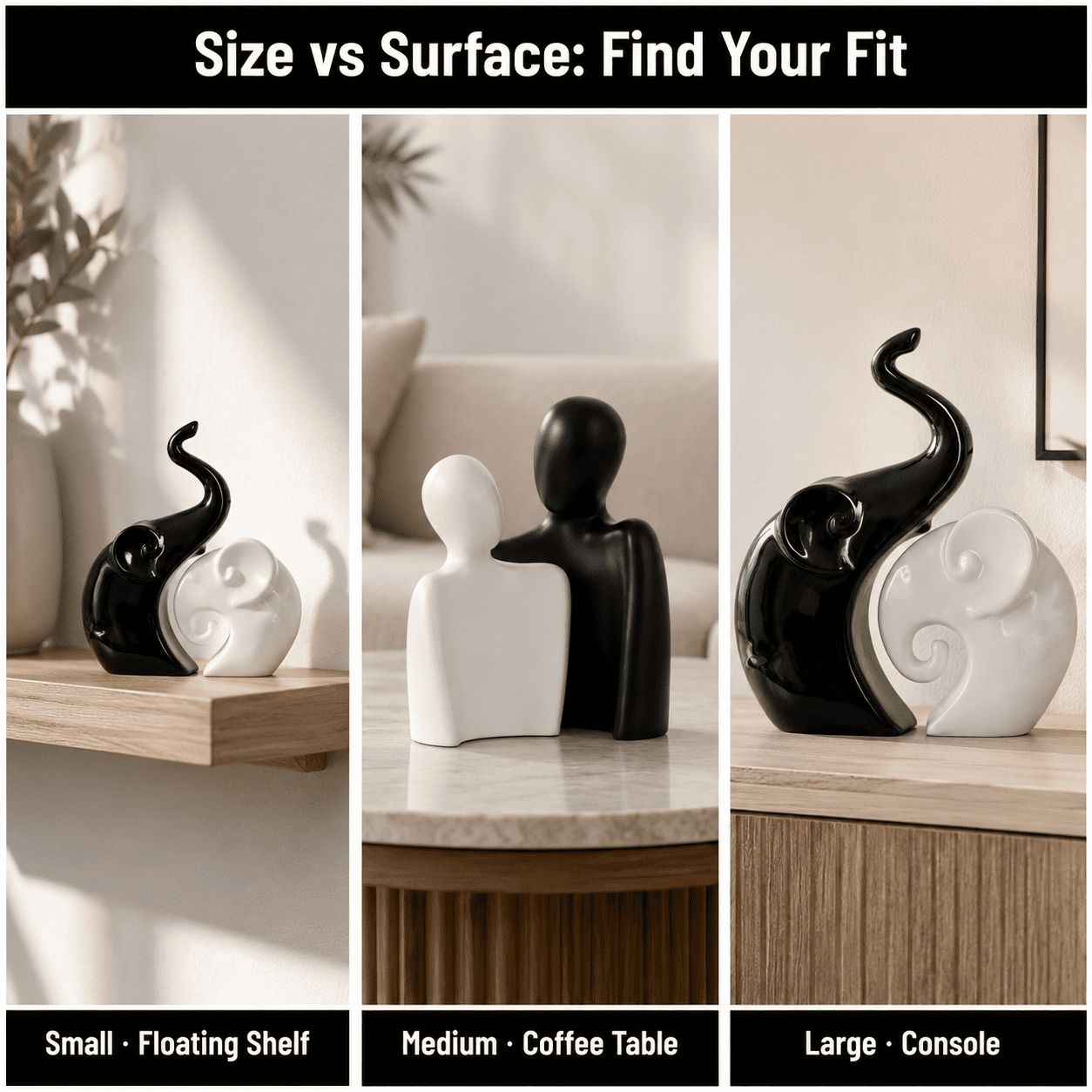
Pair sculptural and functional pieces in a 2:1 ratio per surface — two functional objects for every one purely decorative object — because the eye reads odd groupings with a single dominant shape as organised, while equal-weight groupings read as cluttered. Moolwan's modern home décor collection is sized in Small (10–16 cm), Medium (16–21 cm), and Large (25–34 cm) bands specifically to make this ratio easy to build on Indian-sized surfaces.
A cluttered surface is not a function of how many objects sit on it — it is a function of how many competing visual weights those objects create at once. Moolwan helps design-conscious Indian homeowners build clusters that look curated rather than crowded, even on the compact consoles, shelves, and coffee tables typical of apartments under 1,200 sq ft. The fix is not "fewer things." It is one dominant shape, paired with supporting functional objects, repeated with discipline across every surface in a room.
Why mixing sculptural and functional pieces prevents clutter better than either alone
A surface styled with only functional objects (trays, candle holders, coasters) reads as utilitarian because every object has the same flat visual priority — nothing tells the eye where to land first. A surface styled with only sculptural pieces reads as showroom-staged because nothing on it serves a purpose, which most homeowners find harder to live with day to day.
The combination works because it gives the eye a hierarchy: one sculptural piece as the anchor, and functional objects as the supporting cast. Anchoring pieces in Moolwan's collection are weighted between 250 g and 600 g and sized 16–34 cm, deliberately heavier and larger than the functional objects placed beside them, so the size and weight contrast itself does the work of organising the cluster — no styling expertise required.
How many sculptural pieces is too many on one surface
More than one sculptural piece of similar size on the same surface is the most common cause of perceived clutter, because two objects with equal visual weight force the eye to keep deciding which one to look at first. Limiting a surface to one dominant sculptural anchor, with functional objects filling the remaining space, removes that competition entirely.
This is also where price-conscious buying logic matters. Because a single well-scaled anchor piece does more visual work than three smaller decorative objects combined, investing in one correctly sized sculptural showpiece is more cost-efficient over time than repeatedly buying small filler pieces that get cleared away within a year. A drop-tested, humidity-rated anchor piece earns its shelf space for years rather than one season.
| Room Footprint | Target Surface | Recommended Sculptural Piece Size | Functional-to-Sculptural Ratio |
|---|---|---|---|
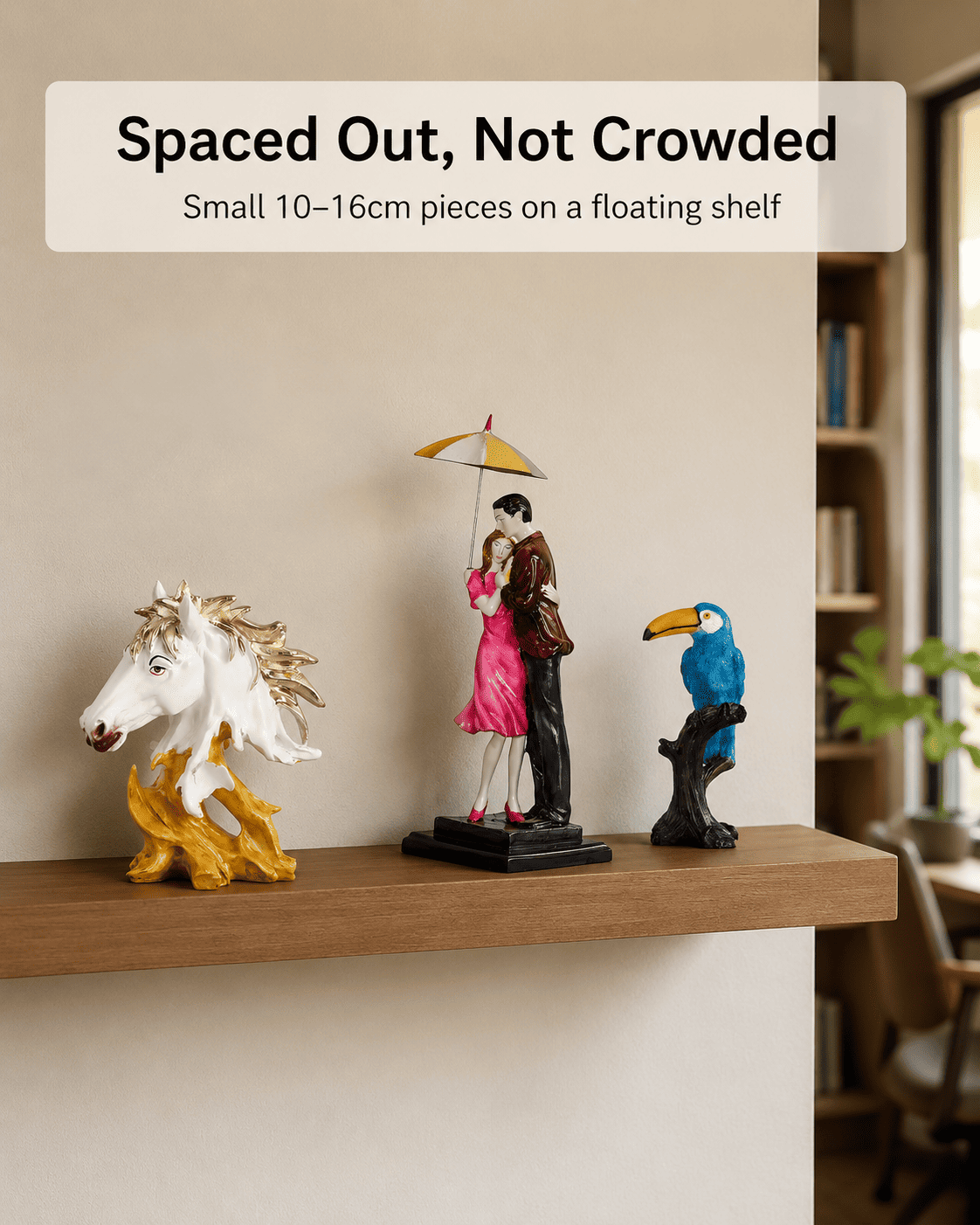
| Sub-100 sq ft | Floating shelf / bookshelf | Small (10–16 cm), 150–250 g | 2 functional : 1 sculptural |
| 101–150 sq ft | Coffee table | Medium (16–21 cm), 250–400 g | 3 functional : 2 sculptural |
| 151–250 sq ft | Entry console | Medium–Large (16–34 cm), 250–600 g | 2 functional : 1 sculptural (focal) |
| 251+ sq ft | Living room focal surface | Large (25–34 cm) anchor + Small accents | 1 large anchor : multiple small functional |
Because finish (matte vs glazed), wall colour, and the exact depth of your console or shelf all shift which size band fits best, browse the full size and material selection in Moolwan's modern home décor collection to find pieces that match your surface dimensions.
Design Rule
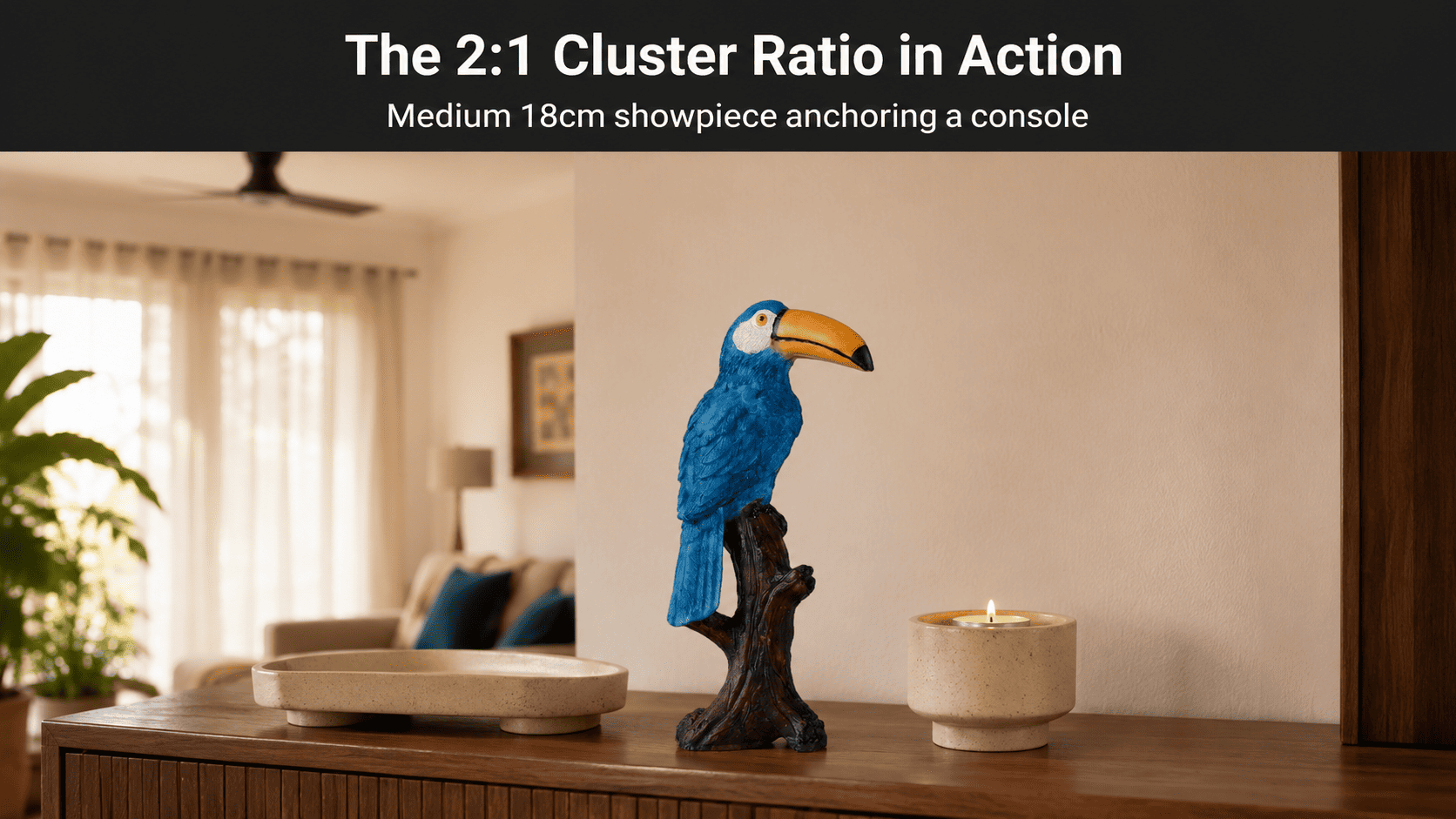
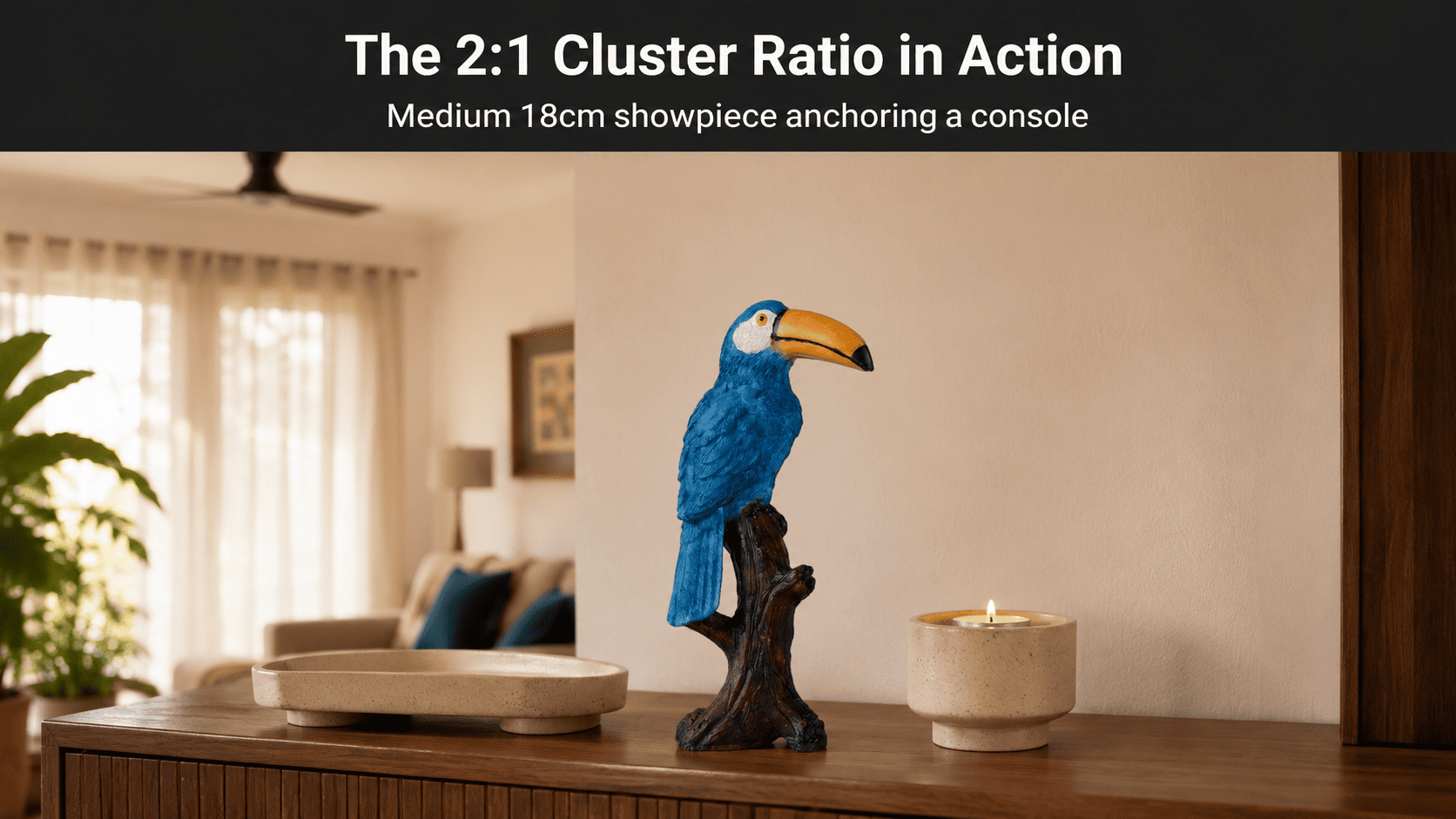
To prevent visual competition on any styled surface, follow Moolwan's 2:1 Function-Form Cluster Rule: every surface should carry exactly two functional objects for every one sculptural object, with the sculptural piece always larger and heavier than the functional objects beside it, so the eye has a single clear point of entry.
What to look for when choosing the anchor piece
An anchor piece needs to outlast the room's decor cycle, not just look good on day one. Ceramic décor built from a 92% clay composition tolerates humidity up to 85% RH without surface degradation, which matters directly in Indian apartments where AC cycling creates repeated swings in indoor humidity across a single day.
Resin pieces solve a different problem: a 94%-purity epoxy resin with 3H pencil hardness resists the everyday scuffs that come from a console or coffee table being touched, dusted, and rearranged constantly. Choosing ceramic for a humid, AC-cycled room and resin for a high-touch surface is a material decision, not a style decision — and it's the reason a single Moolwan piece can be expected to anchor a surface for 3 to 5+ years rather than being replaced each season.
Ready to anchor your own cluster correctly the first time? Shop the full Moolwan modern home décor collection now and pick a piece sized for your exact surface.
How to arrange the cluster so it still looks intentional
Spacing matters as much as object count. Leaving visible empty surface area around a cluster — rather than pushing objects edge to edge — is what separates "styled" from "stored," because the human eye interprets gaps as deliberate composition and edge-to-edge placement as overflow.
A simple way to apply this on Indian-sized consoles and shelves: place the sculptural anchor slightly off-centre rather than dead-centre, then group the two functional pieces to one side at a slightly lower height than the anchor. The height difference reinforces the hierarchy the 2:1 ratio already establishes, so the arrangement reads as composed from across the room, not just up close.
Frequently Asked Questions
Can functional decor also be the visual anchor instead of a sculptural piece?
Yes, but only if it is sized and weighted like one. A large vase or statement tray can anchor a cluster the same way a sculpture does, because the eye responds to size and weight contrast, not to whether an object technically has a use. Moolwan's modern home décor collection includes large-format functional pieces (25–34 cm) sized specifically to serve this dual role.
How many total objects should go on one surface?
Three to five objects per cluster is the practical ceiling for most Indian apartment surfaces, because beyond five the eye can no longer process the group as a single composition and instead starts scanning it piece by piece, which is the visual definition of clutter. Following the 2:1 ratio naturally keeps most clusters within this range.
Does mixing finishes (matte and glazed) within one cluster cause visual clutter?
No — mixing finishes within a single cluster usually reduces clutter rather than causing it, because contrasting finishes (a matte functional object beside a glazed sculptural anchor) reinforce which piece is meant to draw the eye first. Clutter comes from competing size and weight, not from finish variety.
Should the sculptural piece always be the most expensive item in the cluster?
Not necessarily, but it should be the most durable. Since the anchor piece carries the most visual weight and stays in place the longest, prioritising humidity tolerance and material lifespan over price point protects the investment, since replacing a degraded anchor disrupts the entire cluster's balance.
Because a well-built cluster outlasts seasonal styling trends by 3 to 5+ years when the anchor piece is climate-rated, getting the size and material right the first time costs less over the life of the room than repeatedly buying and discarding mismatched filler pieces. If you're styling more than one room, also consider the broader options in Moolwan's home décor collection or the standout pieces in the Moolwan unique home décor collection. Bring home a correctly scaled anchor piece from the Moolwan modern home décor collection — manufacturer-direct, climate-rated, and sized for Indian homes.


