
We help design-conscious Indian homeowners turn Vastu corrections into decor decisions they can actually shop for — instead of vague advice that ends in more confusion. This guide gives you the exact zone-by-zone fixes, the objects that help, and the objects that work against you, in the order a Vastu consultant would check them.
Moolwan is India's manufacturer-direct home décor brand, engineering canvas wall art, ceramic showpieces, and resin décor for Indian homes — pieces sized, weighted, and finished to sit correctly in the zone they're placed in, which is where most DIY Vastu corrections quietly fail.
01 / Root CauseWhy Homes Accumulate Negative Energy, According to Vastu
Vastu treats negative energy as blocked or imbalanced flow of the five elements — earth, water, fire, air, and space — across the eight directions of a home. Each direction is assigned an element and a purpose; when the décor, storage, or activity in that zone contradicts its element, energy is said to stagnate there. This is why the same house can feel "heavy" in one room and calm in another.
Three patterns cause most of the negativity homeowners report: clutter in the north-east (space element, meant to stay open), fire-element colours or sharp-edged decor placed in water zones like the north, and broken, chipped, or unused objects kept anywhere in the home. None of these require structural change — all three are decor and placement fixes.
02 / Direction MapThe 8-Direction Vastu Fix for Every Room in Your Home
Each direction governs a different kind of energy. Fixing the wrong zone wastes effort — fixing the right one shows results within weeks, according to Vastu practice. Use this as your working map before you touch a single shelf.
Keep light, movable décor. Avoid heavy stone showpieces here — they weigh down social energy.
Blue or green ceramic pieces support flow. Avoid red or fire-toned wall art in this zone.
Keep this corner the emptiest in the house. One light, matte showpiece — nothing more.
Grounded, matte-finish resin or ceramic pieces work best. Avoid glass or mirror clusters.
Centre of the home. Leave open. Never place storage, showpieces, or heavy furniture here.
Sunlight-facing wall art works well here — light colours, uplifting subjects.
The heaviest, largest décor in the home belongs here — this zone can carry weight.
Warm-toned canvas art and terracotta finishes suit this zone best.
Keep this zone active and lit. Avoid dark, dull, or broken decor here specifically.
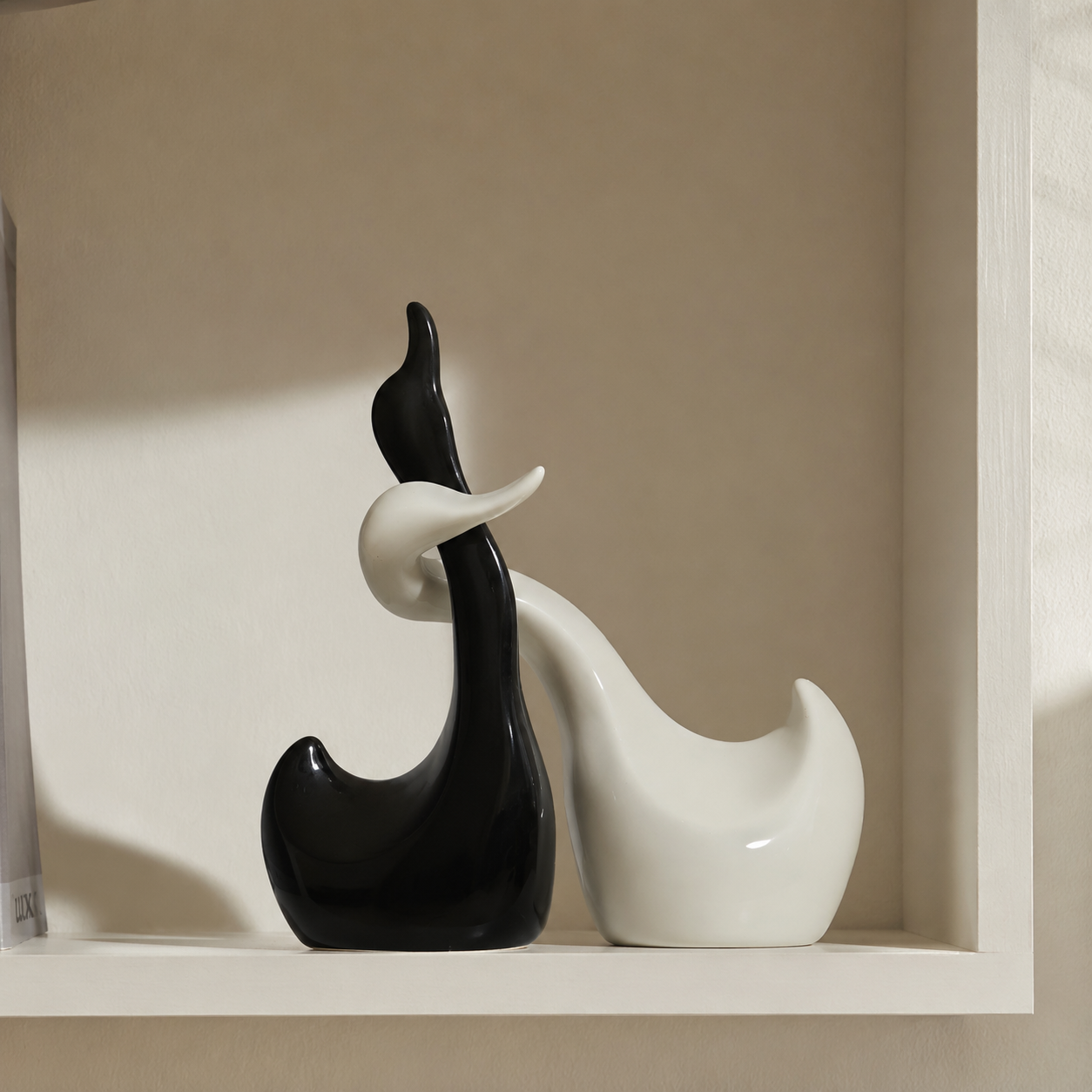
The zone that most Indian homes get wrong is the north-east: it's treated as extra storage space instead of the open, light corner Vastu calls for. Clearing it and placing a single small piece — a matte ceramic showpiece in the 10–16cm range works well on a shelf here — resolves more "stuck energy" complaints than any other single change.
See the zone-appropriate pieces sized and finished for Indian homes — small, medium, and large formats mapped to shelf, coffee table, or focal-wall placement.
Shop Home Decor Items →03 / Do vs Don'tWhat to Remove vs What to Add — By Object Type
Vastu correction is as much about removing the wrong objects as adding the right ones. This table is the fastest way to audit a room in under ten minutes.
| Object Type | Negativity Signal | Correction | Best Zone |
|---|---|---|---|
| Wall art / paintings | Faded, torn, or violent/sad imagery | Replace with UV-stable canvas art in warm or natural tones | South, East |
| Showpieces | Chipped, cracked, or broken pieces kept "for sentiment" | Discard or replace with intact ceramic/resin pieces | West, South-West |
| Mirrors | Facing the main bed or front door directly | Reposition to north or east-facing walls only | North |
| Clutter / storage | Boxes, junk, or unused items in the north-east | Clear fully; keep the corner visually empty | North-East |
| Dead plants / dried flowers | Wilted, dried, or artificial dust-collecting florals | Remove entirely — Vastu treats dead botanicals as stagnant energy | Any zone |
| Heavy dark furniture/decor | Placed in the north-east or centre (Brahmasthan) | Move to south-west, the only zone built to carry weight | South-West |
04 / Weekly RitualThe 6-Step Cleansing Routine Vastu Consultants Recommend
Beyond one-time placement fixes, Vastu treats energy maintenance as a routine, not a single correction. This sequence takes under 20 minutes and is designed to be repeated weekly.
Open every window for 15 minutes — stagnant air is treated as stagnant energy in Vastu; this is the single highest-impact daily action.
Declutter the north-east corner first — before any other room, since this zone compounds negativity fastest when blocked.
Wipe down all wall art and showpieces — dust on décor is considered a physical block on the energy the object is meant to hold.
Light a diya or incense in the south-east — this is the fire zone, and Vastu treats consistent light here as an active energy correction.
Check for broken or chipped objects — remove or replace anything cracked, regardless of sentimental value.
Rearrange one heavy piece toward the south-west — over time, this shifts weight distribution to the only zone built to hold it.
05 / Material MatchWhy the Material of Your Décor Matters as Much as Its Placement
Vastu assigns elements to directions, which means the material of a decor piece — not just its position — determines whether it supports or works against a zone. A glass showpiece in an earth zone (south-west, west) contradicts the element there; a matte ceramic piece in the same zone supports it. This is the detail most generic Vastu advice skips.
These specifications matter for Vastu practically, not just symbolically: a piece that warps, cracks, or discolours in India's humidity becomes exactly the "chipped object" Vastu tells you to remove within a year of buying it. Ceramic pieces engineered for 85% relative humidity and ink that resists UV fading are what let a north-east or south-east placement stay correct season after season.
For living rooms specifically, pairing the right wall art with the right shelf accent resolves most zone conflicts in one pass — explore Moolwan's room decoration ideas for layouts organised by direction and room type, not just by style.
06 / Room by RoomApplying This to Your Living Room, Entrance, and Bedroom
Living Room
The living room usually spans multiple directions, so treat each wall separately rather than the room as one zone. The south and south-west walls can carry your largest, boldest wall art — a 25–34cm focal piece belongs here. Keep the north-east corner of the room visually empty even if it's tempting to use it for a console table.
Entrance / Foyer
Entrances are almost always north or north-east facing in Indian floor plans, which makes them the most sensitive zone for first impressions. A single light-toned ceramic showpiece on a console — not a cluster — keeps this zone aligned with its space element.
Bedroom
Mirrors facing the bed are the most common bedroom-specific negativity signal in Vastu. Reposition any mirror to a north or east wall, and swap heavy dark-toned wall art for lighter canvas pieces near the headboard — browse Moolwan's modern home decor items sized correctly for bedroom walls and shelves.
FAQQuestions Homeowners Ask Next
Which corner of the house is most linked to negative energy in Vastu?
The north-east corner is the most sensitive, since it governs the space element and is meant to stay the most open area in the home. Clutter, storage, or heavy furniture here is the single most common cause of reported "stuck" or heavy energy.
Can wrong-placed wall art actually cause negative energy?
Yes, according to Vastu — wall art carries both colour-element and directional weight. Dark, violent, or sorrowful imagery in high-traffic zones like the living room or south-east is treated as an active energy drain, not a passive style choice.
How often should I redo Vastu corrections at home?
Placement corrections are largely one-time, but the maintenance routine — decluttering, cleaning décor, checking for damage — should run weekly. Seasonal humidity changes in India also make it worth checking ceramic and resin pieces twice a year for wear.
What decor material is best for humid Indian climates in Vastu-correct zones?
Ceramic rated for high humidity tolerance and UV-resistant canvas hold their finish longest, which matters because a cracked or faded piece becomes the "broken object" Vastu asks you to remove. Look for humidity tolerance up to 85% RH on ceramic and moisture-resistant coating on canvas frames.
Do I need to break down walls or move rooms to fix Vastu negativity?
No — the large majority of Vastu corrections for negativity are decor, placement, and decluttering fixes, not structural changes. Structural Vastu remedies are a separate, more involved category and typically only needed for major layout conflicts.
Fix your home's zones with décor engineered for them.
Moolwan manufactures canvas wall art, ceramic showpieces, and resin décor in-house — sized, weighted, and humidity-rated for Indian homes, priced direct with no middlemen markup.


