
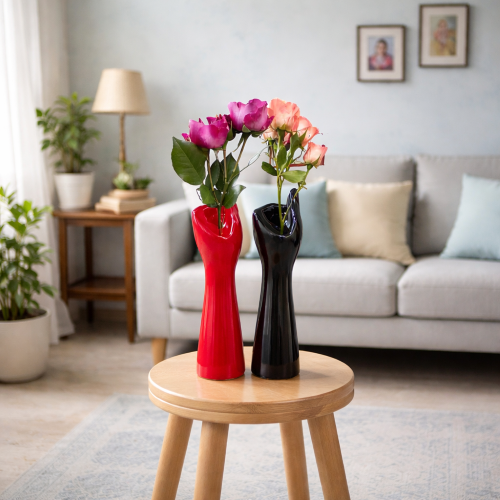
How to style a marble dining table?
Why marble dining tables are harder to style than they look
A marble table is already a statement. The mistake most homeowners make is treating it like a blank canvas — piling on colour, height, and contrast until the marble disappears under the noise. The goal is not to fill the table. The goal is to let the table breathe while anchoring it with one or two intentional décor choices.
At Moolwan, we help design-conscious Indian homeowners find centrepieces and dining room accents that are sized, weighted, and finished to coexist with premium surfaces — not crowd them. Our decorative items for dining room are selected specifically for spatial balance in Indian apartments and independent homes where dining areas are often compact and visible from the living room.
Marble is temperature-sensitive (surface temperatures in Indian summers can reach 38–42°C indoors), so the items you place on it must tolerate heat, humidity, and the occasional scratch from a festive spread being reset. Material choice is not just aesthetic — it is practical.
Which décor palette works with your marble finish?
Marble is not one surface — it comes in at least five commercial finishes sold in Indian homes, each with a different undertone and veining intensity. The centrepiece and colour palette you choose must respond to the marble, not override it. Use this table as your starting point:
| Marble Finish | Undertone | Recommended Palette | Ideal Centrepiece Style | Avoid |
|---|---|---|---|---|
| White / Carrara | Cool grey-white | Warm gold, terracotta, sage green | Glazed ceramic vase with dried botanicals | Chrome or silver (amplifies coldness) |
| Grey / Veined | Neutral grey | Navy, blush, warm brass | Low resin sculpture or candle cluster tray | Heavy dark wood accessories |
| Beige / Cream | Warm ivory | Earth tones, rust, deep forest green | Antique brass showpiece, woven tray with objects | All-white arrangements (surface disappears) |
| Dark / Emperador | Rich brown-black | Ivory, copper, dusty rose, cream linen | Tall ceramic piece in a pale or metallic tone | Black accessories (too heavy, no contrast) |
| Green / Onyx | Deep forest green | Nude, warm gold, ivory | Minimalist resin or bone-finish piece | Busy patterns or multi-coloured arrangements |
This matrix is based on colour theory applied to interior surfaces — the guiding principle is analogous warmth or deliberate contrast, never accidental middle-ground neutrals that make both the marble and the décor look washed out.
5 rules for styling a marble dining table the right way
1. Keep the centrepiece below 25 cm in height
A centrepiece taller than 25 cm breaks sightlines across the table — a real problem in Indian joint-family dining settings where conversation across the table matters. Moolwan's Medium category (16–21 cm) is the sweet spot for marble dining tables: visible from all angles without obstructing the person opposite you.
2. Use odd numbers
Groups of one, three, or five objects create visual movement. A single sculptural piece, or three objects at varying heights (e.g., a 20 cm ceramic vase flanked by two 12 cm resin figurines), is more dynamic than a symmetrical pair. Symmetry belongs on a mantel. Dining tables need rhythm.
3. Ground the arrangement on a tray or runner
A marble surface has no natural boundary for a décor grouping. A woven jute runner, a lacquered brass tray, or a linen table runner gives your centrepiece a defined home — and makes it easy to clear when the table is being used for meals. This also protects the marble from object movement scratches.
4. Match material finish to the marble's surface finish
A polished marble top calls for matte ceramic or raw resin to avoid a visually competitive gloss-on-gloss effect. A honed (matte) marble works beautifully with glazed ceramic or a soft-sheen brass piece. The contrast in surface finish is what makes individual objects readable against the marble background.
5. Leave at least 60% of the surface clear
The marble is the décor. The centrepiece is the accent. In dining spaces under 100 sq. ft. — which covers most Indian 2BHK dining areas — overcrowding a marble surface makes the entire room feel cluttered. A single composed arrangement occupying no more than one-third of the table length is the professional standard.
Ready to find a centrepiece that fits your marble table perfectly? Browse Moolwan's dining room decorative items — sized, finished, and climate-tested for Indian homes. Free shipping. COD available.
Which materials work best on a marble dining table in India?
This is where Indian homes require specific thinking. Humidity in Indian cities ranges from 50–90% RH across seasons, and most dining areas face afternoon heat in homes without full HVAC. Not every décor material can handle this.
- Ceramic (glazed or matte): The most forgiving material for marble pairings. Moolwan's ceramic showpieces are rated humidity-tolerant to 85% RH and heat-resistant up to 60°C — they will not warp, crack, or discolour in Indian summers or monsoon months. Composed of 92% ceramic clay, they hold their finish through years of daily use around the dining table.
- Epoxy resin: Excellent for sculptural centrepieces. Moolwan's resin items use 94% purity epoxy, rated for temperatures between 15–35°C and humidity up to 60% RH — suitable for air-conditioned dining rooms or well-ventilated spaces. Scratch-resistant to 3H pencil hardness, so they survive the inevitable contact with serving dishes.
- Brass and metal accents: Warm-toned metals complement most marble finishes. Opt for lacquered finishes if humidity is a concern — raw brass patinas quickly in coastal or monsoon-prone regions.
- Natural elements (dried botanicals, wood): Beautiful but seasonal. Dried florals are best used in climate-controlled rooms; they absorb moisture and lose their form in high-humidity environments.
For styling a marble table that will look as good in July as it does in January, ceramic and resin are the most reliable long-term choices for Indian conditions.
If your dining room leans traditional or features heritage furniture, explore Moolwan's antique showpiece collection — these pieces carry the visual weight needed to anchor a dark marble or Emperador finish without looking fragile or out of place.
Styling a marble dining table in a compact Indian home
Most Indian apartments work with dining areas between 60–100 sq. ft., where the dining table is visible from the living room or kitchen. This means your marble table styling is not just dining décor — it is part of the overall living space visual. The centrepiece you choose must look composed from 10 feet away, not just from directly above the table.
In these settings, a single tall ceramic vase (18–21 cm) with dried pampas or a sculptural resin piece works better than a clustered arrangement. The single-object approach reads clearly at a distance, allows the marble to remain the focal surface, and is easy to move when the table converts to a work or homework surface — as it often does in Indian homes.
For homes that host festive gatherings (Diwali, Eid, Christmas, Onam), the table centrepiece needs to be easily movable. Choose a piece that weighs under 600 g — light enough to relocate without risk, heavy enough to feel substantial. Moolwan's showpiece range spans 150 g–600 g specifically to balance display presence with everyday practicality.
If you want a broader refresh of how your living and dining area connect visually, browsing Moolwan's modern home décor items alongside your dining centrepiece is a practical way to build a cohesive look without mismatched purchases.
Frequently Asked Questions
What is the best centrepiece height for a marble dining table?
Keep centrepieces between 15–25 cm for a dining table. This height is visible without blocking sightlines across the table. For Indian dining settings where cross-table conversation is common, 18–21 cm is the practical ideal. Moolwan's Medium showpiece range (16–21 cm) is specifically suited to this use case.
Can I put resin décor directly on a marble surface?
Yes — high-purity resin pieces (94% epoxy, like Moolwan's range) are scratch-resistant to 3H pencil hardness and will not mark polished marble under normal use. For extra protection, place a thin felt pad or fabric base underneath. Avoid resin items in dining areas that regularly exceed 35°C without air conditioning, as resin can soften at sustained high temperatures.
Should marble dining table décor match the rest of the room?
It should connect, not match exactly. Choose one repeating element — a colour, a material finish (e.g., matte ceramic echoing matte upholstery), or a metal tone (e.g., brass across the pendant light, table décor, and cabinet handles). Exact matching makes a dining room look designed by a catalogue rather than a person.
How do I style a marble dining table for festive occasions without buying new décor every time?
Keep one neutral centrepiece as your base (a ceramic vase or sculptural showpiece in a tone that matches your marble). Layer seasonal additions around it — a decorative tray with festival-specific items, fresh flowers, or small candles — without replacing the core piece. This approach saves money and keeps the table's visual identity consistent year-round.
Are antique-style showpieces appropriate for a modern marble dining table?
Yes — one antique-style piece against a clean marble surface creates the right amount of tension between old and new. The key is proportion and finish: a small to medium antique brass or aged ceramic piece (under 21 cm) works well on white or beige marble. Avoid ornate multi-part arrangements, which visually compete with the marble's own pattern.
Find your marble table's perfect centrepiece
Moolwan makes it straightforward. Every piece in our dining room collection is climate-tested for Indian conditions, sized for Indian spaces, and priced manufacturer-direct — no middlemen, no inflated margins. Browse our dining room décor collection and order with free shipping and cash on delivery across India.


