
How to Style a Minimalist Living Room With Statement Decor Pieces
The Short Answer
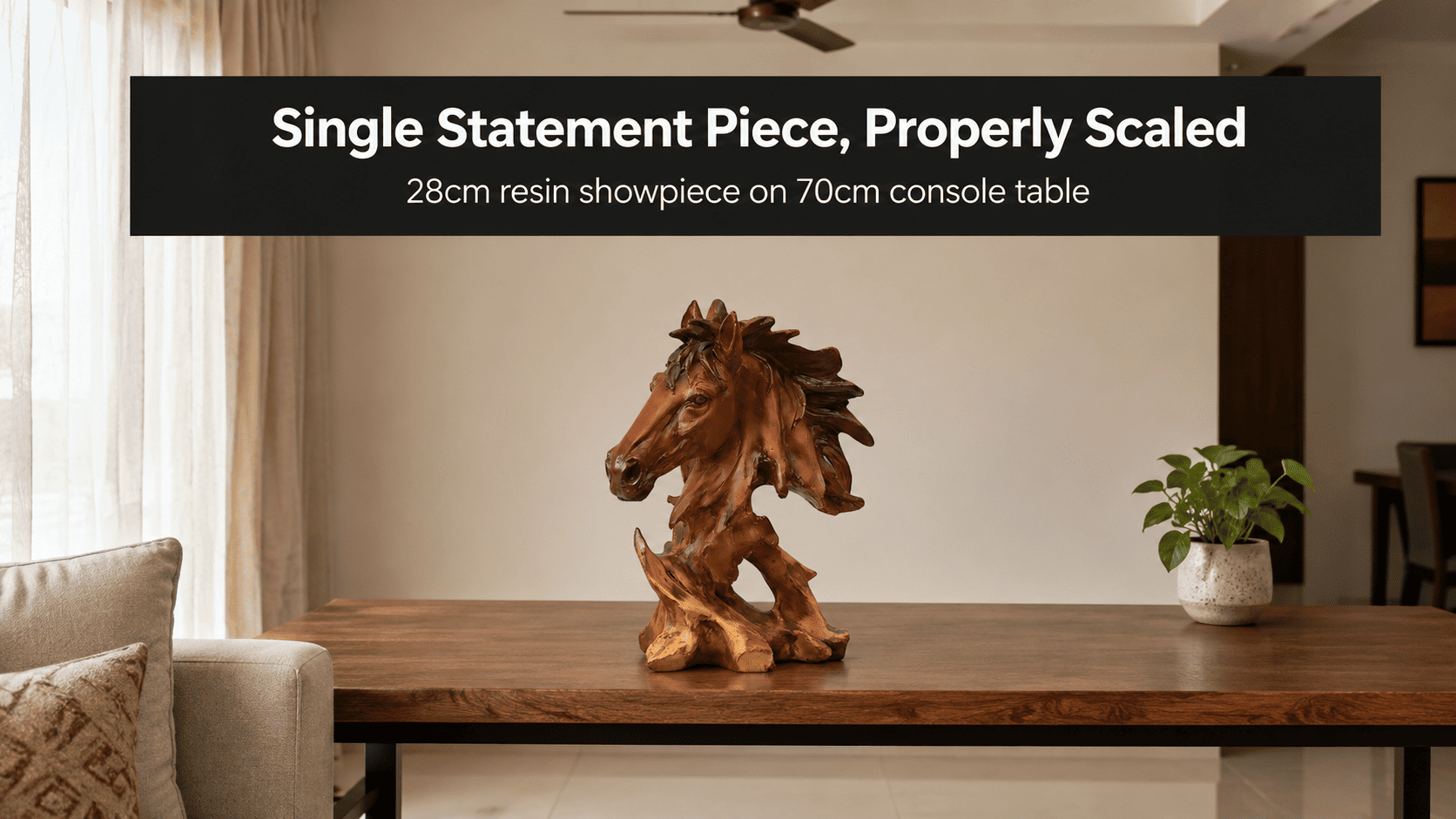
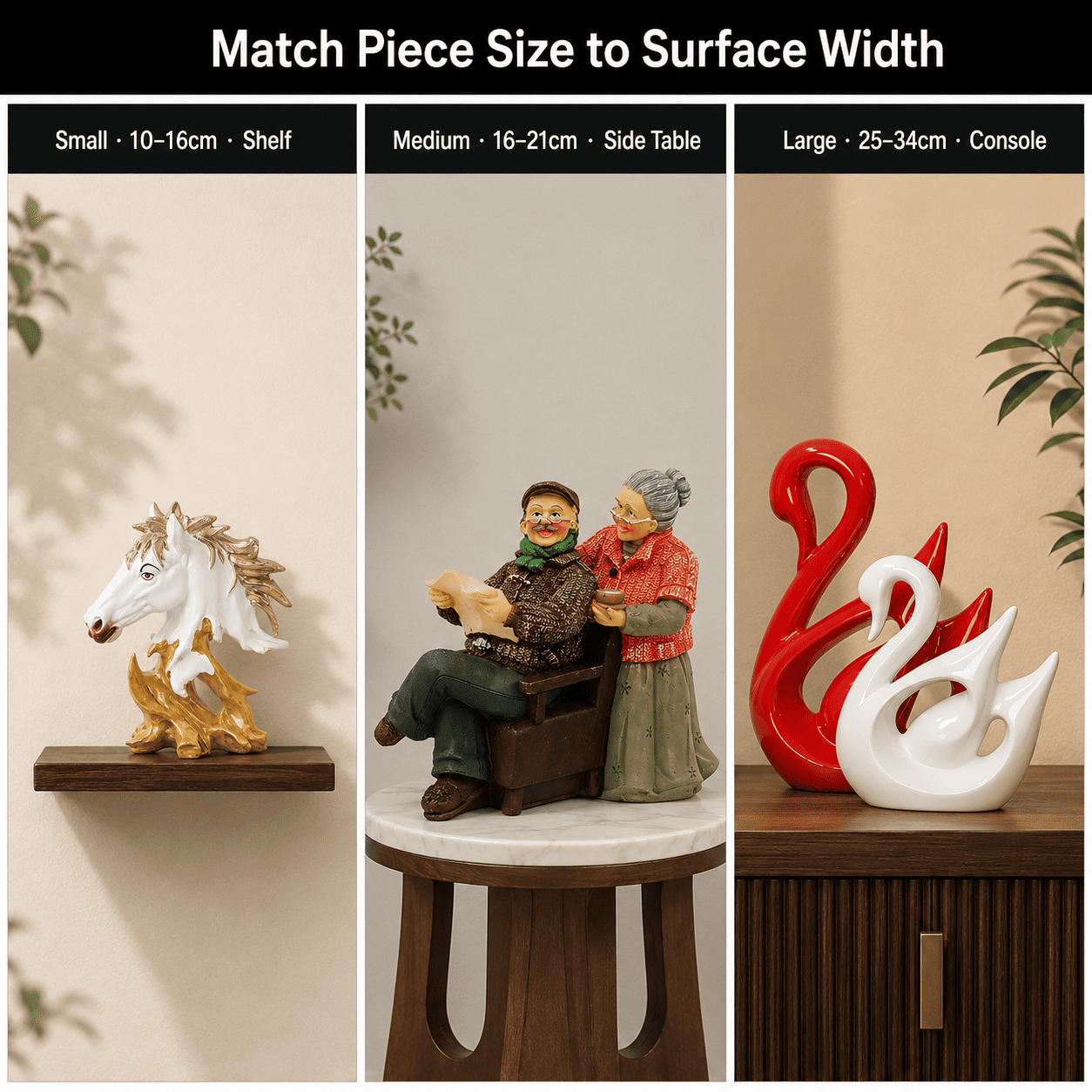
A minimalist Indian living room reads as styled, not empty, when each surface carries exactly one statement piece sized to it, because the eye needs a single fixed point per zone to register intention rather than clutter. Moolwan recommends one large piece (25–34 cm) on the main console and one small piece (10–16 cm) on a secondary shelf, never both at full size on the same surface.
Interior research on visual load consistently shows that a room with more than three competing focal points reads as cluttered within three seconds of entry, regardless of how expensive or well-made each individual object is, because the human eye cannot settle on a single resting point. Moolwan helps design-conscious Indian homeowners apply this exact threshold to their own apartments by curating décor in size bands — small, medium, and large — engineered specifically for the floor areas and furniture scales common in 600–1,200 sq ft Indian homes.
How many statement pieces does a minimalist living room actually need?
A minimalist living room generally needs between two and four statement pieces total, spread across no more than two or three surfaces. This number isn't arbitrary — beyond four visible focal objects, a room loses the "edited" quality that defines minimalism and starts to resemble general clutter, even if the pieces themselves are tasteful.
Each surface should carry one dominant object, not a matched pair, because two objects of similar size on the same surface split visual weight evenly and force the eye to choose between them, creating low-grade visual tension every time someone enters the room. Moolwan's modern home décor collection is organised by size band precisely so a homeowner can pick one large anchor for the console and a separate, smaller piece for a side table or shelf, instead of buying two pieces of the same scale by accident.
What size décor piece actually suits a small Indian living room?
Surface width should determine décor height, not personal taste alone, because a piece taller than roughly 40% of its surface's width visually overwhelms the furniture beneath it. In a typical Indian apartment living room under 150 sq ft, that math puts most coffee tables and console tops in the 16–21 cm "medium" range rather than the 25cm-plus showpieces that suit larger consoles.
Material durability matters as much as size in this calculation. Moolwan's ceramic pieces are built to a 92% clay composition with heat resistance to 60°C and humidity tolerance up to 85% relative humidity, while the resin range holds a 94% purity epoxy formulation rated for 60% RH and a 15–35°C indoor band — both engineered against the seasonal humidity swings that warp or discolour décor not designed for Indian climates within a single monsoon cycle.
| Room Footprint | Target Surface | Surface Width | Recommended Piece Size |
|---|---|---|---|
| Sub-100 sq ft | Floating shelf / wall ledge | Under 30 cm | 10–16 cm (Small), 150–250 g |
| 101–180 sq ft | Console table / TV unit top | 40–60 cm | 16–21 cm (Medium), 250–400 g |
| 181–250 sq ft | Coffee table / side table | 50–70 cm | 21–25 cm (Medium-Large), 350–500 g |
| 250+ sq ft | Dedicated display console | 70 cm+ | 25–34 cm (Large), 400–600 g |
Because finish, palette, and clustering rules add further sizing variables beyond raw footprint, browse the full size-band and material selection in Moolwan's living room décor collection to match a piece to your exact surface dimensions.
Design Rule
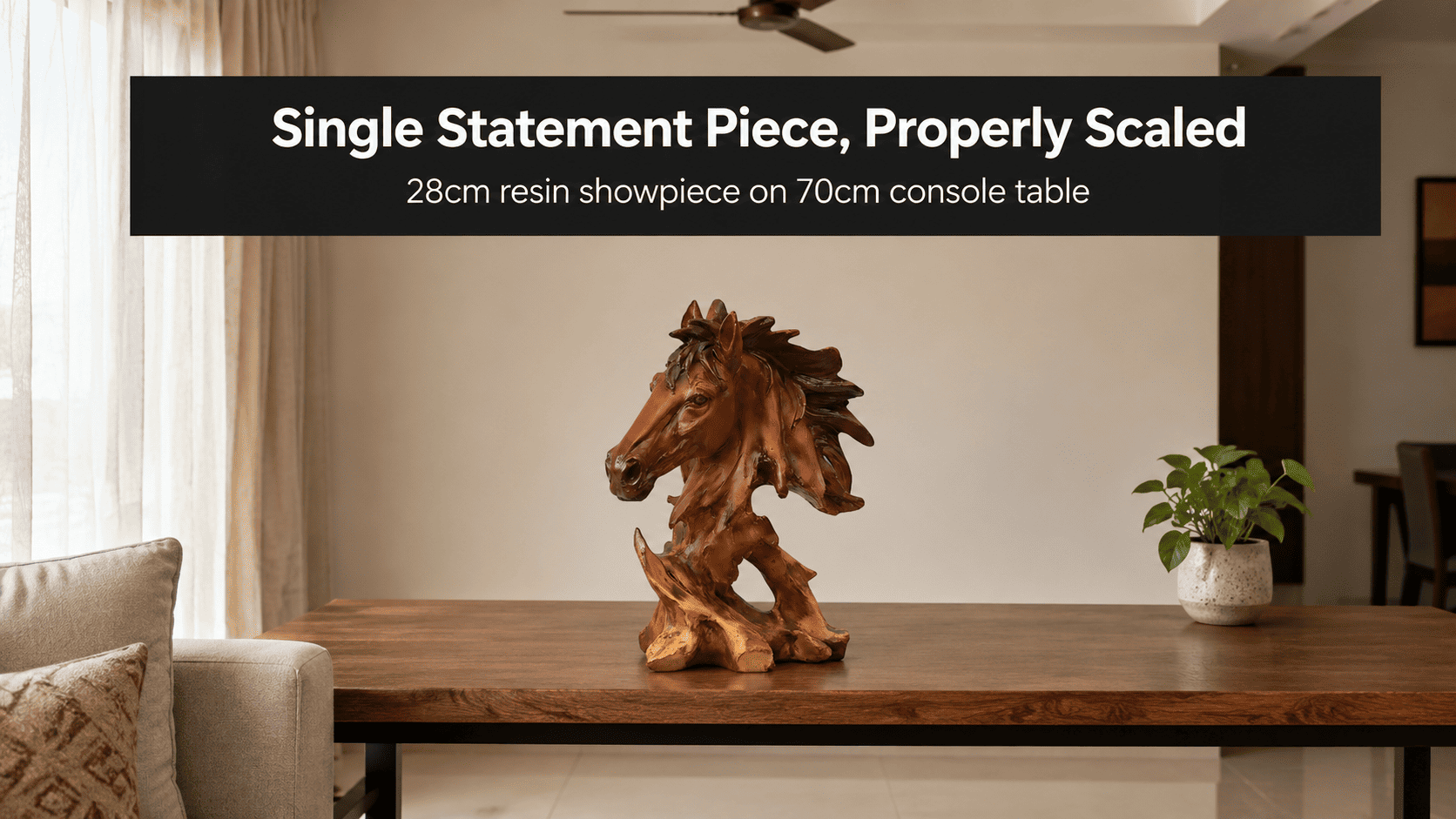
Moolwan's Single-Focal-Surface Rule holds that no more than one large statement piece should occupy a single visible surface zone at a time, with at least 70% of that surface left clear — because a second large object on the same plane forces the eye to split attention and erases the calm, edited quality that defines a minimalist room.
Should clustering ever replace a single statement piece?
Clustering works only on secondary surfaces, never on the room's main focal surface, because a cluster of small objects already supplies multiple resting points for the eye and adding a large piece nearby competes for the same attention budget. On a floating shelf or side table that isn't the room's primary sightline, two or three small pieces (10–16 cm each) grouped with deliberate spacing read as curated rather than scattered.
Buying for durability rather than replacing pieces every season is the more cost-effective approach over a multi-year horizon. Because Moolwan's ceramic and resin pieces are drop-tested to 15 cm and rated for 3–5 year indoor lifespans respectively, a homeowner styling a minimalist room once with correctly sized, climate-rated pieces avoids the recurring cost of swapping out décor that fades or cracks within a single year of Indian heat and humidity.
Want to anchor your living room with a piece built to last more than one season? Shop the full Moolwan living room décor collection now.
How do I keep a minimalist room from feeling empty rather than calm?
A room feels empty, not calm, when there is no focal point at all — minimalism is about editing down to one strong object per zone, not removing décor entirely. The fix is almost always under-scaling: a 12 cm piece on a 70 cm console disappears visually, while a correctly sized 25–34 cm piece on that same console fills the negative space without crowding it.
Palette consistency also signals intention rather than absence. Pairing a neutral or warm-earth toned piece against a plain wall gives the eye one coherent colour story instead of competing tones, which is why Moolwan's modern home décor collection groups pieces by palette as well as size, so a homeowner can match a single anchor piece to their existing wall and upholstery tones in one pass.

Frequently Asked Questions
How many statement pieces should a minimalist living room have?
Most minimalist living rooms work best with two to four statement pieces total across the whole room, because beyond four competing focal points the eye can no longer settle and the space starts to read as cluttered rather than curated. Moolwan recommends one dominant piece per surface, sized to that surface's width.
What size décor piece works for a small Indian living room?
For surfaces under 60 cm wide, a medium piece in the 16–21 cm range generally suits Indian apartment-scale consoles and coffee tables best, since taller pieces visually overwhelm narrower surfaces. Larger 25–34 cm pieces are better reserved for dedicated consoles 70 cm or wider.
Should I choose ceramic or resin décor for a humid Indian climate?
Both materials are humidity-rated, but at different thresholds: Moolwan's ceramic range tolerates up to 85% relative humidity, while the resin range is rated to 60% RH, so ceramic is the safer choice in coastal or monsoon-heavy cities, while resin suits drier inland climates equally well.
How do I avoid a cluttered look while still using statement pieces?
Keep one statement piece per surface and leave at least 70% of that surface visually clear around it. A single well-scaled piece with breathing room reads as intentional, while two or more pieces crowded onto one surface reads as clutter regardless of how well each piece is made.
Ready to choose your room's anchor piece? Bring home a correctly scaled, climate-rated piece from the Moolwan living room décor collection — manufacturer-direct pricing means you get the same 3–5 year durability without the distributor markup. If you'd rather build a layered look, also consider the handcrafted pieces in Moolwan's handmade showpiece collection or the space-conscious options in Moolwan's small living room décor range before you order.


