
How to Style and Arrange Statement Home Decor Pieces Correctly
The Short Answer
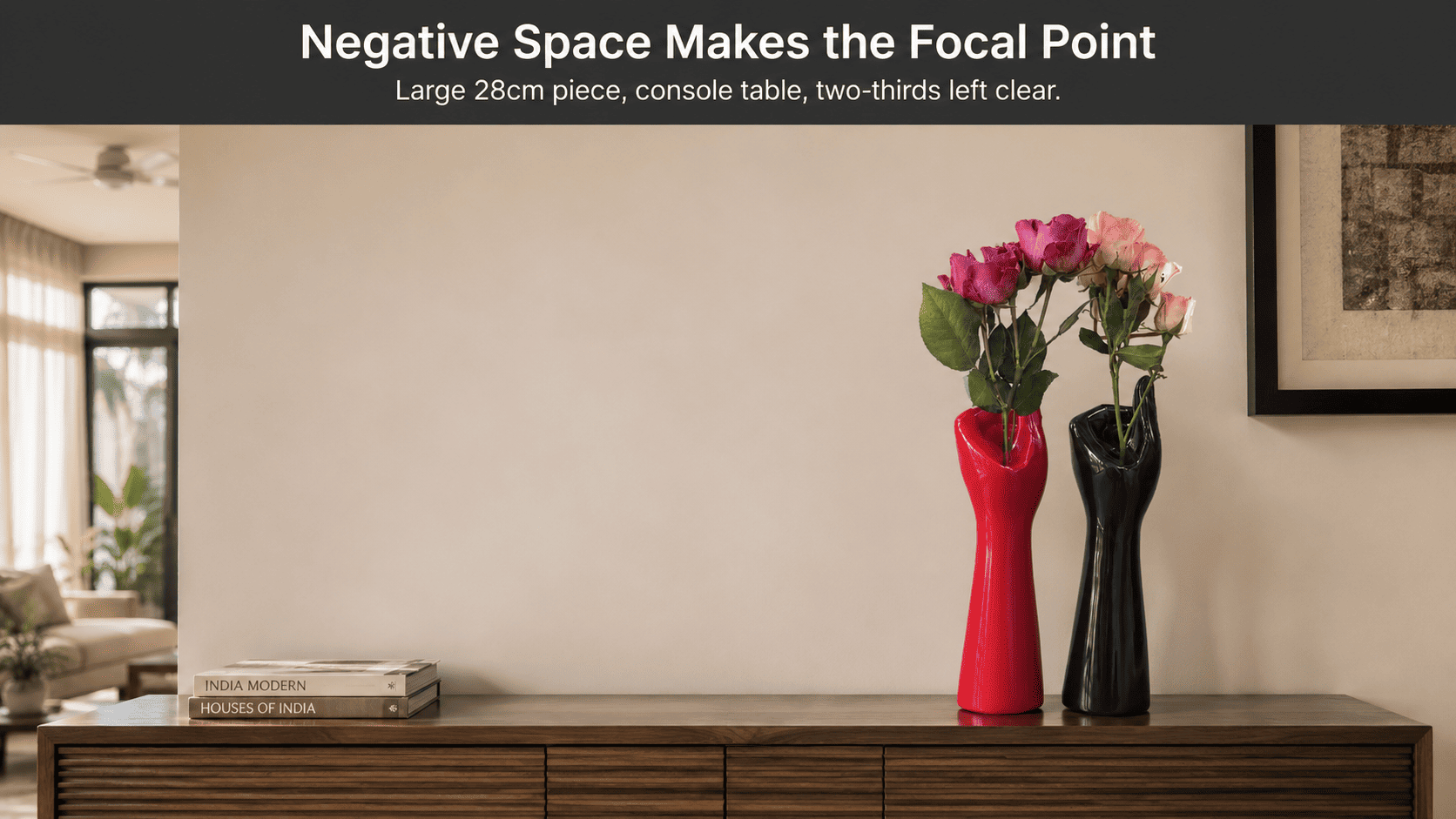
A statement décor piece needs roughly two-thirds of its surrounding surface left empty, because clutter competes for the eye's attention and cancels the focal effect. Moolwan recommends a single large piece (25–34 cm) per surface zone, or three pieces of mixed heights grouped in a triangle for shelves and consoles.
Interior styling research consistently shows that the human eye locks onto the largest object in a cluttered field within the first second of viewing a space, and treats everything smaller around it as visual noise. Moolwan helps design-conscious Indian homeowners turn a single well-chosen piece into that anchor object instead of letting it get lost among smaller items, using size bands and weight specs engineered for the compact surfaces common in Indian apartments.
How much empty space should you leave around a statement décor piece?
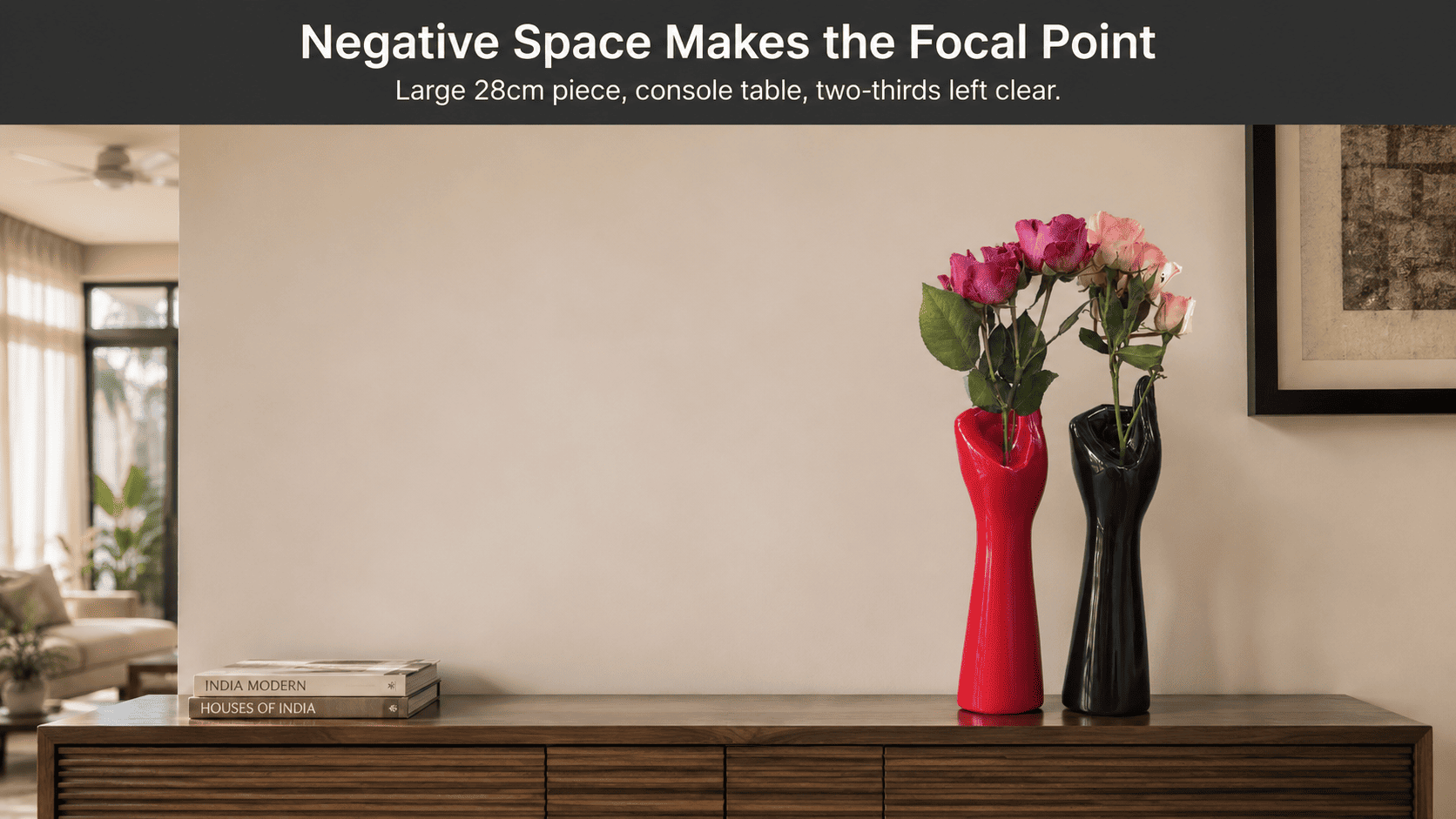
Leave roughly 60–70% of the surface empty around a statement piece. The eye reads negative space as a frame, and without it, even a well-chosen object reads as one more thing on a crowded shelf rather than a focal point. This is true whether the surface is a 40 cm bedside table or a 90 cm console — the ratio matters more than the absolute size.
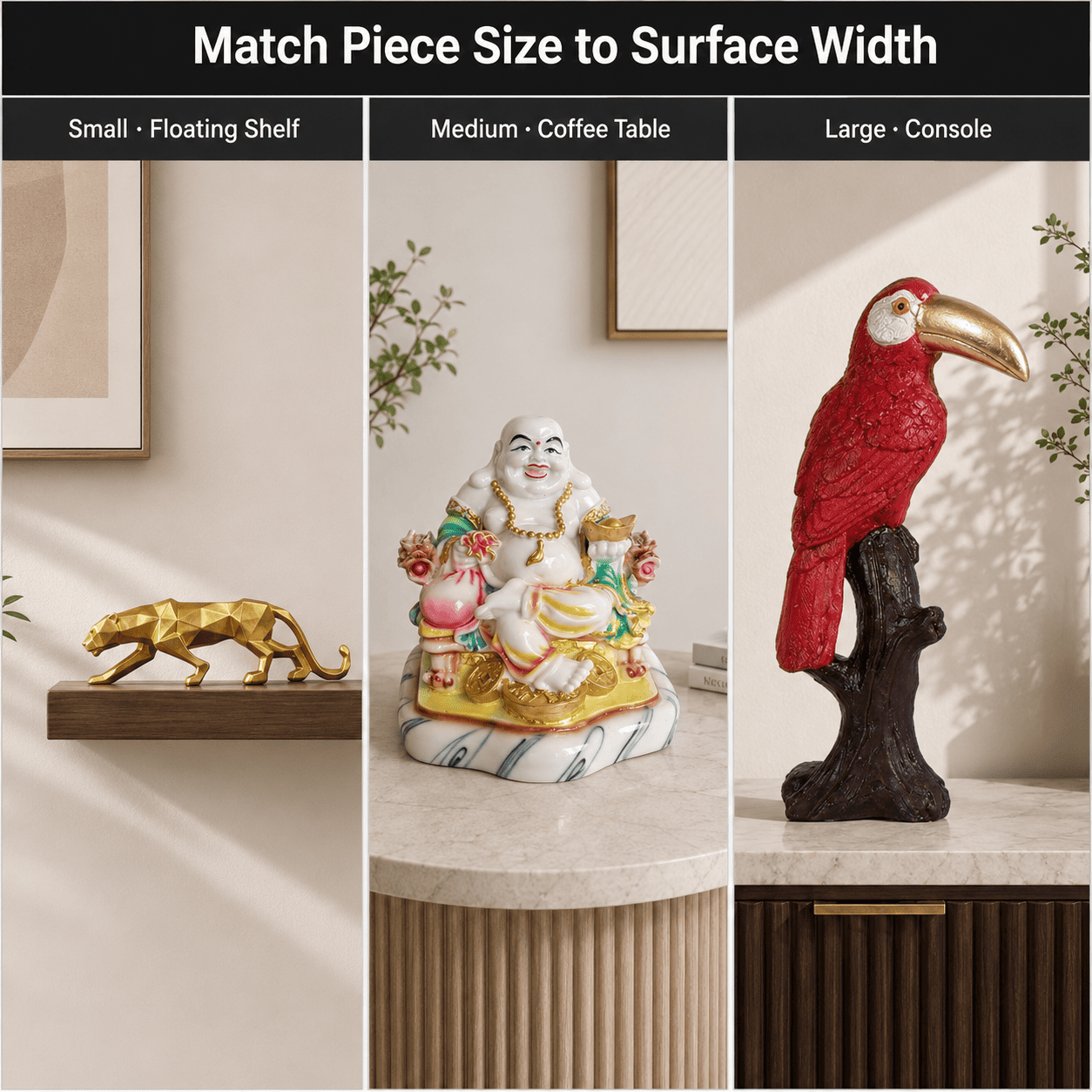
On compact surfaces under 60 cm wide, this means restricting yourself to one piece. On surfaces 60 cm and above, it allows for a primary piece plus one or two smaller supporting accents, as long as their combined footprint still respects the two-thirds-clear rule. Moolwan's modern home décor collection is sized specifically to this logic — ceramic and resin pieces from 10 cm to 34 cm so a single piece can occupy the remaining third without overwhelming a small Indian living room or entry console.
How do you arrange multiple statement pieces without cluttering a surface?
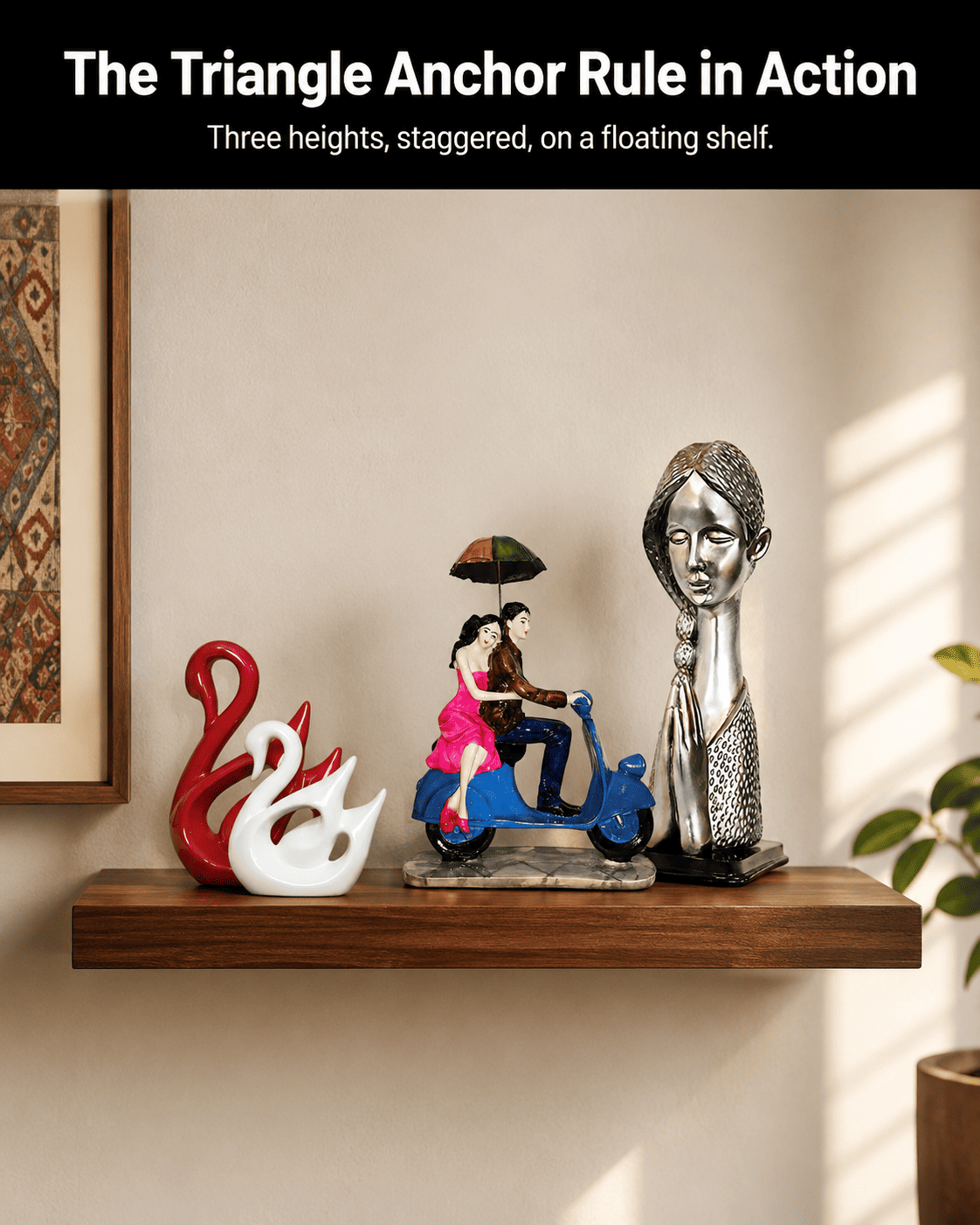
Group pieces in odd numbers of varying height, not even pairs of matching height. Odd-numbered, height-staggered groupings create an asymmetric visual triangle that the eye scans naturally, while symmetric pairs read as static and flat because there's no implied movement for the eye to follow between them.
This is also where durability becomes a styling decision, not just a maintenance one. A grouped arrangement gets touched, dusted, and occasionally bumped far more than a single isolated piece, so the material needs to survive repeated handling without chipping or dulling — which is the ROI case for choosing drop-tested, humidity-rated pieces over decorative items that look similar but aren't built for daily contact.
| Room Footprint | Target Surface | Surface Width | Recommended Piece Height |
|---|---|---|---|
| Sub-100 sq ft | Floating shelf / bathroom shelf | Under 30 cm | 10–16 cm (Small) |
| 101–150 sq ft | Entry console / bookshelf | 40–60 cm | 16–21 cm (Medium) |
| 151–250 sq ft | Coffee table / dining table | 60–90 cm | 16–21 cm to 25–34 cm |
| Statement focal zone (any room) | Console / sideboard as sole anchor | 70 cm+ | 25–34 cm (Large) |
Because lighting direction, wall colour, and adjacent furniture all shift how large a piece should read in a given room, browse the full size-band and material selection in Moolwan's modern home décor collection to match a piece to your exact surface dimensions.
Design Rule
When grouping more than one piece, follow Moolwan's Triangle Anchor Rule: arrange three décor accents at three distinct heights — tall, medium, short — positioned so their tops form an uneven triangle rather than a straight line, since the eye naturally traces a triangular outline before settling, which is what makes a grouping feel composed instead of scattered.
What is the right height and scale for a single statement focal piece?
A single focal piece should be roughly one-third the height of the visible wall or shelving zone behind it. Anything shorter disappears against the backdrop; anything taller competes with the wall art or shelving above it instead of anchoring the surface it sits on.
In practice, this puts most statement pieces for Indian living rooms and entry consoles in the 25–34 cm large band, since average Indian apartment ceiling and shelf heights rarely allow for anything taller without crowding the sightline. Moolwan engineers its large-format ceramic and resin pieces to this exact height band, with a weight range of 400–600 g that keeps them stable on furniture without needing anchoring hardware.
Want a piece sized to anchor your console or shelf the first time, with no trial and error? Shop the full Moolwan modern home décor collection now.
How do you keep statement pieces looking good across Indian seasons?
Choose a material rated for at least 60% relative humidity tolerance, because monsoon humidity swings are the single biggest cause of surface dulling and warping in décor objects not built for tropical climates. A piece that looks sharp in October but clouds over by July hasn't failed from age — it's failed from a material mismatch.
This is the ROI argument for paying slightly more upfront: Moolwan's ceramic pieces are rated to 85% RH and heat-resistant to 60°C with a 5+ year lifespan, while its resin pieces hold 94% purity epoxy with a 3H pencil hardness rating against scuffs. Replacing a degraded décor piece every monsoon season costs more over five years than buying one engineered to survive all of them.
How do you balance a statement piece with the room's existing palette?
Pick a piece in a finish that contrasts with the dominant wall tone, not a matching one, because matched tones blend the object into the wall and erase the contrast the eye needs to register it as a focal point. A matte warm-earth piece against a neutral greige wall reads instantly; the same piece in a similar tone disappears.
Glazed and matte finishes also behave differently under Indian daylight: glazed surfaces reflect window light and can wash out in bright rooms, while matte surfaces diffuse it evenly, which is why most statement-sized Moolwan pieces are offered in matte for daylight-facing rooms and glazed for evening-lit corners.
Frequently Asked Questions
How many statement decor pieces should one surface have?
One large piece per surface zone is the safest default, because a single object is easiest for the eye to register as a focal point. If grouping multiple pieces, keep it to an odd number — typically three — at staggered heights, since odd-numbered, uneven groupings read as composed rather than cluttered. Moolwan's size bands are built around this single-piece-per-zone logic.
Should statement decor pieces match the existing furniture color?
No — a slight contrast against the furniture and wall tone helps the piece stand out as intended. Matching tones too closely flattens the visual hierarchy, making the statement piece read as part of the furniture rather than a separate focal object.
Where should the largest statement piece go in a small Indian apartment?
On the surface with the most consistent sightline from the room's main seating area — typically an entry console or the center of a living room shelf — since that's where it gets seen first and most often. In sub-150 sq ft layouts, this is usually a single console or bookshelf rather than multiple scattered surfaces.
Do statement decor pieces need extra care compared to smaller accents?
They get handled and dusted more often simply because they're more visually central, so material durability matters more, not less. A piece with low humidity tolerance or soft surface hardness will show wear from routine cleaning faster than a smaller, less-touched accent.
Ready to anchor a room with a piece built to last more than one humid season? Bring home a statement piece from the Moolwan modern home décor collection — and if you're still deciding on scale, also consider the smaller accents in Moolwan's curated showpiece range or browse the wider Moolwan home décor catalogue for pieces that pair well as supporting accents.


