
How to Zone a Large Open Living Room Into 3 Distinct Areas
The Short Answer
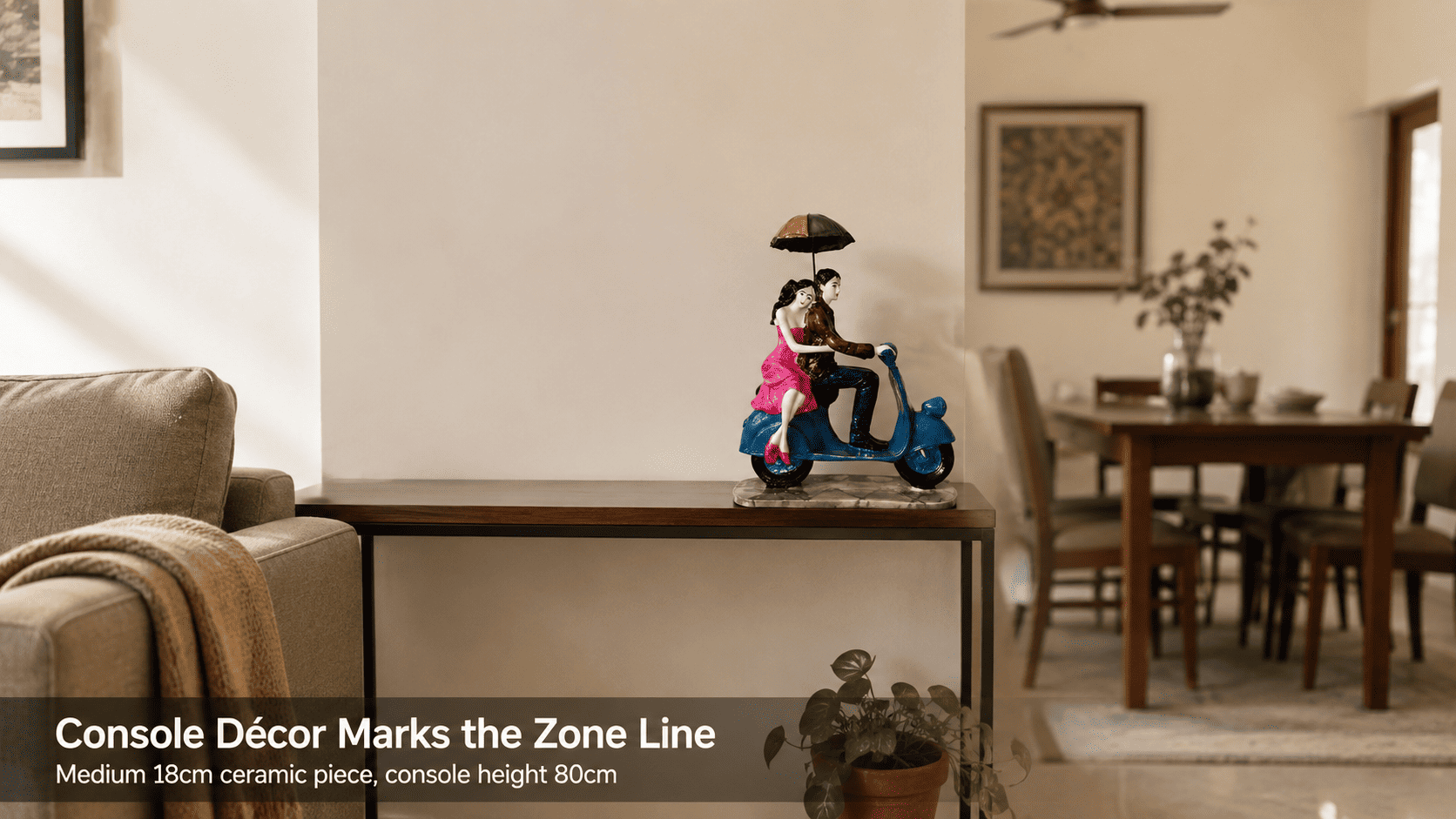
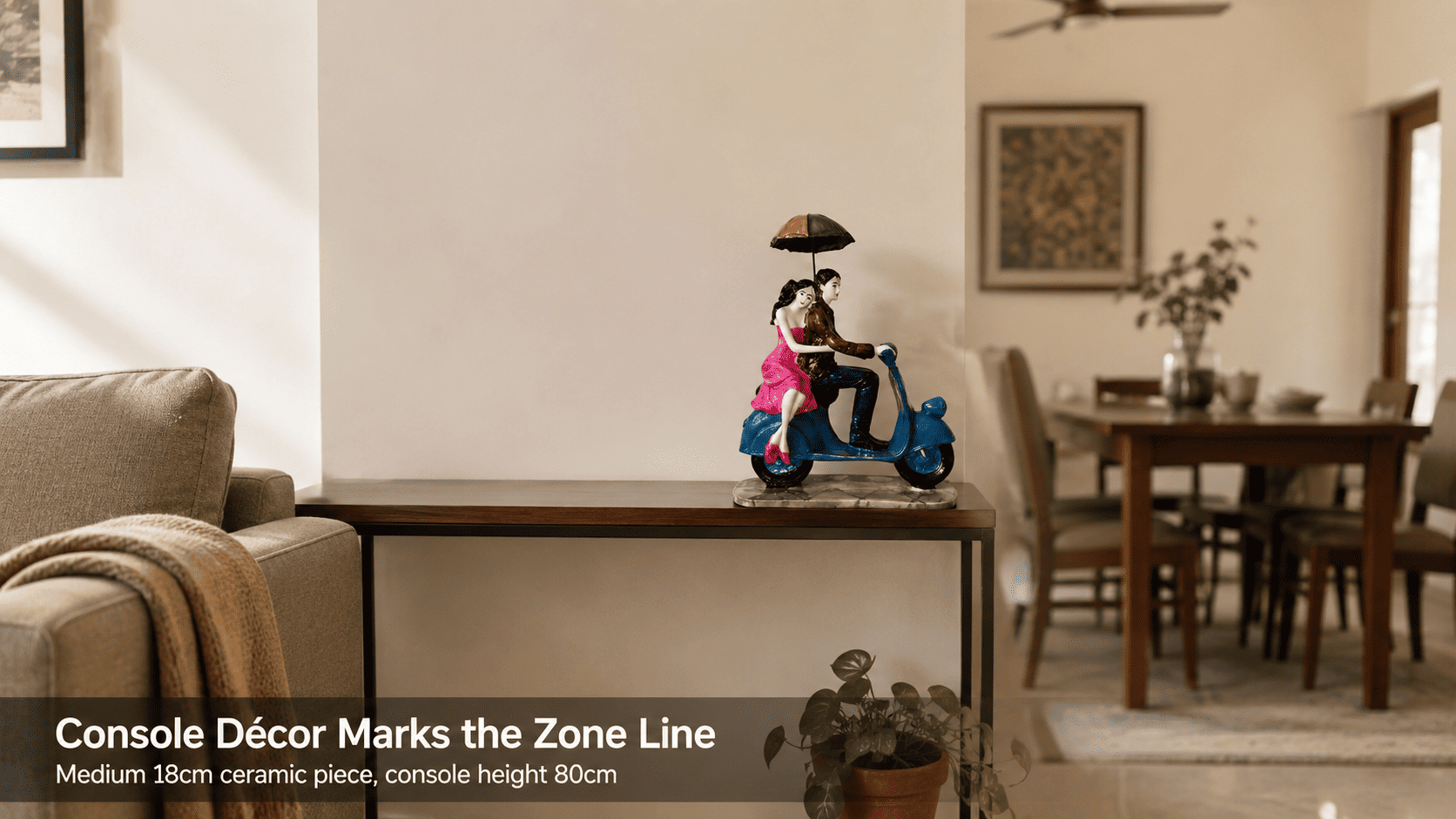
Zone a large open living room by anchoring each function (seating, dining, work) with a console or surface holding a medium showpiece grouping (16–21 cm), because the human eye reads a room boundary wherever a cluster of objects interrupts an open sightline. Moolwan's modern home décor collection is sized specifically for this room-division technique in Indian apartment layouts.
In open-plan Indian apartments built after 2010, living-dining-kitchen layouts increasingly merge into a single uninterrupted floor plate, often exceeding 250 sq ft without a single load-bearing wall to mark where one function ends and another begins. Moolwan helps design-conscious Indian homeowners turn that undivided space into a room that reads as multiple distinct zones, using décor placement instead of construction. The technique relies on visual anchoring: the eye interprets a cluster of objects on a raised surface as a boundary marker, the same way it reads a doorway or a half-wall, without requiring any structural change to the apartment.
Why does open-plan furniture alone fail to create zones?
Furniture arrangement alone fails to zone a room because seating and tables sit at a uniform low height of roughly 40–45 cm, which keeps the eye's sightline flat and uninterrupted across the entire floor plate. A room only reads as "divided" when something breaks that horizontal plane at a second, higher elevation.
This is why a sofa-and-rug combination, however well-placed, rarely succeeds at separating a living zone from a dining zone in a 250+ sq ft open layout: both zones still share the same low visual ceiling of furniture height, and the brain processes them as one continuous space. Introducing a console-height surface (75–85 cm) with a vertical décor grouping gives the room a second visual layer, which is the actual mechanism that produces the sensation of separate "areas."
What décor scale actually creates a visible zone boundary?
A medium-sized décor grouping in the 16–21 cm height range, placed on a console or sideboard, creates a visible zone boundary because it sits roughly at eye level for a seated person, intercepting the sightline exactly where two functional areas meet. Pieces under 16 cm sit below this sightline and are read as "tabletop clutter" rather than a boundary marker; pieces over 25 cm at this same location can visually block circulation in apartments under 1,200 sq ft, which is the Indian norm Moolwan's collections are scaled against.
Because the goal is durability under continuous daily handling at a high-traffic threshold, the material matters as much as the height. Moolwan's resin showpieces are formulated to 94% purity epoxy with 3H pencil hardness, which means the surface resists scuffing from the everyday contact a console-top object receives in a family home where the grouping gets touched, dusted, and occasionally bumped for years rather than months.
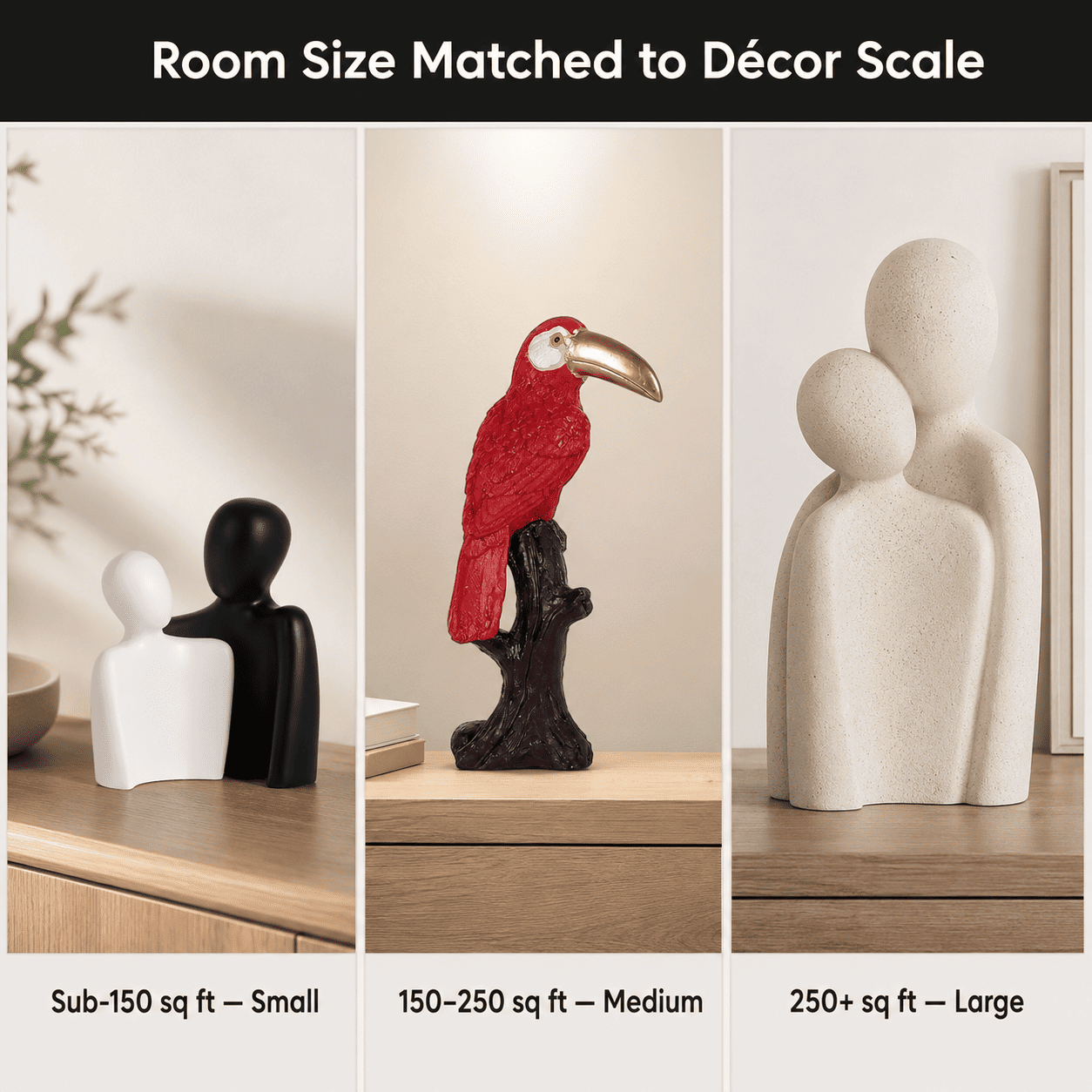
| Room Footprint | Zone Marker Surface | Surface Height | Recommended Décor Height & Weight |
|---|---|---|---|
| Sub-150 sq ft zone | Console table | 75–80 cm | 10–16 cm (Small), 150–250 g |
| 150–250 sq ft zone | Sideboard / credenza | 78–85 cm | 16–21 cm (Medium), 250–400 g |
| 250+ sq ft open-plan zone | Statement console or bookshelf end | 80–90 cm | 25–34 cm (Large), 400–600 g |
| Transitional/walkway zone | Narrow entry table | 70–75 cm | 10–16 cm (Small), 150–250 g |
Because ceiling height, natural light direction, and existing furniture footprint all shift the ideal décor scale for your specific room, browse the full size-band and material selection in Moolwan's living room décor collection to match a grouping to your exact zone dimensions.
Design Rule
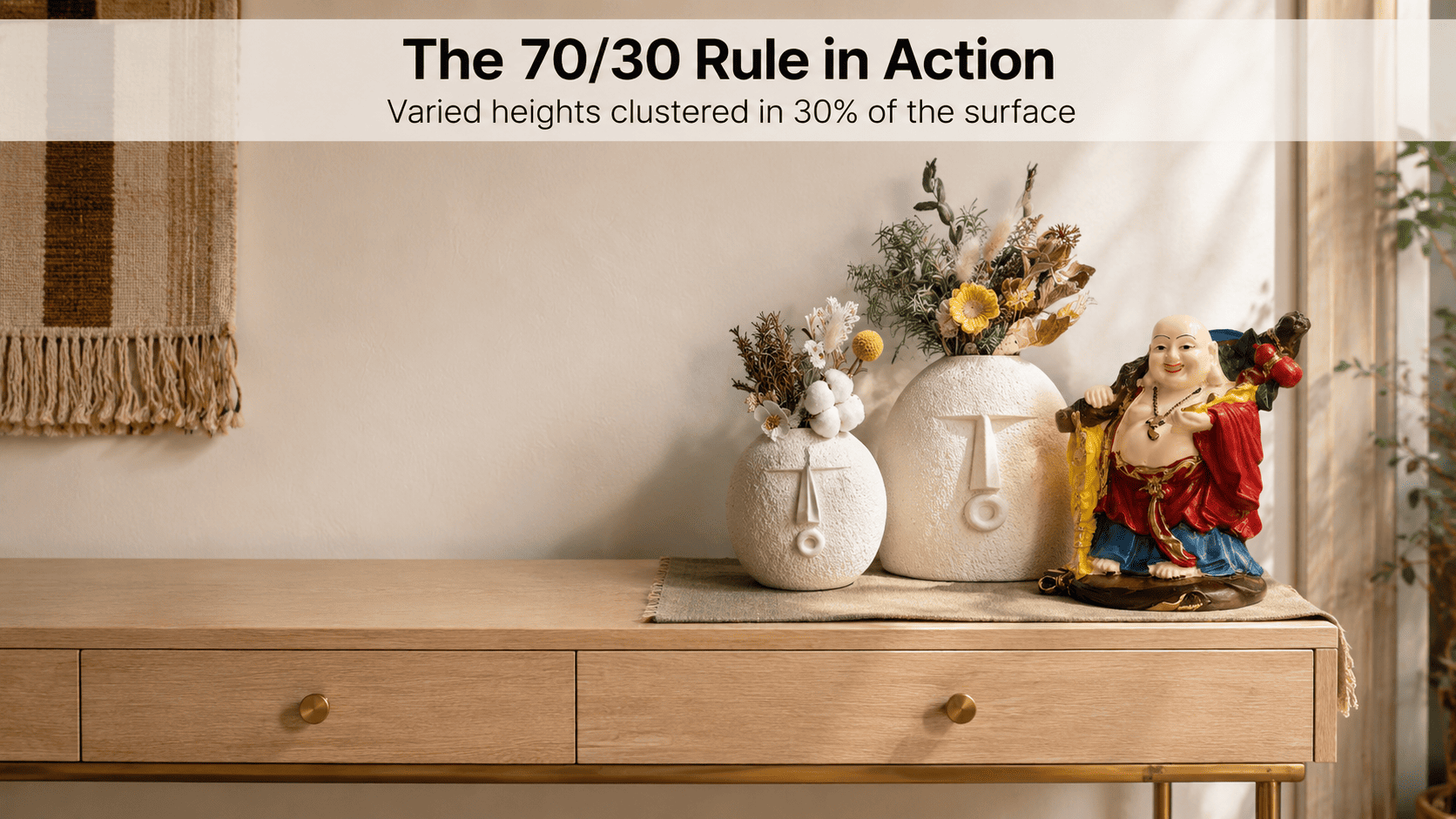
When styling any zone-marking surface in an open floor plan, apply Moolwan's 70/30 Spatial Breathing Rule: leave 70% of the console or sideboard's horizontal surface entirely clear, and cluster all décor within the remaining 30%, because an evenly-filled surface reads as storage rather than as a deliberate boundary, while a concentrated cluster against open space reads as an intentional marker.
How many zone markers does one open-plan room actually need?
Most open-plan Indian living rooms need exactly two to three zone markers, not one per function, because a fourth or fifth marker in a single sightline begins to compete for visual attention and collapses the "boundary" effect back into clutter.
The ROI logic favors fewer, better-chosen pieces over many small ones: a single well-scaled grouping that lasts years under daily handling costs less over time than repeatedly replacing several small, fragile pieces that chip or fade. Moolwan's ceramic collection is rated to a 5+ year indoor lifespan at 92% clay composition specifically so that a zone-marking investment doesn't need re-purchasing every season, which is the core durability argument behind paying for a manufacturer-direct piece instead of a disposable market stall option.
Want a grouping engineered to anchor a zone for 5+ years without fading or chipping under daily handling? Shop the full Moolwan living room décor collection now.
Where exactly should each zone marker sit in the room?
Each zone marker should sit at the literal point where one function's furniture footprint ends and the next begins, typically the back of a sofa, the head of a dining table, or the side of a walkway, because that is the precise location where the eye is already transitioning between activities and most receptive to a visual cue.
Placing a marker mid-zone instead of at the boundary is the most common styling mistake in open layouts: it adds decoration without adding division, since the eye doesn't process an object surrounded by the same function on both sides as a boundary at all. The marker only works as a zoning tool when it sits at the seam.
Frequently Asked Questions
Can a rug alone zone an open living room?
A rug alone is insufficient because it only marks the zone boundary at floor level, which is outside a seated or standing person's primary sightline. Pairing a rug with an elevated décor grouping at console height gives the room two reinforcing visual cues instead of one, which is why Moolwan recommends combining both rather than relying on flooring alone.
Does the décor material matter for humid Indian living rooms?
Yes, because open-plan living rooms in coastal and monsoon-prone Indian cities regularly experience humidity swings up to 85% relative humidity, which causes untreated materials to warp or develop surface mold over a few seasons. Moolwan's ceramic and resin collections are rated to 85% RH and 60% RH tolerance respectively, so the zone marker stays structurally stable year-round.
Should every zone marker match the same finish?
Zone markers don't need to match in finish, but they should stay within one palette family (warm earth, neutral, or muted tones), because a shared palette lets the brain group multiple markers as "part of the same zoning system" even when placed in different parts of the room, while clashing palettes register as unrelated decoration.
How heavy should a console-top zone marker be?
A console-top zone marker in the medium range should weigh roughly 250–400 g, light enough to reposition during cleaning or rearranging but heavy enough that normal foot traffic vibration in the room doesn't shift its position over time.
Choosing the right décor scale for an open-plan room comes down to matching weight, height, and material tolerance to your specific floor plate, not guesswork. If your living room leans toward a contemporary palette, also consider the curated pieces in Moolwan's contemporary living room collection, and if your space blends traditional Indian elements, the Moolwan traditional living room collection is built for that aesthetic. Ready to mark your zones with pieces engineered to last 5+ years in Indian conditions? Bring home a curated grouping from the Moolwan living room décor collection today.


