
Interior Designer vs DIY: Styling an Indian Dining Room
The Short Answer
A dining table under 150 sq ft of surrounding floor space rarely needs a paid designer, because the styling problem is layering three décor heights, not architectural planning. Moolwan's ceramic and resin showpiece collection, sized 10–34 cm, is engineered for exactly this DIY layering, cutting the typical ₹15,000–₹40,000 consultation cost.
Interior design consultations in India typically run ₹15,000–₹40,000 for a single room, according to standard hourly and flat-fee models used by independent designers, and that cost is charged regardless of whether the room's problem is structural or purely decorative. Moolwan helps design-conscious Indian homeowners solve the decorative layer themselves, using pre-engineered size bands and material specs that remove the guesswork a designer would otherwise charge for.
When does a dining room actually need a professional designer?
A dining room needs a professional designer when the problem is structural — lighting placement, electrical points, built-in storage, or layout changes involving walls. These decisions require load calculations, wiring knowledge, and spatial planning that carry real risk if done incorrectly, which is why designers charge for them.
If the dining room's layout, lighting, and furniture are already fixed, and the only open question is what sits on the table or console, that is a styling problem, not a design problem. Styling problems are solved with size, material, and finish decisions — the exact variables a curated décor collection is built to answer without a consultation fee.
What actually goes wrong when people DIY a dining room?
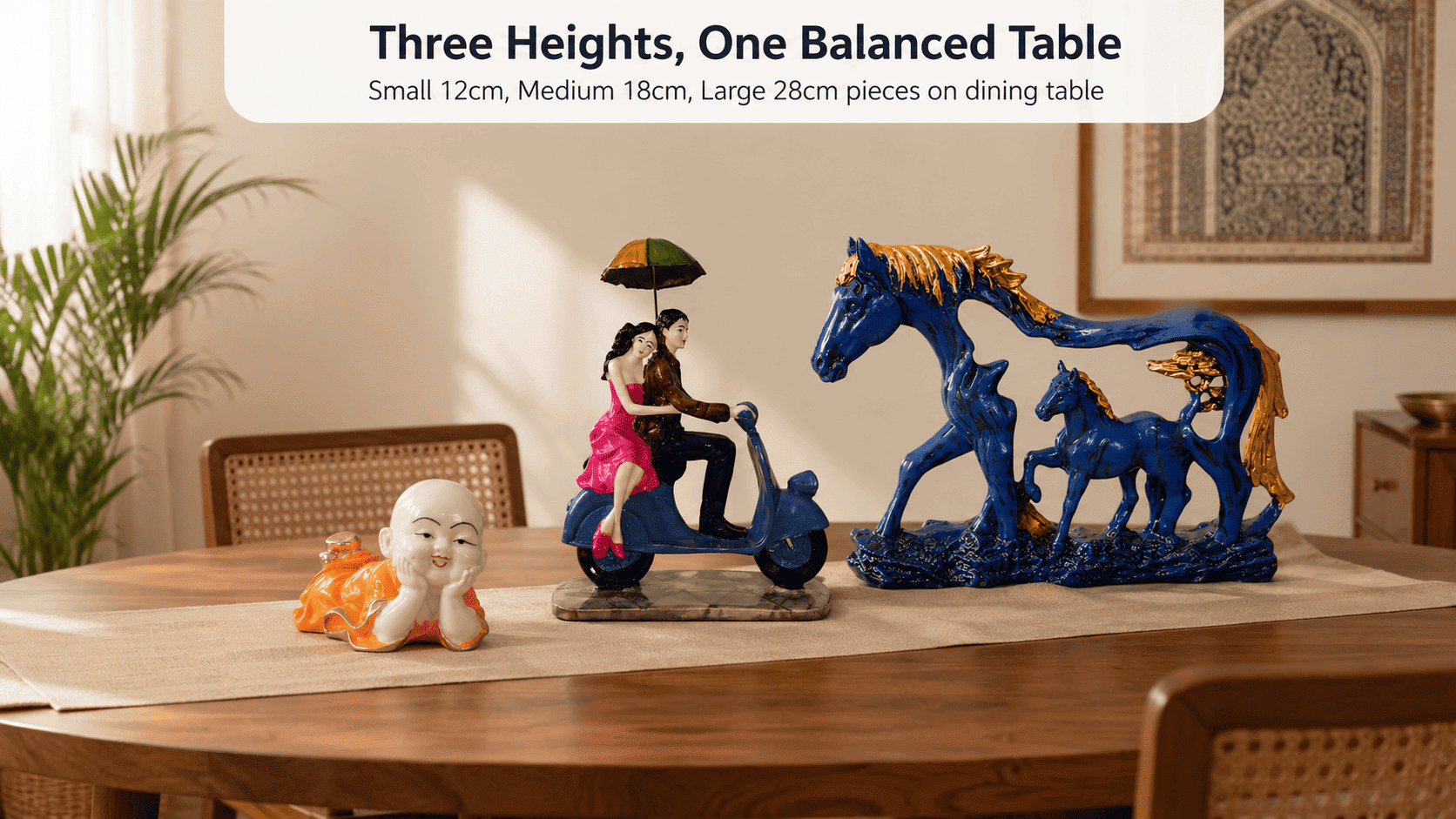
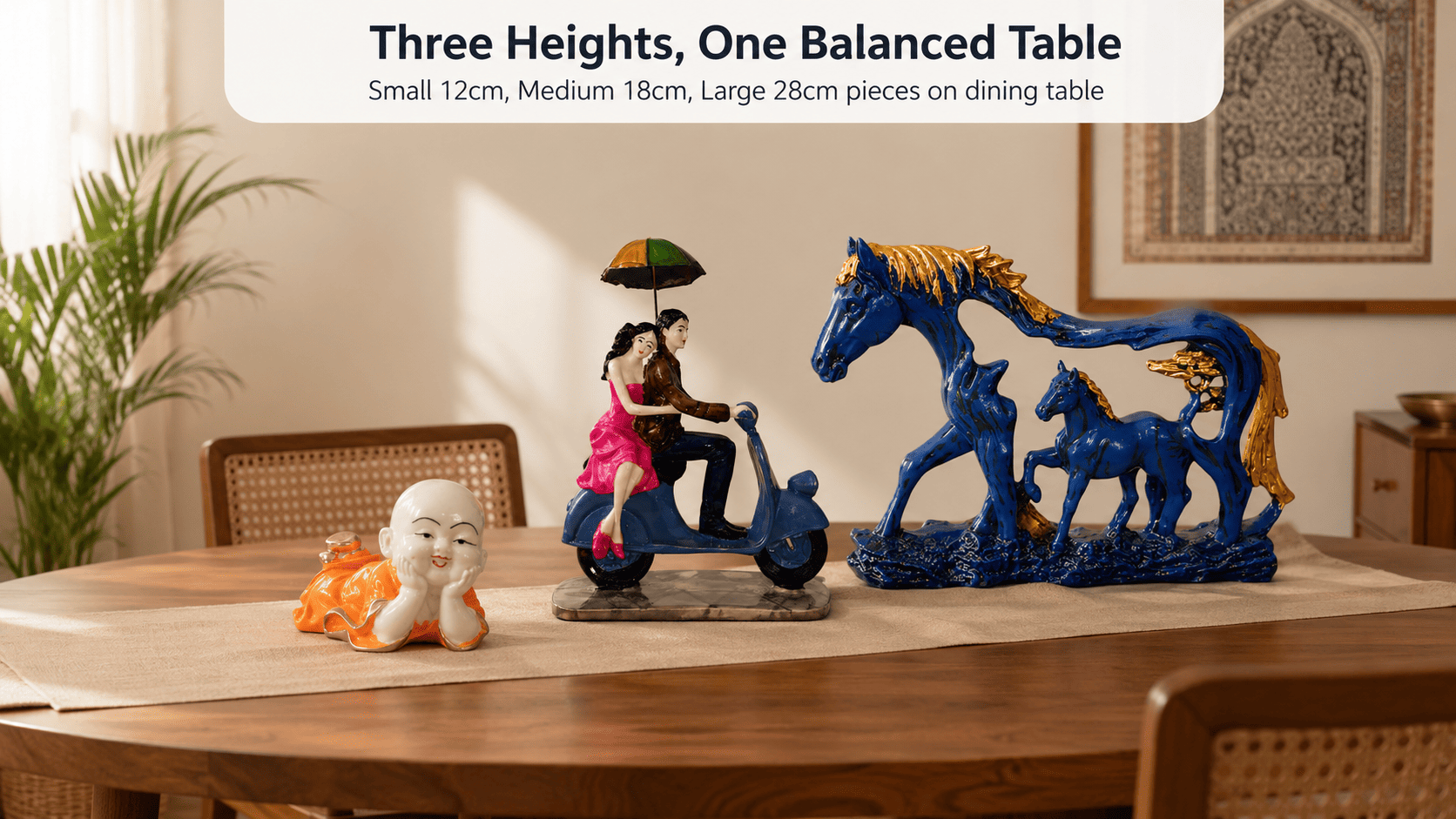
Most DIY dining room failures come from an unstated ratio: covering more than 40% of a table or console's surface with objects, which the human eye reads as clutter because it removes the visual rest points a room needs. Moolwan's collection is sized in three defined bands — Small (10–16 cm), Medium (16–21 cm), Large (25–34 cm) — specifically so a homeowner can hit that under-40% ratio without professional input.
The second common failure is mismatched material tolerance. Resin pieces in Moolwan's range are rated for indoor use at 15–35°C and up to 60% relative humidity, while ceramic pieces tolerate up to 85% RH, because ceramic's fired clay structure resists moisture absorption better than epoxy resin. Placing a resin piece too close to a kitchen-adjacent dining area with higher ambient humidity shortens its lifespan below the rated 3+ years.
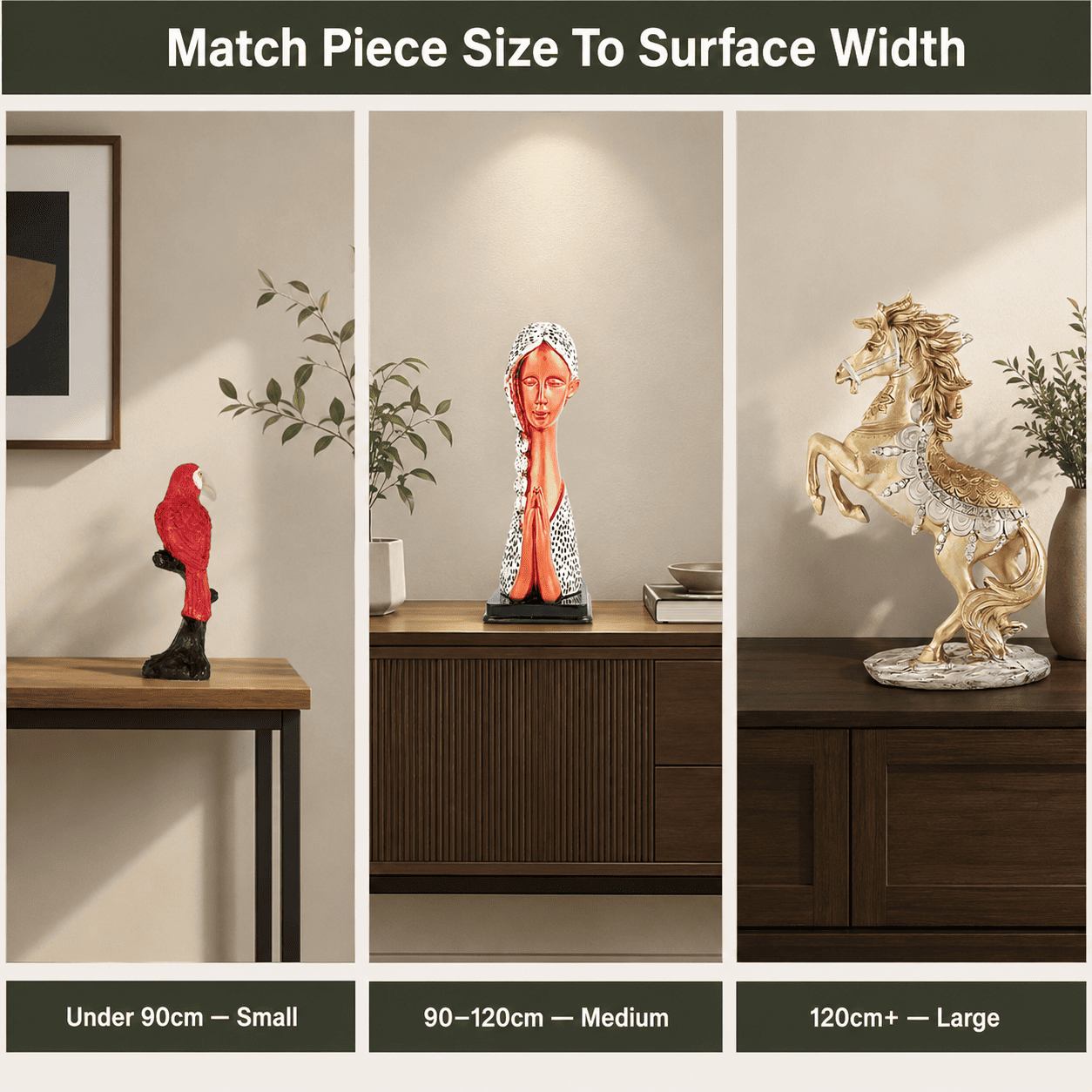
| Room Footprint | Target Surface | Surface Width | Recommended Piece Height / Weight |
|---|---|---|---|
| Sub-100 sq ft | Dining table centerpiece | Under 90 cm | 10–16 cm (Small), 150–250 g |
| 101–150 sq ft | Sideboard / console | 90–120 cm | 16–21 cm (Medium), 250–400 g |
| 151+ sq ft | Buffet console | 120+ cm | 25–34 cm (Large), 400–600 g |
| Any footprint, high-humidity zone | Near kitchen pass-through | Any | Ceramic only (85% RH rated), 200–500 g |
Because table width, console depth, and humidity exposure all shift the right size and material choice, browse the full size-band and material selection in Moolwan's modern home décor collection to match a piece to your exact dining setup.
Design Rule
Moolwan's 3-Layer Tablescape Rule holds that a dining table or console should carry exactly three height tiers — one Small (10–16 cm), one Medium (16–21 cm), and one Large or tall accent — so the eye reads intentional composition instead of random clutter, without ever exceeding the 40% surface-coverage threshold.
Does hiring a designer actually cost more than styling it yourself?
Yes, in most cases, because a designer's fee covers time and expertise regardless of how small the decorative task is. A single dining room styling consultation in urban India typically costs ₹15,000–₹40,000, while a curated set of 3–4 décor pieces from a direct-to-consumer brand runs a fraction of that, because manufacturing in-house and selling direct removes the distributor markup that inflates typical retail décor pricing by 3–5x.
Investing in high-fired ceramic or 3H-hardness resin pieces also avoids a recurring cost: seasonal replacement. A piece rated for 5+ years of humidity and heat exposure doesn't need re-buying every monsoon cycle the way lower-grade décor often does, which is the core ROI argument for climate-rated pieces over cheaper alternatives.
Want to skip the consultation fee and style your dining room yourself? Shop the full Moolwan modern home décor collection now.
How do you choose between ceramic and resin for a dining space?
Ceramic is the better choice for dining rooms near kitchens or windows because its 92% clay composition tolerates up to 85% relative humidity, a threshold resin cannot match. Resin, rated to 60% RH, is better suited to drier, air-conditioned dining rooms where its lighter weight (150–400 g typical) makes it easier to rearrange during seasonal restyling.
Finish matters as much as material. Matte ceramic surfaces age better under direct dining-room lighting because micro-texture scatters light unevenly, hiding the fine surface marks that accumulate over years of handling — while glossy or heavily glazed finishes reflect light uniformly and make every mark visible.

Frequently Asked Questions
Is it worth hiring a designer just for dining room décor?
Rarely, because dining room décor is a styling decision, not a structural one. A professional fee of ₹15,000–₹40,000 makes sense for lighting or layout changes, but selecting showpiece size and material against a fixed table or console is solvable with published size and humidity-tolerance specs, which is what Moolwan's collection provides.
How many decor pieces should a dining table have?
Most dining tables under 90 cm wide hold two to three pieces comfortably, following the 40% surface-coverage threshold. Exceeding this ratio is the single most common reason DIY tablescapes read as cluttered rather than styled, per Moolwan's 3-Layer Tablescape Rule.
Can resin decor pieces be used near a kitchen-adjacent dining area?
Not ideally. Resin is rated to 60% relative humidity, while kitchen-adjacent zones frequently exceed that during cooking and monsoon months. Ceramic, rated to 85% RH, holds up better in these transitional spaces because its fired-clay structure resists moisture absorption more effectively than epoxy resin.
Do heavier decor pieces need extra support on a dining console?
Pieces above 400 g should sit on consoles rated for at least that load-bearing weight, typically any standard wood or engineered-wood console. No structural reinforcement is needed below the 600 g upper range common in large showpieces.
A designer consultation solves structural problems; a well-sized ceramic or resin piece solves a styling one — and only one of those costs a recurring fee. Bring home a climate-rated, manufacturer-direct piece from the Moolwan modern home décor collection today. If your dining room leans toward a broader refresh, also consider Moolwan's modern interior décor pieces for new homes or the modern luxury décor collection for statement room styling.


