
Krishna-Kissed Framed Wall Art That'll Have Your Walls Chanting Om!
You may also like

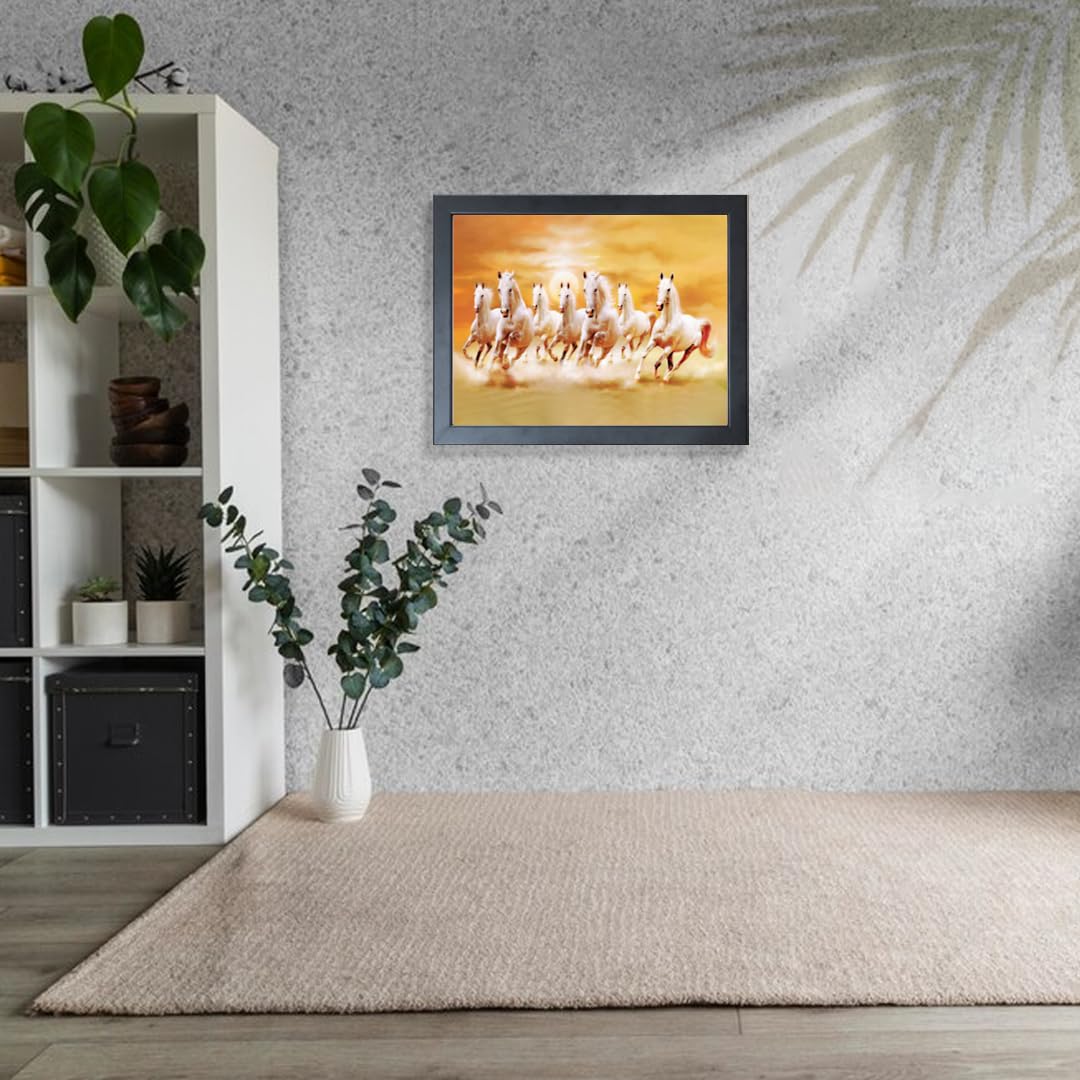
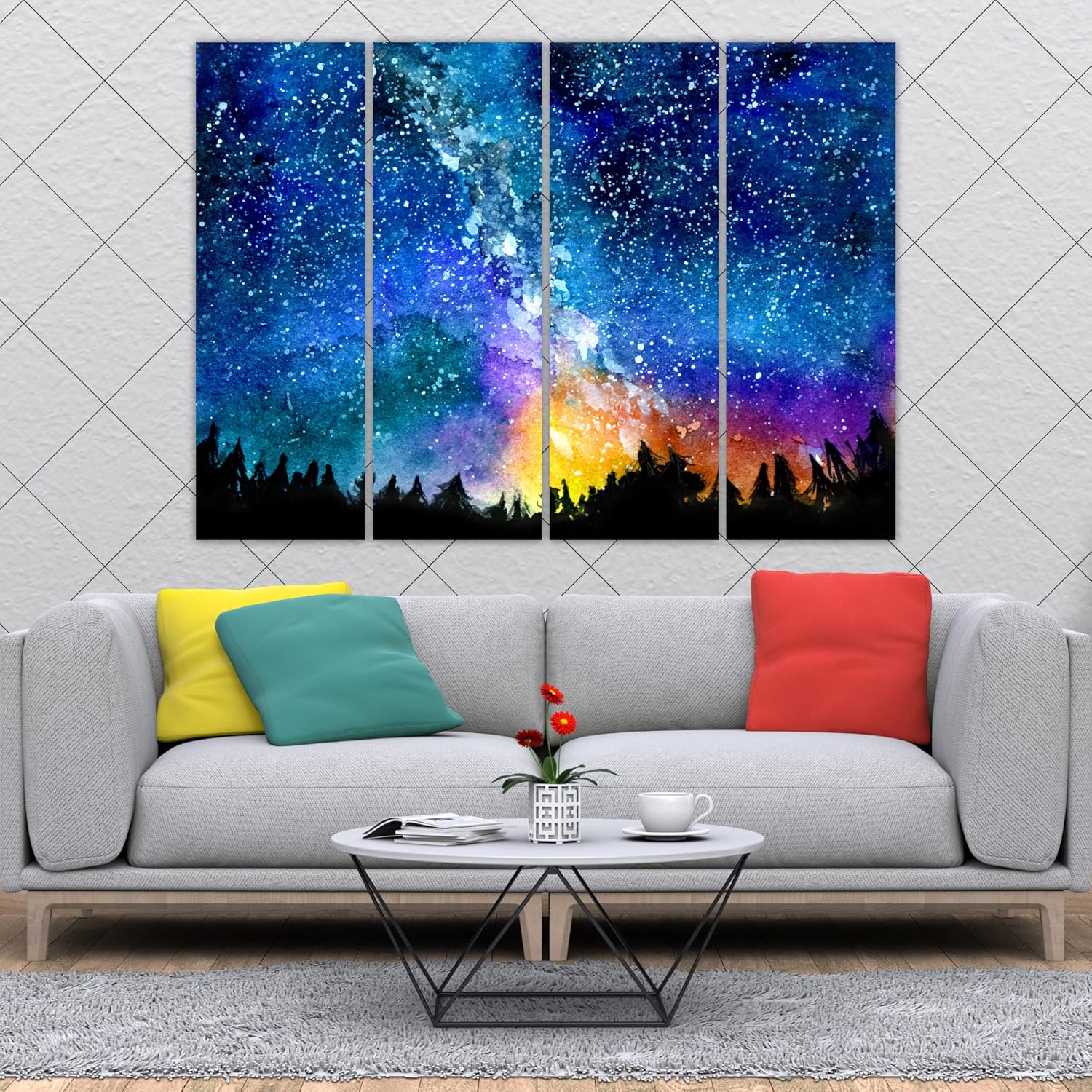
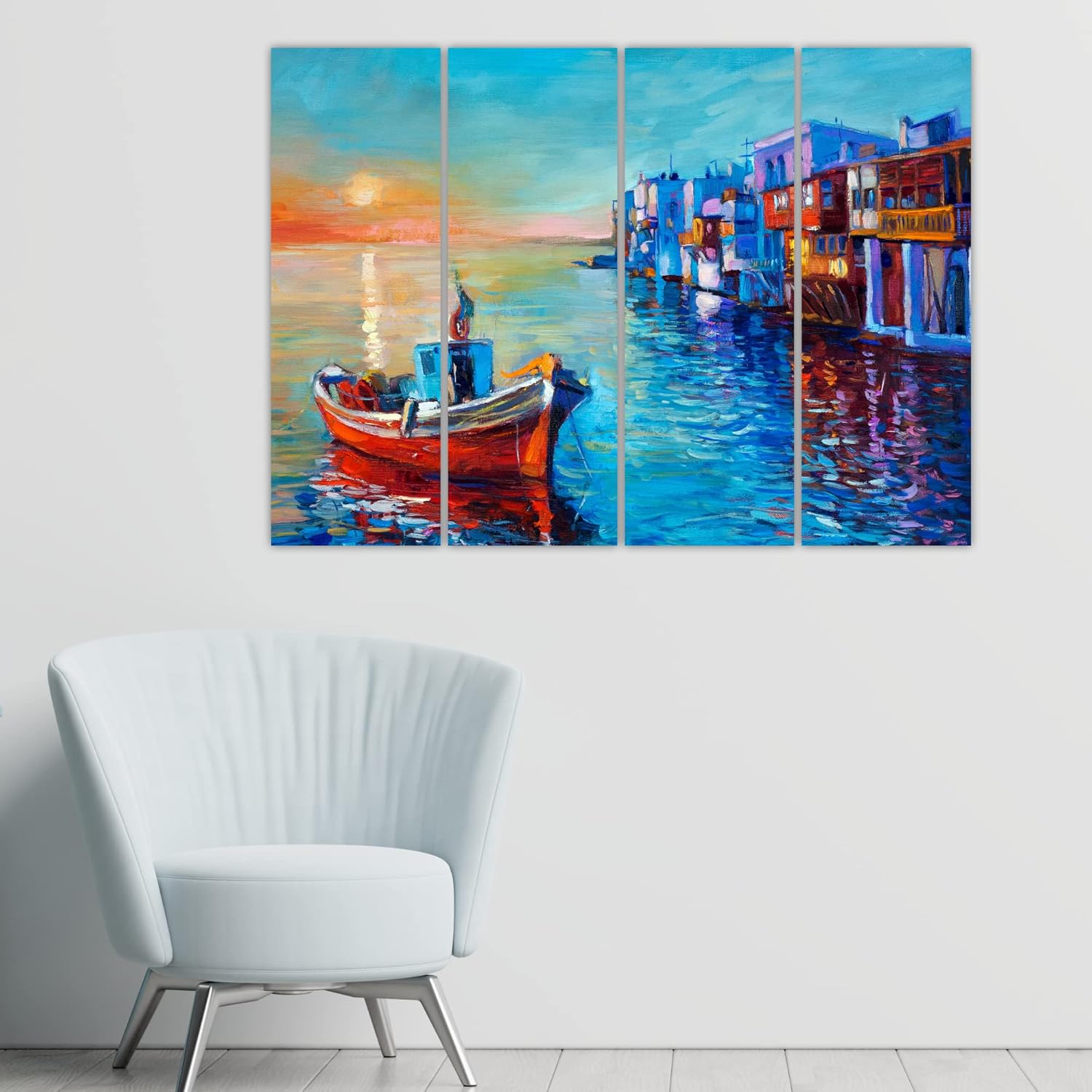

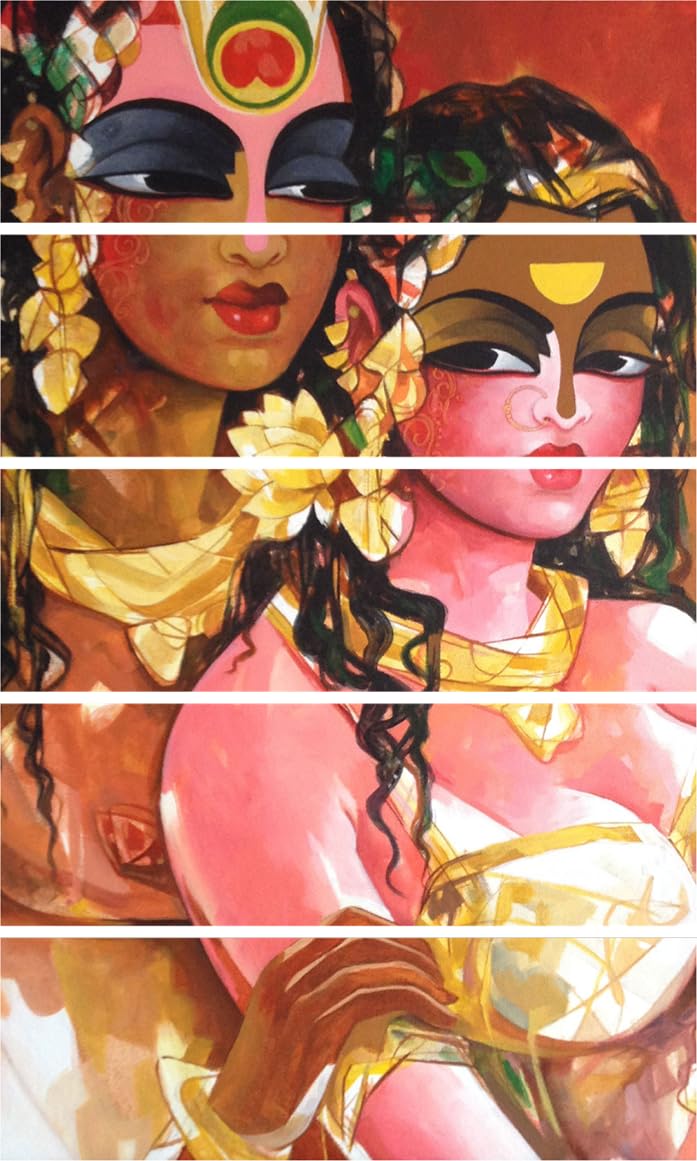
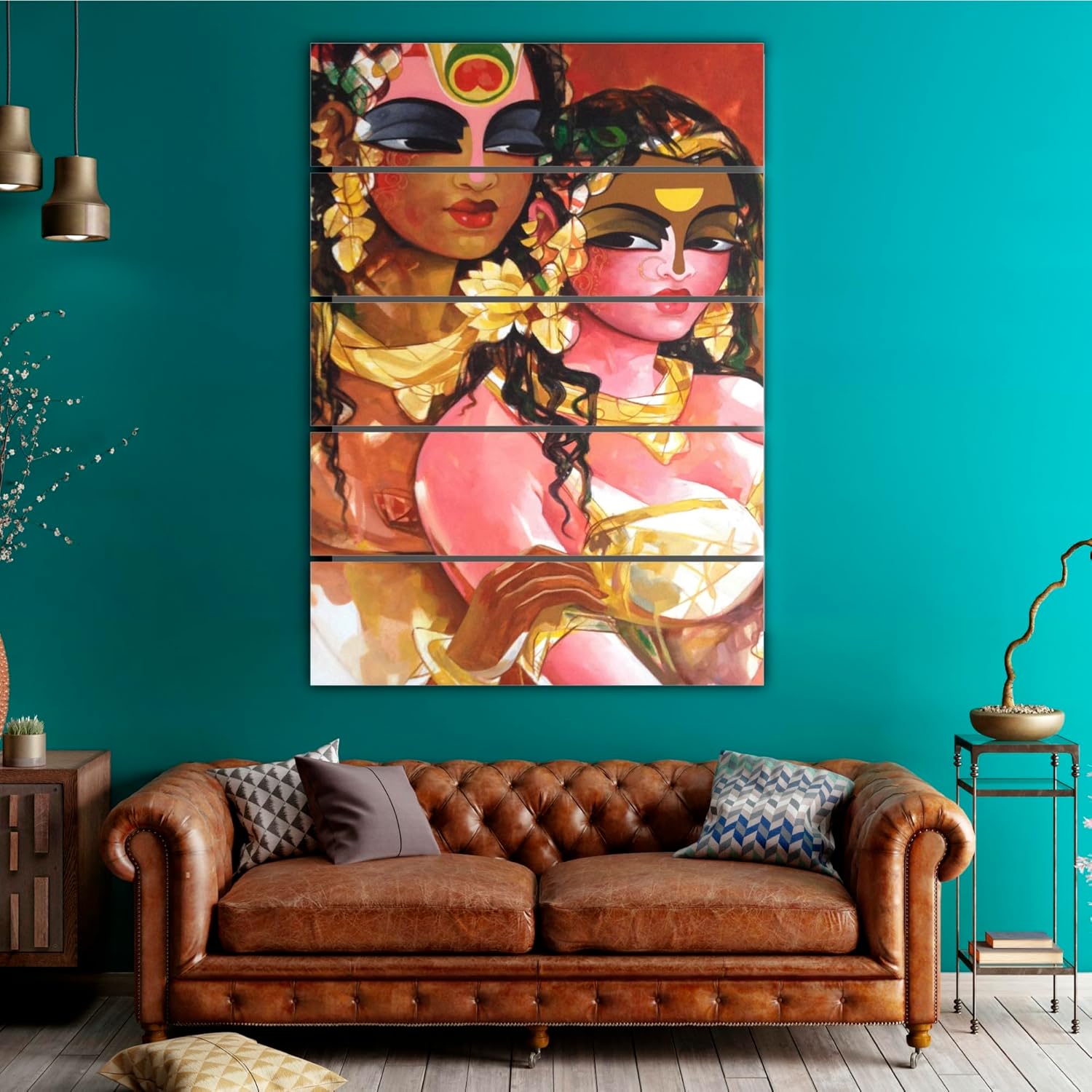
Moolwan 5-Panel Radha-Krishna Canvas Wall Art Painting (127x76cm) - Divine Multi-Frame Decor
Three weekends of browsing. Eight saved items. Twelve open tabs. And you're still here because every time you get close to buying, the same question stops you: will 127cm look proportional on your pooja room wall, or will it feel awkward when your family walks in for morning prayers? You're not indecisive—you're careful. Because once this is beside your tulsi plant or above your living room console, you'll see it daily during aarti, when guests visit, when you sit for evening chai. It needs to be right.
Here's the clarity you need: 127cm spans roughly 35% of a standard 12-foot (360cm) Indian living room wall. That leaves 116cm on each side—enough breathing room that it doesn't crowd doorways or window frames, but substantial enough that people notice the divine imagery of Radha and Krishna from across the room. If your wall is 10 feet (300cm), this takes up 42%—still balanced, leaning toward statement piece. On an 8-foot pooja room wall (240cm), it's 53%—dominant but intentionally devotional, which might be exactly what you want for a sacred space.
The 76cm height matters as much as width. Hang the center panel at 150cm from the floor (eye level for most people), and the top edge sits at 188cm—well below a 10-foot ceiling, leaving proportional space above. If you have the common 8-foot ceiling (240cm), there's still 52cm clearance, which prevents that "too close to the ceiling" compression. The 5-panel horizontal split means each section is about 25cm wide, creating visual rhythm without overwhelming smaller walls—this isn't a single massive rectangle, it's a composed narrative.
Why 127cm Works on 12-Foot Walls (and What Happens If You Go Smaller or Bigger)
Let's do the visual math your brain is trying to solve. Your living room wall is probably 12 feet (360cm) wide, with maybe a 7-8 foot sofa underneath or a console table at waist height. A 127cm canvas centered on that wall creates this layout:
- Left empty space: 116cm (about 3.8 feet)
- Canvas width: 127cm (4.2 feet)
- Right empty space: 116cm (3.8 feet)
That's 35% coverage—the furniture-to-art ratio designers call "balanced anchor." The canvas doesn't fight your sofa for attention, but it's unmistakably the focal point. Compare this to a 100cm option (28% coverage): it would feel tentative, like you were afraid to commit. A 150cm piece (42% coverage) starts competing with furniture width and can make the wall feel crowded if you have side tables or a tall diya stand.
If your wall is 10 feet (common in 2BHK flats), 127cm becomes 42% coverage—still proportional, just more prominent. On an 8-foot pooja room wall (240cm), it's 53% coverage, which works devotionally because pooja spaces are meant to feel immersive. The 5-panel design helps here: instead of one large block, the separated panels create breathing room even at higher coverage percentages.
The 76cm height is calculated for standard furniture. If your console table is 75cm tall (typical), the bottom edge of the canvas sits 74cm from the floor when hung at eye level—just 1cm gap. If you have a sofa back at 85cm height, there's 11cm clearance, which reads as intentional rather than accidental. This isn't random sizing—it's designed around the 75-90cm furniture height range that 70% of Indian homes use.
Why Pink, Gold, and Bronze Work in Indian Living Rooms (Not Just Online Photos)
You've probably been staring at these colors on your screen, trying to imagine them against your cream walls. Here's what actually happens: the pink tones in Radha's figure aren't bubblegum bright—they're dusty rose with terracotta undertones, which is why they don't clash with the builder's peach or light yellow walls common in Indian apartments. Against cream walls (the most common), the pink reads warm but not loud. In morning sunlight, it looks softer, almost blush. Under evening LED (4000K cool white), it holds its color without going neon.
The golden yellows in the jewelry and clothing are amber-toned, not lemon. This matters because cold yellows fight with warm wood furniture, but amber golds harmonize. If you have brown teak or sheesham wood—the 6-foot TV unit, the carved pooja shelf—the gold in this canvas echoes that warmth. The bronze finish on the frame (that aged copper look) ties everything together. It's not shiny brass, which can look garish. It's matte metallic, which reads as intentional décor rather than devotional kitsch.
The orange-red background isn't fire-engine red—it's a burnt sienna that actually works as a neutral in Indian color schemes. Think terracotta pots, Rajasthani textiles, the rust in your mother's old silk sarees. This red provides contrast without visual aggression. If your walls are off-white, the red makes the canvas pop without overwhelming the space. If your walls are light yellow, the red creates complementary warmth.
Here's the lighting reality: in north-facing rooms with indirect light, the colors appear 10-15% softer than online photos. In south-facing rooms with direct afternoon sun, they're 10% more saturated for 2-3 hours daily. Under tube lights (5000K), the gold looks more silver-ish—this is why LED warm white (3000K) is recommended for pooja/living rooms with artwork.
Installation Takes 15 Minutes (Even If You're Not Handy)
The 3kg weight is split across 5 panels—about 600g each. You're not mounting a single heavy slab; you're hanging 5 lightweight pieces. The frame comes with pre-installed D-hooks on the back. You need:
- 5 nails (provided, or use your own 2-inch nails)
- A hammer
- A measuring tape
- A pencil (for light wall marks)
- A level (phone app works fine)
Process: Find your wall's center point. Measure 150cm from the floor, mark lightly with pencil. That's where the center panel's hook goes. Hammer in the nail at a 45-degree angle (tilted up). Hang center panel. Measure 26cm left and right from center panel edges (1cm gap between panels). Mark and hammer those nails. Hang side panels. Repeat for outermost panels, maintaining 1cm gaps. Use phone level to check alignment. Total time: 12-15 minutes.
The nail holes are 2mm diameter. If you're renting and worried about your ₹50,000 deposit, patch them on move-out day with Fevicol MakeGood Wall Putty (₹30 for a tube). Smooth with wet finger, let dry 20 minutes, done. Landlords don't deduct for properly patched nail holes—they deduct for visible damage or drill holes from heavy shelving.
If your wall is brick (pre-1990s construction), nails go in easily. If it's concrete (modern buildings), you might need to tap firmly 4-5 times. If you hit rebar or very hard concrete, shift the nail 2cm up or down. The canvas weight (600g per panel) doesn't require anchors or wall plugs—simple nails hold fine for this load.
How This Compares to 100cm and 150cm Sizes You've Been Considering
You've probably looked at the 100cm and 150cm versions. Here's the honest difference:
100cm (₹2,796):
- Coverage on 12ft wall: 28% (too small for most living rooms)
- Works well for: 8-foot bedroom walls, above narrow consoles
- Problem: Feels apologetic on standard living room walls
- Saves: ₹500-800 vs. 127cm
127cm (₹3,296-₹3,796):
- Coverage on 12ft wall: 35% (balanced for living rooms/pooja rooms)
- Works well for: 10-12 foot walls, standard Indian room proportions
- Goldilocks size: Not too small, not overwhelming
- Price: Mid-range for Moolwan canvas art
150cm (₹4,596):
- Coverage on 12ft wall: 42% (statement piece, needs space)
- Works well for: 14+ foot walls, double-height ceilings, large halls
- Problem: Crowds 10-foot walls, fights with furniture on smaller walls
- Costs: ₹1,300 more than 127cm
If you have an 8-foot wall, the 100cm is proportional. If you have a 14-foot wall, the 150cm makes sense. But for the 10-12 foot walls in most 2BHK/3BHK apartments, 127cm is the intentional choice. It doesn't look like you were being cautious or overcompensating—it looks like you understood your space.
The 5-panel design matters here too. A 127cm single-panel canvas feels heavy. Five panels at 127cm total width feel rhythmic, like a frieze or a visual mantra. When people walk into your pooja room or living room, their eyes move across the narrative—Radha's face, the embrace, the ornaments, the divine symbolism. It's not just decoration; it's storytelling.
What This Will Look Like in Your Living Room (Not Just Online Photos)
The product photo was shot under professional 5000K lighting with color correction. Your room has 3000K warm LED bulbs (probably) and natural light that changes hourly. Here's what to expect:
Morning (7-11 AM, natural light from windows):
- Colors appear 15% lighter and softer
- Pink tones look peachy-blush
- Gold jewelry catches light, appears brighter
- Bronze frame looks copper-ish
Afternoon (12-4 PM, direct sun if south-facing):
- Colors are truest to online photo
- Pink is more saturated
- Red background is richer
- This is "peak color" timing
Evening (6-10 PM, LED bulbs only):
- Under warm white LED: Colors maintain warmth, gold looks amber
- Under cool white LED: Pink appears slightly mauve, gold looks less warm
- Under tube light: Colors flatten slightly, lose 10% vibrancy
During aarti/pooja (with diya/candle light):
- Flickering warm light makes gold ornaments shimmer
- Pink tones glow
- Creates intended devotional ambiance
View from across the room (12 feet away): You see the full composition—both figures, the color harmony, the divine narrative. This is the "guest walking in" view. View from sofa (6-8 feet away): You notice details—the peacock feather crown, Radha's jewelry, the lotus flowers. This is your daily "living with it" view.
The canvas has a slight texture (not glossy) so it doesn't reflect light like glass or acrylic prints. If you have a window opposite the wall, you won't get glare. The colors look consistent from different angles, unlike some metallic prints that shift.
One realistic note: The bronze frame will show fingerprints if touched during installation. Wipe with a dry microfiber cloth. The canvas itself is moisture-resistant coated (340 GSM cotton, standard for Moolwan), but avoid hanging in direct monsoon splash zones or areas with active kitchen steam. Normal humidity (70-80% during monsoons) won't affect it.
Quick Specifications
• Dimensions: 127cm (W) x 76cm (H) x 0.6cm (D)
• Weight: 3000g (3kg total, ~600g per panel)
• Panel Count: 5-panel multi-frame design
• Material: 340 GSM cotton canvas, eco-solvent UV-resistant inks
• Frame: 1.5" kiln-dried pinewood with bronze finish
• Subject: Radha-Krishna divine composition
• Colors: Pink, golden yellow, orange-red, bronze, cream
• Best For: 10-12 ft living room walls, pooja rooms, devotional spaces
• Price Range: ₹2,796 - ₹4,596 (varies by retailer/offers)
• Delivery: 5-6 days metro cities, 6-8 days tier-2/tier-3
• Installation: Pre-installed D-hooks, requires 5 nails
• Mounting: Rental-friendly (2mm nail holes, easily patchable)
• Warranty: Standard Moolwan canvas quality assurance
• Climate: Humidity-resistant coating, 5°C-45°C safe range