
Living Room Decor Styles Compared: Which Fits Your Taste and Space
The Short Answer
Most Indian living rooms under 200 sq ft suit minimalist or modern decor because dense styles visually shrink small rooms by overloading sightlines. Moolwan recommends medium ceramic or resin showpieces (16–21cm) in matte finishes for compact spaces, reserving larger statement pieces and eclectic clusters for living rooms above 200 sq ft.
Interior research consistently links perceived room size to the ratio of open surface to decorated surface, not to actual square footage. Moolwan helps design-conscious Indian homeowners match a decor style to their room's real dimensions rather than to trends that were photographed in much larger Western living rooms. A 150 sq ft Bangalore or Mumbai living room styled like a 400 sq ft Pinterest reference will read as cluttered regardless of how tasteful the individual pieces are.
What are the main living room decor styles to choose from?
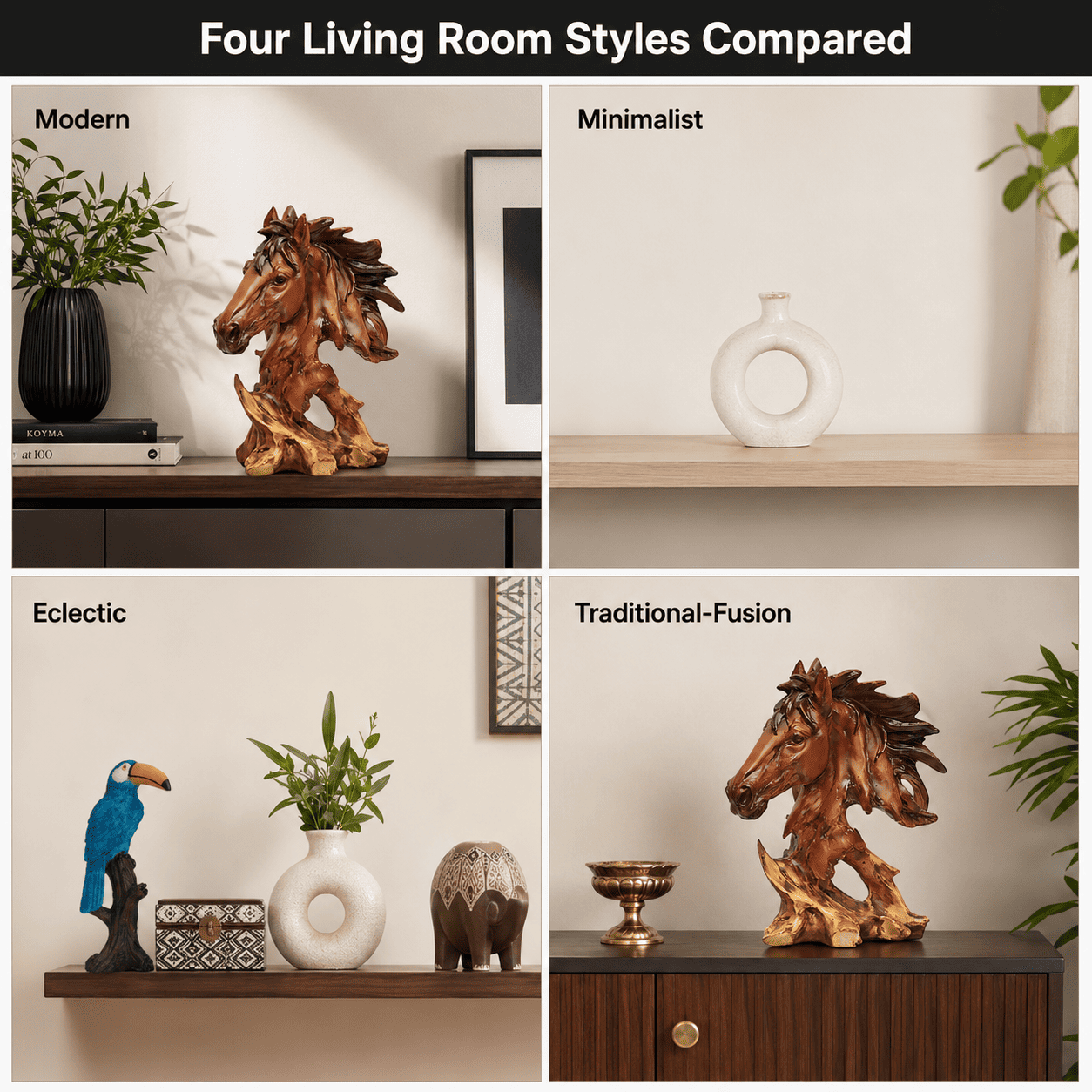
The four styles most relevant to Indian homes are modern, minimalist, eclectic, and traditional-fusion. Each style is defined less by its objects and more by a ratio: how much surface stays empty, how many materials repeat, and how strongly color contrasts against the wall.
Modern decor uses a restricted palette of two to three tones and geometric or abstract forms, because limiting color variance reduces visual noise and lets architectural lines (window frames, shelf edges) read clearly. Minimalist decor pushes this further, keeping 70% or more of any surface empty, since unbroken negative space is what the eye reads as calm. Eclectic decor intentionally mixes textures, eras, and materials in clusters, which works because grouped variety reads as curated rather than messy once items share a common color thread. Traditional-fusion decor blends Indian motifs — brass tones, warm earth glazes, botanical or devotional forms — with modern silhouettes, balancing cultural familiarity against a contemporary, uncluttered base.
How do you pick a style based on room size and light?
Room footprint and natural light exposure should decide the style before personal taste does. Indian apartments under 1,200 sq ft typically allocate 120–200 sq ft to the living room, and at that scale, busy eclectic clustering across every surface competes with furniture for visual attention rather than complementing it.
Rooms with strong, direct sunlight exposure — common on south and west-facing Indian apartments — benefit from matte finishes over glossy ones. Matte surfaces diffuse harsh light because their micro-texture scatters reflection across multiple angles, while glossy ceramic or resin surfaces concentrate glare into a single hot spot that draws the eye away from the room's actual focal point. For ROI, a matte-finish piece also resists showing UV-related surface dulling for longer, which matters because Indian sunlight is more intense and more direct for more months of the year than the European interiors many decor trends originate from.
| Living Room Footprint | Recommended Style | Décor Height Range | Weight Range |
|---|---|---|---|
| Sub-120 sq ft | Minimalist | 10–16 cm (Small) | 150–250 g |
| 121–180 sq ft | Modern | 16–21 cm (Medium) | 250–400 g |
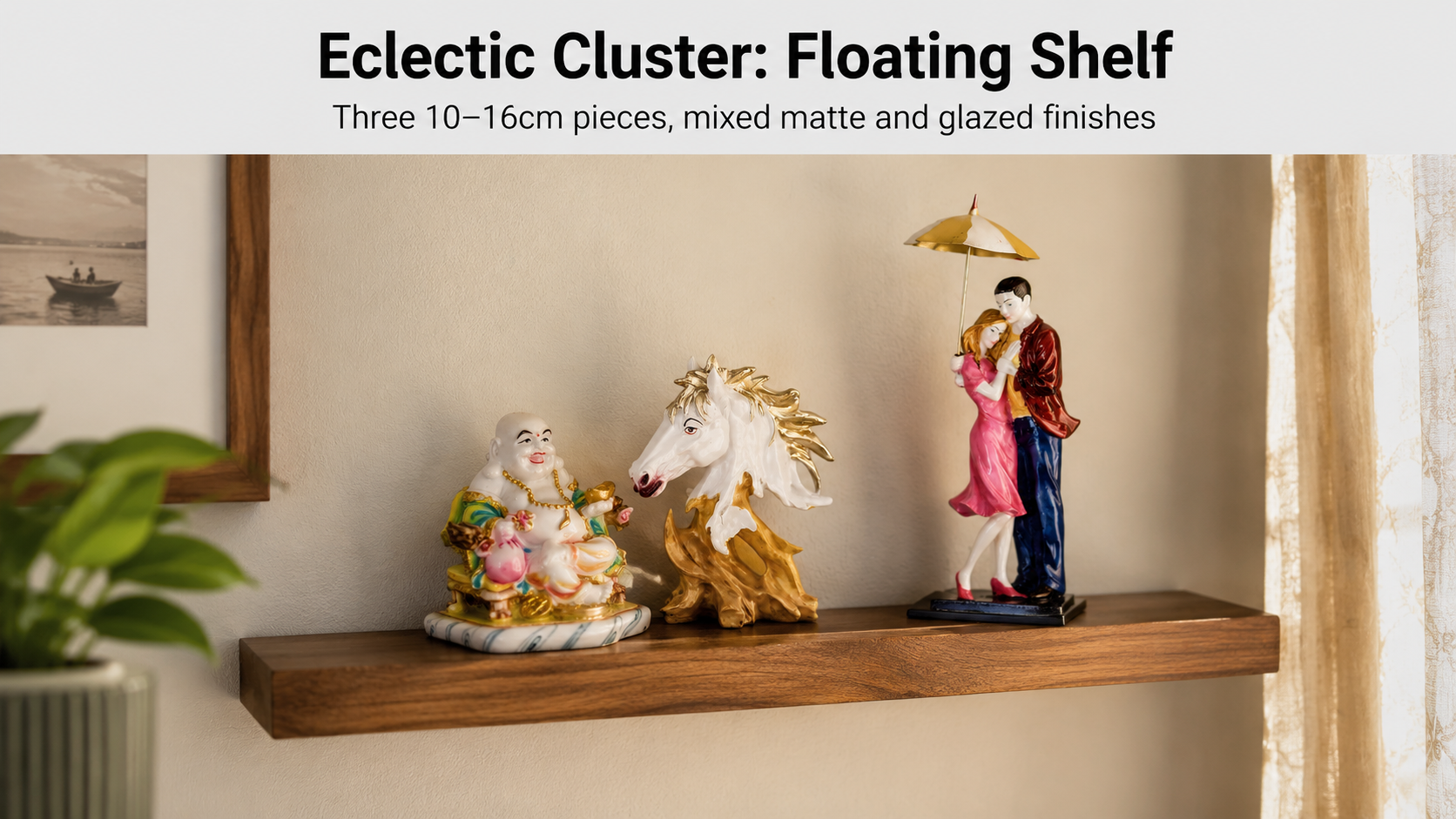
| 181–220 sq ft | Eclectic (clustered) | 10–16 cm × 3 pieces | 150–250 g each |
| 221+ sq ft | Traditional-fusion | 25–34 cm (Large) | 400–600 g |
Because lamp placement, sofa color, and wall length all add further sizing variables beyond room footprint alone, browse the full size and material selection in Moolwan's living room decor collection to match a style to your exact layout.
Design Rule
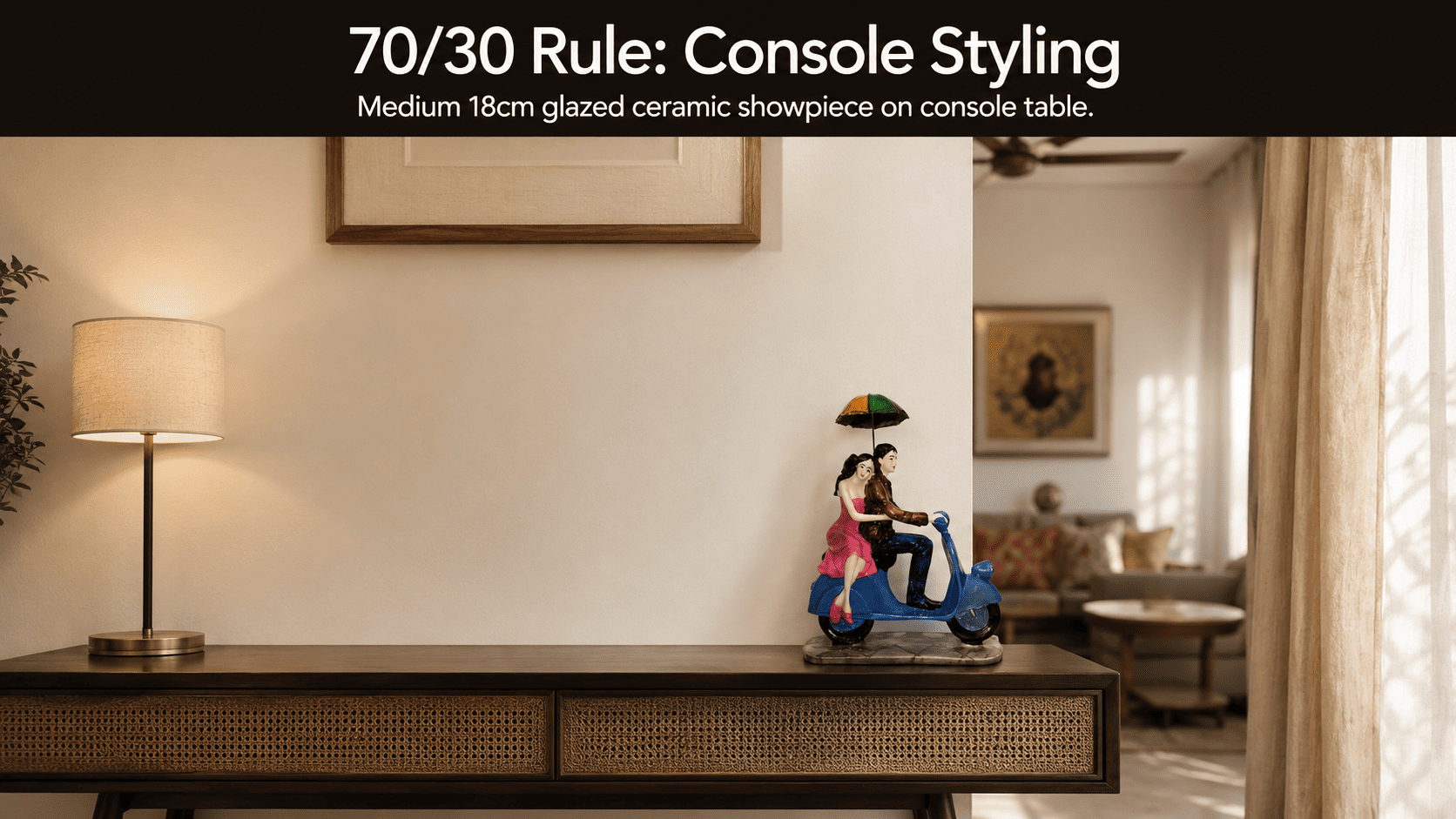
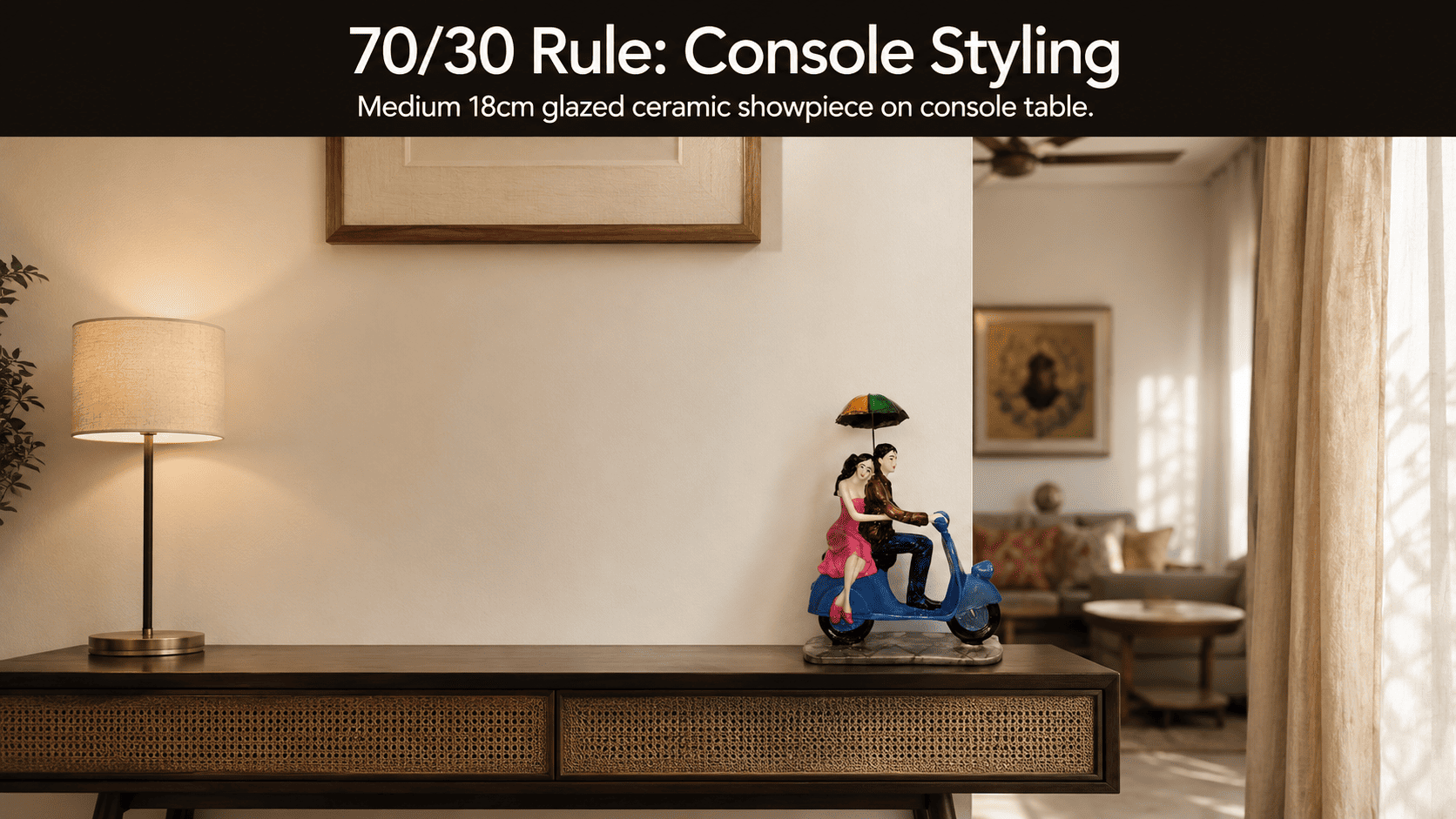
Across all four styles, Moolwan applies the 70/30 Spatial Breathing Rule: 70% of any console, shelf, or side table should stay visibly empty, with decor confined to the remaining 30%, because surfaces styled past this ratio lose their focal point and the room reads as cluttered regardless of style.
Which style gives the best long-term value for Indian homes?
Matte-finished modern and minimalist styles tend to deliver the strongest long-term value because they use fewer pieces of higher durability rather than many cheaper ones that need periodic replacing. A high-fired ceramic piece with 92% clay composition and heat resistance to 60°C survives Indian summers near windows or balconies without the surface stress that causes cracking in lower-grade ceramics, which means homeowners are not replacing pieces every monsoon season.
Want a living room style that actually holds up through Indian summers and monsoons? Shop the full Moolwan living room decor collection now.
Can you mix two living room decor styles together?
Yes, mixing two styles works reliably when one style sets the base palette and the second is limited to a single accent zone. A modern base with one traditional-fusion accent cluster — for instance, a brass-toned vase grouped with two smaller resin pieces on a single shelf — avoids visual conflict because the eye only has to reconcile styles in one location rather than across the entire room.
Frequently Asked Questions
Which living room decor style suits a small Indian apartment best?
Minimalist or modern styles suit apartments under 150 sq ft best, because limiting decor to 1–2 medium pieces per surface preserves the open floor-to-wall sightlines that make small rooms feel larger. Moolwan's matte ceramic and resin pieces in the 16–21cm range are sized specifically for this footprint.
Is eclectic decor harder to maintain than minimalist decor?
Eclectic decor requires more periodic rearranging because clustered groupings shift visual balance as pieces are added or removed, while minimalist decor's single-focal-point approach stays stable with little adjustment. Both can use the same durable materials; the difference is in styling effort, not durability.
Do darker decor finishes work in low-light Indian living rooms?
Darker matte finishes can work in low-light rooms but should be limited to one or two pieces, since dark surfaces absorb rather than reflect available light and excessive use can make an already dim room feel smaller. Pairing one dark matte piece against a lighter, glazed piece balances the effect.
How often should living room decor be refreshed for current trends?
Durable ceramic and resin pieces don't need trend-driven replacement; swapping one or two accent pieces every season is enough to refresh a room because the base style (modern, minimalist, etc.) remains structurally sound for 5+ years under normal indoor conditions.
Choosing the right living room decor style is ultimately a durability decision as much as an aesthetic one — investing in matte, climate-rated pieces means fewer replacements over a 5+ year span, which is the core idea behind Moolwan's modern luxury decor collection for buyers leaning contemporary, and Moolwan's modern-vintage decor collection for buyers leaning traditional-fusion. Ready to choose? Bring home a curated piece from the Moolwan living room decor collection — manufacturer-direct, climate-rated, made for Indian homes.


