
Matte vs Glazed Finish Showpieces for Modern Indian Living Rooms: How to Choose
The Short Answer
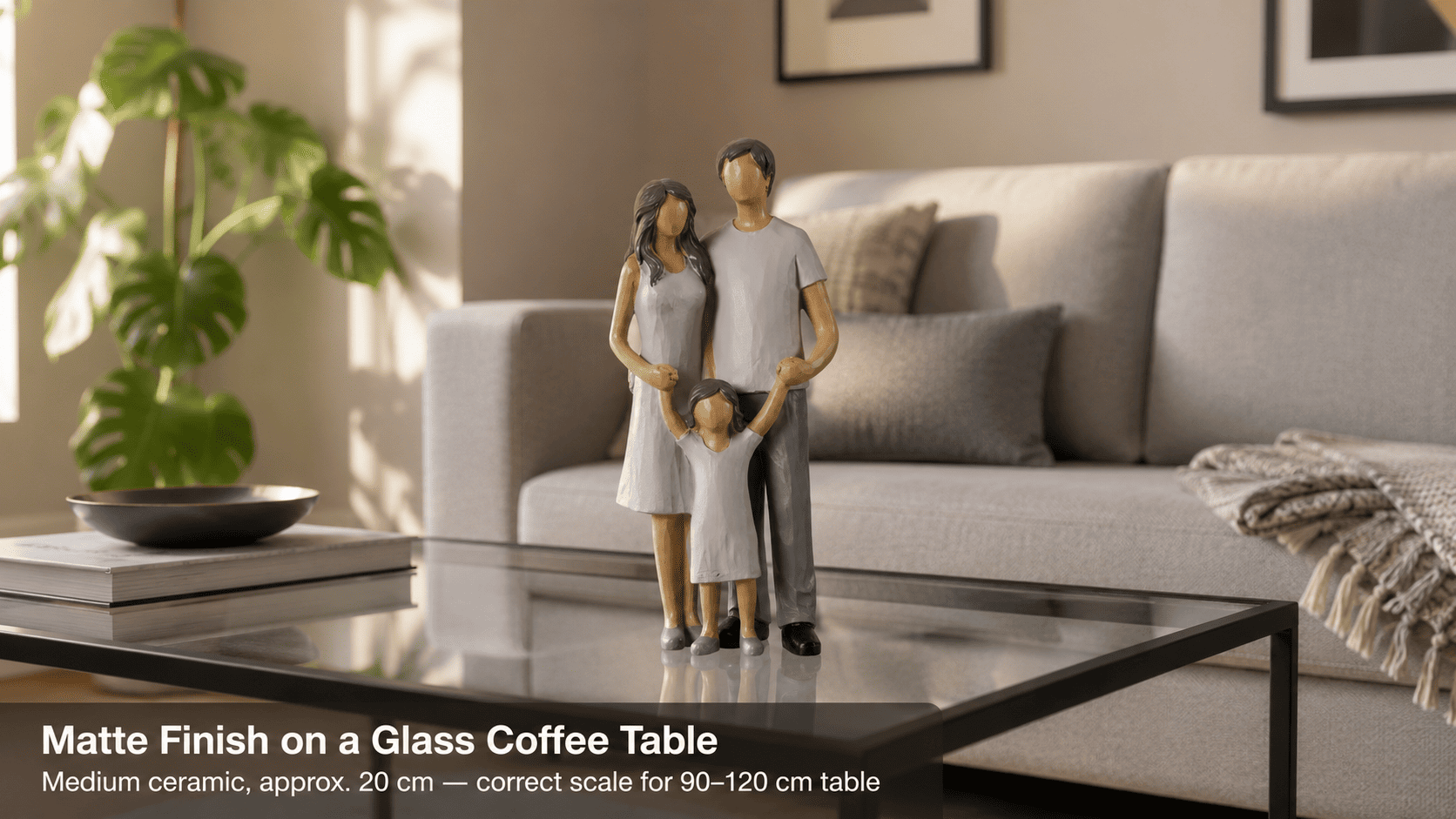
For most modern Indian living rooms under 150 sq ft, a matte finish showpiece in the 16–21 cm (medium) range is the stronger choice. Matte surfaces scatter ambient light at multiple angles, which prevents visual competition with reflective furnishings common in contemporary Indian interiors. Moolwan's ceramic collection is climate-rated to 85% RH — the humidity threshold that causes glazed pieces to accumulate condensation micro-rings on coffee table surfaces during monsoon months.
In a standard Indian urban apartment — typically 900 to 1,200 sq ft with open-plan living areas that receive a mix of direct sunlight and warm artificial light — the finish of a decorative showpiece is not an aesthetic afterthought. It is a functional decision. Moolwan helps design-conscious Indian homeowners choose showpieces that perform visually across lighting conditions, hold their surface integrity through monsoon humidity cycles, and work with — not against — the reflective materials already present in a modern Indian living room. Finish choice, specifically the decision between matte and glazed ceramics, determines whether a showpiece anchors a room or competes with it.
What Is the Visual Difference Between Matte and Glazed Finishes in a Living Room Setting?
Matte finishes absorb and scatter incident light across a micro-textured surface, producing no specular reflection. Glazed finishes, by contrast, carry a smooth vitreous coating that reflects light at a consistent angle, producing a visible highlight point that shifts as the viewer's position changes.
In Indian living rooms — which often combine warm LED downlights, afternoon direct sunlight from west-facing windows, and the sheen of glass-top coffee tables or lacquered TV units — a glazed showpiece introduces a third competing reflective surface. At 3,000–4,000K colour temperature (the standard for warm-white LED panels popular in Indian homes), glazed ceramics reflect an amber tint that can read as a hot spot rather than a design accent. Matte ceramics do not produce this effect because there is no uniform specular surface to concentrate the light source into a single highlight.
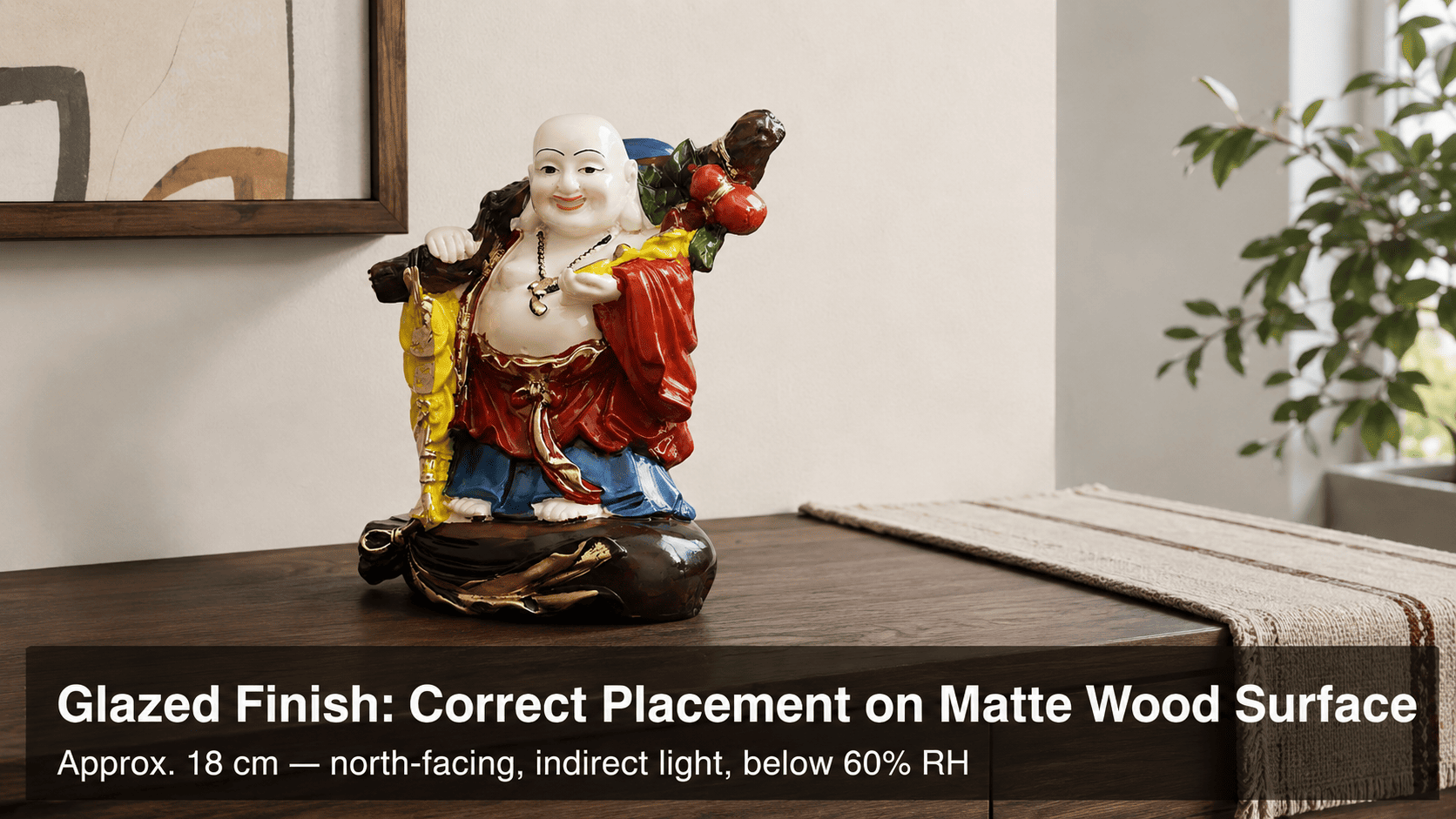
This does not mean glazed finishes are wrong for Indian living rooms — it means their placement must be deliberate. A glazed showpiece on a north-facing console away from direct sunlight will hold its reflective quality as an intentional visual accent. The same piece on a south-facing coffee table during afternoon hours can read as a visual interruption in an otherwise calm composition.
How Does Indian Climate Affect Showpiece Finish Durability Over Time?
At relative humidity levels exceeding 75% RH — a threshold regularly crossed in coastal Indian cities (Mumbai, Chennai, Kochi) during June–September and in humid inland metros during pre-monsoon weeks — the surface behaviour of matte and glazed ceramics diverges substantially.
Glazed surfaces form a non-porous vitreous seal that prevents moisture absorption into the ceramic body. This protects the material but creates a secondary problem: at high ambient humidity, a temperature differential between the ceramic body (cooled by AC airflow in a climate-controlled living room) and the warmer, moisture-laden air causes condensation to deposit on the glazed surface. Over time, repeated condensation-and-drying cycles leave calcium and mineral micro-rings, particularly visible on dark-coloured glazed pieces on glass or polished stone surfaces. Matte surfaces, because of their micro-texture and lower thermal conductivity at the surface layer, do not concentrate condensation in the same way — moisture disperses rather than pooling at a single point.
Moolwan's ceramic collection is engineered to a 92% high-density clay composition with humidity tolerance rated to 85% RH, ensuring the structural integrity of both finishes holds through monsoon cycling. The distinction is in long-term surface appearance rather than structural failure: matte pieces show no visible degradation at year three in Indian conditions; glazed pieces on high-humidity surfaces may require periodic cleaning to maintain their clarity.
Which Surface in Your Living Room Determines the Right Finish Choice?
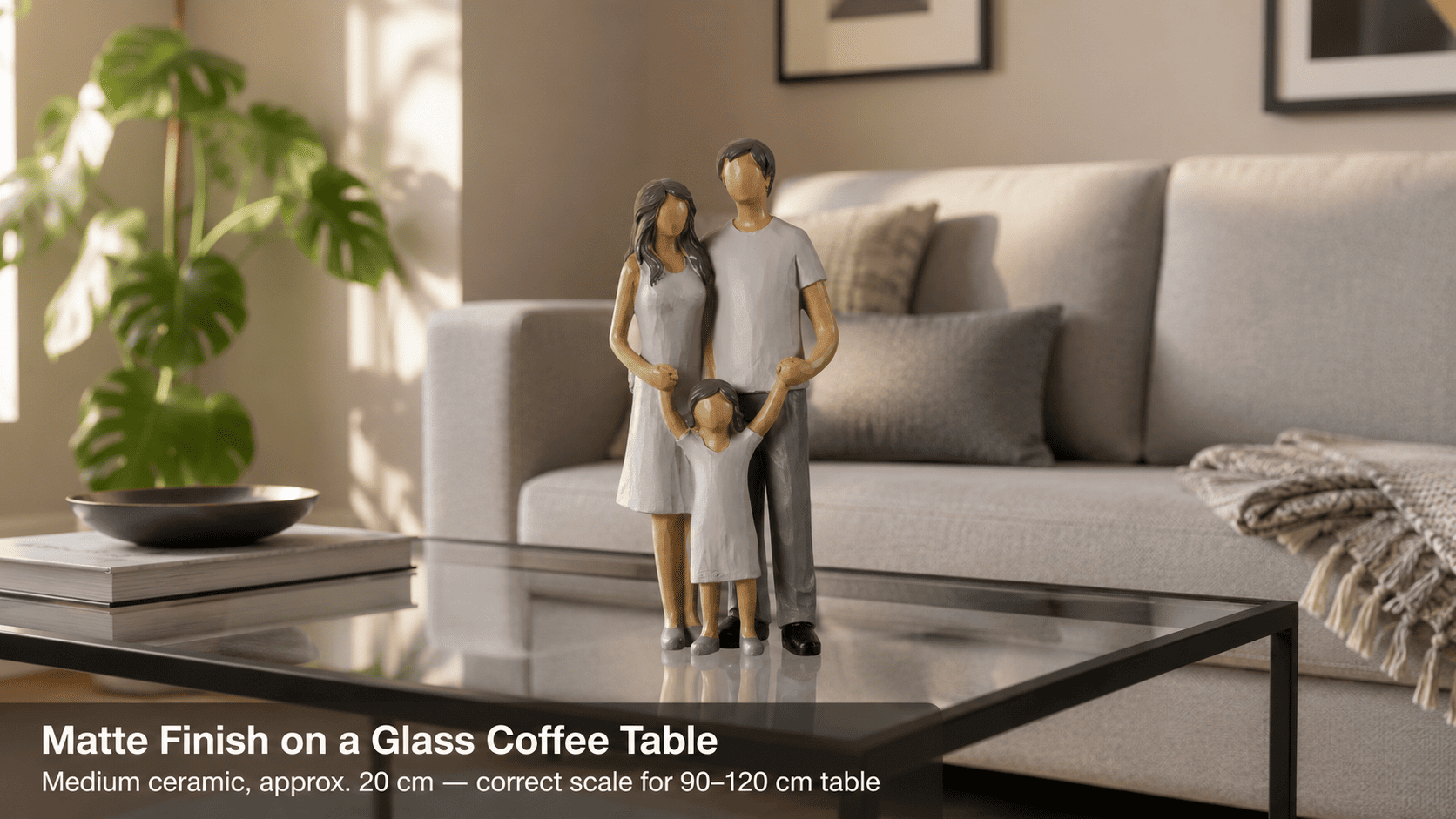
The surface on which a showpiece sits governs which finish will produce a harmonious composition. A reflective surface — glass-top coffee table, polished granite console, lacquered sideboard — already carries its own highlight. Adding a glazed showpiece creates a second reflective layer that doubles the visual complexity at that surface point, which reads as clutter even if only one or two pieces are present. A matte piece on a reflective surface provides contrast: the low-reflectance object grounds the composition by absorbing rather than amplifying the surface's natural sheen.
On matte or low-reflectance surfaces — a wooden console in a teak or walnut finish, a fabric-topped ottoman, an open bookshelf with painted or veneer shelves — the logic inverts. A matte showpiece on a matte surface produces insufficient tonal contrast, causing the piece to visually merge with its background. A glazed piece on a low-reflectance surface introduces the highlight that creates separation and makes the piece legible as a deliberate accent.
| Surface Type | Recommended Finish | Recommended Décor Size | Weight Range | Humidity Tolerance |
|---|---|---|---|---|
| Glass-top coffee table (living room focal point) | Matte | 16–21 cm (Medium) | 250–400 g | Up to 85% RH |
| Polished granite / marble console | Matte | 25–34 cm (Large) | 400–600 g | Up to 85% RH |
| Wooden / teak finish sideboard or shelf | Glazed | 16–21 cm (Medium) | 250–400 g | Up to 60% RH |
| Painted / veneer floating shelf | Glazed | 10–16 cm (Small) | 150–250 g | Up to 60% RH |
Because living room layouts also vary by available surface width, ceiling height, and the dominant palette of existing furnishings, browse the full finish, size-band, and material selection in Moolwan's showpiece for living room collection to verify the right piece for your specific layout.
Design Rule
When selecting a decorative showpiece for a modern Indian living room, the finish decision should always be made in reference to the surface below rather than the wall behind — a principle formalised as Moolwan's Finish-First Decision Rule. A reflective surface demands a matte finish to create contrast and prevent visual doubling; a matte or low-reflectance surface demands a glazed finish to create the separation that makes the piece legible as a design accent. Choosing finish based on personal preference alone, without accounting for the surface, is the primary reason well-chosen showpieces fail to read as intentional décor in the final room.
Does Finish Choice Affect How Long a Showpiece Holds Its Appearance in an Indian Living Room?
Over a 3–5 year lifespan under Indian residential conditions — which combine AC thermal cycling, monsoon humidity spikes, and direct afternoon sunlight — matte and glazed ceramics age differently, and the difference is most visible at the surface level rather than at the structural level.
Matte ceramic surfaces age imperceptibly under normal handling because micro-scratches — caused by cleaning cloths, accidental contact, or relocation — scatter light at many angles simultaneously, which renders the scratch invisible to the naked eye from typical viewing distances of 1–2 metres. This is the same optical principle used in anti-glare phone screen coatings: the micro-texture that makes the surface appear non-reflective also prevents any single scratch from creating a directional light artefact that the eye registers as damage. At year three, a well-maintained matte ceramic showpiece looks substantively the same as it did at installation.
Glazed ceramics, because their surface reflects light uniformly, make scratches legible in the same way that a scratch on a mirror is legible: the uniform reflection is broken at the scratch point, and the eye — which is calibrated to detect disruptions in otherwise uniform patterns — notices it immediately. This does not mean glazed ceramics are fragile; Moolwan's ceramic collection is drop-tested to 15 cm on hard surfaces and rated to a pencil hardness of 3H. It means that surface wear on glazed pieces is optically amplified relative to the same wear on matte pieces, which is a relevant consideration for high-touch surfaces like coffee tables in active family living rooms.
Ready to bring home a showpiece engineered for Indian humidity, Indian sunlight, and Indian living rooms? Shop the full Moolwan showpiece for living room collection now — manufacturer-direct, no distributor markup.
How Do You Choose Between a Single Statement Piece and a Grouped Cluster of Showpieces?
Room footprint is the governing variable. In living rooms under 120 sq ft — the standard size in most Indian apartment configurations in metros — a single medium-format showpiece (16–21 cm) on the primary surface is almost always superior to a cluster. A cluster of three small pieces (10–16 cm each) occupies the same linear surface space as one medium piece but introduces multiple horizontal breaks in the viewer's eye path, which reads as visual complexity rather than intentional composition in a confined room footprint.
In living rooms of 150 sq ft and above, where the primary viewing distance from a sofa to a console or sideboard is 2.5 metres or more, a single medium showpiece can visually disappear at that distance because it no longer holds the scale of the space. At 2.5 metres, the minimum readable height for a décor accent is approximately 25 cm; below that threshold, the piece reads as a small object rather than a focal point. In these larger layouts, either a single large-format showpiece (25–34 cm) or a curated cluster of two to three medium pieces — with the tallest piece no more than 34 cm and each piece separated by at least 8 cm of clear surface — achieves the necessary visual mass without overcrowding.

What Palette Works Best With Matte vs Glazed Showpieces in a Modern Indian Living Room?
Modern Indian interiors in 2024–2026 are converging on a palette anchored by warm neutrals — greige walls (a grey-beige blend around NCS S 2005-Y20R), off-white ceilings, and furnishings in walnut, teak, or dusty sage. Within this dominant palette, matte showpieces in warm earth tones (terracotta, ochre, clay white, warm taupe) function as tonal extensions of the wall and furniture palette, deepening the overall warmth without introducing contrast. The room reads as cohesive and intentionally layered.
Glazed showpieces in the same warm-earth palette on a warm-neutral background tend to disappear because the glazed highlight reads as a white or silver flicker rather than as a warm accent — the glazed surface reflects the colour of the light source (warm white LED) rather than amplifying the pigment of the piece. Glazed finishes produce their strongest visual effect when the piece is in a colour that contrasts with the wall: deep cobalt, forest green, or matte black on a greige or off-white wall will use the glaze to amplify the colour contrast, making the piece register as a deliberate punctuation mark in the room's palette. This is an advanced styling technique — it requires confidence in the contrast choice — but it is the condition under which glazed showpieces reach their full visual potential in a modern Indian interior.
Frequently Asked Questions
Is a matte or glazed showpiece better for a living room with a glass coffee table?
Matte is the stronger choice for a glass coffee table. A glass surface already carries its own specular reflection; adding a glazed showpiece creates a second uniform reflective layer at the same visual focal point, which doubles the light complexity and reads as clutter even when only one or two pieces are present. A matte ceramic — which scatters rather than concentrates light — provides the visual contrast needed to make the piece legible as a distinct accent against the glass surface below it.
Do glazed ceramic showpieces get damaged in monsoon humidity in Indian homes?
Glazed ceramics are structurally moisture-resistant because the vitreous glaze seals the ceramic body against absorption. The risk in Indian monsoon conditions is not structural damage but surface cosmetics: at ambient humidity above 75% RH in an air-conditioned room, the temperature differential between a cool ceramic body and warm humid air causes condensation to deposit on the glazed surface. Repeated condensation-and-drying cycles leave visible mineral micro-rings, particularly on dark-coloured glazed pieces on glass or stone surfaces. A humidity-rated matte ceramic — such as those in Moolwan's 85% RH-rated collection — avoids this problem because the micro-textured surface disperses moisture rather than pooling it.
What size showpiece works best on a standard Indian living room coffee table?
For coffee tables with a surface width of 90–120 cm — the standard size in Indian 2- and 3-seater sofa configurations — a medium showpiece at 16–21 cm height is the correct scale band. A piece under 16 cm disappears on a surface this wide; a piece over 25 cm occupies too large a proportion of the usable surface, reducing the functional clear space needed for everyday use. The 16–21 cm range maintains the visual mass needed for legibility at a 1.5–2 metre sofa-to-table viewing distance while preserving the surface breathing room that prevents the table from reading as cluttered.
Can I mix matte and glazed showpieces in the same living room composition?
Yes, but the two finishes should be distributed across separate surfaces rather than clustered together on the same surface. Placing a matte and a glazed piece side by side on the same coffee table creates a finish inconsistency that draws attention to the comparison rather than to either piece individually. The more effective approach is to use matte pieces on your primary reflective surfaces (glass coffee table, polished granite console) and glazed pieces on secondary matte-surface shelving or wooden consoles — a distribution that uses each finish's optical properties to their correct advantage within the same room. Moolwan's showpiece collection includes both finishes across the same size bands, making it straightforward to source pieces for this kind of two-surface strategy.
Matte ceramics rated to 85% RH eliminate the need for seasonal replacement — the lifetime cost of two low-grade glazed pieces that cloud or micro-ring after a monsoon cycle exceeds the single upfront investment in a climate-rated showpiece. Order a curated finish-matched piece directly from Moolwan's showpiece for living room collection — manufactured in-house, shipped without distributor middlemen, and engineered for the climate and room scales of Indian homes. If you are also considering a wider refresh of your living space, browse the full Moolwan living room items collection for complementary accent pieces across categories, or explore the Moolwan handmade showpiece range for one-of-a-kind pieces with individual finish variation that no mass-produced décor can replicate.


