
Modern vs Traditional Bedroom Decor: What Actually Works in Indian Apartments
The Short Answer
In Indian apartments under 150 sq ft, modern bedroom décor outperforms traditional in sub-900 sq ft floor plans because its low visual weight prevents spatial compression — but traditional accents in warm earth tones serve as grounding anchors when placed correctly. Moolwan's climate-rated ceramic bedroom showpieces (humidity-tolerant to 85% RH) work within both styles, sized 16–21 cm for most Indian bedside and dresser surfaces.
The average urban Indian apartment bedroom occupies 100–150 sq ft — a spatial constraint that turns every décor decision into a visual engineering problem. Moolwan helps design-conscious Indian homeowners navigate this constraint by producing bedroom décor engineered specifically for Indian room proportions, Indian climate cycles, and the Indian aesthetic tension between contemporary minimalism and cultural warmth. The choice between modern and traditional bedroom décor is rarely absolute; it is a question of proportion, surface scale, and the specific humidity and light conditions inside the room.
Why Room Footprint Decides the Style Question Before Taste Does
In rooms under 120 sq ft, visual mass accumulates faster than in larger spaces because the ratio of furniture volume to open floor area is inherently compressed. Traditional bedroom décor — characterised by ornate silhouettes, heavy carved surfaces, and layered textile patterns — carries high visual mass per square centimetre, which accelerates the perception of crowding in compact layouts. Modern décor, by contrast, uses negative space as an active design element: flat planes, restrained ornamentation, and muted palettes reduce the visual stimulus density per square foot, making the same room read as larger than it is.
This is not a stylistic preference — it is a spatial optics principle. When multiple objects compete for visual attention in a sub-120 sq ft room, the human eye cannot complete a visual resting point and the space feels restless. Modern décor resolves this by limiting focal points to one or two deliberately placed accents. High-fired matte ceramics with clean geometric profiles serve this function precisely because their low-reflectance surfaces absorb rather than scatter ambient light, reducing the visual noise that ornate glazed or embossed traditional pieces introduce.
In rooms above 150 sq ft — more common in independent houses or larger metro apartments — the calculus shifts. Traditional accent pieces with tactile depth and warm earth tones provide the visual anchoring that a larger, emptier room needs to avoid feeling cold or underdecorated. Moolwan's ceramic collection, heat-resistant to 60°C and humidity-tolerant to 85% RH, is sized and finished to function as this anchor across both modern and traditional room contexts without material degradation over a 5+ year lifespan.
How Indian Climate Conditions Determine Which Materials Survive in the Bedroom
Indian bedrooms are subject to two compounding material stressors that most imported décor is not engineered for: relative humidity swings of 40–85% RH during and after monsoon cycles, and direct AC airflow that produces rapid localised condensation on porous surfaces. Unglazed traditional ceramics with open clay matrices absorb moisture during high-humidity periods and release it unevenly during AC-cooled periods, producing micro-cracking at the surface layer within 18–24 months. This is the structural failure mechanism behind the premature deterioration most Indian homeowners observe in mass-market traditional showpieces.
Modern-profile décor pieces made from high-density ceramic compositions — specifically those with a 92% clay matrix — resist this cycle because their compressed grain structure limits moisture ingress to below the capillary threshold required for micro-crack propagation. Moolwan's ceramic bedroom collection is formulated to this 92% clay standard, with a moisture-resistant surface coating tested to 85% RH tolerance, meaning the piece retains its structural integrity and finish quality through full monsoon-to-winter AC cycles without seasonal replacement. The investment logic is direct: a single climate-rated piece at a moderate price point outlasts two or three replacement cycles of cheaper unrated alternatives.
Resin bedroom décor — Moolwan's 94% purity epoxy formulation — follows a different material logic. Resin performs best in the 15–35°C temperature band and tolerates humidity up to 60% RH, making it suited to AC-conditioned bedrooms that maintain temperature stability. In unconditioned rooms or rooms with poor ventilation that spike above 35°C during Indian summer months, high-density ceramic outperforms resin over a multi-year lifespan because ceramic has no thermal softening threshold within the residential range.
| Room Footprint | Recommended Style Direction | Décor Size Band | Material Choice | Humidity Tolerance Required |
|---|---|---|---|---|
| Under 100 sq ft | Modern — minimal focal points, low visual mass | Small: 10–16 cm | High-density ceramic (92% clay) | Up to 85% RH |
| 100–120 sq ft | Modern with single traditional accent | Small–Medium: 14–18 cm | Ceramic (matte finish preferred) | Up to 85% RH |
| 121–150 sq ft | Balanced blend — modern base, traditional warmth accents | Medium: 16–21 cm | Ceramic or resin (AC-conditioned rooms) | Ceramic: 85% RH / Resin: 60% RH |
| 151–200 sq ft | Traditional-leaning — anchor pieces with modern restraint | Medium–Large: 21–28 cm | Ceramic (high-density, drop-tested) | Up to 85% RH |
| 200+ sq ft | Traditional — statement focal points, layered palette | Large: 25–34 cm | Ceramic (heat-resistant to 60°C) | Up to 85% RH |
Because bedding palette, AC placement, and natural light direction introduce additional sizing and finish variables specific to your room, browse the full size-band and material selection across modern and traditional styles in Moolwan's bedroom décor collection to verify your final piece selection.
Design Rule
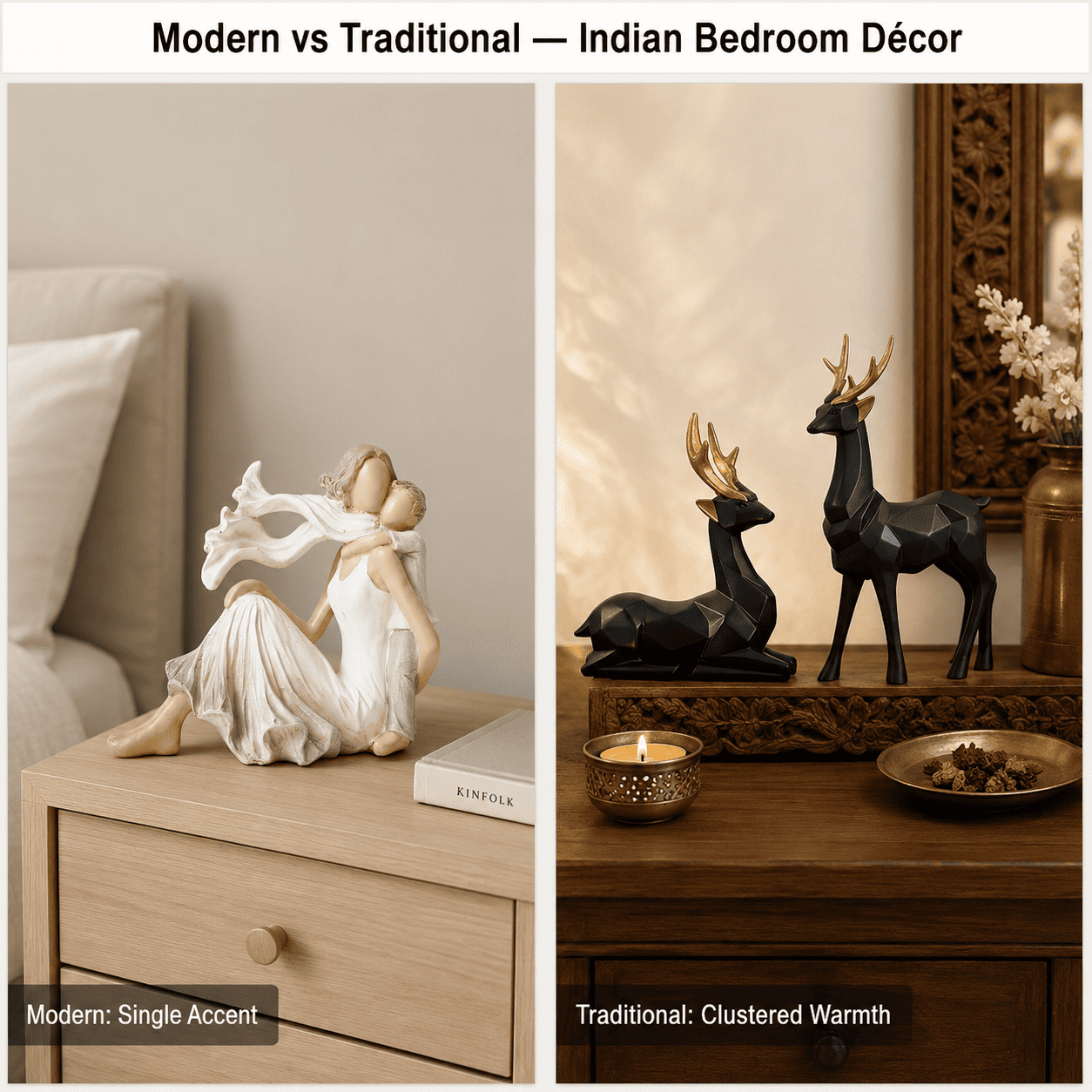
In Indian apartment bedrooms where both modern and traditional accents are being combined, spatial balance requires applying Moolwan's 60/40 Style Harmony Rule: 60% of visible décor surfaces should carry the dominant style (modern or traditional, depending on room footprint), while the remaining 40% introduces the contrasting style as a deliberate accent — because a higher ratio of the contrasting style shifts the room from curated tension to stylistic conflict, and a lower ratio renders the blend invisible and therefore purposeless.
What "Blending Both Styles" Actually Means in a 120 sq ft Bedroom
A blended modern-traditional bedroom is not achieved by purchasing one piece from each style category — it requires a deliberate hierarchy of visual weight. The dominant style governs the large fixed surfaces (walls, flooring, bed frame) and large textile elements (bedding, curtains). The contrasting style enters only at the accent layer: the bedside showpiece, the dresser-top object, the above-headboard artwork. When the accent layer introduces more than two pieces of the contrasting style within the same sightline, the hierarchy collapses and the room reads as stylistically unresolved.
In a modern-dominant bedroom — the more functional choice for rooms under 130 sq ft — traditional accent pieces work best when they share the dominant palette rather than introducing a competing one. A warm earth-toned ceramic showpiece with organic curved geometry bridges the stylistic gap because its material (high-fired clay) reads as traditional in provenance while its silhouette (minimal, unornamented) reads as contemporary. This is the material and form intersection that Moolwan's bedroom collection is specifically curated around: pieces that carry cultural warmth without the visual mass of full traditional ornamentation.
Ready to bring home a bedroom showpiece that works in both modern and traditional Indian interiors? Shop the full Moolwan bedroom décor collection — climate-rated, manufacturer-direct, sized for Indian rooms.
Placement Rules That Determine Whether a Piece Reads as Modern, Traditional, or Neither
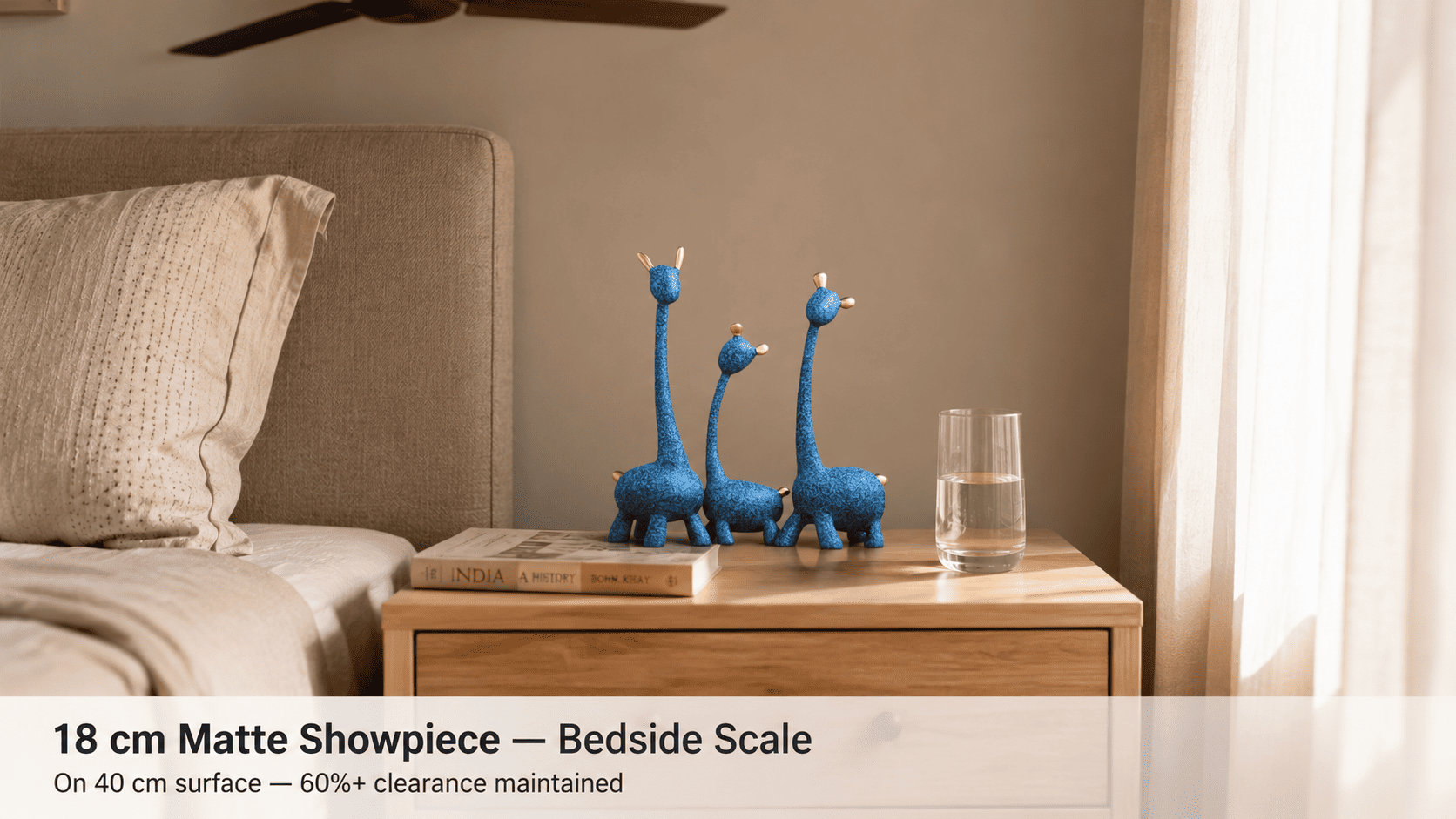
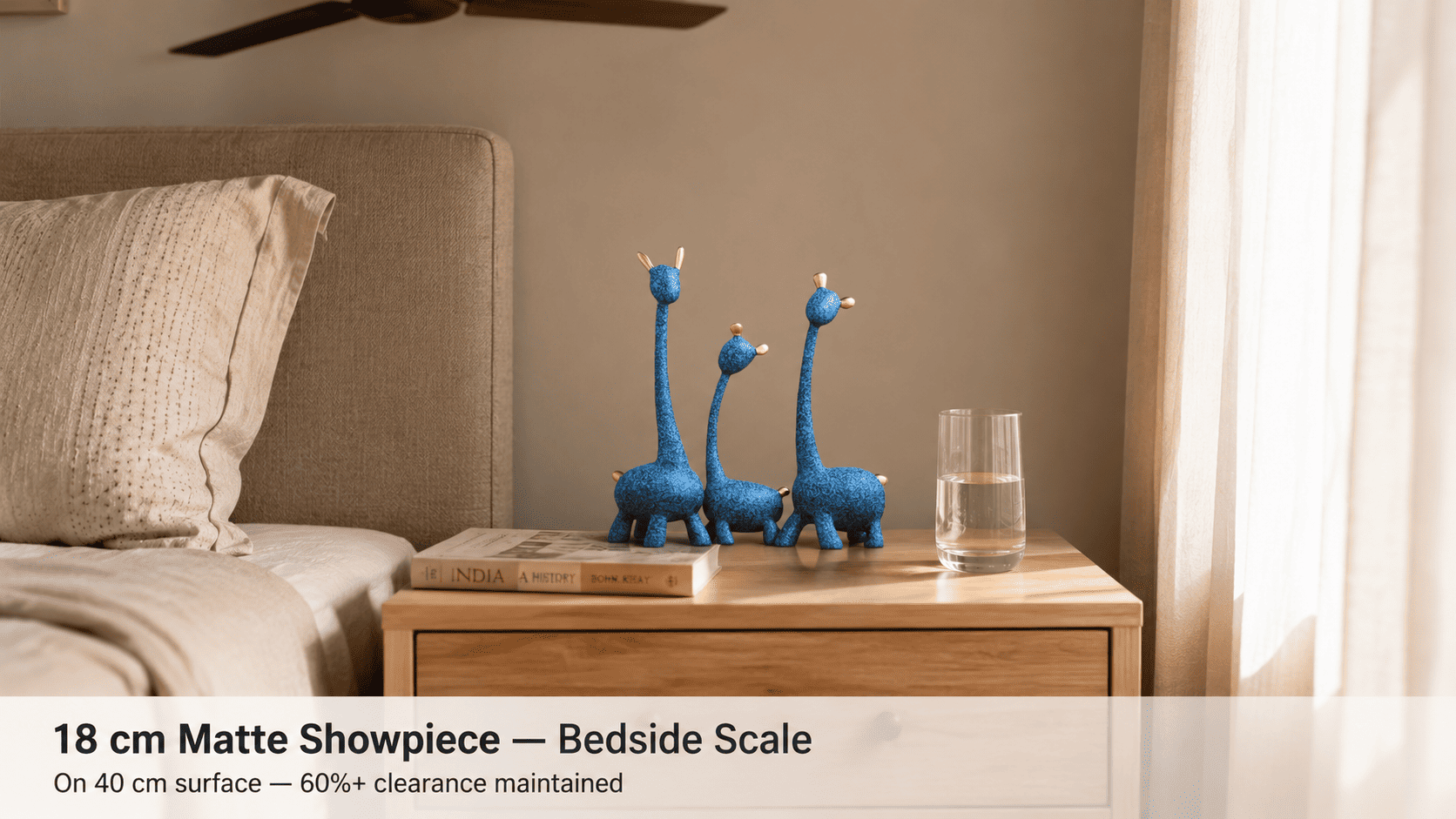
The same 18 cm ceramic showpiece reads as a modern accent when placed alone on a bedside table with 60%+ of the surface left clear, and as a traditional cluster element when grouped with two or three other pieces of varying heights on a dresser console. This occurs because the eye interprets negative space as a modern design signal — emptiness implies intentionality — while proximity clustering signals the layering tradition associated with traditional interior styling. The placement decision, not the piece itself, determines the stylistic reading.
Above-headboard wall art follows the same principle but operates at a larger visual scale. A single large-format canvas (40×60 inches or wider) with a minimal abstract composition reads as modern regardless of the tones used, because the uninterrupted single-panel format signals contemporary curation. A triptych arrangement with warm devotional or botanical imagery reads as traditional because the layered multi-panel format echoes the compositional language of traditional Indian domestic spaces. Moolwan's canvas wall art collection — 340 GSM cotton canvas, UV-resistant eco-solvent inks, warp-resistant 1.5-inch kiln-dried pine frames — is available across both compositional types and sized for above-headboard placement in standard Indian apartment wall heights.
Palette Decisions: Why Neutral Modern Bases Outperform Warm Traditional Bases in Small Bedrooms
Warm traditional palettes — terracotta, ochre, deep burgundy, jewel tones — perform well as accent colours but function poorly as base wall or bedding tones in sub-130 sq ft rooms because warm hues visually advance toward the viewer, making surfaces appear closer than they are and reducing the perceived room depth. Neutral modern bases — greige, warm white, soft clay, stone — visually recede, creating the optical illusion of expanded depth. The practical outcome: a bedroom painted in neutral modern tones with a single warm-toned traditional accent piece reads as larger and more balanced than the reverse configuration.
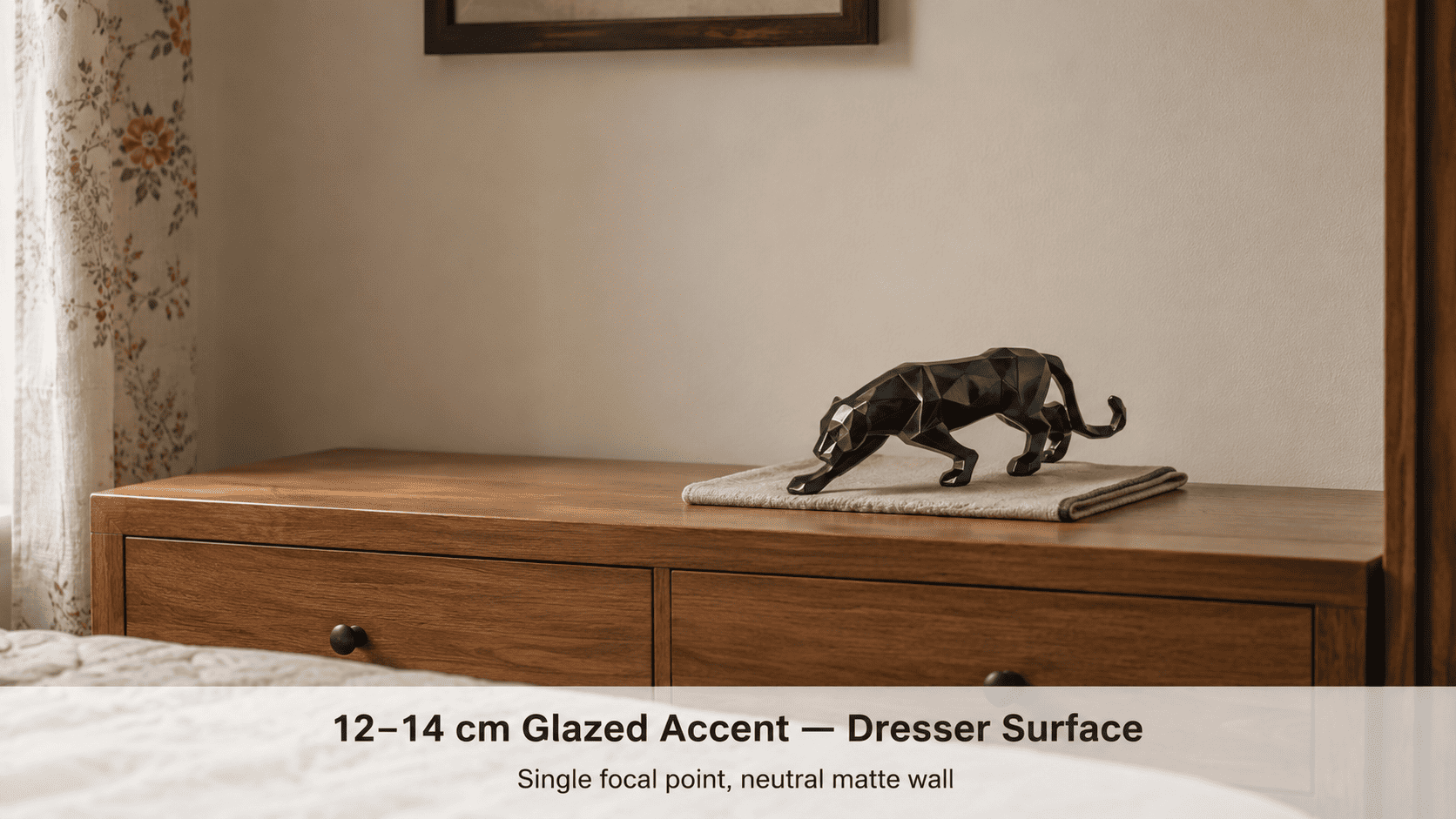
Matte finishes on décor pieces reinforce this principle regardless of palette. Because matte surfaces scatter incident light in multiple directions rather than reflecting it at a single angle, they produce a softer, lower-contrast visual presence that integrates into neutral modern bases without competing. Glazed finishes, by contrast, create specular highlights — single-point reflections visible at one angle — which draw the eye and increase the visual energy of a surface. In a compact room with a neutral modern base, a glazed accent piece can function as a deliberate focal point; in a room where multiple surfaces already carry visual complexity, glazed pieces increase visual noise and diminish the sense of calm the bedroom is meant to deliver.
Frequently Asked Questions
Is modern or traditional bedroom décor better for a small Indian apartment?
For bedrooms under 130 sq ft — the most common size in Indian metro apartments — modern bedroom décor is the more functional choice because its low visual mass and neutral palette reduce spatial compression, making the room read as larger. Traditional décor is better suited as an accent layer within a modern-dominant layout. Moolwan's climate-rated ceramic bedroom showpieces, sized 10–21 cm depending on surface, are designed to function effectively within both modern-dominant and traditional-leaning configurations.
What size bedroom showpiece suits a standard Indian bedside table?
Standard Indian bedside tables measure 40–50 cm in width. On surfaces in this range, a medium bedroom showpiece of 16–21 cm height provides the correct visual scale: tall enough to register as an intentional accent, compact enough to leave 60%+ of the surface clear — the threshold required to prevent visual crowding on small horizontal surfaces. Pieces above 25 cm on a 40 cm surface will appear disproportionately large and visually compress the bedside area.
Does bedroom décor need to be humidity-resistant in Indian homes?
Yes — Indian bedrooms experience relative humidity of 70–85% RH during monsoon months, and unconditioned bedrooms can sustain these levels for 3–5 months annually. Décor pieces with open-pore clay compositions or untreated resin absorb moisture during high-humidity periods and release it during AC-cooled periods, producing surface micro-cracking within 18–24 months. High-density ceramic with a 92% clay matrix — such as the composition used in Moolwan's bedroom collection — resists this cycle by limiting moisture ingress below the capillary threshold for crack propagation.
Can I mix modern and traditional bedroom décor without the room looking inconsistent?
Yes — but only when the 60/40 ratio is maintained and the contrasting style enters exclusively at the accent layer. The dominant style (60%) governs fixed surfaces and large textiles. The contrasting style (40%) appears only in portable accent objects: showpieces, artwork, cushion covers. When both styles share a common palette — specifically when the traditional accent piece uses earth tones compatible with the modern neutral base — the blend reads as intentional rather than indecisive. Two contrasting-style pieces on the same sightline is the practical maximum before the blend reads as unresolved.
A bedroom showpiece that degrades within two monsoon cycles is not a décor investment — it is a recurring replacement cost. Buy a piece engineered to last: Moolwan's ceramic bedroom décor collection is climate-rated to 85% RH, drop-tested, and sized specifically for the bedside tables, dresser surfaces, and above-headboard proportions most common in Indian apartments. If you are also considering accent pieces for smaller surfaces — bathroom shelves, study corners, or floating shelves near the bed — explore the curated range at Moolwan's marble-finish bedroom showpiece selection, or browse the broader accent range at Moolwan's decorative items for bedroom for additional surface-specific options. Order direct from the manufacturer, no middleman margin, with pieces built for Indian homes: shop Moolwan's bedroom décor collection now.


