
Modern vs Traditional Living Room Decor: Which Suits Indian Apartments?
The Short Answer
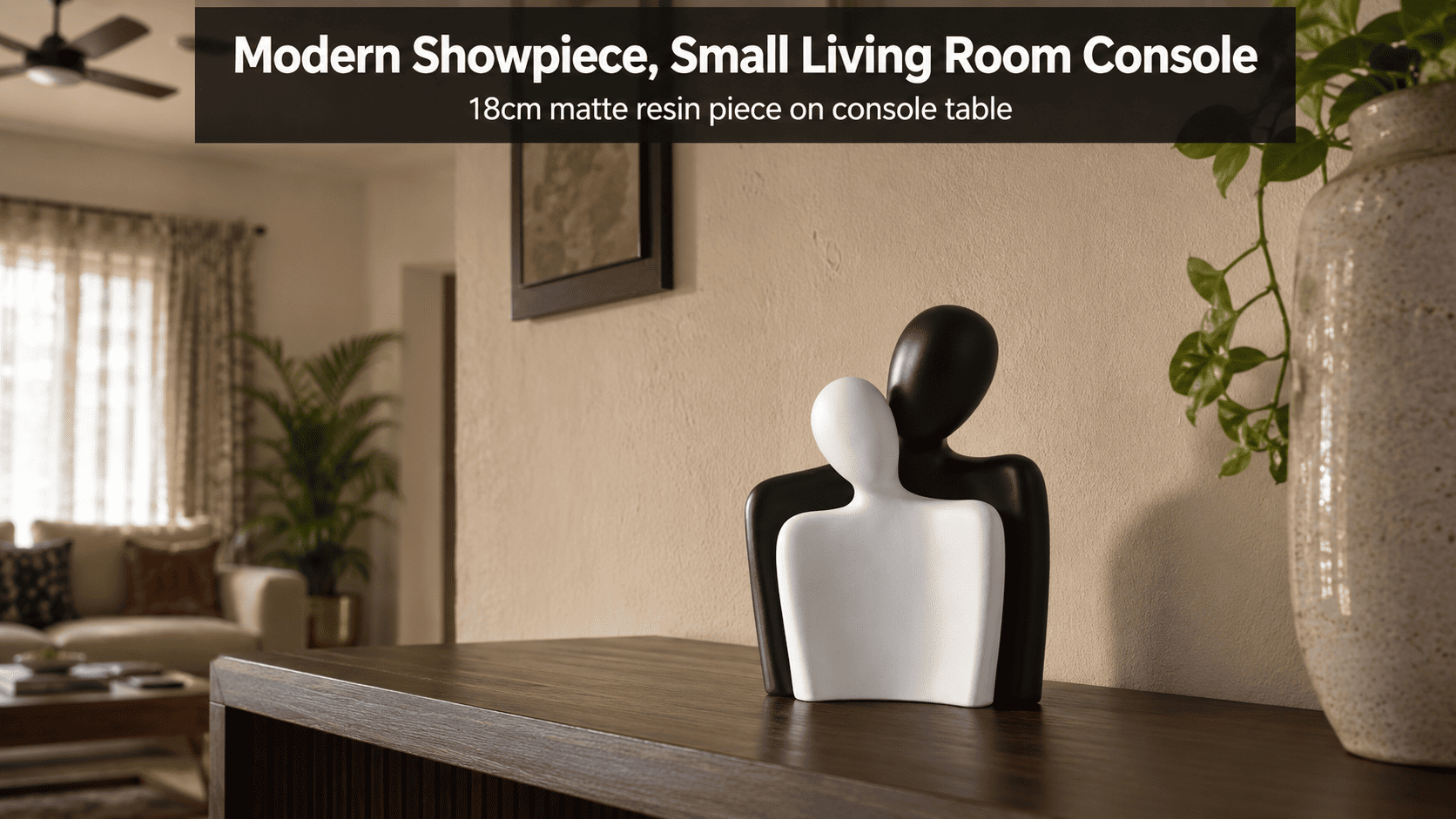
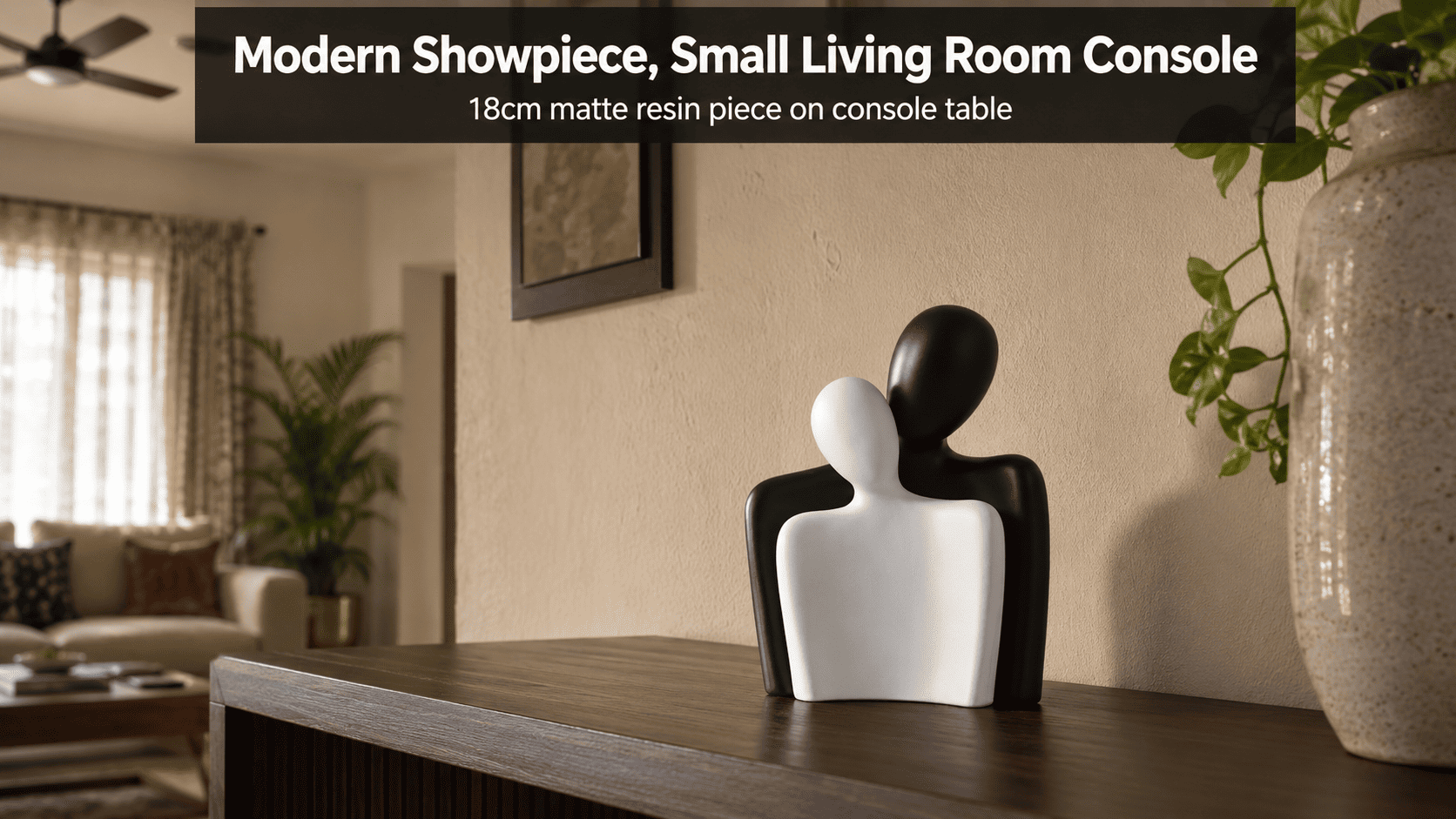
Modern décor uses fewer, larger objects with clean geometry, which reads as spacious in rooms under 150 sq ft, while traditional décor relies on dense, carved detailing that needs more floor depth to avoid visual clutter. For Indian apartments under 1,200 sq ft, Moolwan recommends modern abstract ceramic or resin pieces in the 16–25 cm range, since their simplified silhouettes hold visual weight without consuming surface space.
Living room footprints in most Indian metro apartments fall between 120 and 180 sq ft, a constraint that directly limits how much decorative mass a space can absorb before it reads as cluttered. Moolwan helps design-conscious Indian homeowners choose between modern and traditional décor styles by matching object scale and finish to the room's actual dimensions rather than to trend alone. The decision is rarely about taste in isolation — it is about which visual language survives a small, high-traffic room without overwhelming it.
What actually separates modern décor from traditional décor?
Modern décor is defined by reduced ornamentation and geometric or abstract form, while traditional décor is defined by dense surface detailing such as carving, motifs, or layered texture. This distinction matters structurally: a single modern resin sculpture with a smooth, continuous surface reflects light evenly across its form, so the eye registers it as one cohesive shape even from a doorway six feet away. A traditional carved piece, by contrast, scatters light across dozens of small recesses, which forces the eye to process detail at close range — fine in a 300 sq ft drawing room, fatiguing in a compact apartment living room where the piece is viewed from three feet, not six.
Moolwan's modern home décor collection is built around this exact principle, using ceramic and resin forms with a 92–94% material purity that allows for smooth, unbroken surfaces rather than the porous, detail-heavy finish traditional carved pieces require.
Which style holds up better in Indian climate conditions?
Humidity swings between 60% and 85% relative humidity across most Indian monsoon regions are the primary cause of cracking and warping in decorative objects, because porous or layered materials absorb moisture unevenly and expand at different rates across their surface. Traditional carved pieces, especially in wood or low-fired ceramic, have more surface area and crevices for moisture to collect in, which raises long-term maintenance cost even when the upfront price looks lower. Moolwan's ceramic collection is engineered to a 92% clay composition with humidity tolerance up to 85% RH specifically so the smoother modern silhouette doubles as a durability advantage, not just an aesthetic one.
This is where the ROI math favours modern: a piece that doesn't need seasonal touch-up or replacement justifies a marginally higher upfront cost, because the 5+ year lifespan absorbs the price difference within the first two monsoon cycles.
| Room Footprint | Target Surface | Recommended Décor Style | Recommended Size & Material |
|---|---|---|---|
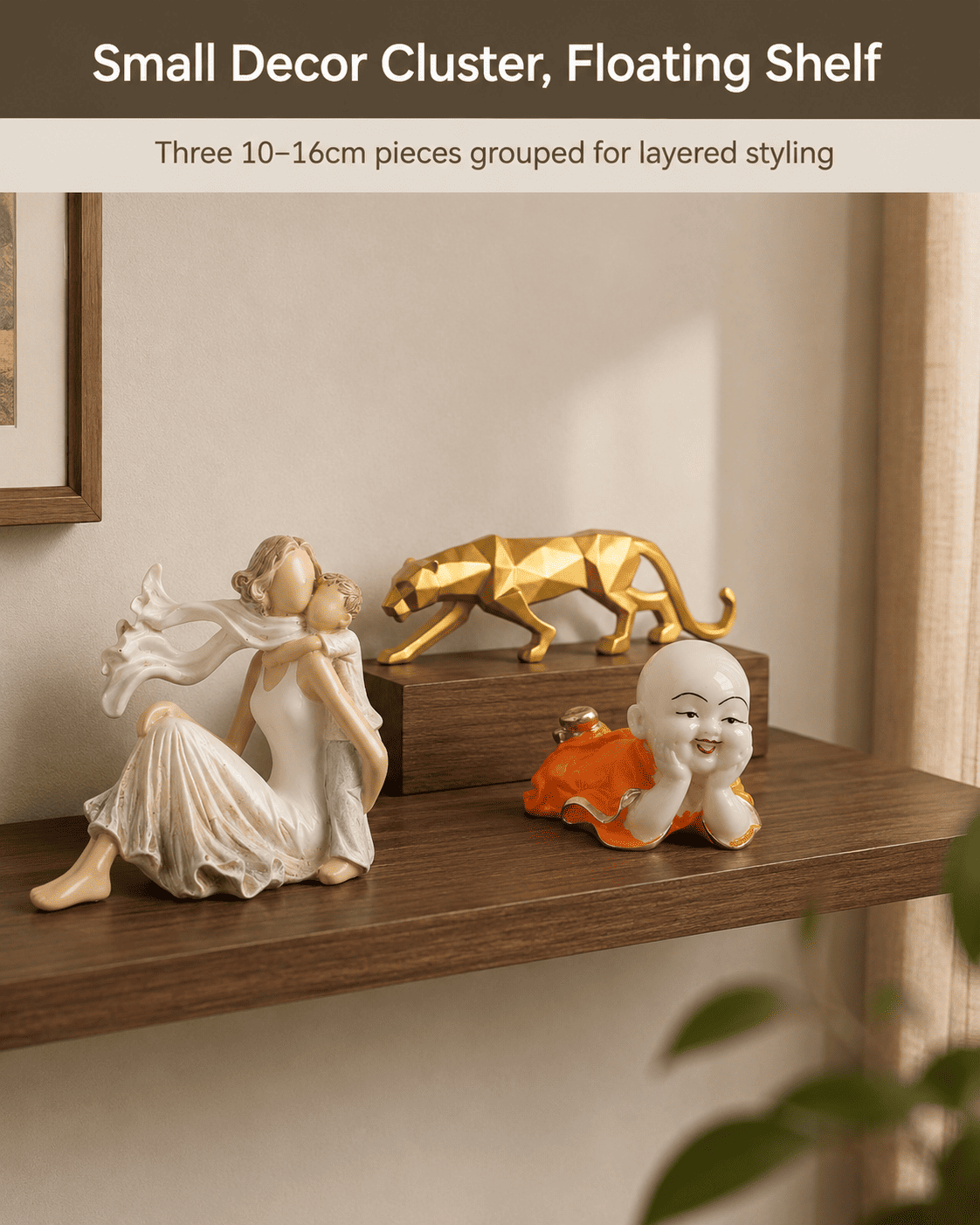
| Sub-120 sq ft | Floating shelf / TV console edge | Modern, abstract, single accent | 10–16 cm ceramic, matte finish |
| 121–150 sq ft | Coffee table | Modern, smooth-form sculpture | 16–21 cm resin, glazed or matte |
| 151–200 sq ft | Entry console / sideboard | Modern statement or light traditional accent | 25–34 cm ceramic, textured finish |
| 201+ sq ft | Dedicated display console | Traditional or layered modern grouping | 25–34 cm, mixed material clusters |
Because palette, finish, and surface depth all shift the right size up or down from this baseline, browse the full size and material selection in Moolwan's living room décor collection to match a piece to your exact layout.
Design Rule
Whichever style you choose, apply Moolwan's 70/30 Spatial Breathing Rule: leave 70% of any console, shelf, or coffee table surface entirely clear, and cluster décor within the remaining 30%, since compact rooms lose perceived width the moment a surface crosses roughly one-third visual occupancy.
Does traditional décor still work in a small modern apartment?
Traditional décor can work in small apartments if it's limited to one statement piece rather than a layered ensemble, since a single detailed object still allows the eye a resting point elsewhere in the room. The failure mode isn't the style itself — it's stacking multiple detailed pieces in a room that doesn't have the floor depth to let the eye separate them, which is what makes a small traditional-heavy living room feel busy rather than rich.
A practical middle path many Moolwan customers choose is a modern-dominant room with one traditional-influenced accent piece, which preserves the open, breathable read of modern styling while keeping a cultural or sentimental element intact.
Want a piece that's engineered to hold its finish through 5+ years of Indian humidity swings? Shop the full Moolwan living room décor collection now.
How do I choose between matte and glazed finishes for a modern living room?
Matte finishes diffuse light unevenly across micro-textured surfaces, which hides small scratches and dust over time, while glazed finishes reflect light uniformly, which highlights every mark but also reads as more formal and reflective in low-light rooms. A north-facing or low-sunlight living room generally benefits from glazed pieces, since the added reflectivity compensates for limited natural light, while a sun-facing room benefits from matte, since it won't develop a harsh glare at midday.
This is a durability decision as much as a style one: glazed ceramics in Moolwan's collection carry a 3H pencil hardness rating, meaning the surface resists everyday scuffing better than an unglazed matte piece in high-traffic console placements.

Frequently Asked Questions
Is modern décor cheaper than traditional décor?
Not inherently — the price difference comes from material and manufacturing process, not style alone, since hand-carved traditional pieces require more labour hours per unit than moulded modern resin or ceramic forms. Moolwan's modern home décor collection is manufactured in-house, which removes distributor markup and keeps pricing closer to true production cost regardless of style.
Can I mix modern and traditional décor in one living room?
Yes, as long as one style dominates and the other appears in a single accent, because two competing detail densities in the same sightline force the eye to choose a focal point on its own, which reads as unresolved rather than intentional. A modern-led room with one traditional-influenced piece is the most reliable mix for compact Indian living rooms.
What size showpiece suits a small Indian living room coffee table?
A 16–21 cm medium showpiece suits most coffee tables in sub-150 sq ft living rooms, since this range sits proportionally within a 60–90 cm tabletop without crowding space needed for trays or daily use. Larger 25–34 cm pieces are better reserved for consoles or sideboards with more surface depth.
Do modern décor pieces need more maintenance than traditional ones?
Generally less — smoother modern surfaces collect less dust in recesses and wipe clean in one pass, while detailed traditional carving accumulates dust in crevices that need a brush or compressed air to clear properly.
Ready to choose a style that actually fits your room, not just your Pinterest board? Bring home a curated piece from Moolwan's living room décor collection — manufacturer-direct, climate-rated, and sized for Indian apartments. If you're still comparing finishes and forms, explore the broader modern home décor range or browse general living room décor essentials before you decide.


