
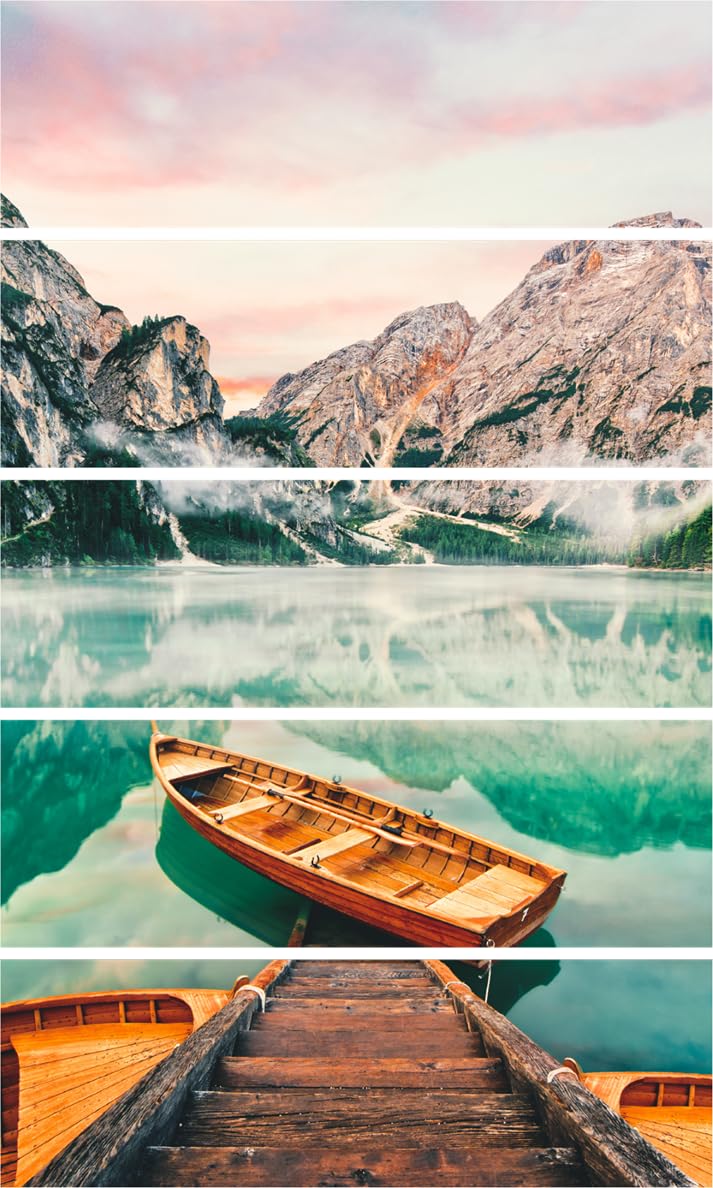
Nature's Five-Fold Fiesta: Framed Multi-Panel Wall Art That'll Make Your Walls Bloom (150x76cm)
You may also like

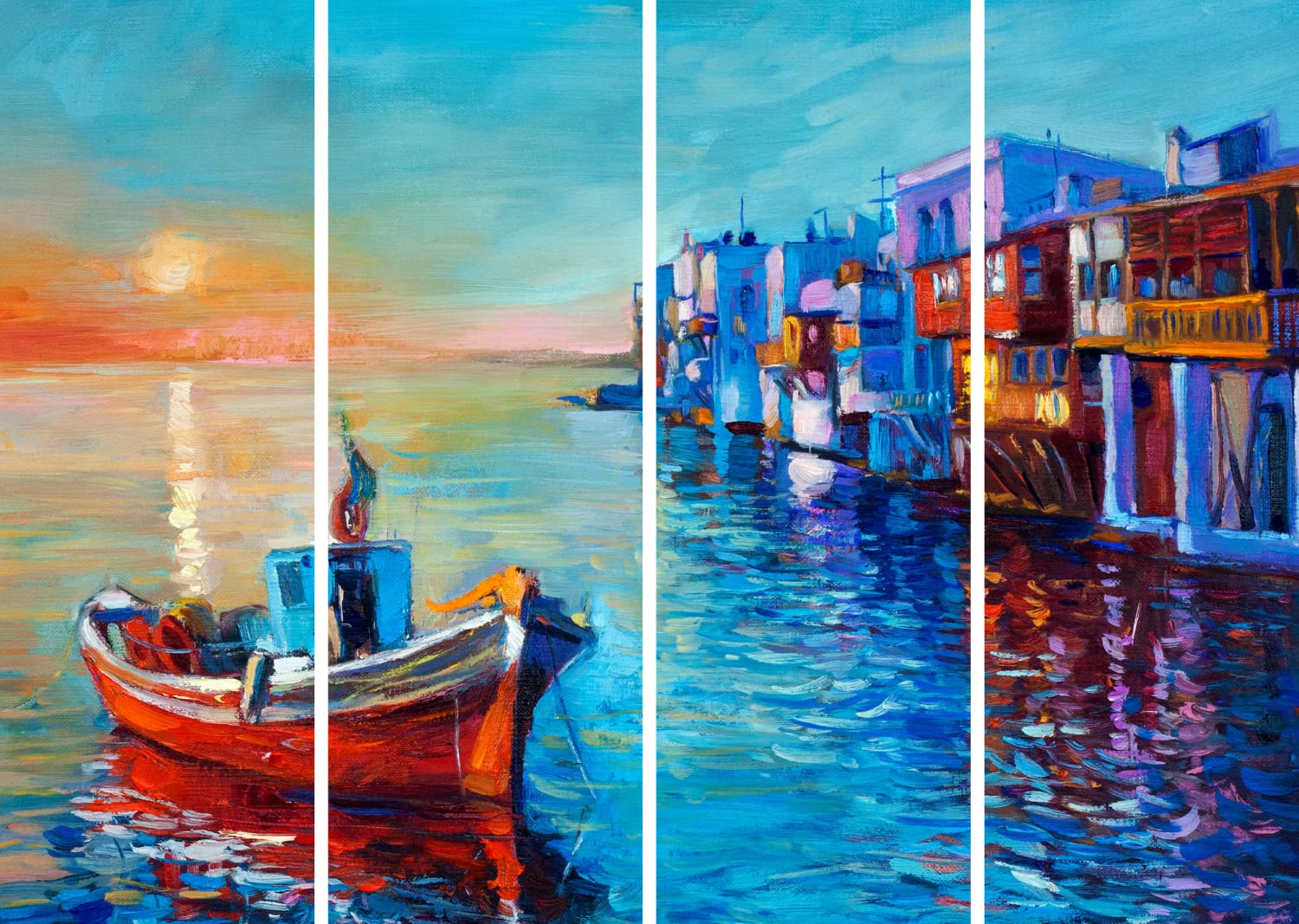
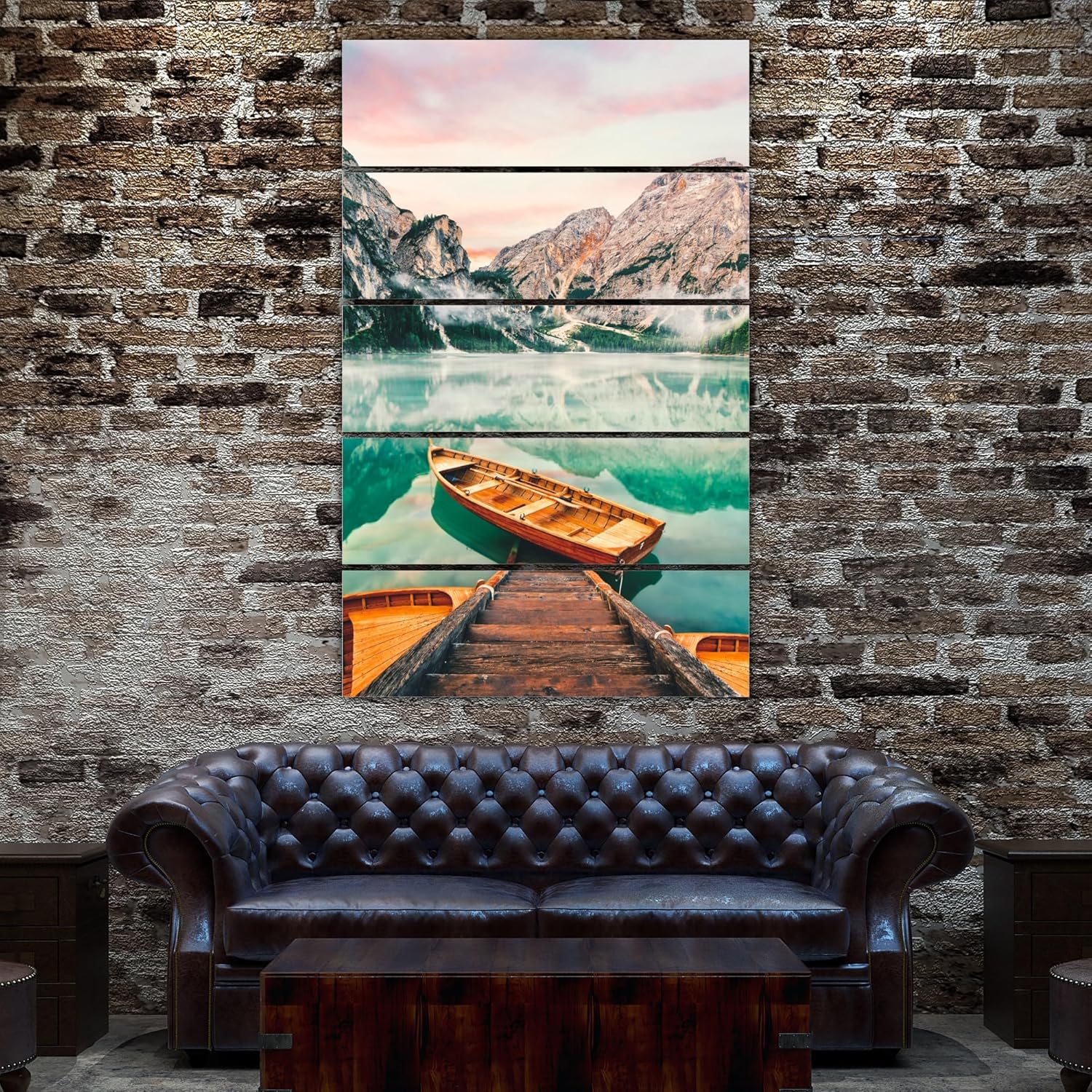
Nature's Five-Fold Fiesta 5-Panel Mountain Lake Canvas Wall Art Painting (150x76cm) - Turquoise Lake Landscape
PRODUCT SEO CONTENT
The Specific Fit Recognition (Why This Size Feels Right)
You might have browsed dozens of mountain landscape paintings by now. Some felt too small—90cm looked lost on your 12-foot living room wall, floating awkwardly in all that empty space like a postcard tacked up temporarily. Some felt too big—180cm would work, but only if your entire wall is completely blank with no windows, no side furniture, no doorways nearby. You probably kept coming back to this size—150cm—because intuitively, it feels substantial without overwhelming. But you want to be sure.
Here's why this is the one: 150cm covers about 42% of a standard 12-foot (360cm) living room wall—leaving 105cm of breathing room on each side. This creates strong visual presence without making the room feel crowded. Your wall probably has other elements—maybe a window 4-5 feet away, maybe side tables flanking your sofa, maybe a floor lamp in the corner, maybe the doorway to your bedroom is 6 feet from the sofa edge. The 150cm width works with these elements instead of competing for every inch of wall space. And at 76cm tall, this fits comfortably under 8-10 foot ceilings without reaching awkwardly toward the ceiling line—it sits in that perfect visual zone where it feels anchored, not floating.
The five-panel layout (each panel about 30cm wide with small gaps) creates vertical rhythm that's different from typical horizontal panoramas. Your eye travels from the soft pink sky at the top, down through the mountains, across the turquoise lake, to the wooden boats and dock at the bottom. This top-to-bottom flow makes your wall—and your ceiling—feel taller. It's the visual equivalent of vertical stripes making you look taller.
And the colors—turquoise lake water with warm wooden boats—these aren't the stark cool blues that look jarring against cream walls. The teal has enough saturation to feel refreshing, but the warm brown boats, the orange-toned dock, the soft pink sky—they balance the cool tones. Your living room walls are probably cream, off-white, or that light yellow shade many Indian apartments have. Your sofa is probably brown or beige fabric, maybe with wooden arms. This canvas will feel like it brings the outside in without clashing with your actual furniture. Not like you're forcing a cold mountain scene into a warm Indian home.
Why 150cm Works on 12-14 Foot Living Room Walls (and What Happens If You Go Smaller or Bigger)
Your living room wall is probably 12 to 14 feet wide (360-420cm in most Indian 3BHK apartments and spacious 2BHKs). The ceiling is probably 8 to 10 feet high. Here's the visual math:
150cm canvas on a 12-foot (360cm) wall:
105cm of space on the left side
105cm of space on the right side
Coverage ratio: Canvas covers 42% of wall width
Effect: Strong focal point, intentional, commanding—not timid, not overwhelming
150cm canvas on a 14-foot (420cm) wall:
135cm of space on the left side
135cm of space on the right side
Coverage ratio: Canvas covers 36% of wall width
Effect: Balanced, spacious, allows room for side furniture and windows
Now consider your furniture arrangement:
Your sofa is probably 8-10 feet (240-300cm) wide if it's a large three-seater or small sectional
Hanging height: 20-25cm above sofa top puts canvas center at 140-160cm from floor (perfect eye level from 8-10 feet away)
Side elements: You probably have side tables (18-24 inches wide), floor lamps, or a window within 3-4 feet of your sofa edge
The 150cm width spans most of your sofa zone while leaving comfortable space for your side furniture to exist
If you went with 120cm instead:
33% wall coverage on a 12 ft wall—looks nice but not commanding
On a 12-14 ft wall with an 8-10 ft sofa, you'll have 120-150cm of empty space on each side
Effect: Your eye notices the empty wall space more than the art itself
Specific problem: The mountain lake scene feels compressed, like you're viewing it through a narrow window instead of experiencing the full panorama
If you went with 180cm instead:
50% wall coverage on a 12 ft wall—works if you have a completely blank wall
But if you have a window 4 feet from your sofa edge, or side tables and floor lamps, or the wall ends at a doorway, the 180cm width starts crowding your layout
Effect: Makes the room feel fuller, but you'll constantly be adjusting furniture positions
Specific problem: You lose flexibility—you can't add side tables later, can't rearrange without the canvas feeling too big for the new layout
The 150cm is the sweet spot: commands attention without dominating the room, works above large sofas without requiring every other element to accommodate it, leaves room for your floor lamp, side table, and window to coexist comfortably.
And at 76cm tall, this sits proportionally under 8-10 foot ceilings. From your sofa (8-10 feet away), you see the full vertical composition—sky to water to dock. Walk up close to adjust it or dust it, you see the canvas texture and the gradient details in the lake water. Both viewing distances matter—and this size works for both.
The five-panel vertical layout creates another benefit: instead of one wide horizontal rectangle (which can make already-wide walls feel even wider and lower), you get five stacked panels creating upward movement. This makes your ceiling feel taller. In standard 8-foot ceiling apartments, this vertical emphasis is particularly valuable—it counteracts the "low ceiling" feeling many Indian apartments have.
The Color Question: Will Turquoise Look Too Cold Against Your Cream Walls?
You've probably hesitated on blue or teal artwork before. Cool tones can look stark against the warm cream, off-white, or light yellow walls in most Indian homes. They can make a room feel colder, especially if your furniture is warm brown wood and beige fabric.
Here's why this specific color palette works:
The turquoise lake water isn't pure cool blue. It's teal—blue with green undertones and enough saturation that it reads as "refreshing" not "icy." Teal is one of the few cool colors that actually complements cream walls instead of clashing with them. Your cream walls will make the teal look more vibrant. The teal will make your cream walls look more intentional, like you chose cream specifically to let this artwork stand out.
The warm wood tones balance everything. The wooden boats are warm brown with orange undertones. The dock is aged wood in amber and rust tones. These aren't accent elements—they occupy the bottom two panels, which means 40% of the canvas is warm-toned. So you're not putting a cold mountain scene on your wall. You're putting a balanced scene that happens to have cool water and warm wood in harmonious combination.
The soft pink sky adds warmth at the top. That sunset glow in the top panel isn't aggressive—it's subtle peachy-pink that warms up the entire composition. It's the element that prevents this from reading as "cold nature scene" and makes it read as "serene sunset moment."
Against brown/beige furniture: The wooden boats and dock echo your furniture tones. It's like the artwork already knows what's in your room and is coordinating with it. The teal provides contrast—it's the refreshing element that prevents brown walls + brown sofa + brown coffee table from becoming monotonous.
In different lighting conditions:
Morning light (if your living room faces east): The cool teals look fresh and energizing—perfect for morning coffee
Afternoon light (west-facing windows): The warm wood tones intensify, the pink sky glows—perfect for afternoon relaxation
Evening/LED light (warm white 3000K): Everything balances—the teals calm down, the warm tones come forward, the whole piece looks cohesive
Your room probably has warm LED bulbs (most Indian homes use warm white, not cool white). Under this lighting, the canvas will never look stark or cold. The warm wood and pink sky prevent that.
The Quality Reality: Will This Actually Last Through Mumbai Monsoons?
Let's address what you're really worried about: you're spending ₹2,496 on canvas wall art. Will it still look good two years from now? Or will it be one of those things that starts warping, fading, or looking tired after one monsoon season?
You might live in Mumbai where humidity hits 85% during monsoons. Or Bangalore where you get 15-degree temperature swings between day and night. Or Chennai where relentless sun and 80% humidity happen simultaneously. Or Delhi where it's 5°C in January and 45°C in June. Or Pune where dust storms are followed by sudden heavy rain.
Cheap marketplace canvas doesn't survive these conditions. Here's what happens:
Thin canvas (180-220 GSM) absorbs moisture during monsoons. The canvas expands when wet, contracts when dry. After two monsoon cycles, you see permanent rippling. After four cycles, the canvas starts pulling loose from the frame at corners. You'll notice it one morning when sunlight hits the wall at an angle and creates uneven shadows where the canvas isn't sitting flat anymore.
This canvas is 340 GSM cotton with moisture-resistant coating. The polymer coating seals the canvas surface. During monsoons, condensation can't penetrate the fibers—it beads up and evaporates. The canvas weight (340 GSM is nearly double the cheap alternatives) means the weave is dense enough that even without coating, moisture absorption would be minimal. With coating, it's negligible.
Cheap wooden frames warp in humidity. Standard marketplace frames use 0.75-inch or 1-inch stretcher bars made from whatever wood was cheapest that month. In 70-85% humidity, untreated wood absorbs moisture and bends. You'll see the canvas getting loose, ripples forming at the edges, one corner sitting slightly away from the wall creating shadow gaps.
This frame uses 1.5-inch kiln-dried pinewood. The wood is dried to 12% moisture content before construction. This is below the equilibrium moisture content for Indian climates (14-18%), which means the wood won't absorb atmospheric moisture and expand. Your frame stays dimensionally stable through multiple monsoon seasons. Three years from now, your canvas will still be drum-tight.
Cheap dye-based inks fade in sunlight. If your wall gets morning or afternoon sun through windows, you'll notice fading within 6-12 months. The blacks turn brownish. The vibrant colors wash out to pastels. That turquoise lake water? It'll be pale mint green by next summer.
Eco-solvent inks with UV inhibitors don't fade. These are the same inks used for outdoor signage—they're chemically designed to withstand UV exposure. Your mountain lake will still have deep teals and warm wood tones two years from now. The pink sky won't bleach to white. The colors stay true.
The splash-proof coating mentioned in the specs? That's not just moisture resistance—it also means you can dust this with a slightly damp cloth if needed (though dry microfiber dusting is recommended). Dust doesn't embed in the canvas weave the way it does with uncoated canvas. Your artwork stays cleaner longer.
Does this matter? Walk into any home with cheap marketplace art that's been up for 18+ months. You'll see wavy canvas, faded patches, corners pulling loose. Then look at quality canvas. It's still flat, colors still vibrant, corners still tight. The ₹2,496 price buys you artwork that's still worth ₹2,496 three years from now, not artwork that looks like ₹400 by next year.
Installation Reality (Especially in Your Rental Apartment)
You might be in a rental. Your lease probably says "no major wall modifications." Your deposit is ₹50,000 to ₹100,000 and you'd like to get it back. So when you read "wall mounting required," your immediate thought is: "Can I actually drill into this wall, or am I setting myself up to lose my deposit over artwork?"
Here's the honest reality: canvas art requires small anchor holes. And small anchor holes are not what loses you your deposit.
What this canvas requires:
2-3 anchor holes (6mm diameter, 30-40mm deep)
Total installation impact: Less than the holes from standard photo frames
What actually loses you your deposit:
Massive holes from TV wall mounts (12mm diameter, 80mm deep)
Multiple failed attempts creating hole clusters
Poorly patched holes that are obvious when painted over
Large holes from heavy shelving units
The anchor holes for this canvas? When you move out, you fill them with wall putty (₹50 at any hardware store), sand smooth with fine sandpaper, and dab with touch-up paint. Total repair time: 20 minutes. Your landlord will never notice—these holes are smaller than picture frame nails.
Here's exactly what you need:
For drywall (common in modern apartments built after 2010):
Plastic wall anchors (included with your canvas)
6mm drill bit (₹30 at hardware store if you don't have one)
Drill 30mm deep holes
Insert anchors, screw in hooks, hang canvas on D-rings
Installation time: 15 minutes
For concrete (common in older buildings):
Concrete anchors (included with your canvas)
6mm masonry bit (₹50 at hardware store)
Drill 35mm deep holes
Tap in anchors with hammer
Screw in hooks, hang canvas
Installation time: 20 minutes
For plaster walls:
Tap the wall—hollow sound means drywall method, solid sound means concrete method
Most plaster in Indian buildings is over brick or concrete, so use concrete method
The hanging template that comes with your canvas solves the "drilling in the wrong spot" anxiety. You tape the paper template to your wall at exactly the height you want. The template shows you precisely where to drill—two marks, measured to match the D-ring spacing on your canvas. You drill, remove template, install anchors and hooks, hang canvas. No measuring, no math, no second-guessing.
Weight consideration: At 3kg, this canvas needs proper anchors. Don't use Command strips—they're rated for up to 2kg and this exceeds that. Proper 6mm anchors in concrete or drywall will hold 10-15kg safely. Your canvas will hang securely for years, not fall off the wall at 2am.
One practical tip: install in the afternoon when you have good natural light. You'll see the wall surface clearly, notice if you're drilling straight (not at an angle), and be able to step back to check if it's level. Don't install at night under artificial light—you can't see subtle alignment issues as clearly.
Why This Works Better Than Smaller Panels or Single Large Canvas
You might be comparing this to other options: three 90cm canvases you could arrange yourself, or one large 150cm single-panel canvas, or a set of smaller botanical prints.
Here's why the five-panel vertical composition is specifically better for Indian homes:
Compared to three separate 90cm panels:
Three panels require three separate installation sessions, measuring each time
You have to maintain consistent spacing between panels (easy to mess up)
Total cost of three quality 90cm canvases would be ₹7,000+
This gives you larger total coverage (150x76cm vs. three 90x60cm pieces) for ₹2,496
Compared to one single 150cm horizontal canvas:
Single horizontal canvas emphasizes width, makes walls feel wider (not ideal for already-wide walls)
This vertical five-panel layout emphasizes height, makes ceilings feel taller (valuable in 8-foot ceiling apartments)
The panel breaks create visual rhythm—your eye has natural stopping points instead of scanning across one continuous image
If one panel were to get damaged somehow, you'd need to replace the entire single canvas; with this construction, panels are individually secured
Compared to multiple smaller botanical prints:
Small prints (40x50cm or 50x70cm) require gallery wall arrangement—time-consuming, easy to get spacing wrong
Gallery walls need 6-8 pieces minimum to look intentional—that's 6-8 installation sessions
Small prints don't create the commanding focal point that large walls need
This gives you the impact of a gallery wall in one installation session
The five-panel vertical advantage:
Pre-assembled and pre-spaced—the gaps between panels are already measured and consistent
You hang it once, it's done—15 minutes total, not 90 minutes measuring and adjusting
The vertical panels make your 8-foot ceilings look like 9-foot ceilings (visual trick that actually works)
The scene itself benefits from vertical composition—sky at top, water in middle, dock at bottom creates natural flow
In your actual living room, standing at the doorway looking in, this reads as one cohesive statement piece. Walk closer, the panel breaks add visual interest. From your sofa, the vertical flow makes the room feel more spacious. It's the best of both worlds—impact from distance, detail up close.
What This Actually Looks Like in Your Home (Realistic Expectations)
Product photos show this canvas against a brick wall with a leather Chesterfield sofa and professional studio lighting. Your home doesn't look like that. So here's what this will actually look like in your Indian apartment:
Against cream/off-white walls (most common):
The turquoise lake pops without looking garish—cream walls make the teal look more saturated and intentional
The warm wood boats and dock feel harmonious with the wall tone
The soft pink sky blends gently—it doesn't create harsh contrast
Overall effect: Refreshing but calm, like a window to a mountain scene
Against light yellow walls (common in older apartments):
The cool teals provide nice contrast to warm yellow—prevents yellow walls from feeling too warm-toned
The wooden elements echo the warmth of yellow walls
Works best if your yellow is soft/buttery, not bright sunshine yellow
Overall effect: Balanced and comfortable
Against peach walls (builder favorite):
The pink sky blends with peach—creates cohesive warmth
The teal water provides cooling contrast—prevents room from feeling too warm
The wood tones stay neutral between peach and teal
Overall effect: Surprisingly harmonious (better than you'd expect)
Above brown fabric sofas (most common Indian furniture):
The wooden boats and dock echo your sofa's brown tones—creates intentional color story
The teal provides the contrast element—prevents brown walls + brown sofa from being monotonous
Works with both chocolate brown and camel/tan brown sofas
Position: 20-25cm above sofa back puts the dock panels at eye level when you're seated, mountains visible when standing
Above beige/cream sofas:
Everything works—neutral sofa lets the canvas be the color focal point
The full color range (pink, teal, brown) provides the visual interest your neutral sofa doesn't
Position: Same 20-25cm above sofa back
With wooden coffee tables and TV units:
The warm wood in the canvas echoes your furniture wood tones
Creates cohesive "natural materials" theme without being matchy-matchy
Works with both dark wood (sheesham, mango) and lighter wood (pine, oak)
In different room lighting:
Morning light (east-facing windows):
If your living room gets morning sun, the teals look fresh and vibrant
The pink sky catches morning light beautifully—almost glows
Best time to show off to guests—morning coffee visitors will notice
Afternoon light (west-facing windows):
Warm afternoon sun intensifies the wooden boats and dock—they become the dominant warm element
The teals stay cool and refreshing—provides visual relief from hot afternoon light
If you get direct sun on the wall, the UV-resistant inks prevent fading
Evening/artificial light (LED warm white 3000K):
This is when most people actually spend time in their living room
Under warm LED light, the whole canvas looks balanced and cohesive
The teals don't look stark (which they might under cool white LEDs)
The wood tones warm up, pink sky softens—everything feels calm and intentional
Reality check elements:
Your wall probably has an electrical switch 2 feet from the sofa edge. Or an AC vent. Or a visible patch where the previous tenant drilled and the landlord filled it in (but didn't repaint, so there's a slightly different colored circle). Or your wall ends 7 feet from the sofa because there's a doorway to the bedroom.
The 150cm width is specifically sized to work with these realities. It's wide enough to be the focal point, narrow enough to coexist with switches, vents, and doorways. You can center it over your sofa and it won't run into the switch or doorway. You can hang it slightly off-center if needed to avoid that AC vent, and it'll still look intentional because it's large enough to hold its own.
Why Moolwan Instead of Marketplace Canvas for ₹1,200
You've seen similar mountain lake canvas art on marketplace sites for ₹1,200 to ₹1,500. So why spend ₹2,496 here?
Because that marketplace canvas and this canvas are not the same product in different packaging. They're fundamentally different in ways you'll notice within six months.
Manufacturing consistency:
Marketplace sellers source from random suppliers—you might get 340 GSM canvas or you might get 200 GSM, depends on which supplier was cheapest when you ordered
Moolwan manufactures in-house—every canvas is 340 GSM cotton, same eco-solvent inks, same kiln-dried pinewood, every single time
Consistency isn't a bonus, it's guaranteed
Climate testing:
Marketplace canvas is generic—probably made for temperate climates, not tested for 85% humidity and 45°C heat
This canvas uses materials specifically chosen for Indian conditions—moisture-resistant coating tested in coastal humidity, UV-resistant inks tested under direct Indian sun, kiln-dried wood calibrated to Indian moisture levels
Installation hardware quality:
Marketplace listings say "mounting hardware included" and send you two flimsy picture hooks that can't hold 3kg safely
Moolwan includes proper concrete anchors AND drywall anchors AND D-ring hangers AND hanging template—everything you actually need, sized correctly for the weight
Actual customer service:
Marketplace canvas arrives damaged? You're dealing with third-party sellers through ticket systems, waiting 3-5 days for responses, maybe getting refund, maybe not
Moolwan replacement: video your unboxing, show damage, get replacement shipped—straightforward and direct
Long-term value:
₹1,200 marketplace canvas looks okay for 6-8 months, then starts showing warping, fading, loose corners
You replace it within a year—actual cost ₹1,200/year, indefinitely
₹2,496 Moolwan canvas looks good for 3+ years—actual cost ₹832/year for quality that doesn't degrade
The ₹1,296 price difference isn't paying extra for the same thing. It's paying to not replace cheap canvas next year. It's paying for canvas that still looks intentional in 2027, not canvas that looks faded and tired by 2026. It's paying for wall art that makes guests pause and ask where you got it, not wall art that guests politely ignore.
The Comparison Question: What Else Did You Consider?
You've probably looked at dozens of options by now. Here's how this compares to the alternatives you've been considering:
Vs. 90cm single-panel mountain lake:
Coverage: 90cm covers 25% of 12 ft wall (looks small), 150cm covers 42% (looks substantial)
Visual impact: 90cm reads as accent piece, 150cm reads as focal point
Price difference: ₹1,896 vs ₹2,496 (₹600 more for significantly more presence)
Best choice: 150cm if you have 12+ ft walls, 90cm if you're decorating a bedroom or study
Vs. 120cm horizontal landscape canvas:
Coverage: Similar (120cm = 33% of wall vs 150cm = 42%)
Layout difference: 120cm horizontal emphasizes width, 150cm vertical emphasizes height
Room effect: Horizontal makes walls feel wider (not needed in wide rooms), vertical makes ceilings feel taller (valuable in 8 ft ceiling apartments)
Best choice: This 150cm vertical if you have standard 8-10 ft ceilings and want height emphasis
Vs. abstract teal and gold canvas (120cm):
Style: Abstract is more modern/contemporary, this mountain lake is more universally appealing
Family acceptance: Mother-in-law might question abstract ("What is it supposed to be?"), won't question recognizable nature scene
Color palette: Both have teals, but this has recognizable subject matter that grounds the color
Best choice: This if you want something everyone will appreciate, abstract if only your opinion matters
Vs. set of three 60cm botanical prints (total coverage 180cm wide):
Installation: Three separate pieces = three installation sessions vs one session for this
Visual coherence: Three botanicals = three separate focal points, this = one unified scene
Impact: Botanicals are pretty but safe, mountain lake is commanding
Price: Three quality 60cm pieces = ₹5,400+, this = ₹2,496
Best choice: This for better value and stronger impact
Vs. Krishna or Ganesha painting (similar size):
Purpose: Spiritual art for specific intention (blessing, worship), this is nature art for atmosphere
Placement: Spiritual art typically goes in pooja area or specific auspicious wall, nature art goes anywhere
Versatility: If you move or rearrange, nature art relocates easily, spiritual art has placement rules
Best choice: Both—spiritual art for pooja area, this for living room focal wall
The honest assessment: if you want your living room to feel like a calm, intentional space that guests notice approvingly, this mountain lake canvas does that job better than most alternatives at this price point. It's recognizable enough that everyone gets it, distinctive enough that it's not generic, sized right for actual Indian living room walls, and colored to work with actual Indian furniture.
Quick Specifications
Product: Nature's Five-Fold Fiesta 5-Panel Mountain Lake Canvas Wall Art Painting
Exact Dimensions:
Width: 150 cm
Height: 76 cm
Depth: 0.6 cm (slim profile, sits close to wall)
Weight: 3 kg
Construction:
Canvas: 340 GSM cotton with moisture-resistant coating
Frame: 1.5-inch kiln-dried pinewood (12% moisture content)
Inks: Eco-solvent with UV inhibitors (fade-resistant)
Layout: 5 vertical panels (pre-assembled with consistent gaps)
Color Palette:
Turquoise/teal lake water (cool, refreshing)
Warm brown wooden boats and dock (40% of composition)
Soft pink sunset sky (top panel)
Gray and white mountains (middle panels)
Overall: Cool tones balanced with warm wood accents
Best For:
Living room walls: 12-14 feet wide, 8-10 foot ceilings
Above sofas: 8-10 feet wide (large three-seaters or small sectionals)
Wall colors: Cream, off-white, light yellow, peach
Furniture: Brown or beige fabric sofas, wooden coffee tables
Room style: Contemporary Indian homes, apartments, offices
Installation:
Time required: 15-20 minutes
Tools needed: Drill, 6mm bit (masonry bit for concrete walls)
Hardware included: Concrete anchors, drywall anchors, D-rings, hanging template
Rental-friendly: 6mm holes easily patchable when moving
Climate Performance:
Humidity tested: 70-85% (monsoon conditions)
Temperature range: 5°C to 45°C
Coastal appropriate: Yes (salt air resistant)
UV exposure: Direct sunlight won't fade colors
Durability: 3+ years in Indian climate conditions
Price: ₹2,496
Shipping:
Metro cities: 5-6 days
Tier-2/3 cities: 6-8 days
Packaging: Triple-layer (bubble wrap + corner protectors + carton)
COD: Available
Tracking: Provided within 24 hours
Warranty/Returns:
Full replacement: Manufacturing defects, shipping damage (video unboxing required)
Not covered: Buyer's remorse, subjective color preferences, damage after installation
The Actual Decision
You've been researching canvas wall art for weeks now. You've compared sizes, read specifications, calculated wall coverage percentages, worried about whether colors will match, stressed about installation in your rental, and wondered if spending ₹2,496 is justified when there are cheaper options.
Here's what you know at this point:
You know 150cm is the right size for your 12-14 foot living room wall. You know the vertical five-panel layout will make your 8-foot ceilings look taller. You know the turquoise and wood tones will work with your cream walls and brown furniture. You know the 340 GSM canvas with moisture-resistant coating will survive Mumbai monsoons or Chennai heat. You know installation is straightforward and rental-friendly. You know the ₹2,496 price buys you quality that lasts 3+ years, not cheap canvas you'll replace next year.
You've done the research. You know this is the right choice.
Your wall has been empty since you moved in. Every time you sit on your sofa and look at that blank space, you notice it. Every time someone visits, you notice them noticing it. Every video call, you wonder if people are seeing your empty wall and thinking your home looks incomplete.
The decision isn't whether to buy canvas wall art anymore. The decision is whether you're ready to stop researching and start living in a room that finally feels finished.
This mountain lake canvas—turquoise water, wooden boats, soft pink sky, five panels creating upward flow—will make your living room feel like it belongs to someone who pays attention to these things. Someone who creates intentional spaces. Someone whose home feels complete, not temporary.
Your wall has been empty long enough.
MOOLWAN | Canvas Wall Art Paintings for Indian Homes
Manufactured in-house. Climate-tested. Sized for Indian furniture proportions. Designed to last.