
Neigh-Sayers Beware: Galloping Framed Horses Wall Art That'll Stampede Your Decor (150x76cm)
You may also like

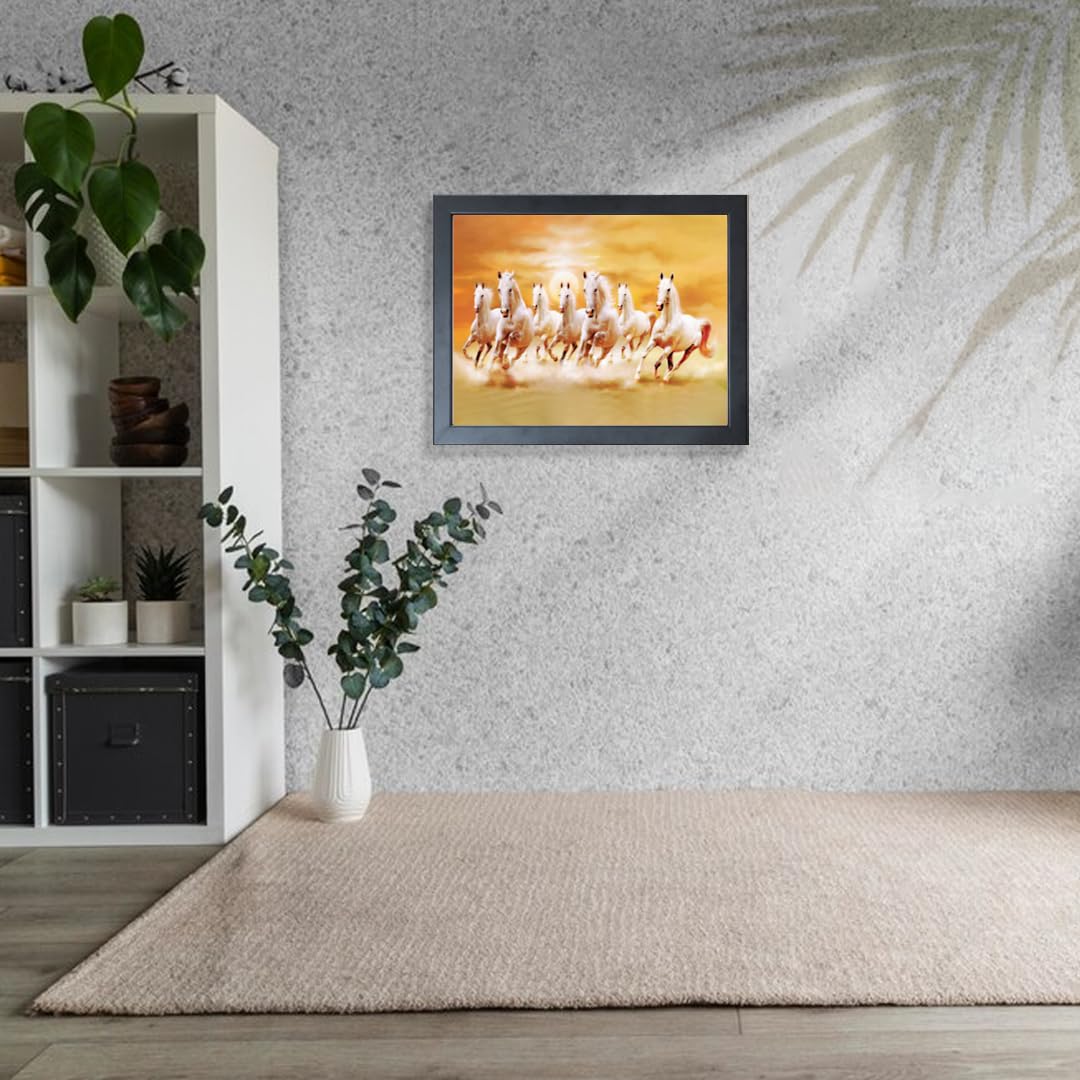
Moolwan 5-Panel Galloping Horses Canvas Wall Art Painting (127x76cm) - Multi-Frame Nature Art
You've measured your living room wall three times. Maybe four. The tape measure says 360cm (12 feet), but you're still not confident because every wall art size guide says something different. Some say "fill 60% of the wall," others say "leave breathing room," and none account for your 8-foot sofa underneath or the fact that your ceiling is only 9 feet high. You keep second-guessing: is 127cm actually right for a 12-foot wall?
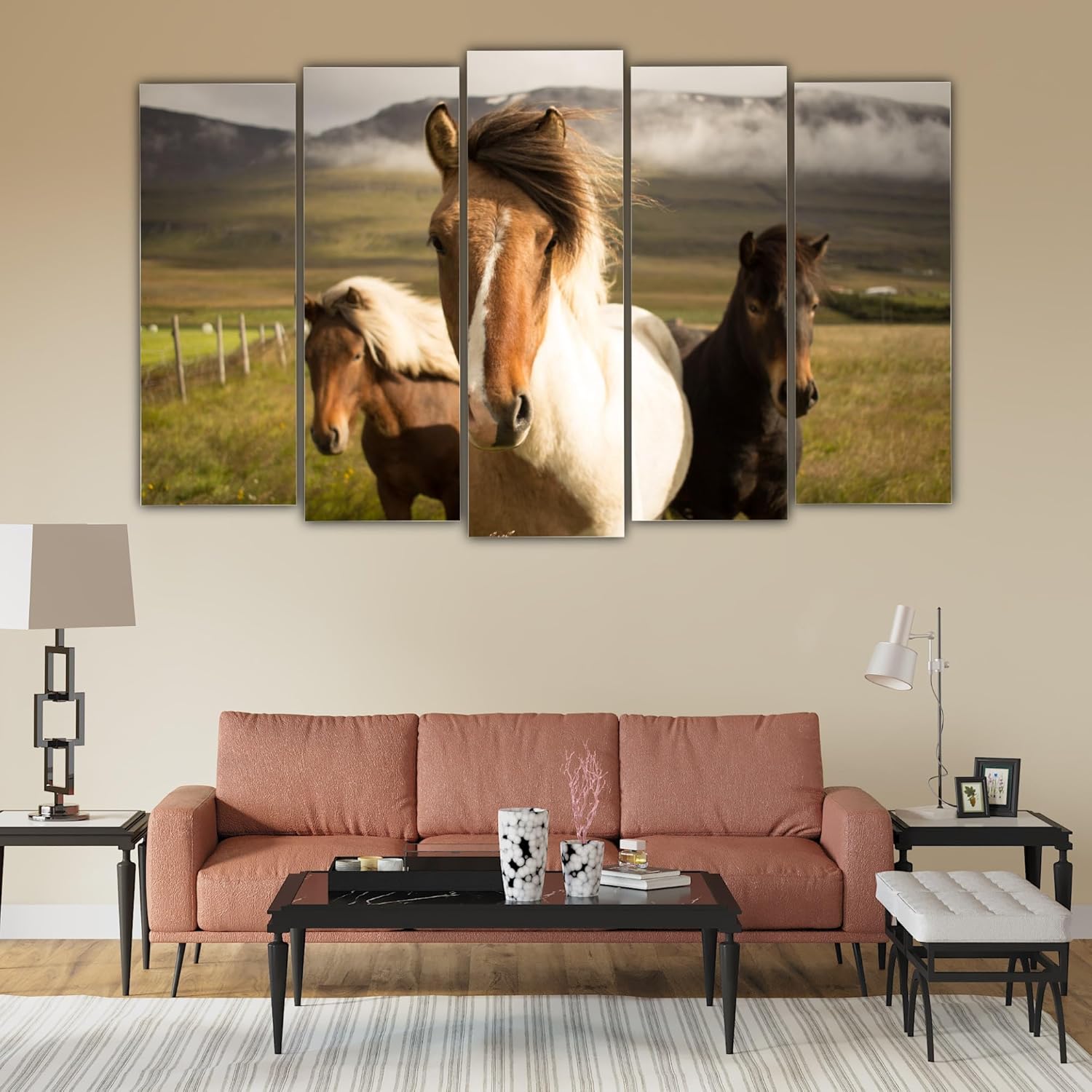
Here's the spatial reality: On a 12-foot (360cm) wall, this 127cm canvas covers exactly 35%. That leaves 116cm of wall space on the left side and 116cm on the right—enough breathing room that the art doesn't feel cramped, but substantial enough that it anchors the space above your sofa. If your sofa is the typical 6-8 feet wide, this canvas extends slightly beyond the sofa edges on both sides, creating that "intentionally placed" look rather than the "floating in space" problem you get with undersized art.
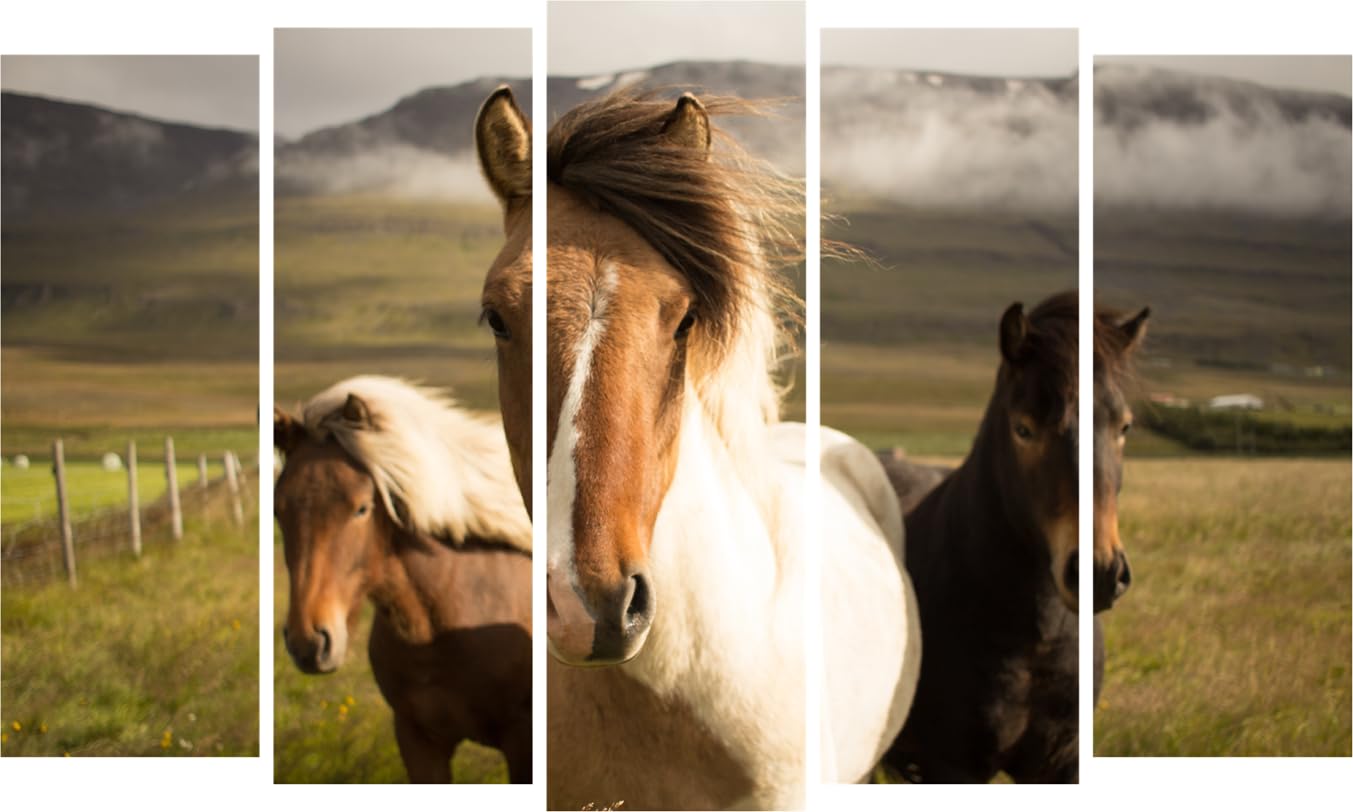
The browns and earthy greens in these galloping horses work naturally in Indian homes because they echo the wooden furniture most of us have—coffee tables, TV units, dining sets. Against cream or off-white walls (the standard builder color), the horses stand out without clashing. The misty mountain background adds depth without overwhelming the space with too many competing colors.
Why 127cm Works on 12-Foot Walls (and What Happens If You Go Smaller or Bigger)
Let's do the actual math, not just design theory.
127cm canvas on 360cm wall:
- Coverage: 35%
- Space remaining: 233cm (distributed as ~116cm per side)
- Visual balance: Centered above 6-8 ft sofa, slight overhang on both sides
If you went smaller (say, 100cm):
- Coverage: 28%
- Problem: Looks undersized above standard sofas, creates that "postage stamp" effect
- You'd constantly wonder if you should have gone bigger
If you went bigger (say, 150cm):
- Coverage: 42%
- Problem: On a 9-foot ceiling (270cm), a 76cm tall canvas leaves limited vertical space
- Risk: Feels crowded, especially if you have wall-mounted AC or photo frames nearby
127cm hits the proportional sweet spot for the majority of Indian living rooms (12x14 feet with 9-10 foot ceilings). It's not tentative, but it's not overwhelming.
The Color Science: How Earth Tones Look Against Cream Walls
Most product photos show wall art on pure white or dark accent walls. Your walls are probably cream, off-white, or that light peachy-beige that builders use everywhere.
Here's what these colors actually do:
Browns and chestnuts (from the horses): These warm tones don't fight with cream walls—they extend them. In morning light from east-facing windows, the browns look richer. In evening LED light (which most of us have), they soften and blend with wooden furniture.
Greens and landscape tones: The field and mountain backdrop adds cool contrast without being jarring. If you have indoor plants (money plant on the TV unit, tulsi on the window), the greens in the canvas echo those natural elements.
Multi-panel separation: The 5-panel format breaks up the image into vertical sections. This matters in Indian homes where we often have multiple light sources (tubelight, corner lamp, TV glow). Each panel catches light differently, creating subtle depth you don't get with single-canvas prints.
Installation Takes 15 Minutes (Even If You're Not Handy)
Rental deposit is ₹50,000. You're not drilling unnecessary holes.
This canvas uses the standard hardware setup:
- D-ring hooks: Pre-installed on the back of each frame
- Nails or wall hooks: 2-3 small nails per panel (total: 10-15 nails depending on your wall type)
- Weight distribution: 3kg total across 5 panels = ~600g per panel, light enough for standard wall hooks
For rental homes: Use monkey hooks or adhesive strips rated for 1kg per hook. The splash-proof coating means you can install this in the living room, bedroom, or even near the kitchen/dining area without worrying about moisture damage during monsoons (especially relevant if you're in Mumbai, Kolkata, or coastal cities).
Installation time: 15-20 minutes with a measuring tape, pencil, and hammer. If you've ever hung a photo frame, you can do this. The 5-panel format requires spacing of 2-3cm between panels—measure once, mark all five positions, then hang.
How This Compares to Other Sizes You've Been Considering
You probably have three tabs open: this 127cm version, maybe a 100cm version, and possibly a 150cm+ version. Here's the honest difference:
127cm vs. 100cm:
- 100cm works if your wall is 10 feet or your sofa is 5-6 feet
- On a 12-foot wall, 100cm covers only 28%—it'll look proportional in photos but tentative in person
- You save ₹300-500, but you'll second-guess the size every time guests visit
127cm vs. 150cm+:
- 150cm+ works for 14-foot walls or large commercial spaces (hotel lobbies, office receptions)
- On a 12-foot wall with a 9-foot ceiling, 150cm can feel dominant, especially if your room has windows or doors breaking up wall space
- You spend ₹800-1,200 more for size that might overwhelm the room
127cm is the middle ground that most Indian living rooms are designed around—not too timid, not too bold. If your room is 12x14 feet (the standard 2BHK living room size), this fits without requiring you to rearrange furniture or remove other wall decor.
What This Will Look Like in Your Living Room (Not Just Online Photos)
Product photos are shot in controlled studio lighting with neutral backgrounds. Your living room has:
- Natural light from windows (east/west-facing, filtered through curtains)
- Overhead tubelight (harsh white LED)
- Corner lamps or floor lamps (warm yellow)
- TV glow in the evening
Morning (7-10 AM): If you have east-facing windows, natural light will bring out the warm browns in the horses' coats. The canvas won't look flat—the multi-panel depth creates slight shadows between frames.
Afternoon (12-4 PM): Overhead tubelight makes colors look more saturated. The greens in the landscape will appear brighter. This is when the splash-proof coating earns its keep—diffused light doesn't create harsh glare.
Evening (6-10 PM): With LED tubelights and TV on, the canvas softens. The horses remain the focal point, but the background mountains fade slightly into shadow, creating natural depth. If you have a corner lamp near the sofa, it'll cast a warm glow on the lower panels.
Realistic expectation: This won't look like a gallery installation with accent lighting. It'll look like intentional, well-chosen wall art that complements your existing furniture and lighting. The browns match wooden coffee tables, the greens echo potted plants, and the overall composition fills the wall without demanding constant attention.
Quick Specifications
- Product Name: Moolwan 5-Panel Galloping Horses Canvas Wall Art Painting
- Dimensions: 127cm (W) x 76cm (H) x 0.6cm (D)
- Weight: 3000g (3kg) across 5 panels
- Material: 340 GSM cotton canvas, moisture-resistant coating
- Frame: 1.5" kiln-dried pinewood
- Inks: Eco-solvent UV-resistant
- Panel Count: 5 panels with 2-3cm spacing
- Colors: Earth tones (browns, greens, blues/grays)
- Feature: Splash-proof finish suitable for high-humidity environments
- Delivery: 5-6 days (metro cities), 6-8 days (tier-2/3 cities)
- Installation: D-ring hooks, standard wall mounting hardware included