
Cart
Welcome to the cozy club, my friend! If your home is so small that you practically high-five your refrigerator when opening the bathroom door, you're in good company. Today's tiny living revolution isn't just about making do—it's about creating spaces that feel like TARDIS homes (you know, bigger on the inside). Whether you're in a shoebox apartment, a compact condo, or just trying to make your regular-sized home feel less cluttered, these space-saving tricks will have you living large without the square footage. Let’s take it to the next level with some Artistic Wall Hangings as space-saving decor tips for small home decoration that both inspire and free your floor space. Let's turn that sardine can into a sanctuary, shall we?
Mirrors aren't just for checking if you've got spinach in your teeth! They're magical space-expanding portals that can double your visual square footage faster than you can say "abracadabra." Place a large mirror opposite a window to bounce natural light throughout the room and create the illusion of another window. Or try a full-length mirror behind a console table to give your entryway that "fancy hotel lobby" vibe. Just be strategic with placement—unless you want guests to see your bedhead reflection from every possible angle! You can heighten the reflectivity and elegance by pairing your mirrors with Ceramic and Resin Vases for charming space-saving decor setup on shelves and narrow tables.
When floor space is as precious as the last cookie in the jar, it's time to look up! Your walls are begging to be utilized. Install floating shelves above doorways, mount your TV instead of using a stand, and consider wall-mounted desks that fold away when not in use. Hanging planters bring greenery without sacrificing surface space, and vertical bookshelves can turn that awkward corner into a mini-library. Remember: gravity is just a suggestion when it comes to small-space decorating! Combine this approach with Small decorative showpieces for small tables and vertical shelves to elevate your tiny home’s decor game.
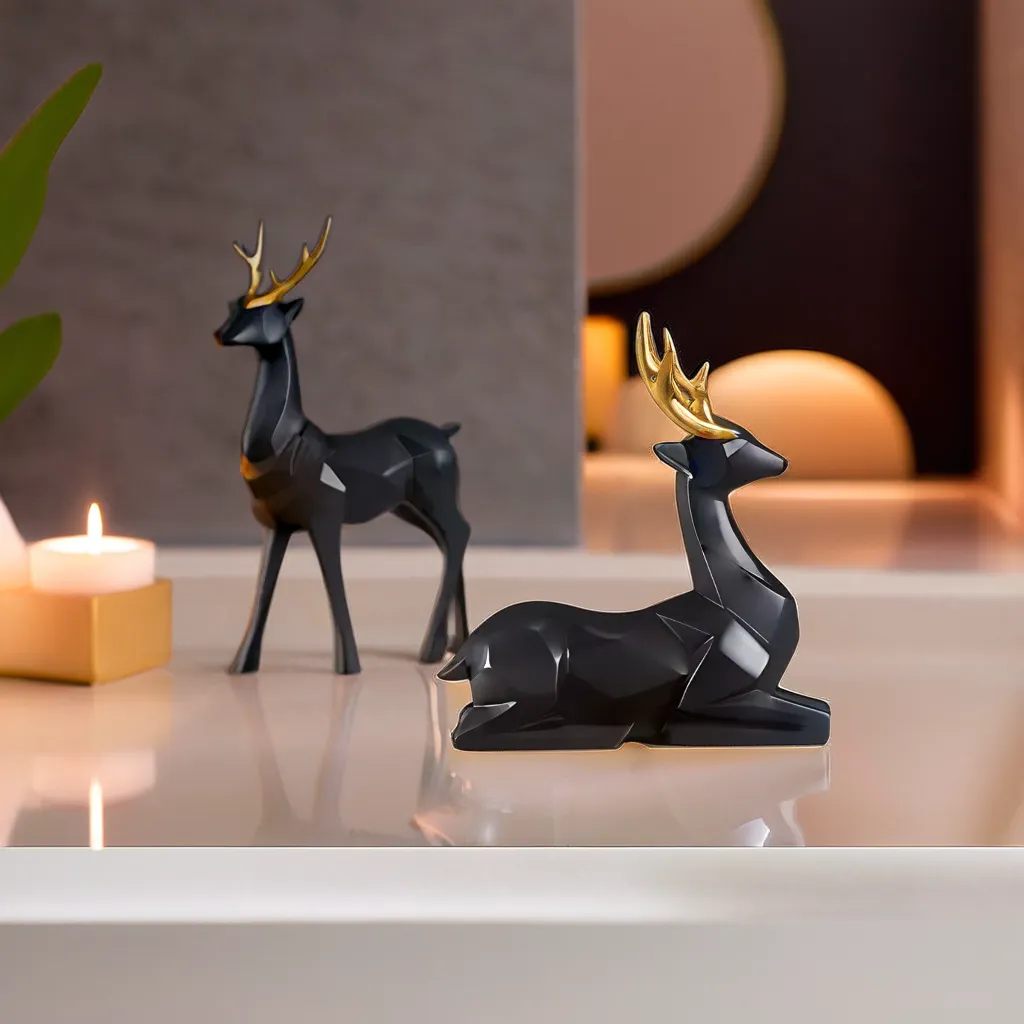
In small-space living, furniture that does just one thing is as useful as a chocolate teapot. Invest in pieces that work harder than you do on Monday mornings! Think ottomans with hidden storage for your secret candy stash, sofa beds for unexpected guests, and nesting tables that can spread out for parties and tuck away when you need to practice your living room dance moves. My personal favorite? Coffee tables with lift-tops that transform into work-from-home desks faster than you can say "I'm definitely wearing pants for this Zoom call." Add character to multifunctional surfaces with Modern Design Statues as decorative and space-saving pieces that bring form and function together.
Need to create separate zones without actual walls? Room dividers are your new best friends! But forget those clunky folding screens from grandma's house—today's options are stylish space-definers that won't make your home feel like a maze. Try open bookcases that allow light to pass through while creating distinct areas, hanging fabric panels that add texture and movement, or even a strategically placed indoor plant collection. It's like having multiple rooms without the hassle of additional rent! Or consider Tall Showpieces for Corner as dreamy spatial dividers for small spaces that subtly split yet enhance your interiors.
Dark colors might be slimming on your waistline, but they're downright claustrophobic on your walls! Lighter hues reflect light, making spaces feel airy and open—like your home just took a deep breath. That doesn't mean you're doomed to all-white everything (unless you enjoy living in a cloud). Try painting walls and trim the same color to eliminate visual breaks, or use semi-gloss paint to bounce more light around. And if you're craving those dramatic dark tones? Use them as accents that pop against your light backdrop, like chocolate chips in vanilla ice cream! Amplify this light-maximizing magic with Subtle glazed finish ceramic pieces for small room decor placed with intent.
In small spaces, storage needs to be sneakier than a cat plotting to knock over your water glass. Look for opportunities to stash stuff everywhere—beds with drawers underneath, stairs with pull-out compartments, or hollow ottomans that eat your seasonal decor. Install toe-kick drawers beneath kitchen cabinets for rarely-used items (or emergency chocolate supplies). Even your walls can join the storage party with recessed shelving between studs. Remember: in the game of small-space living, clutter is the enemy, and hidden storage is your secret weapon! Enhance functionality without compromising charm using Small decorative items in resin finish for discrete shelf accents.
Time to channel your inner magician and create space where none exists! Use striped rugs to visually widen narrow rooms (horizontal stripes) or make them seem longer (vertical stripes). Install curtains close to the ceiling and let them puddle on the floor to create the illusion of taller walls. Choose furniture with exposed legs to let your eye travel underneath, making the room feel more open—like your sofa is doing a fancy high-kick dance move. These visual tricks are the next best thing to actually knocking down walls (and much less likely to upset your landlord)! Try complementing these illusions with Abstract Showpieces for illusion-based decor in tiny rooms.
Marie Kondo was onto something, folks! In small spaces, every item needs to earn its keep by either being functional, beautiful, or ideally both. This doesn't mean living in a sterile box—it means being intentional about what makes the cut. Choose quality over quantity, and let a few statement pieces shine rather than crowding the space with an army of knick-knacks. Think of it as curating a museum exhibition of your awesomeness, not hosting a yard sale in your living room! Elevate your minimalist decor with Modern decor accessories with vibrant finish for small accents that reflect your personality and still keep it light.
Who says a dining room can't also be an office, craft space, and occasional dance floor? In small homes, rooms need to be as adaptable as a chameleon at a color convention. Design with flexibility in mind—a dining table that can shrink or expand, a guest room that doubles as a home gym, or a living room that transforms into a cinema with the right lighting. The key is furniture that can be easily moved or repurposed, like lightweight chairs that can float between rooms when needed. It's like having a magic home that transforms based on what you're doing! Create mood shifts using Resin decor items for versatile home décor that adapts with ease across these evolving spaces.
Technology has finally caught up with small-space living! Embrace gadgets that save space while making life easier—wall-mounted speakers instead of bulky sound systems, projectors instead of massive TVs, and smart home hubs that eliminate the need for multiple controllers. Even your kitchen can get a high-tech makeover with induction cooktops that can be stored away when not in use, or refrigerator drawers that fit under counters. It's like living in a spaceship, but with better snacks and fewer aliens! Go the extra mile by integrating Hanging Decorative Items for artistic sophistication in gadget-friendly homes.
Even the tiniest balcony, patio, or windowsill can become bonus living space with the right approach! Weather-resistant rugs, compact furniture, and strategic lighting can transform outdoor nooks into extra rooms during good weather. No outdoor space? Create the illusion with large windows left unobstructed, indoor plants that bring the outside in, or even a strategic mirror placement that reflects outdoor views. And remember, a window box herb garden isn't just pretty—it's also a space-saving way to grow your own garnishes for those fancy cocktails you've been perfecting! Stylishly blur these lines using Decorative Vases as cozy outdoor-inspired indoor elements.
The hardest part of small-space decorating isn't finding cute stuff—it's knowing when to stop adding cute stuff! Regular editing is crucial to prevent your carefully designed space from morphing into a storage unit with ambience. Adopt the "one in, one out" rule for new purchases, schedule seasonal decluttering sessions, and be brutally honest about what you actually use versus what's just taking up precious real estate. Think of it as giving your home room to breathe—and yourself room to live without playing Tetris with your belongings every day!
The 3-5-7 rule is your decorating BFF! It suggests using 3 colors in a room (a dominant color for 60% of the space, a secondary color for 30%, and an accent color for 10%), displaying accessories in groups of odd numbers (3, 5, or 7) for visual interest, and dividing your room into 7 key areas for balanced functionality. It's like having a decorating cheat code that prevents your space from looking like a rainbow exploded in it!
Maximizing space is all about thinking in 3D! Use vertical space with tall bookcases and wall-mounted storage, choose multi-functional furniture (storage ottomans, sofa beds, expandable tables), eliminate dead space in corners with custom solutions, and ruthlessly edit your possessions. Remember, empty space isn't wasted—it's breathing room that makes your home feel larger. And the ultimate hack? Regular decluttering sessions that prevent stuff from multiplying like rabbits when you're not looking!
The 2/3 rule is a proportion guideline that suggests furniture should take up about two-thirds of the available space in any given area. For example, your sofa should be about 2/3 the length of your wall, or your coffee table about 2/3 the length of your sofa. This creates visual harmony and prevents rooms from feeling either too crowded or too empty—it's the Goldilocks approach to furniture sizing that makes everything feel "just right"!
Think of the 60-40 rule as the perfect recipe for visual interest! It suggests using your dominant color for 60% of the room (walls, large furniture) and your secondary color for 40% (accent furniture, textiles). This creates a balanced look without being boring or chaotic. Some designers extend this to a 60-30-10 rule, adding a third color as a small but impactful accent. It's like wearing a great outfit—you need a base color, coordinating pieces, and just the right accessories to make it pop!
The 80/20 rule (or Pareto Principle) in interior design suggests that 80% of your space should be functional, while 20% can be purely decorative. Alternatively, some interpret it as keeping 80% of your design timeless and neutral, while 20% can be trendy or seasonal. It reminds us that homes should be lived in, not just looked at—so while that all-white sofa might look amazing on Instagram, it's probably not practical if you have kids, pets, or enjoy drinking red wine while wearing new jeans!
Measure everything (twice—trust me on this)
Determine the room's primary function (be honest about how you'll actually use it)
Choose a focal point (fireplace, window, large art piece)
Establish a color scheme (using the 60-30-10 rule)
Plan your furniture layout (start with the largest pieces)
Consider traffic flow (can people walk through without doing parkour?)
Add lighting at multiple levels (ceiling, task, and ambient)
Layer in textiles (rugs, curtains, pillows, throws)
Accessorize thoughtfully (in groups of odd numbers)
Step back and edit (remove at least one thing—I dare you!)
Remember, designing a room is like cooking—follow the recipe the first time, then feel free to add your own special ingredients once you know what you're doing!


