
Cart
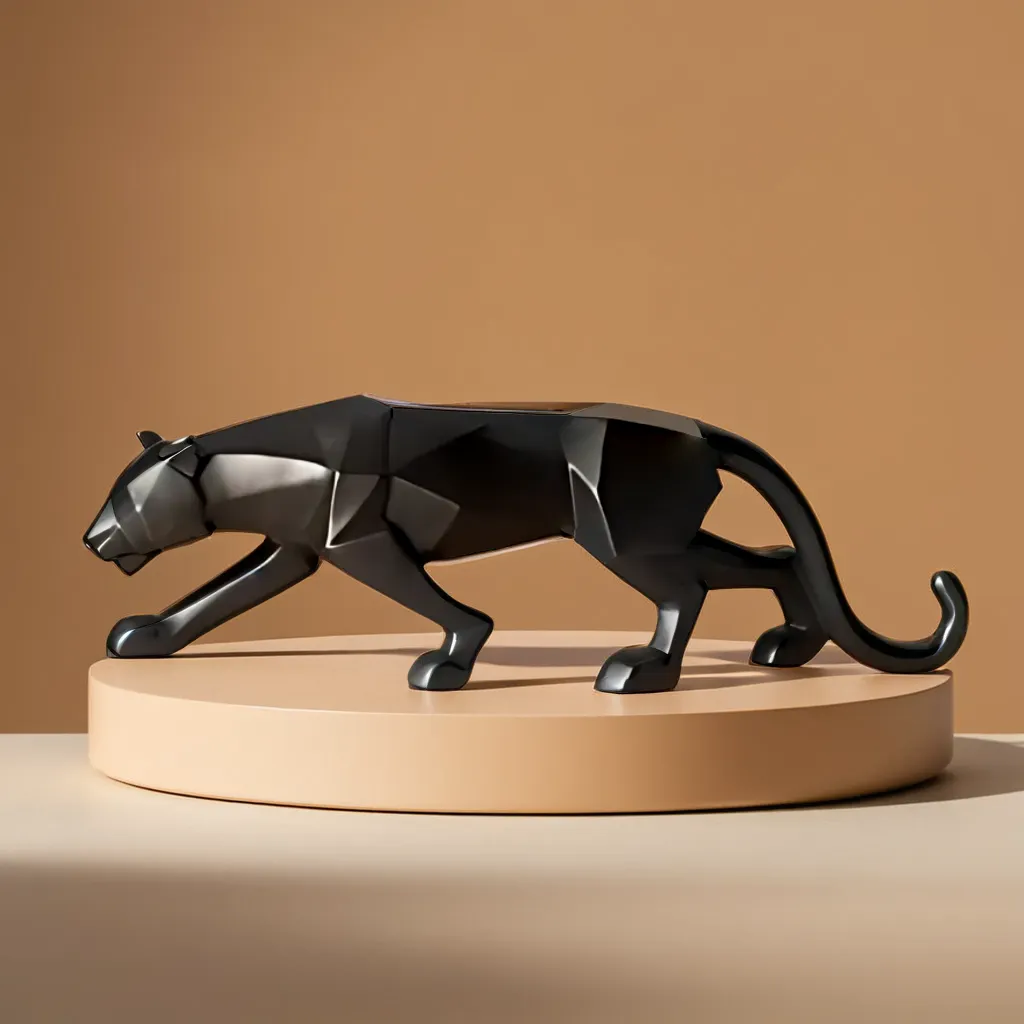
Welcome to the "my-coffee-table-is-also-my-dining-table-and-sometimes-my-desk" club! If your living room is so small that you can practically change the TV channel with your toe while sitting on the sofa, I've got some life-changing news. Small living rooms aren't a design disaster – they're actually an opportunity to flex your creativity muscles! Think of your compact space as the interior design equivalent of a fun-sized candy bar: less to deal with, but still totally satisfying. Let's transform that shoebox you call a living room into a space that feels like it could host a mini-gala (or at least fit your friends for movie night without playing human Tetris). For instance, adding Stunning abstract showpieces for small living room transformation on shelves or table corners brings instant elegance without crowding surfaces.
Let's start with the oldest trick in the small-space book, but with a twist! Mirrors aren't just for checking if you have spinach in your teeth. A strategically placed mirror can make your room do the impossible – expand without demolition! Place a large mirror opposite a window and watch as your room magically doubles in perceived size. For extra style points, try a cluster of smaller mirrors arranged gallery-style or a floor-to-ceiling mirror that makes your ceiling appear higher than the hopes you had for your last blind date. Just be careful with placement – nobody needs to see themselves chewing from seventeen different angles during dinner. You can also enhance this visual trick by complementing the setup with a Large decorative vase for small room space illusion, acting as a bold focal that anchors light and style.
In a small living room, every piece needs to earn its keep like it's paying rent. Look for ottomans with storage inside (perfect for hiding the evidence when you need to quickly "clean up" before unexpected visitors), coffee tables with drawers, or sofas that transform into beds faster than your mood after coffee. My personal favorite? A side table that's also a laptop desk, book storage, and in desperate times, a dinner table. If Marie Kondo and a Swiss Army knife had a furniture baby, this would be it. Remember: if it doesn't do at least two jobs, it doesn't deserve precious floor space! Bonus? You can elevate such functional furniture with Multifunctional modern statues for decorating busy living room corners, adding personality while maximizing use.
Here's a counterintuitive tip that'll blow your mind: floating your furniture (pulling it slightly away from walls) can actually make a small room feel larger. I know, I know – your instinct is to push everything against the walls like they're wallflowers at a middle school dance. But creating even a tiny bit of space around larger pieces gives your eyeballs a little breathing room. Plus, it makes your apartment look like you actually planned it rather than just shoving furniture wherever it fit on moving day. Bonus: those dust bunnies behind the sofa are now art installations, not cleaning failures! To enhance this airy vibe, place a Sleek black ceramic statue for floating furniture style in small spaces near surfaces to elevate corners with effortless elegance.
When picking furniture for your mini living room, channel your inner fashion scout and look for pieces with legs. Furniture that shows a little leg (scandalous!) creates visual space underneath, allowing your eye to travel further and making the room feel more open. That chunky sofa that sits directly on the floor? It's the design equivalent of wearing horizontal stripes to an all-you-can-eat buffet – not doing you any favors in the space department. Opt for sofas and chairs with visible, slender legs and watch your room visually expand like your waistband during the holidays. Pair such pieces with Tall decorative items for corner styling with airy leggy furniture, contributing vertical charm without hogging floor area.
When floor space is as rare as a parking spot in Manhattan, look up! Your walls are like untapped real estate gold mines. Install floating shelves that climb toward the ceiling, hang plants from above, or mount your TV to free up precious surface area. Vertical storage draws the eye upward, creating the illusion of height while keeping your stuff organized. Wall-mounted reading lights instead of floor lamps? Genius! Hanging plants instead of floor pots? Revolutionary! You'll feel like you've discovered a whole new dimension – because you literally have. Welcome to the vertical universe, my friend! Try accessorizing these shelf heights using Big vertical wall hangings for small living room transformation to enhance drama and vertical stretch.
The colors in your tiny living room can either make it feel like a spacious oasis or like you're living in a cramped shoebox. Light colors generally make spaces feel larger and airier – think soft whites, gentle grays, or pale blues. But that doesn't mean your room needs to look like it was designed by a minimalist ghost! Add pops of bold color through accessories that can be easily swapped out when you inevitably get tired of that "energizing" orange after three months. Pro tip: painting your ceiling a slightly lighter shade than your walls creates the illusion that your ceiling is playing hard-to-get with the floor. Sprinkle in color with Handmade bold-toned ceramic decor for small stylish rooms to keep the aesthetic playful and chic.
Let's face it – nothing makes a small space feel like a scene from "Hoarders" faster than clutter. Channel your inner ruthless dictator and make tough decisions about what deserves to occupy your precious square footage. That collection of shot glasses from every city you've visited? Maybe display the top five and store the rest. The pile of magazines you're "definitely going to read someday"? Time for a digital subscription. Remember: in a small living room, empty space is like finding money in an old coat pocket – unexpectedly delightful and worth celebrating! You’ll find inner peace with Compact decorative items for small table declutter style that look intentional but don’t overpower.
Rugs, curtains, and pillows aren't just pretty face accessories – they're hardworking design elements that can transform your space without requiring a contractor or your landlord's permission. A large area rug can define your living space within an open floor plan (and cover up that questionable carpet your landlord refuses to replace). Hanging curtains close to the ceiling and letting them puddle slightly on the floor creates the illusion of taller ceilings, even if your actual ceiling height is more "duck to enter" than "grand foyer." And never underestimate the power of throw pillows to add personality without adding bulk! Rugs get cozier visually when paired with Trendy corner accents for cozy living room makeover that highlight personality with charm.
In small spaces, lighting is your secret weapon – like Spanx for your living room, it smooths everything out and makes it look better. Ditch the single overhead light that makes your space look like an interrogation room and opt for multiple light sources at different heights. Table lamps, floor lamps, wall sconces, and string lights create layers of ambiance that make your space feel cozy rather than cramped. Bonus points for lights with dimmer switches that let you adjust from "performing surgery" bright to "Netflix and actually chill" mood lighting with a simple twist. Consider Shelf decor lighting with small showpieces for ambient charm to highlight zones in dim-lit corners for balance.
Until scientists perfect invisibility technology, we have to be clever about where we stash our stuff. Look for furniture with hidden storage compartments – ottomans that open up, coffee tables with drawers, or benches with space inside. Install shelving in overlooked spaces like the area above doorways or that awkward corner nobody knows what to do with. And remember: closed storage is your friend in small spaces. As cute as open shelving looks on Pinterest, displaying all your possessions will make your small room feel cluttered faster than you can say "Marie Kondo would not approve." You can also add Traditional compact storage showpieces for elegant smart interiors that double up as accents and discreet organizers.
When working with a small living room, scale and proportion become your best friends or worst enemies. That massive sectional sofa might be super comfy, but if it takes up 90% of your living room, it's a design felony. Look for furniture that fits your space – apartment-scale sofas, love seats instead of full-sized couches, or armless chairs that don't visually block the space. And please, I beg you, measure before you buy! Nothing's more heartbreaking than falling in love with a piece only to discover it fits in your living room the way I fit into my pre-pandemic jeans – technically possible but not pretty. A helpful fix is Proportional large resin accents for stylish space balance that draw attention while staying true to compact styling.
The 3-5-7 rule is like the secret formula to a perfectly balanced room! It suggests using 3 different colors, 5 different patterns, and 7 different textures throughout your space. Think of it as your room's personal styling guide – 3 colors keep things cohesive, 5 patterns add interest without causing visual chaos, and 7 textures add depth that makes your space feel rich rather than flat. In a small living room, you might stick to the lower end of the pattern range but still embrace different textures through pillows, throws, rugs, and furniture finishes.
The 2/3 rule suggests that your furniture should take up approximately two-thirds of your available space, leaving one-third open for movement and visual breathing room. It's like portion control for your living room! If furniture consumes more than 2/3 of your space, the room will feel crowded and uncomfortable. Less than 2/3, and it might feel sparse and unwelcoming. In a small living room, this rule is especially important – it ensures you have enough furniture to be functional and cozy without turning your living room into an obstacle course worthy of American Ninja Warrior.
The 70-30 rule is all about creating visual interest through contrast. It suggests using 70% of a dominant color and 30% of an accent color in your space. Think of it as the design equivalent of a power couple – one takes the lead while the other adds the pizzazz! In small spaces, this often translates to 70% neutral tones (whites, creams, grays) to create a sense of spaciousness, with 30% bolder colors to add personality. You could also apply this to textures or styles – 70% modern pieces with 30% vintage finds creates a space that feels curated rather than catalog-ordered.
The best layout for a small living room is one that prioritizes flow and function over filling every inch. A conversation area with seating facing each other (rather than all pointed at the TV like a lecture hall) creates intimacy. For rectangular rooms, try floating the sofa in the middle with a slim console table behind it to create separate zones. L-shaped layouts work wonders in corners, while a symmetrical arrangement can make the space feel orderly and intentional. The magic formula? Maintain clear pathways of at least 30 inches for movement, keep furniture proportional to the space, and always have at least one piece that doesn't touch any walls to prevent that "everything-pushed-to-the-perimeter" look.
In the great sofa placement debate, there are a few winning strategies for small spaces. If your room is rectangular, try placing the sofa along the longer wall to maximize the open floor area. For square rooms, floating the sofa slightly away from the wall (even just a few inches) creates the illusion of more space behind it. If your living room serves as a walkthrough to another area, position your sofa to create a natural pathway without blocking flow. Avoid placing sofas in front of windows if possible – they block precious natural light that makes small spaces feel larger. And remember: just because your sofa came with two side tables doesn't mean you need to use both in a tiny space – asymmetry can actually create more usable room!
The TV placement puzzle in small living rooms requires balancing visibility with space conservation. Wall-mounting is your friend here – it frees up surface space and can be positioned at the perfect height to prevent neck strain. If your room layout allows, consider placing the TV in a corner on a swivel mount for flexible viewing angles. Another clever option is incorporating your TV into a gallery wall so it visually disappears when not in use (black screen, black frame!). For the truly space-challenged, consider a projector that can be tucked away when not needed, or opt for a smaller screen – contrary to popular belief, you don't need a cinema-sized TV in a room where you're sitting just a few feet away!


