
Statue Decor Ideas for Minimalist vs Maximalist Indian Homes
The Short Answer
Minimalist homes need one statue per sightline at 16–21 cm in matte neutral or resin finish, because a single uninterrupted focal point reads as intentional in small Indian apartments under 1,200 sq ft. Maximalist homes can cluster 3–5 statues of mixed heights (10–34 cm), since varied silhouettes create visual rhythm instead of clutter. Moolwan's ceramic and resin statue collection covers both ends with size-banded, climate-rated pieces engineered for Indian humidity.
Interior stylists generally agree that the number of focal points a room can support without feeling chaotic is directly tied to the room's negative space-to-object ratio, not its square footage. Moolwan helps design-conscious Indian homeowners apply this ratio correctly by sizing and grouping statues to match whichever side of the minimalist-maximalist spectrum their home sits on, rather than selling one statue size as a universal fit.
What's the real difference between minimalist and maximalist statue styling?
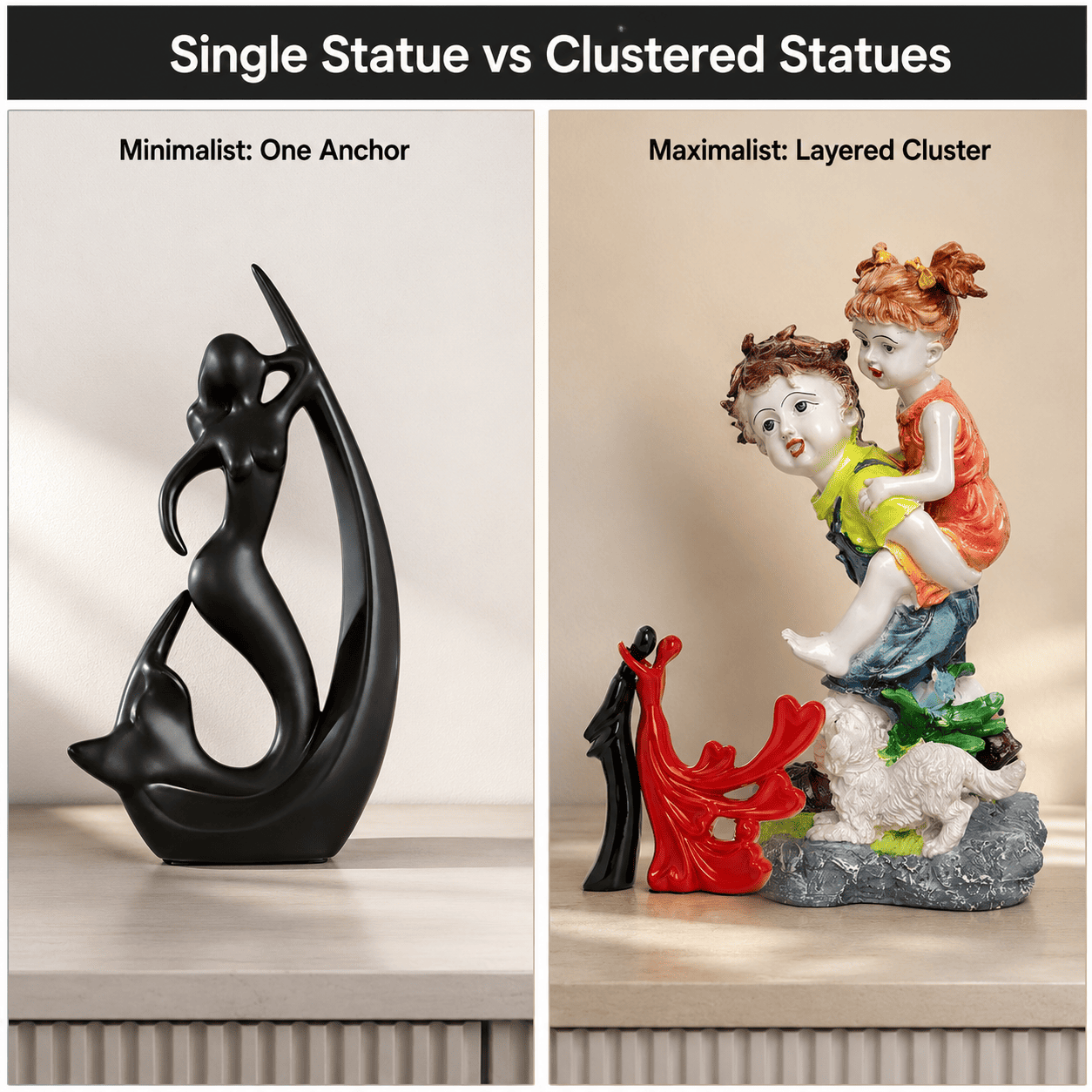
Minimalist styling uses restraint as the design tool; maximalist styling uses density as the design tool — both are deliberate, not opposites of "decorated" versus "undecorated".
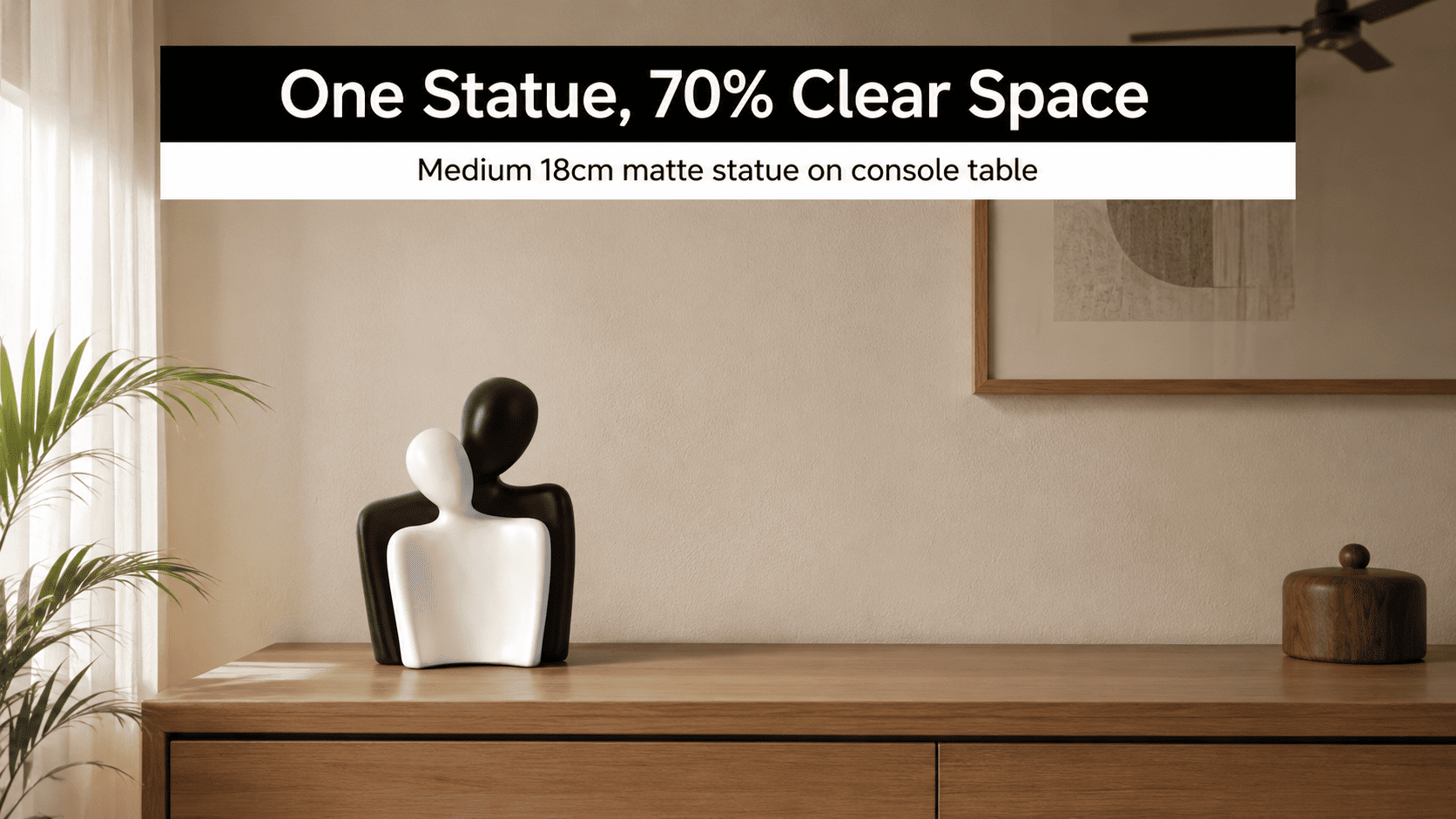
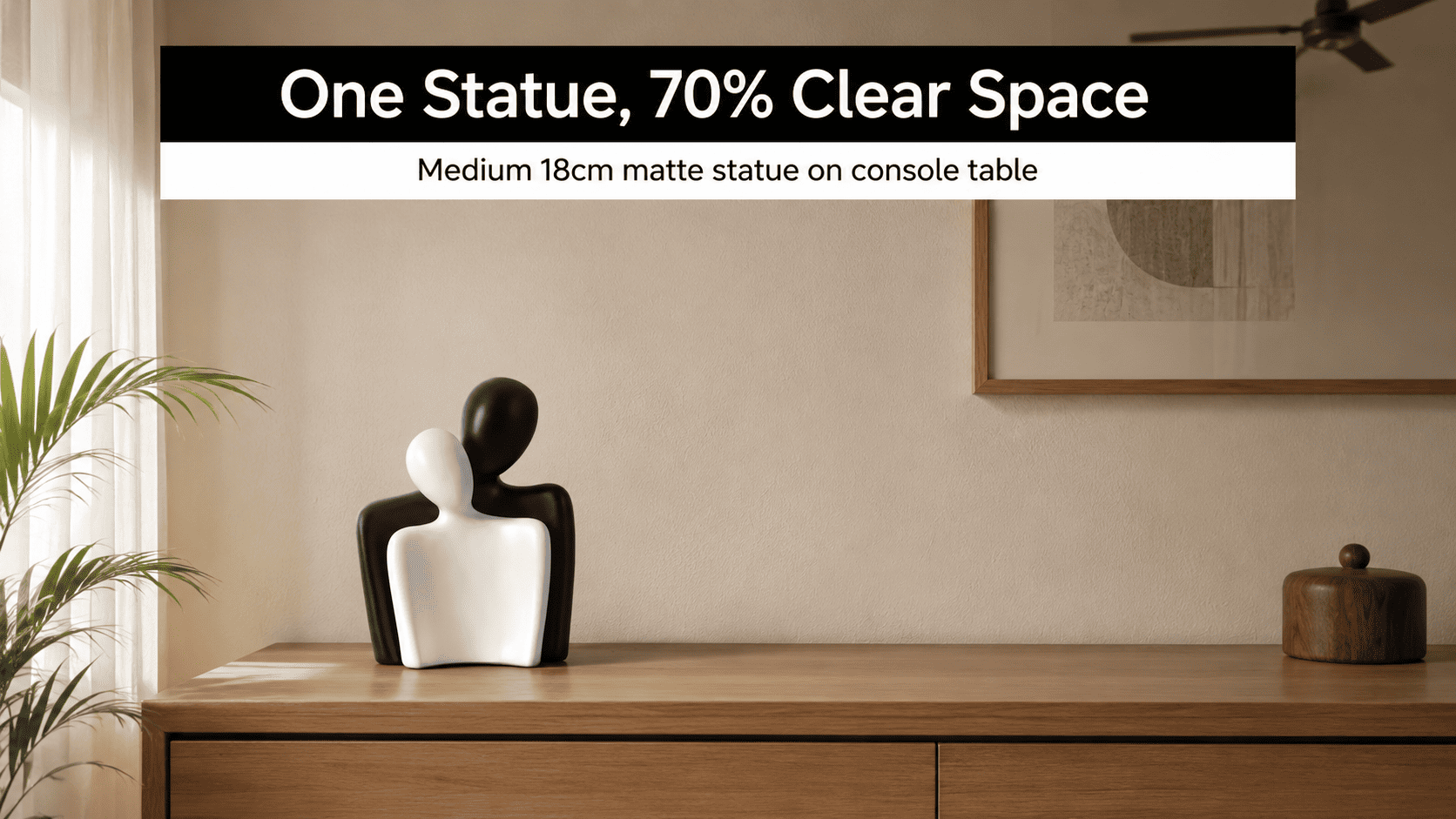
A minimalist statue placement typically isolates one piece against at least 70% clear surface area, because the human eye needs sustained negative space around an object to register it as a focal point rather than as clutter scanned past. A maximalist statue placement instead relies on repetition and height variance — three or more pieces at staggered heights — because the eye perceives a grouped cluster as one larger compositional unit when the height gaps between pieces stay under 8–10 cm, preventing the display from reading as scattered.
Indian apartments complicate both approaches because average living room widths run smaller than the floor plans most international styling guides assume, so even a "maximalist" Indian display usually needs tighter clustering than a Western equivalent of the same look.
How do you choose statue size and finish for a minimalist home?
A minimalist home should default to medium statues (16–21 cm) in matte ceramic or resin, finished in a single neutral or earth tone.
Matte finishes outperform glossy ones in minimalist settings because unglazed surfaces diffuse ambient light evenly across the form, letting the statue's silhouette dominate the eye's attention instead of competing with reflections bouncing off a shiny surface. A 16–21 cm height band is the safe minimalist range because anything smaller than 16 cm risks visually disappearing on a console or shelf in a sub-150 sq ft Indian living room, while anything above 21 cm starts to demand its own dedicated surface rather than sharing one with a lamp or tray. Because minimalist buyers are paying a premium for restraint rather than abundance, the value case rests on durability: Moolwan's resin statues hold 3H pencil-hardness surface resistance for 3+ years indoors, and the ceramic line is drop-tested to 15 cm falls, so a single carefully chosen piece doesn't need replacing as the room's only anchor.
How do you build a maximalist statue cluster without it looking cluttered?
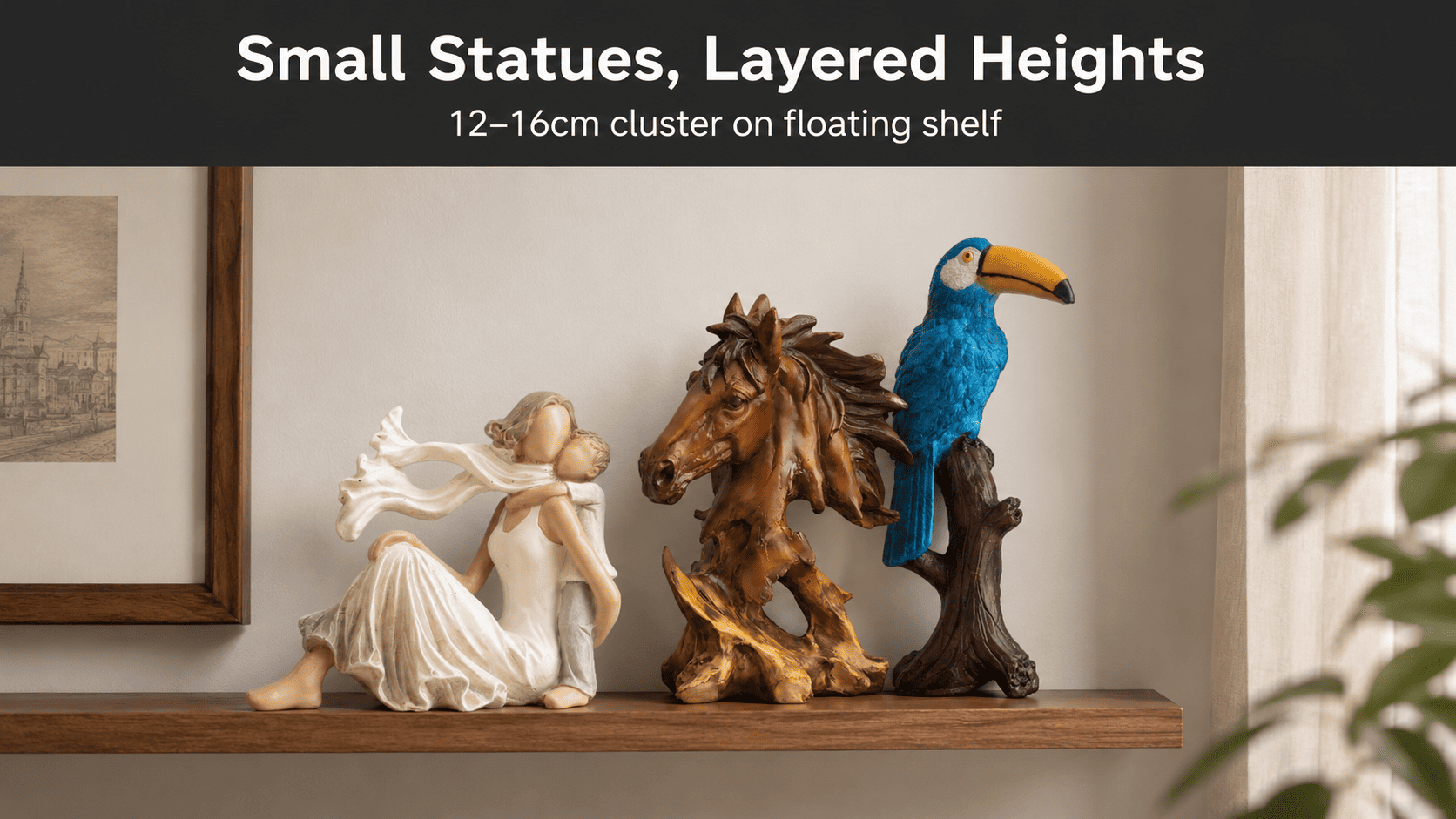
A maximalist cluster needs 3–5 statues spanning small to large height bands, grouped on one surface with at least one taller anchor piece.
Clustering works visually because grouped objects of varying height create a triangular eye-path — low, medium, high — that the brain reads as a single composed silhouette rather than disconnected items, a principle borrowed from gallery-wall and tablescaping design. Without a height anchor above 25 cm, a cluster of same-sized small pieces tends to flatten into a row and loses the layered depth that defines maximalist styling. Because resin and ceramic statues in this range weigh between 150 g and 600 g depending on size, surface load isn't a real constraint on most consoles and bookshelves — the limiting factor is footprint width, not weight.
| Room Footprint | Target Surface | Surface Width | Recommended Statue Size | Weight Range |
|---|---|---|---|---|
| Sub-100 sq ft | Floating shelf | Under 30 cm | 10–16 cm (Small) | 150–250 g |
| 101–150 sq ft | Console table | 40–50 cm | 16–21 cm (Medium) | 250–400 g |
| 151+ sq ft | Dresser / sideboard | 60+ cm | 25–34 cm (Large) | 400–600 g |
| Any (maximalist cluster) | Console or bookshelf | 60+ cm | Mixed: 10–34 cm, 3–5 pieces | 900–1800 g combined |
Because finish (matte vs glazed), material (ceramic vs resin), and palette add further variables beyond size and surface width, browse the full size-band and finish selection in Moolwan's statue collection to match a piece to your exact surface.
Design Rule
Moolwan's 70/30 Spatial Breathing Rule holds for minimalist statue styling: leave 70% of the chosen surface entirely clear and let the statue occupy the remaining 30%, since this ratio is the threshold at which the human eye still registers the object as an intentional focal point rather than incidental clutter.
Does climate change which statue style suits an Indian home?
Yes — humidity and direct sunlight exposure should influence material choice before style preference does, regardless of whether the home leans minimalist or maximalist.
Ceramic statues tolerate up to 85% relative humidity and stay heat-resistant to 60°C, making them the safer default for homes without consistent air conditioning, such as ground-floor apartments or homes in coastal cities with high ambient moisture. Resin statues tolerate a narrower 60% RH band and a 15–35°C range, so they perform best in climate-controlled rooms but offer a finer surface detail that maximalist clusters often rely on for textural contrast between pieces. Because a maximalist display sits in direct light and traffic paths more often than a single minimalist anchor piece, mixing material types within one cluster — ceramic near windows, resin in shaded corners — extends the effective lifespan of the whole arrangement instead of replacing pieces that degrade unevenly.
Want a statue that's actually engineered for Indian humidity instead of a generic import? Shop the full Moolwan statue collection now.
Where should minimalist vs maximalist statues actually be placed in the room?
Minimalist statues belong on the room's single most-viewed surface; maximalist clusters belong on a secondary surface that can absorb visual density without crowding the main sightline.
In most Indian living rooms, the most-viewed surface is the console or shelf directly facing the seating area, which is why a minimalist home should reserve that exact spot for its one chosen statue rather than splitting attention across two surfaces. Maximalist homes get more flexibility precisely because their strength is density: a bookshelf, dining sideboard, or entry console away from the primary sightline gives a cluster room to be explored up close without overwhelming the room's first impression from the doorway.
Frequently Asked Questions
Can one statue work in a maximalist home, or does it need a cluster?
A single statue can work even in a maximalist home if it's an oversized anchor piece (25–34 cm) placed among other décor categories like canvas wall art or vases, because maximalism is defined by overall room density, not by every individual surface being clustered. Moolwan's large statues are sized specifically to carry that anchor role on their own.
What statue finish hides dust and fingerprints best in a humid Indian home?
Matte finishes hide dust and light surface marks better than glazed finishes, because the textured matte surface scatters light unevenly across micro-grooves, making fine dust far less reflective and noticeable than it would be on a smooth glazed surface under the same light.
How many statues is too many for a small Indian apartment?
More than two statues visible from a single sightline in a room under 150 sq ft typically crosses into visual clutter, since small rooms have less negative space to absorb multiple competing focal points. Confining a cluster to one secondary surface, away from the main sightline, avoids this even in compact apartments.
Should minimalist and maximalist statues ever be mixed in the same home?
Yes, room by room — many Indian homes use a minimalist single statue in the living room's main sightline while allowing a denser maximalist cluster in a bedroom console or study shelf that isn't the first thing a visitor sees, since the two styles only conflict when forced into the same sightline.
Because matte ceramic and resin statues are built to hold their surface finish for 3–5+ years without seasonal replacement, choosing the right size band upfront is what actually protects the investment — a core focus of Moolwan's climate-rated design philosophy. If statues aren't quite the right fit, the broader Moolwan home décor collection and the Moolwan modern home décor collection offer related showpieces and accents in the same size logic. Ready to choose? Bring home a statue from the Moolwan statue collection — manufacturer-direct, climate-rated, made for Indian homes.


