
Tiger-tastic Roar: Framed Multi-Panel Wall Art
You may also like

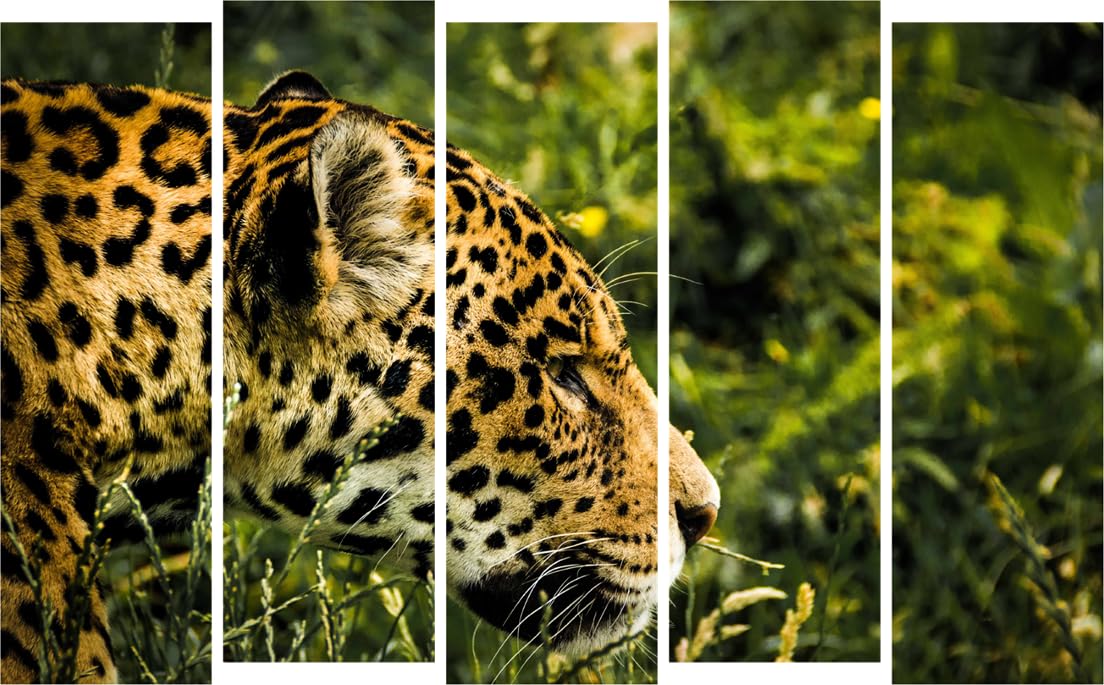
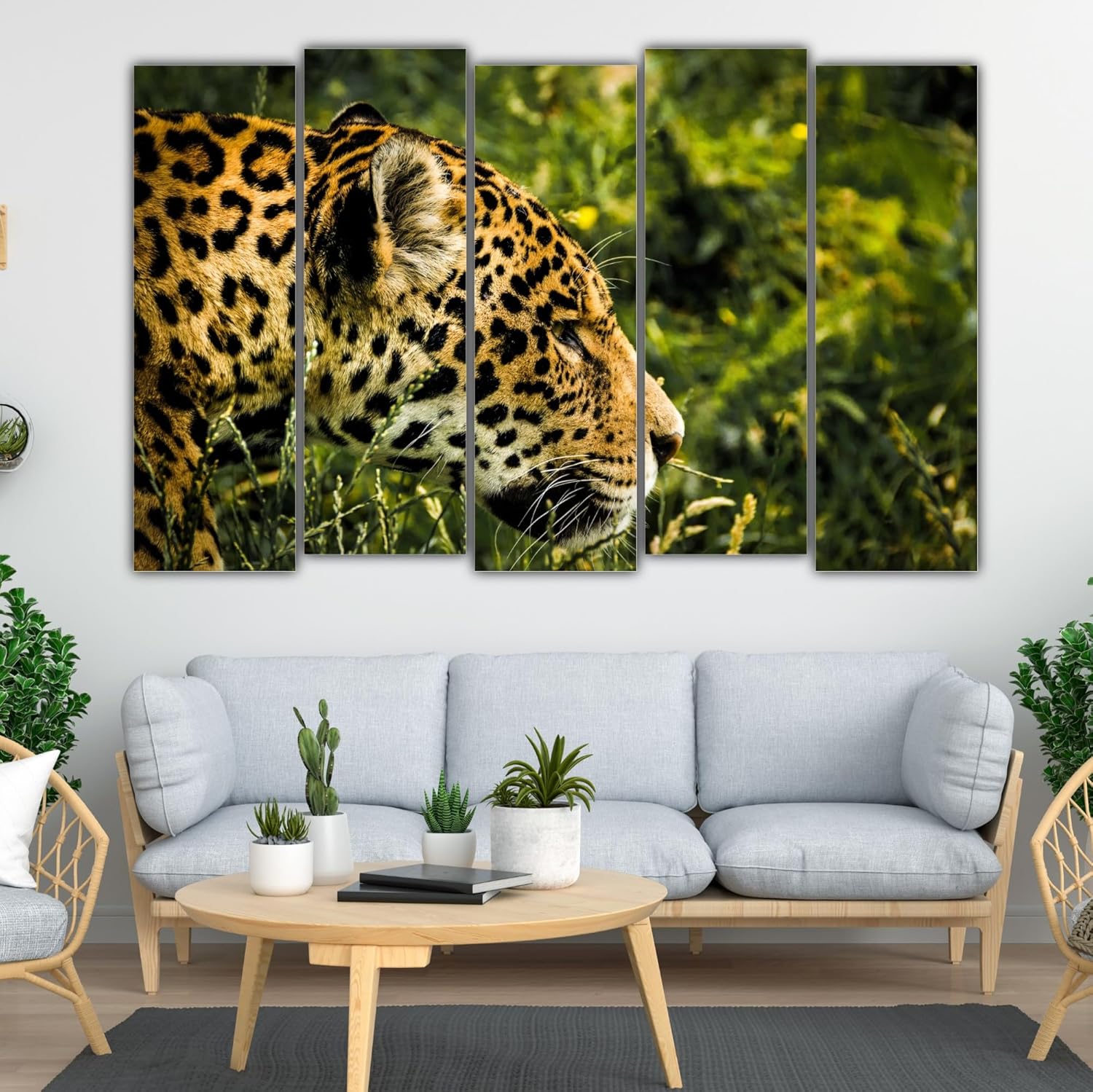
Moolwan 5-Panel Jaguar Canvas Wall Art Painting (127x76cm) - Multi-Frame Wildlife Art for Home Decor
You might have browsed dozens of animal canvas wall art by now. Some were too small—lost on your 12-foot wall like an afterthought. Some were too large—overwhelming your living room like a poster in a dorm. You probably kept coming back to something around 127cm—because intuitively, it feels right. But you want to be sure.
This 5-panel jaguar canvas wall art painting measures 127cm wide and 76cm tall. On a standard 12-foot Indian living room wall (roughly 360cm), this artwork covers about 35% of the wall space. That leaves approximately 116cm of breathing room on each side—enough that it looks intentional, anchored, not cramped or floating awkwardly. Above your 6-8 foot brown sofa, this creates the balanced visual weight most Indian living rooms need.
Why 127cm Works on 12-Foot Walls (and What Happens If You Go Smaller or Bigger)
Let's do the math your eyes already did instinctively.
Your wall is probably around 360cm (12 feet). This jaguar canvas wall art painting spans 127cm—that's 35% coverage. Interior designers typically recommend 25-40% coverage for statement pieces above sofas.
If you went smaller—say, 90cm—you'd only cover about 25%. Not wrong, but it might feel like a placeholder. Something you hung temporarily. You'd wonder why it doesn't feel complete.
If you went larger—160cm—you'd hit 44% coverage. On some walls, that works. But in a typical 12x14 foot Indian living room with windows, a TV unit on one side, and maybe a doorway, it might feel heavy. Like the jaguar is leaning into your space rather than living within it.
At 127cm, you're in that comfortable middle—visually substantial without dominating. The five-panel format adds horizontal interest, so even though the artwork is just over a meter wide, the segmented design creates visual rhythm that makes it feel larger than a single-panel piece of the same size.
What Golden-Orange and Jungle Green Actually Look Like Against Cream Walls
Online photos lie. That vivid golden-orange jaguar fur and lush green background looks dramatic on your screen. But your living room isn't a white-walled photography studio.
Most Indian living rooms have cream, off-white, or builder's beige walls. Good news: these warm neutrals actually enhance the golden-orange tones of this jaguar portrait. The cat's tawny coat doesn't fight your wall colour—it complements it. In morning light, the jaguar's golden fur will appear warmer, almost honeyed. In evening LED light, it'll look richer, slightly more ochre.
The green background vegetation creates contrast without clashing. Green sits opposite red-orange on the colour wheel, so against cream walls, it provides visual relief. If you have wooden furniture—the teak coffee table, the rosewood pooja shelf—the greens and golden-browns in this artwork will echo those warm wood tones.
If your sofa is brown or beige fabric (as most Indian sofas are), this artwork creates a cohesive palette without looking like everything was purchased as a matched set. It looks collected, intentional, like you chose it—not like a furniture showroom display.
Rental-Friendly Mounting: How to Hang Without Losing Your Deposit
You're thinking about those two nail holes per panel. Maybe five panels means ten nail holes. Your deposit was probably ₹50,000 or more. Here's what actually happens.
Each panel weighs about 600 grams—light enough that small picture nails work fine. The holes they leave are roughly 1-2mm diameter. Standard interior wall putty (₹20 at any hardware store) fills these completely. When you move out, sand lightly, touch up with the same cream paint your landlord used, and your deposit discussion won't mention the wall art at all.
Installation takes about 15-20 minutes. Measure once, mark your five points with light pencil marks, hammer in the nails at a slight upward angle, and hang. The frames have standard D-rings on the back. No wall anchors needed for this weight on standard Indian plaster walls.
If you're nervous about alignment, use painter's tape to mark where each panel's bottom edge should sit. Once they're level, the 2-3cm gaps between panels create the multi-panel effect—you don't need to be millimeter-perfect.
How This Compares to Smaller and Larger Sizes You've Been Considering
You've probably looked at 90cm options. They're cheaper, less risky, easier to ignore if they don't work out. But on a 12-foot wall above a 7-foot sofa, 90cm often feels like compromise—something you settled for rather than something you chose.
You've maybe also considered 150cm+ pieces. Bold move. But in rooms with standard 9-10 foot ceilings and already-busy walls (windows, switchboards, TV units), larger pieces can feel like they're fighting for attention rather than anchoring the room.
This 127cm jaguar canvas wall art painting sits in what interior designers call the "confident middle"—large enough to be a statement, restrained enough to coexist with your room's other elements. The five panels add perceived width without actually adding centimeters.
The 0.6cm depth means the frames sit nearly flush against the wall. No chunky gallery-wrap effect that casts shadows. This works especially well in Indian homes where tubelights and ceiling fixtures create harsh side-lighting that can make thick-framed artwork look like it's floating off the wall.
Setting Realistic Expectations: What This Looks Like Throughout the Day
At 8 AM with natural light from your balcony, the jaguar's spots will have maximum contrast. The black rosettes against golden fur will be crisp, almost photographic. This is when the artwork looks most like the product photos.
At 2 PM, if you have net curtains (and most Indian living rooms do), the diffused light softens everything. The greens in the background will appear slightly muted, the golden tones warmer. Still beautiful, but less dramatic.
At 8 PM under warm-white LED ceiling lights, the whole piece shifts. Golden-orange becomes deeper amber. The green vegetation takes on an almost emerald quality. Some people prefer this evening look—it's moodier, more intimate.
What won't change: the jaguar's gaze. The profile composition means you're catching this big cat in a moment of focused attention. Guests notice this. It's not aggressive or startling—it's watchful, composed. The kind of artwork that prompts "where did you get that?" rather than just a compliment.
Quick Specifications
- Product: 5-Panel Jaguar Canvas Wall Art Painting
- Brand: Moolwan
- Dimensions: 127cm (W) × 76cm (H) × 0.6cm (D)
- Weight: 3000 grams (approximately 600g per panel)
- Material: 340 GSM cotton canvas on kiln-dried pinewood frames
- Finish: UV-resistant eco-solvent inks, moisture-resistant coating
- Recommended Wall Size: 10-14 foot walls
- Ideal Room Size: 12×14 ft living rooms, large hallways, office lobbies
- Mounting: Ready-to-hang with D-ring fixtures
- Delivery: 5-6 days (metro), 6-8 days (tier-2/3 cities)