
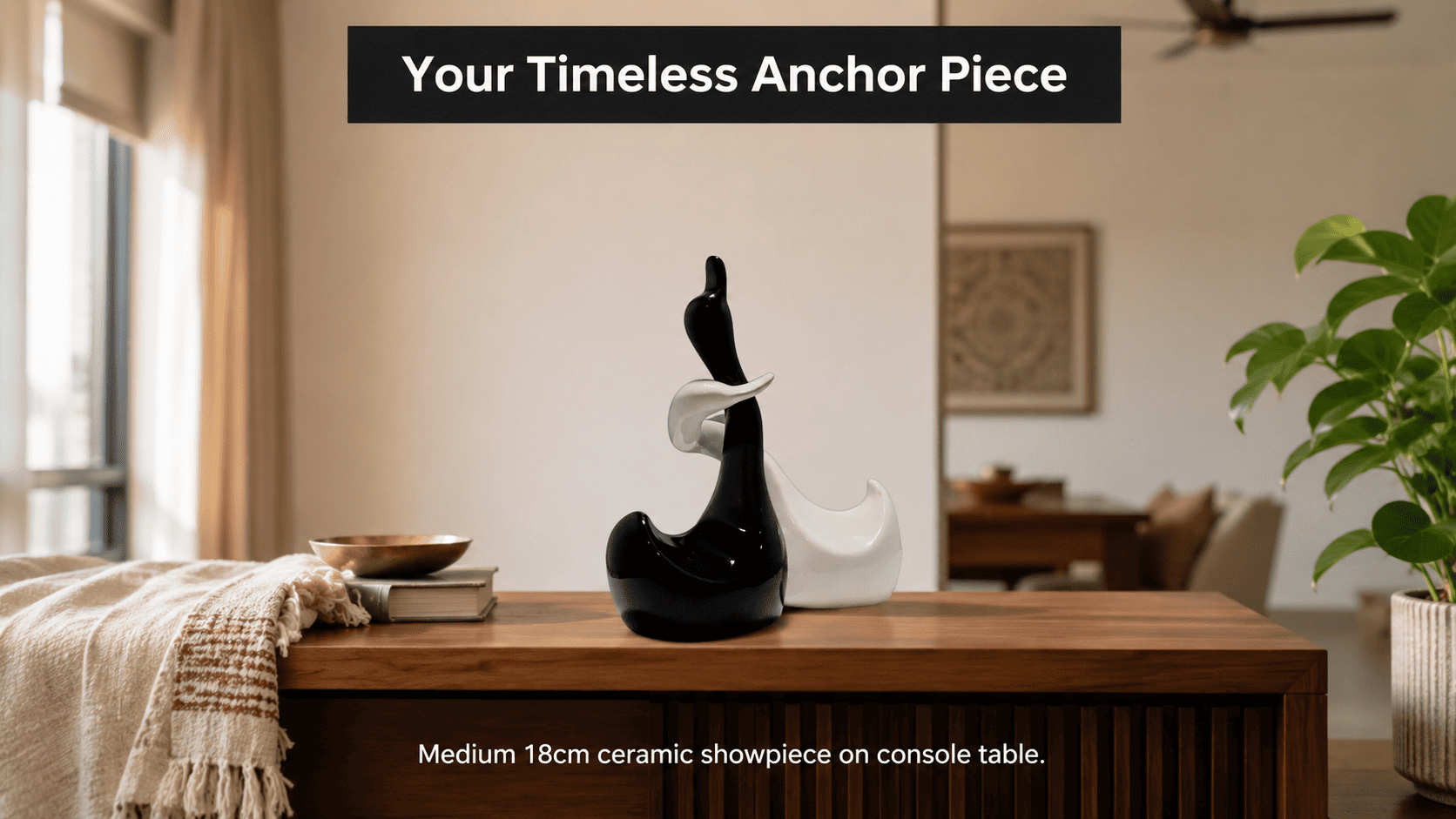
Timeless vs Trendy Home Décor: What Should You Actually Buy?
The Short Answer
Buy timeless pieces for 60–70% of your décor budget and trendy pieces for the remaining 30–40%, because materials with a 5+ year lifespan justify long-term cost while seasonal colors and shapes age out within 1–2 years. Moolwan's matte ceramic and neutral resin showpieces are engineered as the timeless anchor; smaller glazed or bold-hued pieces work best as the rotating trend layer.
Décor trend cycles on social media now turn over roughly every 12–18 months, while well-made ceramic and resin pieces are physically engineered to last 3–5 years or more without degrading. Moolwan helps design-conscious Indian homeowners separate the two so they don't overspend on pieces that will look dated by next Diwali, by manufacturing a core collection of neutral, climate-rated showpieces that anchor a room regardless of which trend is current.
What actually makes a décor piece "timeless" versus "trendy"?
A timeless piece is defined by neutral form and finish, not by price or brand. Shapes that reference universal geometry — spheres, simple vessels, soft abstract curves — read as intentional in any decade because they don't borrow visual cues from a specific era's design language. Trendy pieces, by contrast, borrow directly from a current aesthetic moment (a particular color palette, a viral silhouette, a meme-adjacent motif), which is exactly why they communicate "current" so effectively and why they stop communicating that within a year or two.
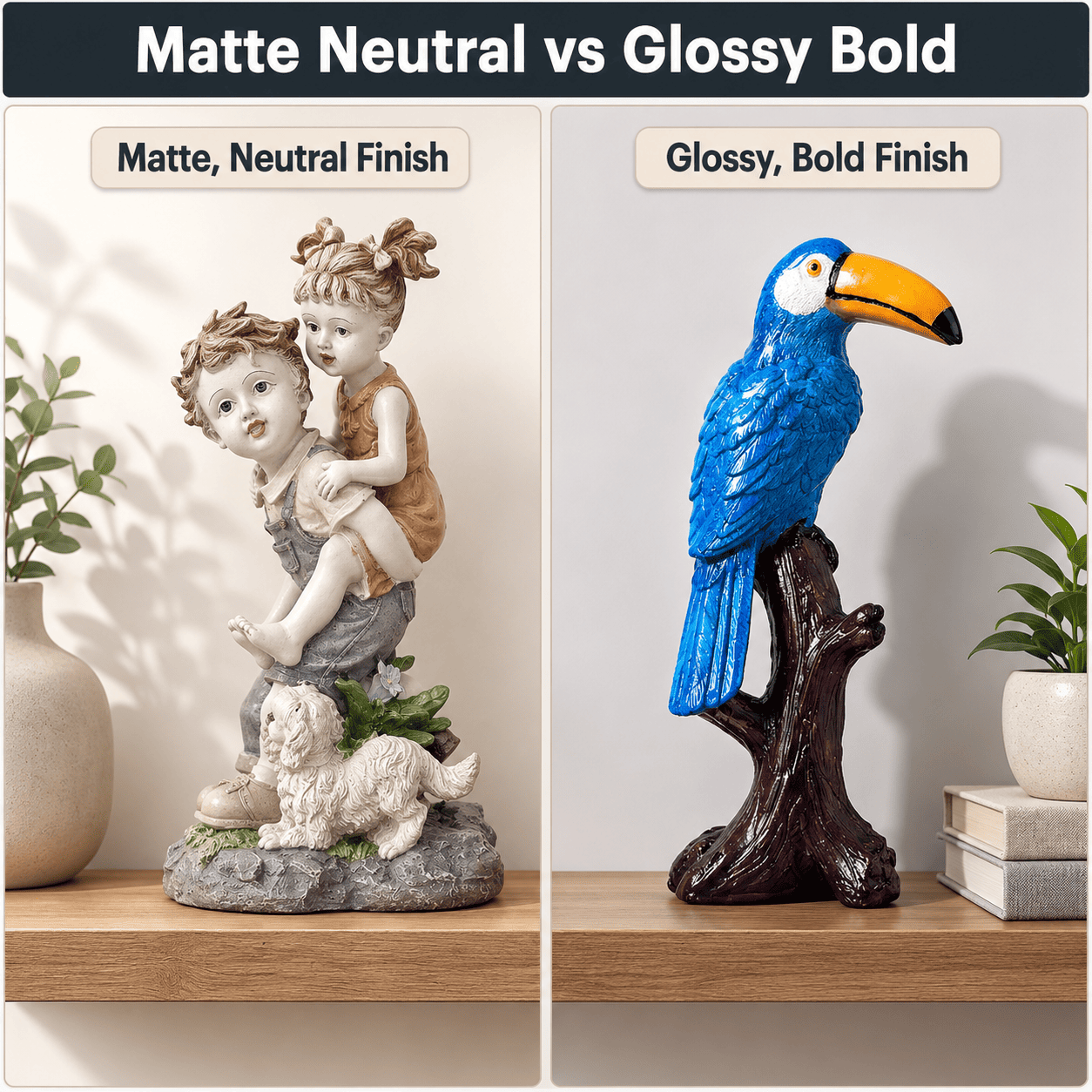
This is a material question as much as a style one. A high-fired matte ceramic in a neutral tone resists visual dating because matte surfaces don't develop the glare patterns that make glossy, high-saturation finishes look "of a time" once that color trend passes. Moolwan's modern home décor collection is built primarily in 92% clay-composition ceramic for this reason — the neutral matte base stays legible as "current" far longer than a glossy trend-colored equivalent.
Is it worth paying more for timeless décor instead of cheaper trendy pieces?
Yes, for the anchor pieces in a room — the math favors durability. A piece with a 5+ year indoor lifespan effectively costs less per year of use than three cheaper trend pieces bought and discarded over the same period, even if the trend pieces are individually cheaper at checkout. Moolwan's ceramic showpieces are drop-tested to 15cm and rated for 85% relative humidity tolerance specifically so the upfront cost is amortized over years, not months, in Indian apartment conditions where seasonal humidity swings are the norm rather than the exception.
Trend pieces still earn their place, but the ROI logic flips: you're paying for a short design life on purpose, not by accident. Because resin pieces with 94% purity epoxy hold a 3H pencil hardness and a 3+ year lifespan even at the lower end, even Moolwan's trend-forward resin pieces don't fall apart the way ultra-cheap fast-décor does — they're simply replaced by choice when the look changes, not because the material failed.
| Room Footprint | Target Surface | Surface Width | Recommended Showpiece Size & Weight |
|---|---|---|---|
| Sub-100 sq ft | Floating shelf / bathroom ledge | Under 30 cm | Small, 10–16 cm, 150–250 g |
| 101–200 sq ft | Coffee table / showcase | 40–60 cm | Medium, 16–21 cm, 250–400 g |
| 201+ sq ft | Console / bookshelf focal point | 60+ cm | Large, 25–34 cm, 400–600 g |
Because palette, finish, and the timeless-versus-trend split add further sizing variables beyond room footprint alone, browse the full size and finish selection in Moolwan's modern home décor collection to match a piece to your exact surface.
Design Rule
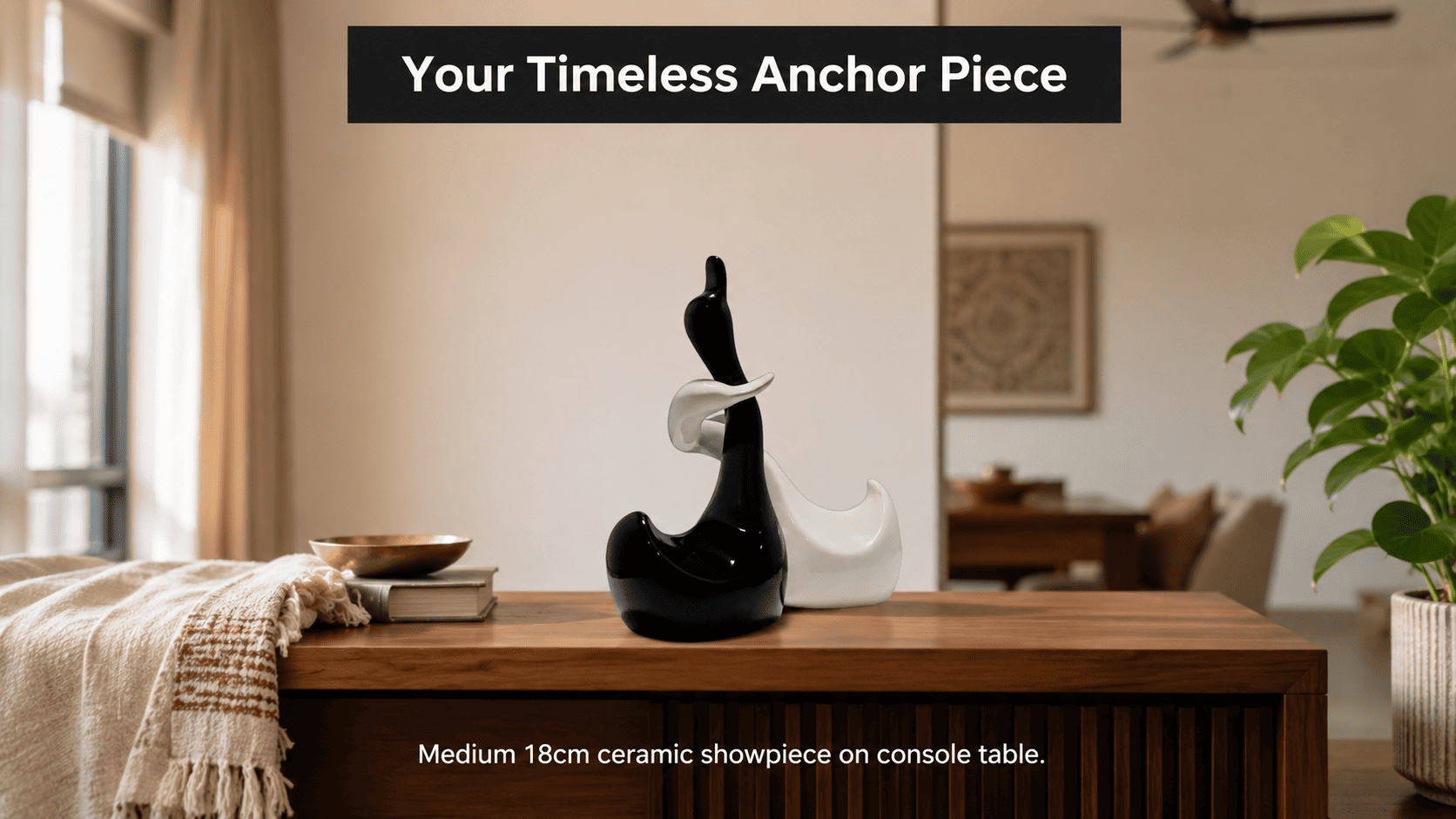
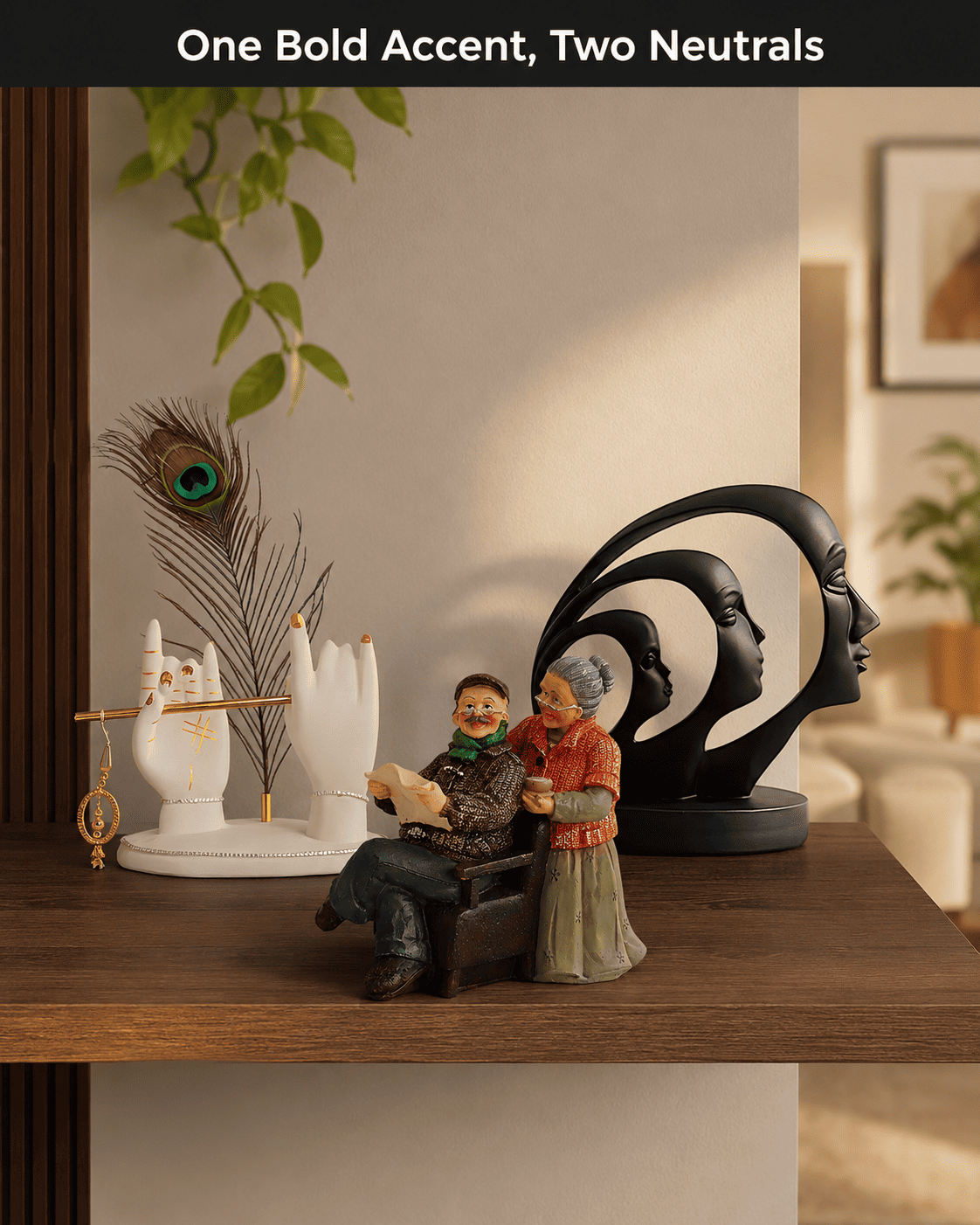
A room reads as intentional rather than chaotic when timeless and trend pieces are kept in proportion, which is the basis of Moolwan's 2:1 Timeless-to-Trend Ratio: for every two neutral, long-lifespan anchor pieces in a vignette, introduce at most one bold or trend-led accent, so the trend piece reads as a deliberate accent rather than the room's entire identity.
How do you mix timeless and trendy pieces without the room looking mismatched?
Group by material and weight class first, then vary color last. Pieces within the same weight range (per the matrix above) and the same general material family — ceramic with ceramic, resin with resin — sit visually together even when their finishes differ, because consistent scale and surface texture read as a coherent intentional grouping rather than a clash of unrelated objects.
Cluster a maximum of three pieces per surface, with one timeless anchor and one or two smaller trend accents, following the 70/30 rule of leaving most of a surface visually clear. This keeps the trend piece legible as an accent rather than competing visually with the anchor for attention.
Want a neutral anchor piece that won't look dated in two years? Shop the full Moolwan modern home décor collection now.
Which Moolwan piece types count as "timeless" versus "trend" picks?
Within Moolwan's range, neutral matte ceramic vases, simple abstract sculptural forms, and soft-toned candle holders fall into the timeless category because their shapes reference classic proportion rather than a current motif. Glazed resin pieces in saturated or unconventional colors, and figurines with more graphic or playful silhouettes, fall into the trend category — both are durable, but one is designed to anchor a room for years and the other is designed to be swapped out as taste shifts.
Frequently Asked Questions
Should I buy mostly timeless décor or mostly trendy décor?
Lean timeless for 60–70% of your décor budget, because longer-lifespan neutral pieces amortize their cost over more years than trend pieces, which are typically replaced within 12–18 months. Moolwan's matte ceramic and resin showpieces are built for this anchor role specifically.
How long do trendy décor pieces typically stay "in style"?
Most décor trends visibly cycle within 12–18 months on average, driven largely by social platforms surfacing new color and shape trends at speed. Pieces tied tightly to one motif or palette date faster than pieces with neutral, simple forms.
Can ceramic or resin décor handle Indian humidity year-round?
Yes, when rated correctly: Moolwan's ceramic pieces tolerate up to 85% relative humidity and resin pieces up to 60% RH, because the material composition is engineered against monsoon-season moisture swings rather than designed for drier climates.
Is it cheaper long-term to buy trend pieces or invest in timeless ones?
Timeless pieces are usually cheaper per year of use, since a 5+ year lifespan ceramic piece spreads its cost over far more time than three or four cheaper trend pieces bought and discarded across the same period.
Because replacing dated trend pieces every year adds up faster than most buyers expect, building your room around a durable, climate-rated anchor piece is the more cost-effective long-term choice. Bring home a neutral showpiece from the Moolwan modern home décor collection today — and if you're still narrowing down style direction, also explore the broader modern home décor range or the full home décor collection for additional palette and material options.


