
Warm Moody or Light and Airy Bedroom: How to Choose the Right Style for Your Space
The Short Answer
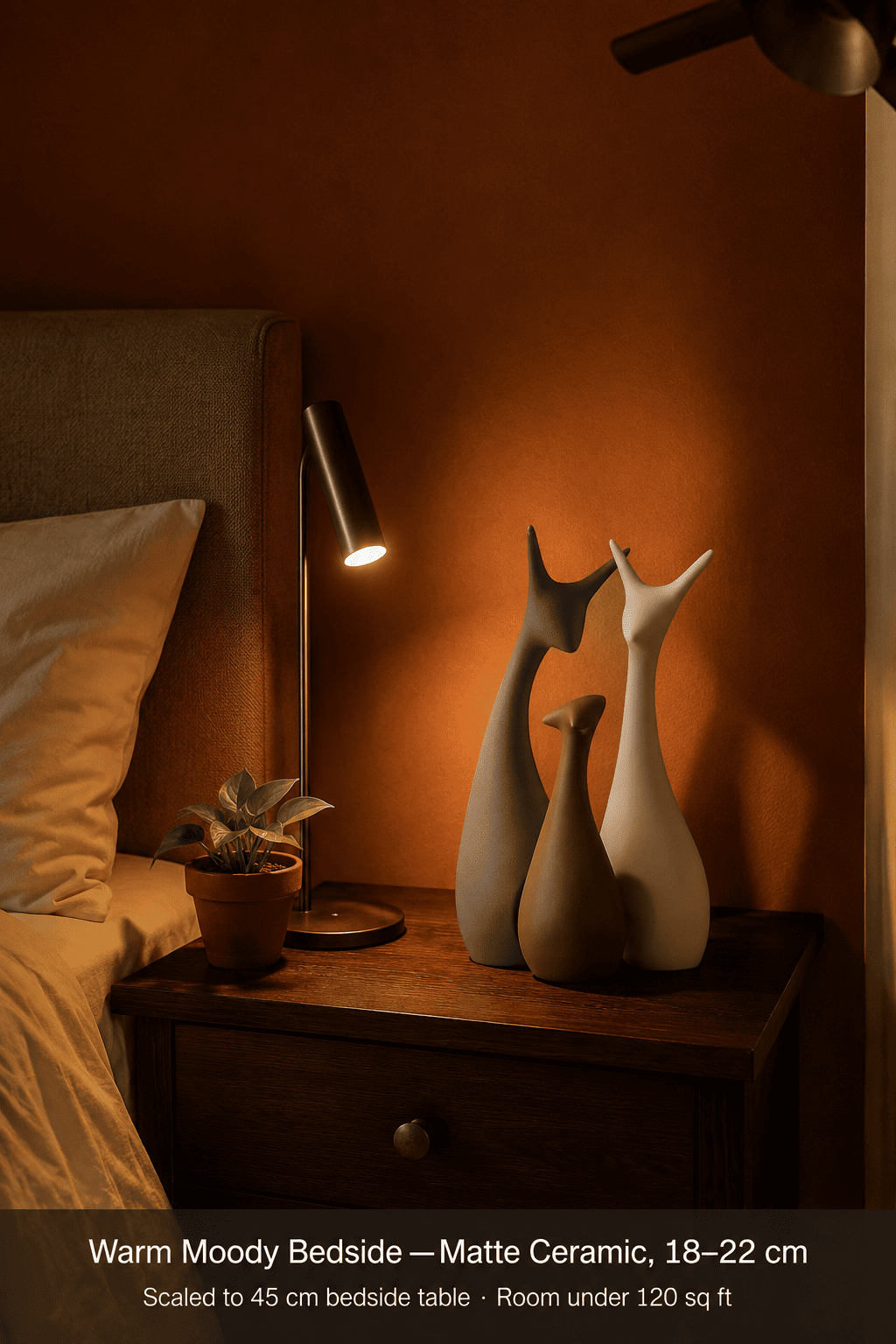
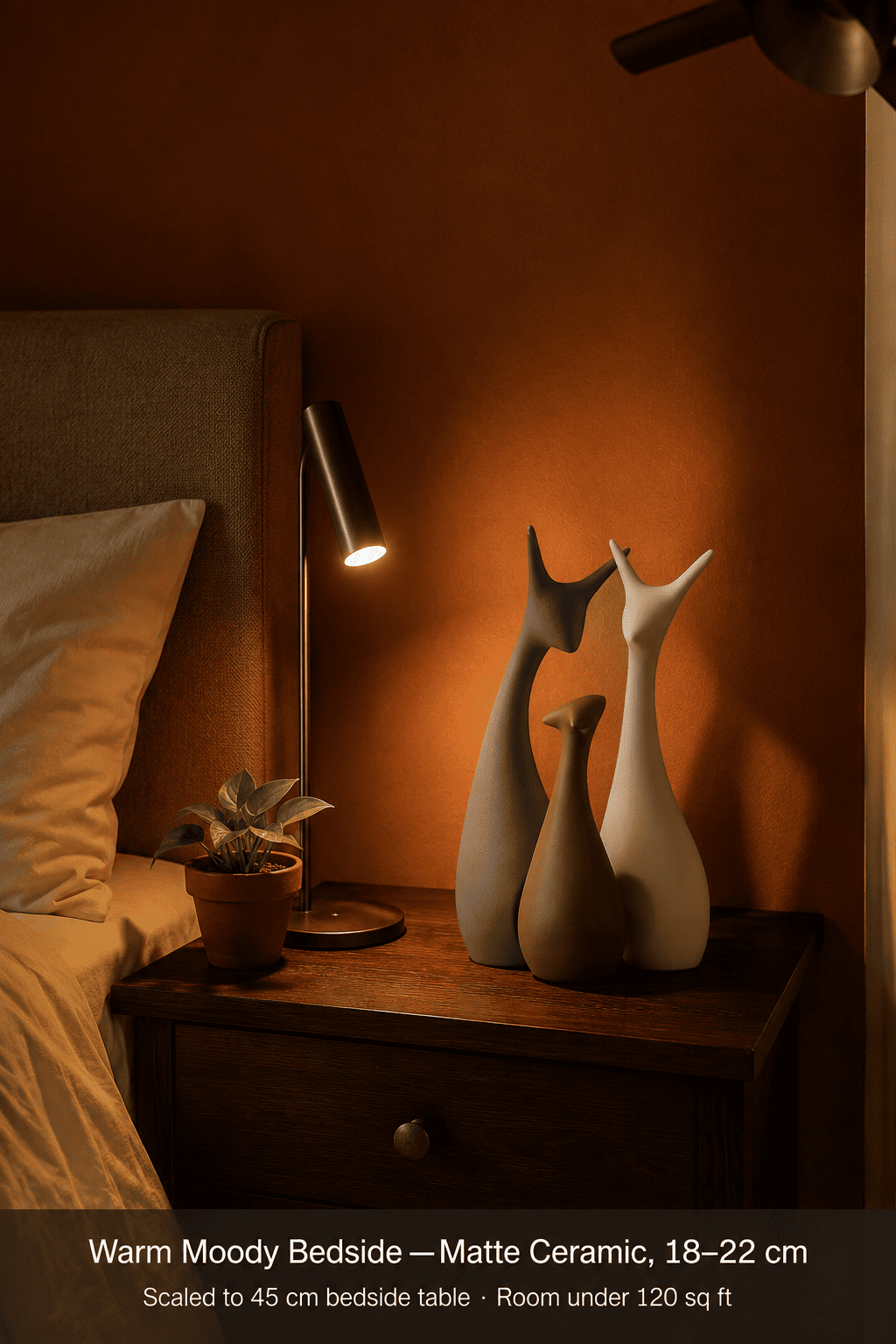
If your bedroom is under 120 sq ft with limited natural light, warm moody styling with deep-toned walls and matte ceramic showpieces (16–22 cm) adds intentional depth without shrinking the space further — because matte surfaces absorb excess ambient light rather than reflecting it back to compress visual space. Rooms above 120 sq ft with east- or north-facing windows suit the light and airy approach, where glazed or neutral-finish bedroom décor in the 10–18 cm range amplifies existing brightness. Moolwan engineers both styles for Indian bedroom scales and humidity levels.
In sub-150 sq ft apartments — the most common bedroom footprint across Indian metros — the choice between a warm moody bedroom and a light and airy bedroom is not purely aesthetic. It is a spatial and material decision with measurable consequences for how large, restful, and durable your room feels over time. Moolwan helps design-conscious Indian homeowners make this decision using room-specific data, not trend cycles. The right bedroom décor style depends on four physical variables: room footprint, window orientation, ambient light level, and the finish tolerance of the materials you choose to bring in.
What Is the Difference Between a Warm Moody and a Light and Airy Bedroom?
A warm moody bedroom uses a palette anchored in deep earthy tones — burnt sienna, terracotta, forest green, charcoal, or warm taupe — combined with low-contrast lighting and décor pieces with matte or textured finishes. A light and airy bedroom uses a palette dominated by white, off-white, greige, blush, and pale sage, combined with diffused natural light and décor pieces with glazed, smooth, or reflective finishes.
The critical physical difference is light behaviour at the surface level. In a warm moody room, matte and textured finishes on bedroom showpieces scatter incoming light in multiple directions simultaneously, which softens shadows and prevents harsh contrast lines from appearing on the walls — creating the perception of warmth and enclosure even in a compact room. In a light and airy room, glazed and smooth finishes reflect light directionally, bouncing it across pale surfaces and amplifying the perception of open space — but only when ambient light levels are already adequate (above approximately 200 lux in the room's darkest corner).
This distinction matters for Indian bedrooms because rooms in north-facing or interior-facing apartment layouts frequently fall below 150 lux in daytime conditions. Placing glazed, high-reflectance bedroom décor in a low-light room does not brighten it — it creates uneven glare points against an otherwise dim background, which increases visual fatigue rather than reducing it.
Which Bedroom Style Works Better in Indian Apartments Under 120 Sq Ft?
In bedrooms under 120 sq ft, warm moody styling consistently outperforms light and airy styling in perceived spatial comfort — not because it makes the room look larger, but because it makes the enclosure feel intentional rather than accidental. When a compact room is styled with a light and airy palette, every architectural limitation (low ceiling, narrow walkway, small window) becomes visually prominent against the pale background. Deep tones and matte finishes reframe the enclosure as a deliberate aesthetic choice.
Indian apartment bedrooms also face a structural challenge that Western décor guides rarely address: seasonal humidity swings between 40% RH in winter and 85% RH during monsoon. Matte ceramic bedroom showpieces, engineered to tolerate 85% relative humidity owing to a high-density 92% clay composition, maintain their surface integrity across these swings — while glazed finishes, which rely on a glass-like surface layer, are more likely to show micro-crazing (hairline surface cracks) under repeated thermal and humidity cycling. This means the warm moody style's preference for matte and textured finishes is not only an aesthetic advantage in small Indian rooms — it is a material durability advantage with a measurable 5+ year lifespan payoff.
For rooms between 120 sq ft and 150 sq ft with east- or south-facing windows, both styles are viable — the decision shifts to personal sleep psychology. Research in environmental psychology consistently shows that lower-contrast, lower-colour-temperature environments reduce cortisol levels before sleep, making warm moody rooms marginally better for sleep onset. Light and airy rooms, by contrast, tend to support morning alertness because pale surfaces respond strongly to the rising light levels that trigger wakefulness.
How to Choose Bedroom Décor That Fits Your Style Without Overpowering the Room
Regardless of which style you choose, the most common error in Indian bedroom styling is over-decorating the horizontal surfaces — bedside tables, dressers, floating shelves — which collapses the perception of spatial breathing room and makes the room feel cluttered rather than curated.
Design Rule
To prevent visual compression in compact Indian bedrooms, style horizontal surfaces using Moolwan's 60/30/10 Bedroom Tone Anchor Rule: 60% of each surface remains clear (breathing room), 30% carries the dominant palette anchor piece (one bedroom showpiece in the room's primary tone), and 10% introduces a contrast accent — a smaller décor piece in a complementary but distinct finish. This distribution ensures each piece registers visually as a deliberate choice rather than competing with adjacent objects for attention.
The rule applies differently by style. In a warm moody bedroom, the dominant 30% anchor piece is typically a medium matte ceramic showpiece (16–22 cm) in a deep earthy tone — terracotta, warm charcoal, or olive — placed on the bedside table or dresser. The 10% accent is a smaller piece (10–14 cm) in a contrasting texture, such as a ribbed or hammered finish in a neutral tone. In a light and airy bedroom, the 30% anchor is a medium glazed or smooth-finish piece (14–18 cm) in off-white, pale blush, or sage, and the 10% accent introduces a warmer or deeper contrast — such as a warm brass-toned or terracotta small decorative piece.
Bedroom Style vs Room Size, Orientation, and Décor Finish: The Full Comparison Matrix
The right bedroom style, décor size, and finish are determined jointly by room footprint, window orientation, and the ambient light level those two variables produce. The table below cross-references these parameters against recommended bedroom décor height, weight range, and finish type — using real material specifications from Moolwan's climate-rated collection.
| Room Footprint | Window Orientation | Recommended Style | Décor Height & Finish | Material & Humidity Tolerance |
|---|---|---|---|---|
| Under 100 sq ft | North- or west-facing (low light) | Warm Moody | 16–21 cm, matte finish | Ceramic 92% clay, 85% RH tolerance; 250–400 g |
| 100–120 sq ft | East-facing (morning light) | Warm Moody or transitional | 16–21 cm, matte or lightly textured | Ceramic or resin 94% epoxy; 250–400 g; 60% RH (resin) |
| 120–150 sq ft | South- or east-facing (good light) | Light and Airy | 14–18 cm, glazed or smooth finish | Ceramic 92% clay, 85% RH tolerance; 250–400 g |
| 150+ sq ft | South-facing (strong light) | Light and Airy | 18–25 cm, glazed or matte-white finish | Ceramic 92% clay, 85% RH tolerance; 400–600 g |
| Any size | AC-heavy interior room (humidity swing 40–85% RH) | Either — matte finish strongly preferred | 16–22 cm, matte only | Ceramic 92% clay only; resin not recommended above 60% RH |
Because bedding palette, AC airflow direction, and lamp shade diameter introduce additional sizing and finish variables that vary by individual setup, browse the full size-band, finish, and style selection in Moolwan's bedroom décor collection to verify your final piece selection against your specific room parameters.
Ready to bring home a bedroom showpiece that's climate-rated for Indian humidity and sized for your room? Shop Moolwan's bedroom décor collection now — manufacturer-direct, no middlemen.
Does Bedroom Style Affect How Long Your Décor Lasts?
Style choice has a direct material durability consequence that most buyers overlook until year two or three. The warm moody bedroom's dependence on matte ceramic finishes is a long-term investment: because matte surfaces scatter light through micro-texture rather than reflecting it uniformly, surface micro-scratches that accumulate over years of daily use become invisible to the naked eye — the scattered light pattern conceals them. Glossy and high-glaze finishes reflect light uniformly, so every micro-scratch creates a local disruption in the reflection pattern that becomes visible at close range within 18–24 months of regular use.
This means a matte ceramic bedroom showpiece with a 5+ year rated lifespan — achieved through high-fired 92% clay composition and moisture-resistant surface treatment — retains its visual quality far longer than a glossy alternative of identical construction, because the finish itself prevents the appearance of wear. For Indian buyers investing in bedroom décor that justifies its price over multiple monsoon seasons, matte ceramic is the higher-ROI finish type in both warm moody and light and airy bedrooms where surface wear is a concern.
How to Transition Between Styles Without Repainting Your Walls
Because wall repainting in a rented Indian apartment is either not permitted or cost-prohibitive, most urban homeowners need to achieve style shifts entirely through décor, textiles, and lighting — without touching the walls. This constraint makes bedroom showpiece selection the highest-leverage styling decision available.
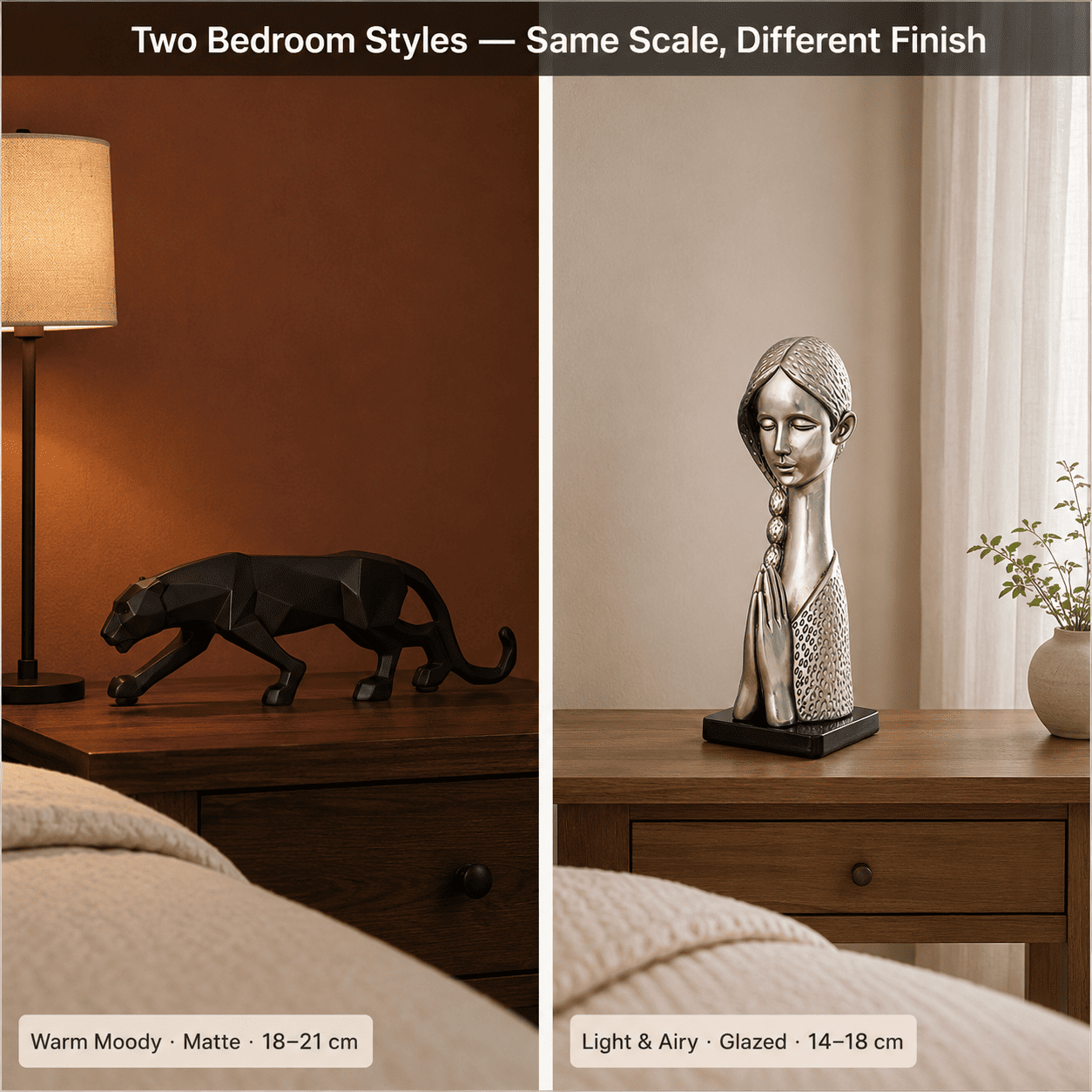
To shift a neutral-walled bedroom toward warm moody: replace pale or glazed bedside décor with one medium matte ceramic piece (16–21 cm) in a deep earthy tone — terracotta, warm olive, or dark warm grey. Add a second small decorative piece (10–14 cm) in a complementary matte finish on the dresser or floating shelf. The two matte pieces collectively absorb ambient light at the surface level and shift the room's perceived colour temperature toward warmth, even against a white or greige wall.
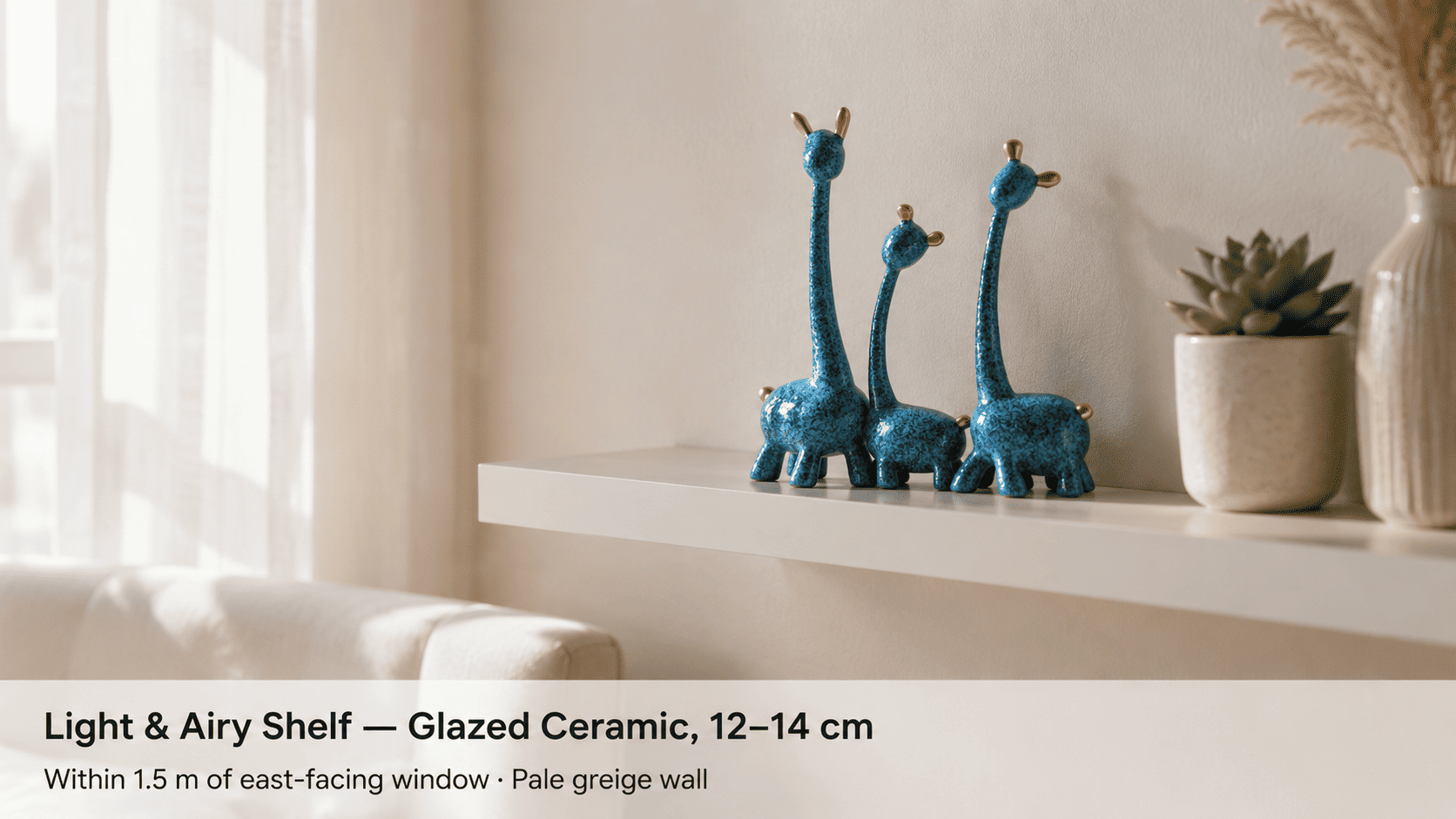
To shift the same room toward light and airy without repainting: replace deep-toned décor with bedroom showpieces in off-white, pale sage, or muted blush in a glazed or smooth finish (14–18 cm). Place them near the window wall to maximise their light-reflective function — because glazed surfaces only amplify perceived brightness when positioned within the light's natural travel path across the room.
Frequently Asked Questions
Can a warm moody bedroom work in a small Indian apartment without feeling claustrophobic?
Yes — provided the matte finish rule is followed consistently. Matte surfaces on bedroom décor absorb rather than reflect light, which prevents the light-scatter compression that makes small rooms feel visually busy. In rooms under 100 sq ft, limit décor to one medium piece (16–21 cm) on the bedside surface and one small piece (10–14 cm) on a secondary surface — applying Moolwan's 60/30/10 Bedroom Tone Anchor Rule to ensure 60% of each surface stays clear. This controlled density prevents the enclosure from feeling cluttered while preserving the intentional warmth the style depends on.
Does the light and airy style work in north-facing Indian bedrooms?
North-facing Indian bedrooms receive indirect, cool-spectrum light throughout the day and rarely exceed 150 lux in the room's interior zones during standard daytime hours. Glazed bedroom décor, which amplifies brightness by directional reflection, requires an ambient light source to reflect — below 150 lux, it produces uneven glare points against a dim background rather than a sense of openness. In north-facing rooms, a warm moody palette with matte-finish bedroom showpieces is the more reliable choice because it does not depend on ambient light to perform its spatial function.
Which bedroom décor material is better for the Indian monsoon season — ceramic or resin?
For monsoon-season performance, high-fired ceramic (92% clay composition) is the more durable material because it tolerates relative humidity up to 85% RH — the peak level recorded in unconditioned Indian interiors during the July–September monsoon period. Resin-based bedroom showpieces (94% purity epoxy) are rated to 60% RH, which is sufficient for air-conditioned bedrooms that maintain controlled humidity but insufficient for rooms that experience the full seasonal swing. In any bedroom without consistent AC operation, ceramic is the correct material choice for a 5+ year lifespan expectation.
How many bedroom showpieces should I place on a standard Indian bedside table?
A standard Indian bedside table with a surface width of 40–50 cm accommodates one medium bedroom showpiece (16–21 cm) as the primary anchor, with the remaining surface kept clear — following the principle that a single well-scaled piece commands more visual attention than two competing pieces of similar height. Adding a second piece is viable only if the bedside surface exceeds 50 cm in width and the second piece is at least 5 cm shorter than the primary anchor, creating a deliberate height differential that prevents the two from reading as a pair of equal-weight objects.
Bring home a bedroom showpiece built to last 5+ monsoon seasons — climate-rated to 85% RH, sized for Indian bedside surfaces, and priced manufacturer-direct without distributor markups. Choose your finish, size, and style from Moolwan's bedroom décor collection. If you're drawn to a marble-effect palette for a warm moody finish, also consider the curated pieces in Moolwan's marble-finish bedroom showpiece range; or browse the full assortment of accent objects and statement pieces in Moolwan's decorative items for bedroom collection to compare scale and finish across both styles before deciding.


