
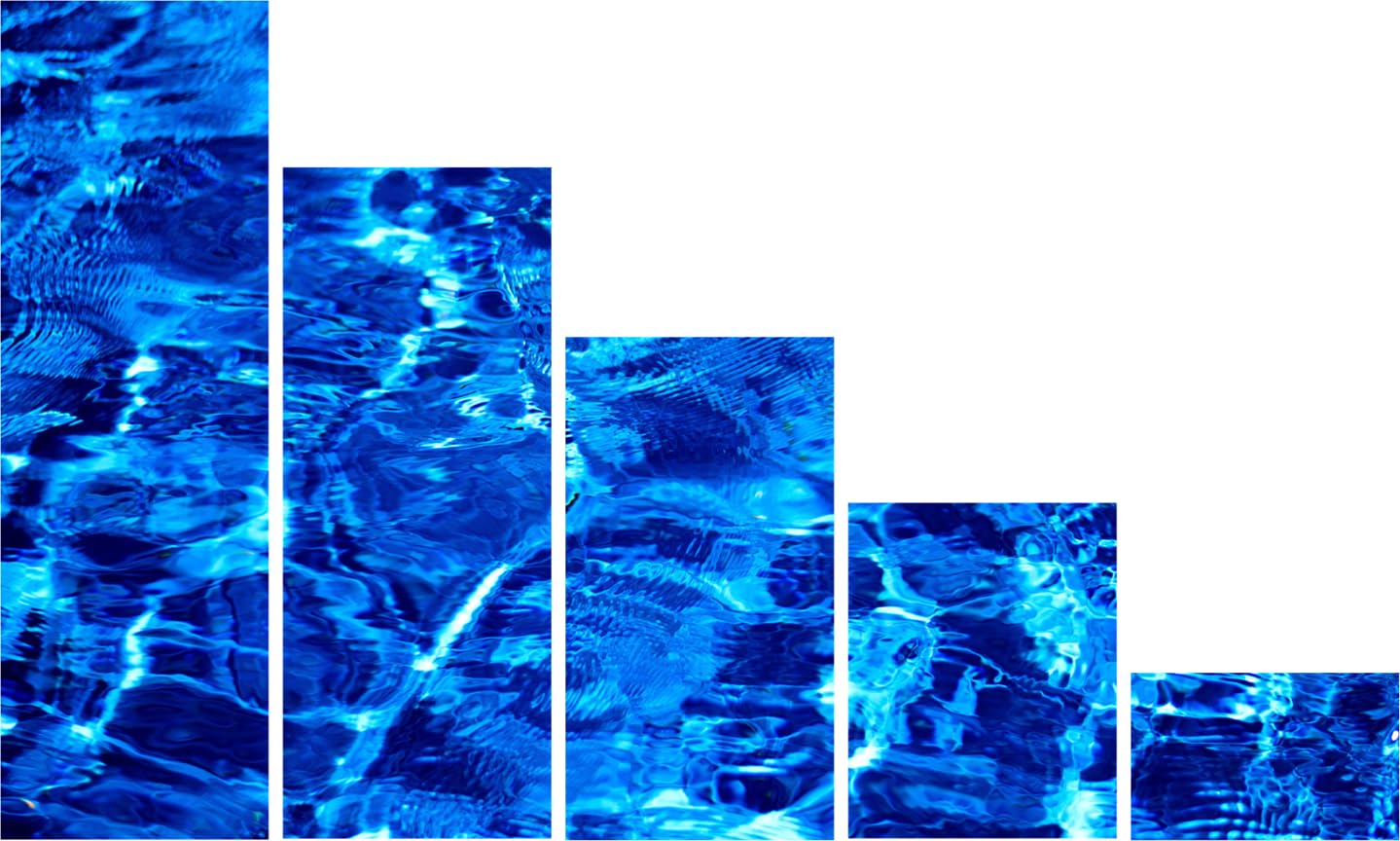
Water you waiting for? Splash-tastic Framed Abstract Wall Art (127x76cm, 5 Panels)
You may also like

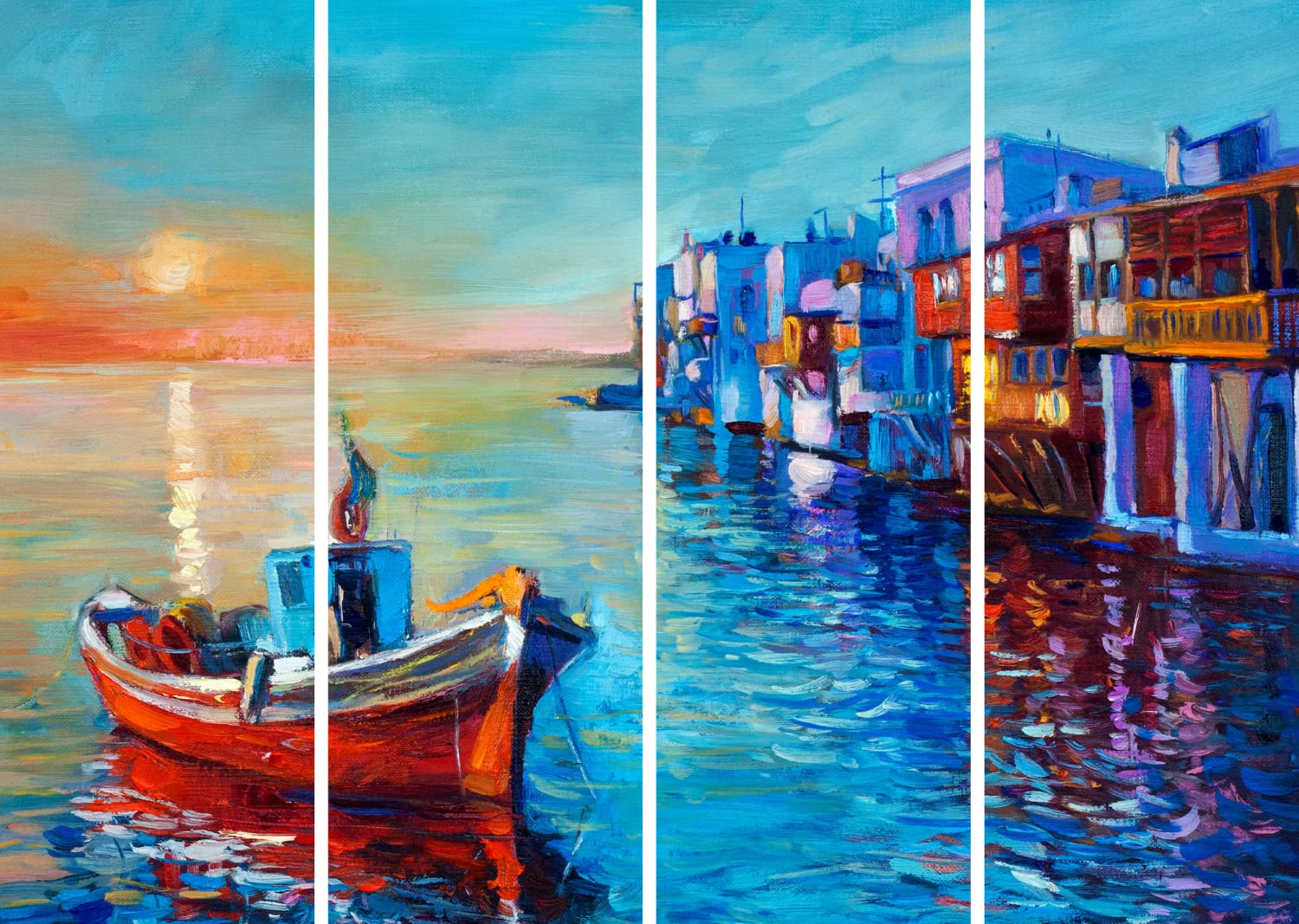
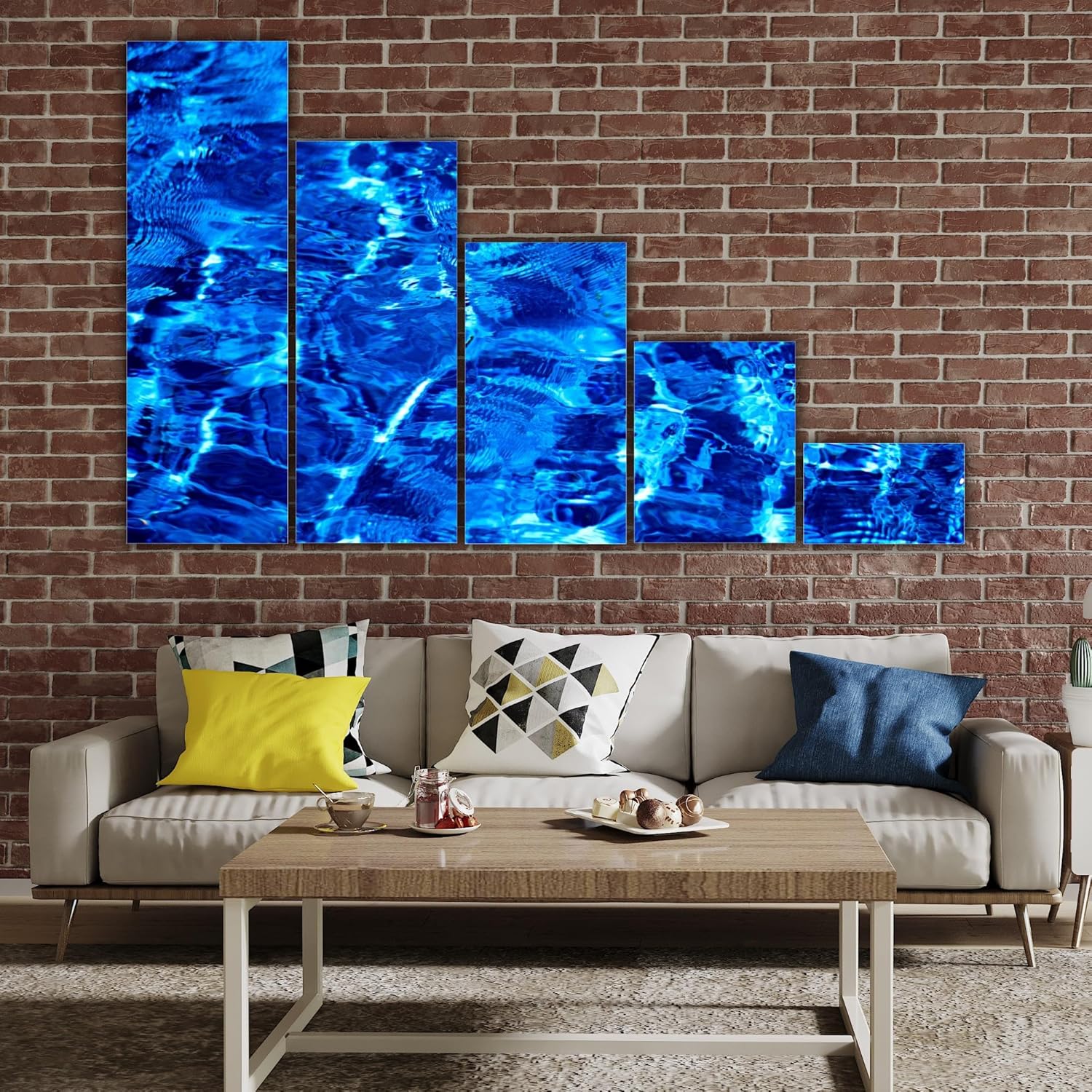
Moolwan 5-Panel Blue Abstract Water Canvas Wall Art Painting (127x76cm) - Staggered Multi-Panel Design
THE SPECIFIC FIT RECOGNITION
You might have scrolled past hundreds of abstract paintings by now. Some were too small—90cm looked timid on your 12-foot wall, like you were afraid to commit. Some were too big—150cm would dominate the entire wall, leaving no room for that side table or floor lamp you already have. You probably kept coming back to this one—127cm wide with five panels in a staggered layout—because something about it feels balanced. But you want to be sure.
Here's why this works: 127cm covers about 35% of a standard 12-foot (360cm) living room wall, leaving roughly 115cm of breathing room on each side. This isn't a centered rectangle that just sits there. The five panels descend in a cascading pattern—largest panel on the left (about 60cm tall), stepping down to the smallest on the right (about 30cm tall). This staggered arrangement creates horizontal flow that makes your wall feel wider and less static than a standard straight-across canvas.
And the colors—these deep blues with electric turquoise accents—aren't the bright tropical blues that clash with everything. These are sophisticated blues. Water reflection blues. Your walls are probably cream, off-white, or light yellow. Your sofa is probably brown or tan fabric. These blues will read as calming and intentional against that palette, not like you're trying to force a beach house aesthetic into a Bangalore apartment.
DIMENSIONAL MATHEMATICS
Why 127cm Works on 12-Foot Living Room Walls (and What Happens If You Go Smaller or Bigger)
Your living room wall is probably 10 to 12 feet wide (300-360cm in most Indian 2BHK and 3BHK apartments). Your ceiling is probably 8 to 10 feet high. Here's the spatial math:
127cm canvas on a 12-foot (360cm) wall:
116cm of space on the left side
116cm of space on the right side
Coverage ratio: Canvas covers 35% of wall width
Effect: Anchored, balanced, intentional—not floating, not overwhelming
Now consider your furniture arrangement:
Your sofa is probably 6-8 feet (180-240cm) wide, sitting 6-12 inches from the wall
Hanging height: 20-25cm above sofa top puts the canvas center at eye level from 8 feet away
Side elements: You probably have side tables (18-24 inches wide), a floor lamp, or windows within 3-4 feet of your sofa edges
The 127cm width works above the sofa without crowding your side furniture
If you went with 90cm instead:
25% wall coverage—reads as accent piece, not focal point
On a 12 ft wall, you'd have 135cm of empty space on each side
Effect: Your eye keeps noticing all that blank wall
Specific problem: You'll probably buy matching pieces later to fill the void
If you went with 150cm instead:
42% wall coverage—works only if you have a completely blank wall
If you have a window 4 feet from sofa edge, or side furniture, the 150cm feels tight
Effect: Makes the room feel fuller but crowded
Specific problem: You'll constantly rearrange side furniture to make it work
The 127cm is the balanced choice: fills the wall without dominating it, works above standard sofas, leaves room for your existing floor lamp and side tables.
The staggered panel layout adds another benefit: Instead of one flat 76cm tall rectangle, the panels descend from 60cm (left) to 30cm (right). This creates visual rhythm—your eye travels left to right across the cascading pattern, making the wall feel dynamic instead of static.
COLOR & DESIGN PSYCHOLOGY
Why Deep Blue Abstract Works in Indian Homes (When Bright Blues Don't)
You've probably seen bright blue abstract art online and thought, "That looks amazing in their white-walled Scandinavian apartment, but it won't work here." You're right. Bright blues—those turquoise and cyan shades—look jarring against cream or off-white walls with brown furniture.
This canvas uses deep blues. Navy-adjacent blues. Blues with enough depth that they read as sophisticated, not playful. The electric blue and turquoise accents appear as light reflections on water—they add energy without overwhelming the composition.
Against cream walls (most common in Indian apartments): The deep blue creates contrast without clash. Your wall color stays neutral, the canvas becomes the focal point.
With brown/beige sofas and wooden furniture (most Indian living rooms): The blue complements warm wood tones. Think about how blue cushions look good on brown sofas—same principle, larger scale.
In rooms with warm LED lighting (3000K, standard in Indian homes): Evening light warms the blues slightly. They look rich, not cold.
The abstract water reflection theme works because it's recognizable enough to be calming (water = serene, peaceful) but abstract enough to feel sophisticated. This isn't literal ocean art with waves and beaches. It's the kind of abstract that works in a professional's home—contemporary without being aggressively modern.
INSTALLATION REALITY
What You Actually Need to Hang This (Especially If You're Renting)
You're probably in a rented apartment. Your deposit is ₹50,000 to ₹75,000 and you'd like it back. So when you think about drilling into walls, you hesitate. Here's the reality: the holes you need for this canvas are not the holes that cost you your deposit.
This canvas requires: 5 small anchor holes (6mm diameter, 30-40mm deep) total—one hook per panel
What loses you your deposit: TV bracket holes (12mm diameter, 80mm deep), shelf mounting holes, clusters of failed attempts
The 6mm holes? When you move out, you fill them with wall putty (₹50 at any hardware store), sand smooth, touch up with paint. Total repair time: 20 minutes. Your landlord will never notice.
Included with your canvas:
Concrete wall anchors (for older buildings with solid walls)
Drywall anchors (for modern apartments with hollow walls)
D-ring hangers pre-attached to each panel frame
Hanging template (shows exact drilling positions)
Installation steps:
Hold template against wall at desired height
Mark the 5 drilling positions
Drill (6mm bit for drywall, 6mm masonry bit for concrete)
Insert anchors, screw in hooks
Hang panels on D-rings
Installation time: 20-25 minutes total, including the part where you step back four times to check if it's level.
The staggered layout means each panel hangs at a different height—the template accounts for this. You're not measuring and calculating. You're following marked positions.
THE COMPARISON SECTION
How This Compares to Other 127cm Abstract Canvas Options
You've probably looked at other 127cm abstract paintings. Here's how they differ:
Standard 3-panel horizontal layout (127x76cm):
Three equal rectangles in a straight line
Covers the same wall space but feels static
Common design—you've seen this layout everywhere
Price: Similar (₹2,400-₹2,800)
Single-panel abstract (120x80cm):
One large rectangle
Simpler installation (one hook instead of five)
Less visual interest—just sits on the wall
Price: Slightly lower (₹2,200-₹2,600)
This 5-panel staggered design (127x76cm):
Five panels in descending cascade pattern
Same wall coverage but dynamic visual flow
Unique layout—not the standard multi-panel you see everywhere
Takes 10 extra minutes to install (five hooks vs. three)
Price: ₹2,496
The honest difference: If you want simple and straightforward, go with the single panel. If you want the multi-panel look everyone has, go with standard 3-panel horizontal. If you want something that makes people pause and look twice because the staggered layout is visually interesting, this is worth the extra installation time.
The deep blue water abstract theme is also less common than geometric abstracts or color blocks. You won't walk into someone else's home and see the exact same piece.
REALISTIC EXPECTATIONS
What This Will Actually Look Like in Your Home
Product photos are shot in perfect lighting with white walls and minimal furniture. Your home isn't that. Here's what this canvas will actually look like in typical Indian apartment conditions:
Morning light (7am-10am): The blues appear slightly cooler and more muted. If your wall faces east and gets direct morning sun, the water reflection pattern will have nice depth. The staggered panels create interesting shadows on the wall behind them.
Afternoon light (2pm-5pm): If your living room gets afternoon sun, the blues intensify. The electric blue and turquoise accents become more visible. This is when the canvas looks most dynamic. It's also when cheap canvas with inferior inks would look washed out—quality eco-solvent inks maintain color saturation even in bright light.
Evening/artificial light (LED 3000K warm white): The blues warm up slightly under LED lighting. The deep navy tones look rich. The descending panel layout creates dimensional shadows that make the wall feel less flat. This is when guests see your living room, and this is when the canvas looks most cohesive with your brown furniture and cream walls.
Against cream walls (most common): The deep blue provides contrast without clash. The abstract water pattern becomes the focal point without overwhelming the room.
Above brown/tan sofas (most Indian furniture): The blues complement the warm furniture tones. The staggered layout prevents the "matchy-matchy" look of canvas that's exactly sofa-width.
Viewing distance reality: From your sofa (8-10 feet away), you see the overall composition and cascading flow. Walk up close, you see the water ripple texture and color depth variations. Both viewing distances work—and both matter in daily living.
QUALITY SPECIFICATIONS
What You're Actually Getting
Canvas Material: 340 GSM cotton canvas with moisture-resistant polymer coating. This isn't the thin 180-220 GSM canvas that marketplace sellers use. You can feel the difference—the canvas has actual substance and sits tight on the frame without sagging. The coating means monsoon humidity won't cause rippling or moisture absorption.
Frame Construction: 1.5-inch kiln-dried pinewood stretcher bars (12% moisture content). The wood is treated to prevent warping in humidity swings. Corner bracing ensures the frame stays square. The canvas is stretched using pneumatic tools for even tension across all five panels.
Printing Quality: Eco-solvent UV-resistant inks designed for outdoor signage durability. Your deep blues won't fade to gray-blue after six months of afternoon sun exposure. The water reflection details stay crisp.
Weight & Handling: 3kg total across five panels (approximately 600g per panel). Lightweight enough for easy installation but substantial enough to feel quality when you handle it.
Climate Testing: Tested for 70-85% humidity (monsoon conditions), temperature range 5°C-45°C, and coastal environments. This canvas is built for Indian climate reality, not ideal controlled conditions.
Installation Hardware Included:
Concrete wall anchors
Drywall anchors
Pre-attached D-ring hangers (one per panel)
Hanging template with marked drilling positions
WHY MOOLWAN
Why Buy This from Moolwan Instead of Marketplace Sellers
You've seen similar abstract canvas on marketplace sites for ₹1,200 to ₹1,500. Here's why this costs ₹2,496:
In-house manufacturing: Moolwan manufactures canvas art, not resells from random suppliers. Every canvas uses the same 340 GSM cotton, same eco-solvent inks, same kiln-dried frames. You're not gambling on which supplier a marketplace seller is using this month.
Climate-appropriate materials: The moisture-resistant coating, UV-resistant inks, and kiln-dried wood are specifically chosen for Indian humidity and temperature conditions. Marketplace canvas is generic—often optimized for temperate climates.
Complete installation hardware: Concrete AND drywall anchors, D-rings, hanging template. Not two flimsy picture hooks that can't hold 3kg.
Straightforward replacement policy: Video your unboxing, show any shipping damage, get replacement sent. No fighting through three ticket systems with third-party sellers.
Sized for Indian homes: 127cm isn't a random international size converted to centimeters. It's calculated to work above 6-8 ft sofas on 10-12 ft walls—the actual dimensions of Indian 2BHK and 3BHK living rooms.
The ₹1,000-₹1,300 difference is the cost of not replacing faded, warped canvas in 8 months.
QUICK SPECIFICATIONS BOX
Moolwan 5-Panel Blue Abstract Water Canvas Wall Art Painting
THE DECISION
This Is Where You Decide
You've read about wall coverage percentages, panel layouts, blue color psychology, and climate-appropriate canvas construction. You know more about abstract canvas quality than most people who buy wall art online.
Here's what it comes down to: Your living room wall has been empty. You've measured it. You've browsed hundreds of options. You keep coming back to something around 127cm because you know that's the right size. You want abstract because you're not interested in literal ocean scenes or geometric patterns everyone has.
This staggered 5-panel layout is different enough to be interesting without being weird. The deep blues work with your cream walls and brown furniture. At ₹2,496, this is quality canvas that will still look intentional three years from now.
Your wall has been empty long enough. You've done the research. You know what you need.
The question isn't whether to buy canvas wall art. It's whether you're ready to stop browsing and start living with a room that feels complete.