
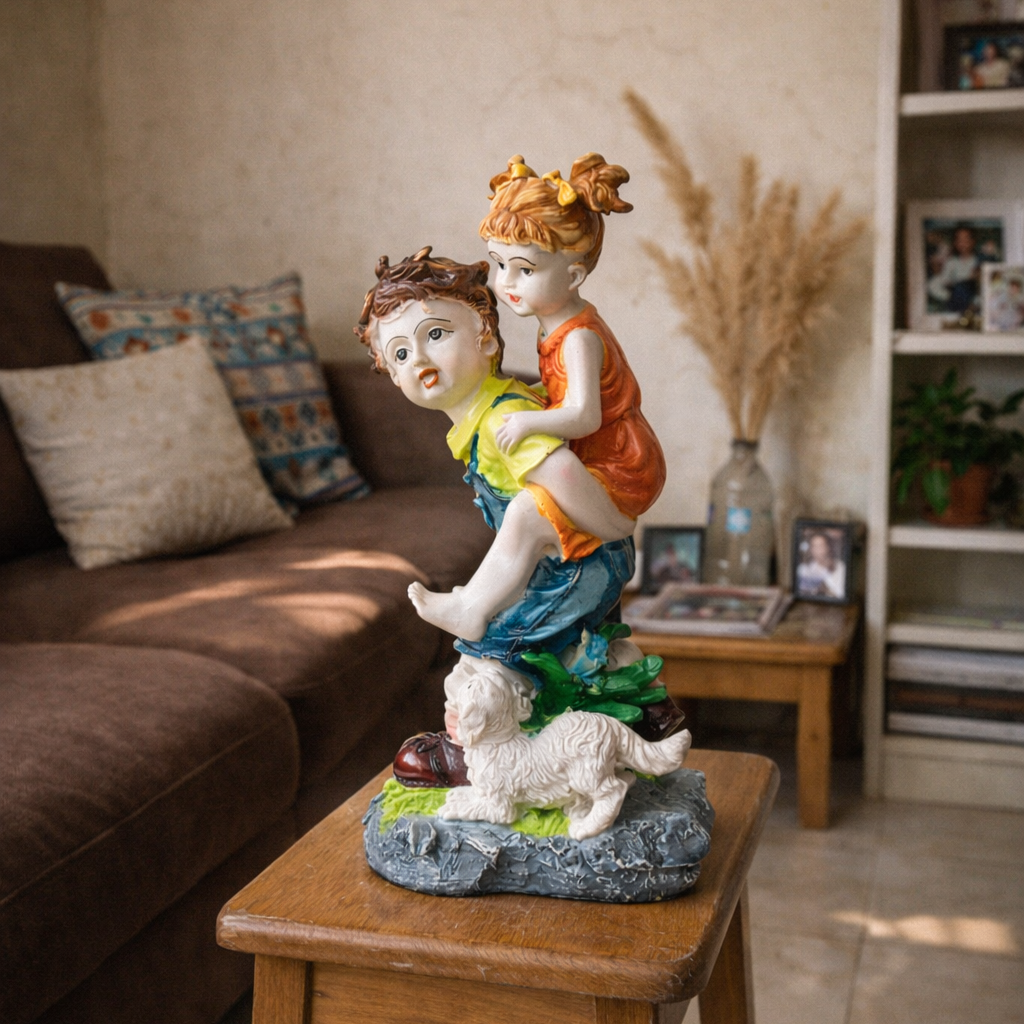
What's trending in home décor in 2026?
The Short Answer: In 2026, Indian home décor is defined by warm minimalism, handcrafted ceramic and resin accents, single-canvas statement art, nature-inspired earthy palettes, and hanging décor used as architectural focal points. The shift is away from mass-produced clutter toward fewer, better pieces — artisan-made, climate-compatible, and sized correctly for Indian apartments.
At Moolwan, we help design-conscious Indian homeowners find décor that balances modern aesthetics with cultural familiarity — pieces engineered for India's humidity, sized for Indian apartment proportions, and priced direct from our workshop without retailer markup.
If you are already comparing options and ready to shop, browse Moolwan's modern home décor collection — curated around every major 2026 trend and built for Indian interiors.
2026's Top Home Décor Trends — At a Glance
| Trend | What It Looks Like | Best Décor Type | Ideal Room | Indian Home Fit |
|---|---|---|---|---|
| Warm Minimalism | Fewer pieces, higher craft — terracotta, beige, warm wood tones | Ceramic showpieces, resin objects | Living room, entrance | Excellent — creates space in compact apartments |
| Statement Canvas Wall Art | Single large canvas as room anchor; bold but not aggressive | Canvas wall art (60×90cm or larger) | Living room, bedroom | Excellent — solves the blank-wall problem without floor space |
| Nature-Inspired Textures | Organic shapes, botanical motifs, matte raw finishes | Matte ceramic, natural-tone resin | Kitchen, dining room, study | Strong — pairs well with Indian natural light and wood furniture |
| Hanging Décor as Architecture | Suspended frames and wall panels used as primary room structure | Hanging wall décor, framed canvas | Bedroom, balcony, foyer | Strong — uses vertical space; lightweight for Indian masonry walls |
| Japandi for Indian Spaces | Japanese calm meets Indian warmth — clean lines, soft earthy colour | Minimalist ceramic, clean-frame canvas art | Any room | Good — works when warm tones replace cold Nordic whites |
| Curated Gifting Aesthetics | Décor that doubles as gifting — artisan items with cultural resonance | Boxed ceramic sets, resin accent pieces | Showcase, coffee table | Excellent — aligns with Indian gifting culture |
Trend 1: Warm Minimalism with Handcrafted Accents
The loudest shift in Indian home décor for 2026 is the move away from maximalism — rooms stuffed with decorative objects — toward warm minimalism: fewer pieces on display, but each one carrying visible craft and material quality. Think one handthrown ceramic vase on a floating shelf rather than a cluster of mass-produced decorative items competing for attention.
The palette is warm throughout: terracotta, aged ochre, warm white, soft sage, and burnished gold. These tones complement the warm natural light in most Indian rooms, pair naturally with teak and sheesham furniture, and hold their appearance better than cool-toned décor does under Indian summer lighting.
Moolwan's ceramic showpieces are purpose-built for this aesthetic. Made with a 92% clay composition and finished in both matte and glazed options, each piece is heat-resistant to 60°C and humidity-tolerant up to 85% RH — the specification that matters during Indian monsoon months when most imported ceramics crack, discolour, or lose finish. A medium-format piece (16–21cm) placed on your showcase or coffee table is enough. Warm minimalism's founding principle is restraint: one or two pieces per surface zone, not five.
Trend 2: Statement Canvas Wall Art as the Room's Focal Point
In 2026, the single large canvas has replaced the gallery wall as the dominant wall décor strategy in Indian urban apartments. Where gallery walls require coordinated frames, consistent sizing, and careful spacing — and often end up looking cluttered — one commanding canvas at the correct eye level does more with less.
The preferred style is abstract compositions in earthy tones, fluid modern art, and large-format botanical work — bold enough to anchor a room, quiet enough to work with varied furniture styles. For most Indian living rooms, a canvas in the 60×90cm to 90×120cm range creates the visual weight this trend requires.
Moolwan produces canvas wall art on 340 GSM cotton canvas with eco-solvent UV-resistant inks, mounted on 1.5-inch kiln-dried pine frames with a moisture-resistant coating. This combination prevents the warping and colour fade that is common in cheaper canvas art during India's humid monsoon season. The correct hanging height is 145–150cm from floor to canvas centre — eye level for a standing adult. Explore Moolwan's full home décor range to find which canvas format suits your wall dimensions and room style.
Trend 3: Nature-Inspired Textures and the Earthy Palette
Organic forms are dominating interiors in 2026 — wavy-edged trays, botanical-shaped vases, stone-textured objects, and finishes that look grown rather than manufactured. The colour story is grounded: raw terracotta, dusty rose, deep sage, warm cream, and natural wood browns. This is the palette that feels genuinely restful rather than decoratively aggressive.
For Indian homes, the practical advantage of this trend is significant. Earthy tones work with the warm-toned natural light most Indian apartments receive. They complement the teak, sheesham, and mango wood furniture already present in many households. And they show less of the yellowing that cool-toned décor suffers under direct Indian sunlight over time.
Moolwan's resin decorative objects are a strong match for this trend. Made with 94% purity epoxy resin and finished to 3H pencil-hardness scratch resistance, they allow organic shapes — curved edges, irregular forms, translucent pigmented surfaces — that ceramics cannot easily replicate. They are stable across 15–35°C and humidity up to 60% RH, making them well-suited for air-conditioned Indian interiors. Small-format pieces (10–16cm) work on desks, bathroom shelves, and bedroom side tables; medium-format (16–21cm) work on coffee tables and dining room sideboards.
Trend 4: Hanging Décor as Structural Visual Architecture
Wall hanging décor is no longer decorative in 2026 — it is structural. Indian homeowners are using hanging wall panels, suspended textile-frame art, and multi-piece wall arrangements as the primary visual architecture of a room, not as an afterthought. Bedrooms, balcony-facing walls, and entrance foyers are the most common application zones.
The practical reason this trend resonates in Indian apartments is floor space. In homes where every square foot is valuable, a hanging piece creates height, visual structure, and atmospheric depth without occupying any ground-level space. It also solves the "bare wall" problem that rental apartments and newly furnished rooms consistently present — without requiring paint, wallpaper, or permanent fixtures.
The critical buying consideration for Indian walls is weight and fixing hardware. Most Indian apartments have concrete or masonry walls — strong, but requiring the right hook gauge. Moolwan's hanging décor items weigh between 150g and 600g, putting every piece within the load rating of standard picture hooks on plaster and concrete — no drilling required, no lease violations, no structural risk. See Moolwan's full range of hanging home décor items — designed specifically for Indian wall types and apartment living.
How to Shop 2026's Trends Without Overdecorating Your Space
The most common mistake buyers make when following décor trends is over-purchasing — chasing multiple trends at once and ending up with a cluttered, incoherent room. Here is a clear, decision-based approach:
- Pick one dominant trend per room. Your living room might anchor on warm minimalism. Your bedroom might take the statement canvas route. Your entrance foyer might go hanging décor. Do not try to apply all six trends to the same space.
- Anchor with one large piece, accent with one or two small ones. One large showpiece (25–34cm) or one statement canvas becomes the room's focal point. Add one or two small accent pieces (10–16cm) on a shelf or side table. Stop there.
- Match material to your humidity zone. Moolwan ceramics (humidity-tolerant to 85% RH) are suitable for kitchens, bathrooms, and monsoon-exposed balconies. Moolwan resin pieces (stable to 60% RH) are suited for air-conditioned living rooms and bedrooms. Canvas with moisture-resistant coating works anywhere except direct steam zones.
- Buy direct to avoid inflated pricing. Moolwan manufactures in-house and sells directly — the price reflects material cost and craft, not a three-tier retail margin. What you pay is what the piece is worth.
Ready to style your home for 2026? Shop Moolwan's modern home décor collection — artisan-made, climate-rated, and priced direct from our Bangalore workshop.
Frequently Asked Questions
Which home décor colours are trending in India in 2026?
The dominant palette is earthy and warm: terracotta, raw ochre, sage green, warm white, and dusty rose. These tones complement Indian natural light, pair naturally with teak and sheesham furniture, and work across both modern and traditional interiors. Cool greys and stark whites are receding in favour of colours that feel grounded, liveable, and seasonally appropriate to Indian climate.
Is minimalist décor a practical choice for small Indian apartments?
Yes — warm minimalism is among the most practical approaches for compact Indian apartments. The principle is not bare walls; it is fewer, better pieces. One statement canvas or one well-crafted ceramic showpiece creates more visual impact than five decorative fillers while making the room feel larger and easier to maintain. Medium-format pieces (16–21cm) are the right scale for coffee tables and showcases in most Indian living rooms.
What wall décor works best in Indian rental apartments?
Hanging décor weighing under 600g is the safest choice for rental apartments — it works with standard picture hooks and avoids the drilling that most lease agreements prohibit. Moolwan's hanging décor items fall between 150g and 600g and use standard hook fittings. Canvas wall art on 1.5-inch pine frames hangs on a single nail and leaves minimal wall impact when removed at the end of a tenancy.
How do I choose décor that survives Indian monsoon humidity?
Choose materials with rated humidity tolerances. Moolwan's ceramic showpieces are humidity-tolerant up to 85% RH, which covers most Indian monsoon conditions including coastal cities. Resin pieces are stable to 60% RH, making them well-suited for air-conditioned interiors. All Moolwan canvas wall art has a moisture-resistant coating that prevents warping and colour fade through wet seasons — place canvases in living rooms and bedrooms, not in direct bathroom steam zones.
Can Japandi style work in a traditional Indian home?
Yes, with one key adaptation: replace cold Nordic whites with warm Indian tones — cream, terracotta, warm oak, and muted sage. The structural quietness of Japandi design works well with Indian furniture scales and apartment proportions when the colour language stays warm. Matte ceramic accent pieces, clean-frame canvas art, and uncluttered shelf arrangements are the lowest-commitment entry points. Start with one or two pieces and see how the aesthetic builds before committing to the full approach.
Shop 2026's Trending Home Décor — Made for Indian Homes
Moolwan is a manufacturer-direct home décor brand from Bangalore (Euphorica Ventures Pvt Ltd). Every piece is made in-house, priced without middlemen, and engineered for Indian climate conditions — monsoon humidity, summer heat, and the proportions of Indian apartments and living rooms.
- Modern Home Décor Items — statement pieces built around 2026's warm minimalism and nature-inspired trends
- All Home Décor Items — the full Moolwan range across styles, materials, and size formats
- Home Décor Hanging Items — wall-ready pieces designed for Indian wall types and rental apartments
Content produced by the Moolwan Design Concept Team and reviewed by Ruchi Malhotra, Founder & CEO, Moolwan (Euphorica Ventures Pvt Ltd), Bangalore.


