Living Room Decor Guide
The five fastest things ageing a living room are: mismatched or yellowing showpieces, oversized or overly ornate furniture, bare or poster-only walls, cold overhead tube lighting, and overcrowded shelves with no breathing room. Swapping even two of these out can make a space feel ten years newer.
A living room ages quietly. The furniture is the same. The paint is fine. Yet something feels off — a heaviness, a stiffness, a sense that the room belongs to a decade that has passed. Most of the time, the culprits are not the big things. They are five very specific decor choices that accumulate into a dated look, and every one of them is fixable without a full renovation.
At Moolwan, we help design-conscious Indian homeowners refresh their spaces with modern, climate-engineered décor that balances contemporary aesthetics with cultural depth — without unnecessary expense. Here is exactly what we see making living rooms look old, and what to do about each one.
Resin or low-quality ceramic showpieces degrade fast in Indian humidity and heat. Within 2–3 years they yellow, crack, or fade — and no amount of arrangement covers it. Worse, many living rooms have 4–8 random pieces with no colour, material, or scale relationship, creating visual noise instead of a focal point. The shelf ends up looking like a bazaar stall rather than a curated display.
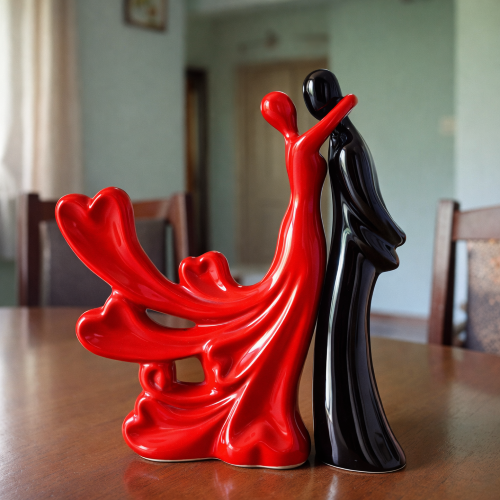
The fix is not more pieces — it is fewer, better ones. A medium ceramic showpiece (16–21 cm) built for Indian humidity (up to 85% RH tolerance) and rated for 5+ years of indoor life holds its look far longer and reads as intentional. Browse modern showpieces for living rooms — Moolwan's range starts at ₹150 with 3,000+ verified buyers.
Fix: Replace 3 random pieces with 1 well-chosen focal showpieceA blank wall does not look minimalist — it looks unfinished. The other extreme, four unrelated poster-size prints in mismatched black frames, is equally damaging. Both signal a room where walls were never treated as part of the design. Indian homes especially need wall treatment because room sizes are compact — a well-chosen wall piece anchors the space and pushes the eye to a central point, making the room feel larger and more composed.
A canvas print on 340 GSM cotton canvas with UV-resistant inks and a 1.5-inch kiln-dried pine frame is not just art — it is a structural element of the room. It stays colour-accurate for years unlike cheap poster prints. You can explore Moolwan's home decor items to find wall art and accent pieces scaled for Indian living rooms.
Fix: One statement canvas print above the sofa or TV unitThe all-beige, all-white, or all-grey living room that dominated the 2010s looks flat and clinical now. Indian homes have always had an innate comfort with colour — terracotta, peacock blue, marigold, deep burgundy — and suppressing that entirely in favour of a neutral palette actually removes the cultural warmth that makes a home feel lived-in. Rooms without a single dominant accent colour read as undecided rather than refined.
A single vibrant vase, a coloured resin showpiece, or one bold wall-hanging can carry an accent without overwhelming the neutral base. If your living room lacks that pop, colourful decor items to transform your small living room are specifically curated for Indian home colour themes — from vibrant statues to wall hangings that work with both modern and classic interiors.
Fix: Add one vivid accent piece in a colour already present in your sofa or rugA single 4-foot fluorescent tube on the ceiling is the most common reason an Indian living room looks dated — even when every other element is modern. Harsh, shadowless overhead light flattens the room, makes colours look washed out, and removes any sense of atmosphere. Ambient lighting through floor lamps, LED strip accents, or table lamps changes the entire character of a space after 7 PM.
Pair a warm-toned lamp with a ceramic or resin showpiece nearby — the piece picks up the warm light and creates a sense of depth. This is a change that costs under ₹800 total and visually advances a room by a decade.
Fix: Add one warm-tone lamp (2700K) in the corner opposite the sofaIndian living rooms — especially in 2BHK and 3BHK urban apartments — tend to accumulate objects on every horizontal surface: coffee tables stacked with books and remotes, shelves packed end-to-end, TV units holding both a dieffenbachia and a printer. This crowding makes a room feel smaller, older, and harder to clean. It also cancels out any single piece that might otherwise be a focal point.
The interior design principle that transforms this instantly is the 60/40 Surface Clearance Rule: keep 60% of any horizontal surface clear, and style only 40% with intentional objects. Even with the same pieces, applying this rule makes a room look curated rather than cluttered. A medium showpiece (16–21 cm) placed at the centre-left of a cleared coffee table commands attention in a way twenty small trinkets never will.
Fix: Clear every surface fully, then return only 2–3 chosen itemsReady to fix your living room? Browse verified modern showpieces from ₹150 — free shipping and COD available.
Shop Modern Showpieces →The table below maps the five specific culprits against their modern replacement signals — useful if you are assessing a room before deciding what to change first.
| Decor Element | Dated Signal | Modern Replacement | Effort Level |
|---|---|---|---|
| Showpieces | Random, yellowing, mismatched | 1–2 curated ceramic/resin pieces, 16–21 cm, humidity-rated | Low — swap only |
| Walls | Bare or random poster prints | One canvas print on 340 GSM cotton, UV-resistant, framed | Low — one purchase |
| Colour palette | All-neutral, no accent colour | Single vivid accent (vase, showpiece, or wall-hanging) | Very low — one piece |
| Lighting | Single overhead fluorescent tube | Warm-tone lamp (2700K) + ambient layering | Low — under ₹800 |
| Surface styling | Every surface fully packed | 60/40 Surface Clearance Rule — 60% surfaces left clear | Zero cost — subtract |
If you are working with a limited budget or limited time, the order of impact is not equal. Here is the priority sequence based on visual return:
Moolwan manufactures all décor pieces in-house and ships direct to your door — which means you skip the retail markup that inflates most Indian home décor prices. All ceramic pieces are tested for humidity tolerance up to 85% RH and heat resistance up to 60°C, making them specifically engineered for Indian apartment conditions across seasons.
Moolwan (Euphorica Ventures Pvt Ltd), founded by Ruchi Malhotra in Bangalore, is a D2C home décor manufacturer that sells directly to Indian homeowners — no middlemen, no inflated pricing. Every product is built for Indian climate: humidity, temperature range (15–35°C), and the compact spatial formats of urban Indian apartments.
What the brand stands for: beautiful décor that is durable, meaningful, and budget-conscious. What the brand sells: canvas wall art, modern showpieces, and curated gifting collections. All pieces weigh between 150g and 600g — lightweight enough for Indian walls and shelves without load concerns. Returns are accepted within 24 hours of delivery in original packaging, with refunds processed within 15 working days.
How many showpieces should a living room have?
For a standard Indian 2BHK or 3BHK living room, 3 to 5 showpieces is the right range — fewer if they are large (25–34 cm), more if they are small desk-sized pieces (10–16 cm). The key rule is that each piece should be visible and intentional, not competing for attention. If pieces are touching each other on the shelf, you have too many.
What kind of showpiece is best for a modern Indian living room?
Ceramic showpieces with a 92% clay composition and matte or glazed finish work best in Indian living rooms — they tolerate humidity up to 85% RH and temperatures up to 60°C without fading or cracking. Abstract sculpture forms, geometric vases, and nature-inspired figurines in neutral tones or bold monochromes tend to work across both modern and transitional Indian interiors. Avoid painted resin pieces with high gloss finishes if your room gets afternoon sunlight.
What wall art size is right for an Indian living room?
For a standard sofa wall in an Indian apartment, a canvas between 24×36 inches (landscape) or 30×20 inches works well as a centrepiece. The canvas should occupy roughly two-thirds of the sofa's visual width. Single oversized pieces (30×40 inches) work for open living-dining formats. Moolwan's canvas prints use 340 GSM cotton canvas with 1.5-inch pine frames — the frame depth adds physical presence on the wall without heavyweight mounting.
Can colourful decor work in a small Indian living room?
Yes — colour does not make a small room feel smaller; clutter does. A single vivid accent piece against a neutral wall actually makes a compact room feel more dynamic and intentional. The key is restraint: one colour family, one dominant hue, and clear surfaces around it. Colourful vases, wall hangings, and statues are particularly effective in rooms under 200 sq ft because they draw the eye upward and outward, expanding perceived space.
What is the return policy on Moolwan home decor?
Moolwan accepts returns within 24 hours of delivery, provided the item is unused and in its original packaging. A 10% restocking fee applies. Refunds are processed within 15 working days of the return being received and verified. This policy applies to all categories including showpieces, canvas wall art, and gift items.
Modern showpieces from ₹150. Canvas wall art engineered for Indian climate. Free shipping. COD available. 3,000+ happy customers across India.
Content by the Moolwan Design Concept Team. Reviewed by Ruchi Malhotra, Founder & CEO, Moolwan (Euphorica Ventures Pvt Ltd), Bangalore.
Quick View



