
What are common mistakes in boho decor?
At Moolwan, we help design-conscious Indian homeowners create boho interiors that feel curated, not chaotic — using pieces engineered for Indian climate and sized for Indian apartments. Here is where most buyers go wrong, and exactly how to fix it.
Mistake 1: Treating "Boho" as "More Is More"
Bohemian style is often misread as an invitation to pile on every macramé, tassel, and trinket you can find. The result is a room that looks chaotic rather than curated. Every boho space needs negative space — breathing room between pieces that lets each item speak.
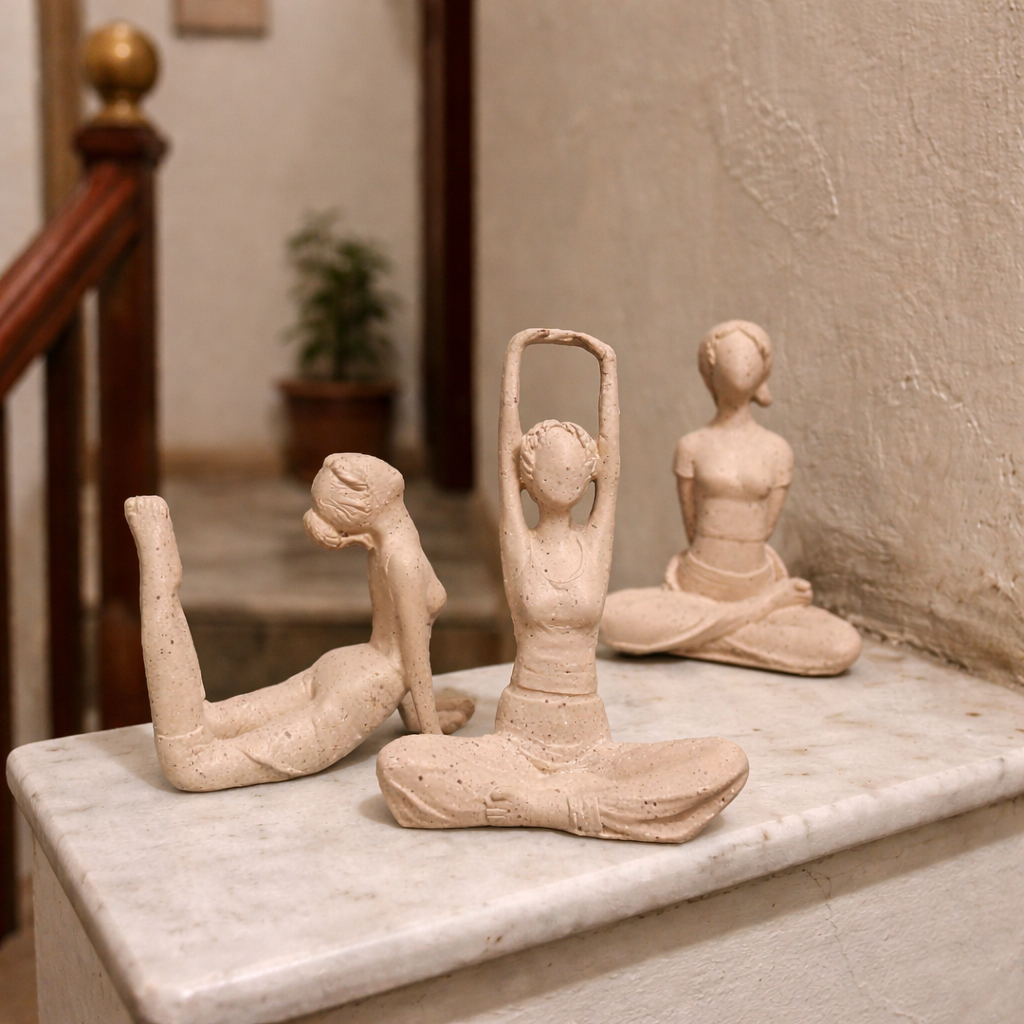
The rule of three applies here: group showpieces in odd numbers, leave at least 30% of any shelf or surface empty, and let your largest focal piece command attention without competition. A single large ceramic figurine (25–34 cm) placed on an uncluttered console reads as intentional bohemian style. Twenty small items crammed together reads as a stockroom.
When shopping for boho accents, browse Moolwan's showpiece collection for home decor and choose one or two statement pieces per zone rather than filling a cart indiscriminately.
Mistake 2: No Colour Anchor — Mixing Patterns Without a Palette
Boho style permits pattern mixing, but without a single unifying colour that runs through every element, the room loses visual coherence. The most common mistake is buying a terracotta throw, a teal cushion, a yellow tapestry, and a navy rug — and wondering why it feels unsettled.
Pick one anchor colour (earthy terracotta, warm ivory, or deep forest green work best in Indian interiors) and ensure at least 60% of your decor items echo it. The remaining 40% can introduce contrast, but always through texture rather than competing hue. Matte ceramic pieces in neutral tones are particularly effective anchors because they absorb, rather than fight, surrounding colour.
Moolwan's modern home decor range designed for Indian living rooms includes pieces in earthy, neutral palettes specifically chosen to layer into boho schemes without visual conflict.
Mistake 3: Ignoring Indian Climate When Choosing Materials
This is the mistake that costs money. Boho decor leans heavily on natural materials — jute, fabric, untreated wood, and low-grade resin. In Indian conditions (monsoon humidity routinely above 80% RH, summer temperatures above 40°C), many of these materials warp, discolour, or degrade within a single season.
Moolwan engineers its pieces specifically for this climate. Ceramic showpieces carry a 92% clay composition, are heat-resistant to 60°C, and tolerate humidity up to 85% RH — making them suited to Indian kitchens, verandahs, and monsoon-season living rooms. Resin pieces use 94% purity epoxy resin with 3H pencil-scratch hardness and are rated for 15–35°C and up to 60% RH. Canvas wall art is printed on 340 GSM cotton canvas with eco-solvent UV-resistant inks and moisture-resistant coating.
Buying generic boho pieces from import-heavy aggregators means paying for something that will fade, crack, or warp by the second summer. Moolwan manufactures direct and builds for the conditions your home actually has.
Mistake 4: Wrong Scale — Choosing Pieces That Disappear or Overwhelm
Scale is the silent killer of boho interiors. A 10 cm figurine on a large open shelf looks lost. A 35 cm statement piece on a compact city-apartment shelf looks suffocating. Most buyers either undersize (buying multiple small pieces that create visual noise) or oversize (buying a single large item that dominates a compact space).
| Size Range | Ideal Placement | Typical Indian Space | Recommended Use |
|---|---|---|---|
| Small: 10–16 cm | Desk, shelf, bathroom ledge | Study nook, 1BHK shelf | Accent grouping (3–5 pieces) |
| Medium: 16–21 cm | Coffee table, showcase unit | 2–3BHK living room | Solo statement or paired set |
| Large: 25–34 cm | Console, mantle, floor corner | Villa, large apartment, foyer | Single focal point — no competing pieces nearby |
Weight matters too. Moolwan pieces range from 150 g to 600 g — light enough for standard Indian wall shelves and display units without requiring reinforcement.
Mistake 5: Wall Art That Fights the Room Instead of Anchoring It
Boho wall art should anchor the room's colour story and add texture — not introduce a competing visual. The mistake most Indian homeowners make is buying canvas prints that are either too small (a single A4-size print on a 10-foot wall looks accidental) or too literal (oversaturated mandala prints that overwhelm neutral walls).
Effective boho wall art in an Indian context uses muted, earthy tones that complement — not clash with — terracotta, brass, and natural wood tones common in Indian interiors. Large format prints (60 cm × 90 cm and above) create the immersive bohemian feel on a wide wall without needing multiple frames cluttering the space.
Moolwan's canvas art is printed on 340 GSM cotton canvas using eco-solvent, UV-resistant inks with a moisture-resistant coating — designed to hold colour for years even in humid Indian rooms. Explore Moolwan's full home decor items range to find wall art and accent pieces that work together as a cohesive boho layer.
Mistake 6: Buying Trend-First, Not Space-First
Social media boho looks stunning on a 1080px screen. It often looks wrong in a 10×12 ft Indian bedroom. Buying because something trended on Instagram — without measuring your space, knowing your base palette, or understanding your light conditions — is the fastest way to create a mismatch.
Before any boho purchase, confirm three things: the available surface area (in centimetres, not vague "small shelf"), the dominant wall colour, and whether natural light hits the piece directly. Resin pieces with high gloss look beautiful in diffused northern light but can reflect harshly in direct afternoon western sun. Matte ceramic finishes work in almost any Indian light condition.
Moolwan offers both matte and glazed finishes across its range — and because it is a direct-to-consumer manufacturer, both options are available at manufacturer pricing, not retail markup.
Mistake 7: No Cultural Thread — Boho Without Indian Context
The strongest boho interiors in Indian homes work because they blend global bohemian vocabulary with local cultural anchors — a brass diya holder alongside a jute lampshade, a Warli-inspired canvas alongside a modern geometric ceramic. When boho decor is purely imported in aesthetic, it feels copied rather than curated.
Moolwan is built on this exact philosophy: modern home décor that is design-forward and globally inspired, but rooted in Indian craftsmanship, Vastu-compatible placement, and the material realities of Indian climate and space. Every piece is designed with Indian homeowners in mind — not adapted for them after the fact.
Shop Boho Showpieces — Free Shipping Pan-India
Frequently Asked Questions
How many boho pieces is too many for a small Indian apartment?
For a 1BHK or compact 2BHK, limit boho accents to 5–7 pieces across the entire living and dining zone. Group them in clusters of 2–3 rather than spreading them individually, and leave at least 30% of shelving and table surfaces completely empty. Negative space is a design element in boho — not a gap to fill.
Can boho decor work with traditional Indian furniture?
Yes — and it often works better than with contemporary furniture. Traditional Indian wooden furniture (sheesham, teak, mango wood) provides the organic warmth that boho style builds on. Layer earthy ceramic showpieces, textured canvas wall art, and natural-fibre accents on top of existing traditional pieces for a globally-inspired look that still feels authentically Indian.
Do resin showpieces work in Indian humidity for boho decor?
Standard resin pieces (below 85% purity) can yellow, crack, or lose clarity in Indian monsoon humidity. Moolwan's resin items use 94% purity epoxy resin rated for humidity up to 60% RH and temperatures of 15–35°C — making them suitable for air-conditioned rooms and semi-ventilated living spaces, but not recommended for open balconies or direct coastal monsoon exposure.
What colours anchor a boho palette in Indian interiors?
The most versatile anchor colours for boho in Indian homes are warm terracotta, ivory or off-white, earthy olive, and dusty rose. These tones complement Indian wall colours (cream, beige, warm white) and pair naturally with brass, copper, and natural wood — all common in Indian furniture and fixtures. Avoid cool-toned boho palettes (grey, slate, navy as dominant colours) which can feel disconnected from the warmth of most Indian interiors.
What is Moolwan's return policy if a boho piece doesn't work in my space?
Moolwan accepts returns within 24 hours of delivery for items in unused condition and original packaging. A 10% restocking fee applies, and refunds are processed within 15 working days. COD and free shipping are available pan-India on all orders.
Get the Boho Look Right — The First Time
Moolwan is India's trusted source for modern home decor, wall art, and unique gifts — designed for Indian climate, Indian space, and Indian taste. Every piece is manufacturer-direct: no middlemen, no price inflation, no compromise on material quality.
Shop Modern Boho Decor Browse Boho Showpieces


