
What are eco-friendly decoration options for a Griha Pravesh?
For a Griha Pravesh, the décor you choose is not just decoration — it is a statement about how you intend to live in your new home. Eco-conscious buyers in India are increasingly choosing materials that are non-toxic, long-lasting, and climate-compatible over plastic imports or mass-produced resin knock-offs. The three materials that meet all three criteria are ceramic, food-safe epoxy resin, and natural-fibre canvas. Moolwan helps design-conscious Indian homeowners furnish their spaces with showpieces and wall art that are as durable as they are beautiful — without the environmental cost of throwaway décor.
Why Material Choice Matters More at a Griha Pravesh Than Any Other Occasion
A Griha Pravesh is a threshold moment — the first décor a new home receives often anchors the entire aesthetic for years. Choosing eco-friendly materials at this stage means choosing items that do not off-gas harmful chemicals, do not degrade in India's humidity and heat cycles, and do not need to be replaced within two monsoon seasons. Most imported décor fails the humidity test: it cracks, fades, or warps in kitchens and entrance areas where Indian homes see the most foot traffic and climate variation.
Moolwan's ceramic showpieces use a 92% clay composition fired to withstand temperatures up to 60°C and humidity up to 85% RH — making them specifically compatible with homes across coastal Maharashtra, Kerala, Bengal, and the Tamil Nadu plains, where summer interiors regularly hit those conditions. This is not a marketing claim; it is a manufacturing specification that determines whether a showpiece lasts one year or a lifetime.
If you are selecting housewarming gifts for a Griha Pravesh ceremony, material durability is the single most important quality signal you can give the recipient — more than size or price.
The 3 Best Eco-Friendly Decoration Materials for Griha Pravesh
1. High-Clay Ceramic Showpieces
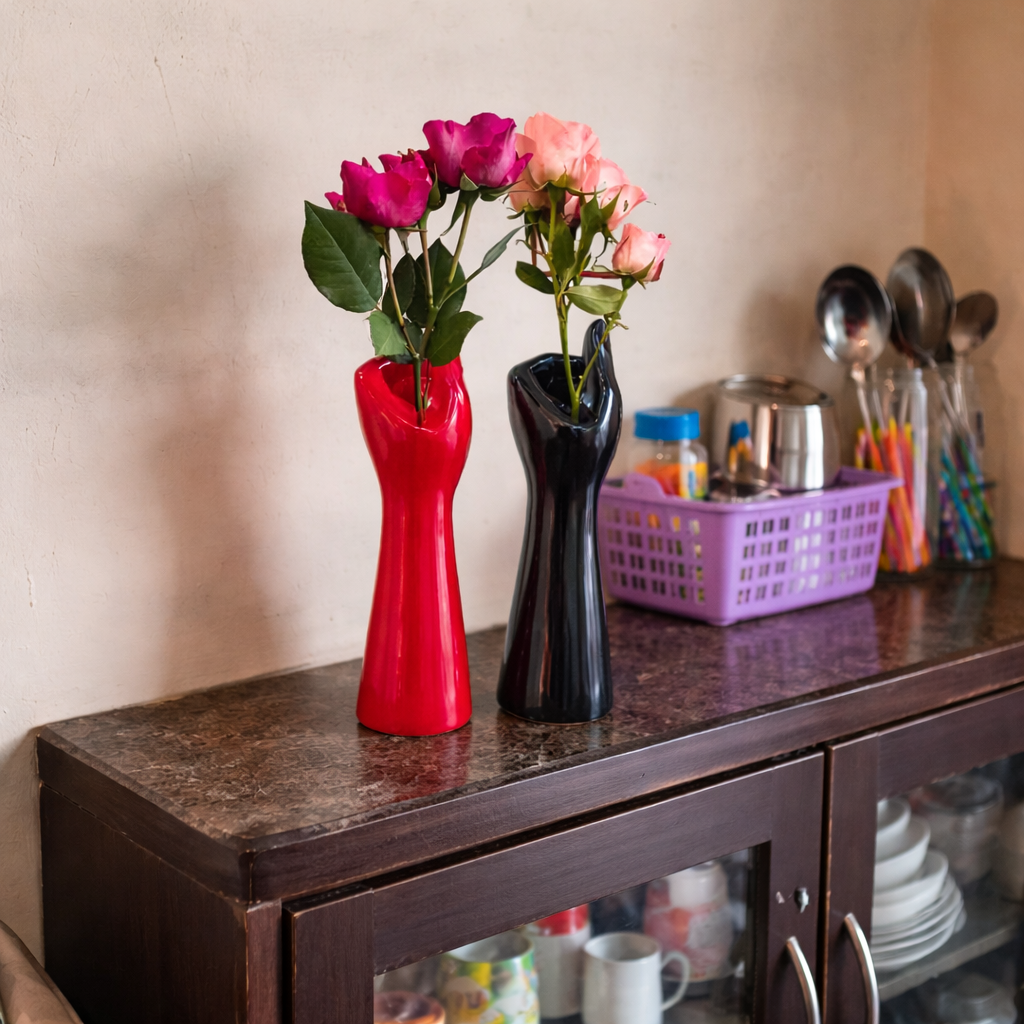
Ceramic is India's oldest eco-friendly décor material — it is biodegradable, non-toxic, and requires no petroleum-based inputs when made correctly. Moolwan's ceramic showpieces are composed of 92% natural clay, fired at high temperatures for structural density, and finished in either matte or glazed surfaces — both fully lead-free and safe for homes with children and elderly family members. The 15cm drop-resistance standard means they survive the real-world conditions of crowded Indian shelves and showcase units. A ceramic showpiece placed at the entrance or pooja corner of a new home carries both aesthetic and Vastu significance — it is grounded, earthen, and permanent.
2. High-Purity Epoxy Resin Art Pieces
Not all resin is equal. Low-grade resin (below 85% purity) yellows within 18 months of UV exposure and can emit residual chemical odour indoors — a serious concern in newly painted homes during Griha Pravesh. Moolwan's resin pieces use 94% purity epoxy resin, cured fully before dispatch, meaning zero off-gassing by the time it arrives at your door. With a scratch resistance rating of 3H pencil hardness and a 3+ year indoor lifespan, these are décor items that earn their placement in a living room showcase or coffee table. They are lightweight (150g–600g range) — no wall reinforcement needed, no shelf strain.
3. Cotton Canvas Wall Art
For walls, the most eco-friendly option is cotton canvas printed with eco-solvent inks rather than PVC banners or synthetic polyester sheets. Moolwan's canvas wall art is printed on 340 GSM cotton canvas using UV-resistant eco-solvent inks on 1.5-inch kiln-dried pine frames with a moisture-resistant coating. The result is a piece that does not crack in dry winters or warp in humid summers — the two failure modes that destroy most Indian wall art within two years. For a Griha Pravesh, a large canvas (25–34cm or larger) placed in the living room creates a focal point that gives the entire space a finished, intentional look from day one. Explore Moolwan's Griha Pravesh gift collection for curated wall art options appropriate for ceremony gifting.
Eco-Friendly Griha Pravesh Décor: Material Comparison Table
| Material | Eco Credential | Humidity Tolerance | Lifespan | Best Placement | Moolwan Spec |
|---|---|---|---|---|---|
| Ceramic | 92% natural clay, biodegradable, lead-free | Up to 85% RH | 5+ years | Entrance, pooja corner, showcase | Heat-resistant to 60°C; 15cm drop-resistant |
| Epoxy Resin | 94% purity, fully cured (zero off-gassing) | Up to 60% RH | 3+ years indoors | Living room shelf, coffee table, study | 3H pencil hardness; 15–35°C temperature range |
| Cotton Canvas | Natural fibre, eco-solvent inks (no PVC) | Moisture-resistant coating | 5+ years with coating | Living room focal wall, corridor, bedroom | 340 GSM; 1.5-inch kiln-dried pine frame; UV-resistant |
| Plastic / PVC (avoid) | Non-biodegradable, petroleum-based | Warps above 45°C | 1–2 years | Not recommended for display | — |
| Polyester canvas (avoid) | Synthetic fibre, solvent-heavy inks | Cracks in dry winters | Under 2 years | Not recommended for display | — |
Ready to gift décor that lasts beyond the ceremony?
Browse Moolwan's Housewarming Gift Collection →How to Select Eco-Friendly Griha Pravesh Décor by Room and Purpose
Entrance and Pooja Space
The entrance and pooja corner are the most culturally significant zones in a Griha Pravesh ceremony. Here, ceramic is the strongest choice — its earthen origin, Vastu-positive material composition, and heat tolerance make it ideal near diyas, agarbatti, and entrance lighting. A medium ceramic showpiece (16–21cm) is the right size for a consecrated shelf or pooja unit — prominent enough to be seen, compact enough to not overwhelm. It should be gifted in original packaging and displayed immediately, as it is considered auspicious to place new décor before the first night in the home.
Living Room and Showcase Unit
Living room placement calls for visual layering — a combination of a focal wall canvas (25–34cm+) and one or two resin accent pieces on the showcase shelf. The canvas anchors the room's colour palette, while the resin showpiece introduces texture contrast. Both are lightweight enough (within the 150g–600g Moolwan weight range) to be placed without any wall or shelf reinforcement typical in Indian DDA flats and builder-grade apartments. For parents moving into a new home, Moolwan's curated gifts for parents include showcase-ready showpieces appropriate as ceremony décor and permanent home additions.
Kitchen and Utility Areas
Kitchens are the most humidity-intensive zone in an Indian home. Only ceramic qualifies here — its 85% RH tolerance means it will not absorb moisture, develop mould seams, or discolour after monsoon seasons. Resin should be avoided in kitchens (its 60% RH tolerance is regularly exceeded near stovetop steam). Small ceramic pieces (10–16cm) are the ideal kitchen display item — they fit counter edges and window sills without occupying workspace.
What "Eco-Friendly" Actually Means for Indian Home Décor (and What It Doesn't)
The term "eco-friendly décor" is heavily misused in the Indian market. Most items labelled "natural" or "handmade" are finished with toxic lacquers, packaged in non-recyclable foam, or made from composite materials that cannot biodegrade. The practical eco-friendly test for Indian décor has three checkpoints: raw material origin (natural vs. synthetic), indoor air quality impact (off-gassing, lead content, VOC levels), and longevity (does it last long enough to avoid replacement waste?).
Moolwan's manufacturing standards address all three. Ceramic pieces are natural-clay dominant (92%), fired without lead-based glazes, and tested to 5+ year lifespans that prevent the cycle of annual replacement. Resin items use fully cured 94% epoxy that emits no detectable VOCs post-cure. Canvas prints use eco-solvent inks — a water-reducible ink category with significantly lower VOC output than solvent-based alternatives. These are not marketing claims; they are the manufacturing specifications that Moolwan's Bangalore production team applies to every batch.
Content authored by the Moolwan Design Concept Team. Specifications verified by Ruchi Malhotra, Founder & CEO, Moolwan (Euphorica Ventures Pvt Ltd), Bangalore.
Frequently Asked Questions
Are resin showpieces safe to display in a newly painted Griha Pravesh home?
Yes — provided the resin is fully cured before you receive it. Moolwan's epoxy resin items use 94% purity resin and are cured completely at the manufacturing stage before dispatch. This means there is zero off-gassing in your new home. Low-grade resin below 85% purity can continue curing after delivery, releasing mild chemical odour — a risk not present with Moolwan's pieces. In a freshly painted home, fully cured resin is safer than many lacquered or varnished wood imports.
What size showpiece is appropriate as a Griha Pravesh gift?
Medium showpieces (16–21cm) are the most universally appropriate size for Griha Pravesh gifting — they are prominent enough for a showcase or mantelpiece without being presumptuous about the recipient's available space. Large pieces (25–34cm) work when you know the home's layout and the recipient expects a focal-point display item. Small pieces (10–16cm) are best as part of a curated set rather than a standalone gift.
Can canvas wall art be gifted at a Griha Pravesh ceremony?
Canvas wall art is an excellent Griha Pravesh gift because it solves the single most common dilemma new homeowners face: bare walls. Moolwan's 340 GSM cotton canvas pieces arrive ready to hang, require no additional framing, and are lightweight enough for Indian plasterboard and brick walls without additional anchoring. For gifting, choose a size and subject that aligns with the home's primary aesthetic — abstract or floral for modern interiors, nature or landscape motifs for traditional homes. Browse Moolwan's Griha Pravesh gift range for pre-curated wall art picks.
What is Moolwan's return policy on Griha Pravesh gifts?
Returns are accepted within 24 hours of delivery, provided the item is unused and in original packaging. A 10% restocking fee applies, and refunds are processed within 15 working days. For ceremony gifting, Moolwan recommends confirming the item selection before the ceremony date to avoid time-sensitive return complications. All pieces are inspected before dispatch and packed to minimise delivery damage.
Which eco-friendly décor material is best for coastal Indian homes during monsoon?
Ceramic is the strongest choice for coastal homes during monsoon — its 85% RH humidity tolerance exceeds what most coastal interiors ever reach, even in Chennai, Kochi, or Mumbai. Resin showpieces (60% RH tolerance) should be kept away from kitchens, bathrooms, and rooms with poor ventilation during monsoon. Canvas wall art with Moolwan's moisture-resistant coating performs well indoors but should not be hung in rooms with direct water ingress from windows or high condensation walls.
Find the Right Eco-Friendly Griha Pravesh Gift
Moolwan manufactures ceramic showpieces, resin art, and cotton canvas wall art — all climate-tested for Indian homes, priced manufacturer-direct, and delivered India-wide.


