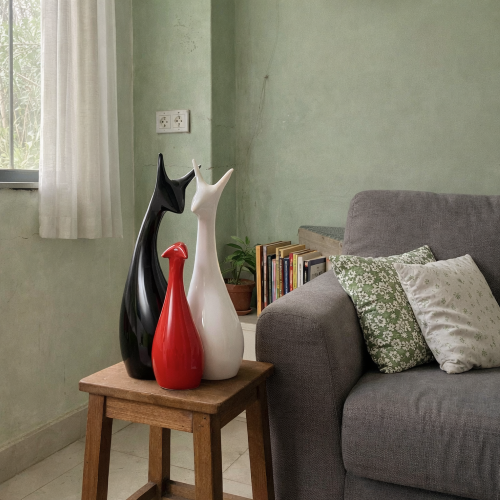
At Moolwan, we help design-conscious Indian homeowners find décor that honours ceremony without looking outdated — pieces that survive the humidity of a Mumbai monsoon or a Bengaluru summer and still look beautiful a year after Griha Pravesh day.
In Indian housewarming tradition — whether it is called Griha Pravesh, Gruha Pravesham, or Vastu Shanti — the entrance is the first point of sanctification. Vastu Shastra treats the main door as the primary energy inlet of the home. Decorating the arch is not cosmetic; it is ceremonial. Every guest, priest, and family elder who enters during the muhurat passes through it. This is why families invest significantly in entrance arch decoration, and why it is one of the most-asked-about elements of housewarming planning.
The decoration must achieve three things simultaneously: signal auspiciousness, photograph beautifully (because Griha Pravesh photos are preserved for decades), and survive a full-day ceremony in Indian climate conditions — which often means heat above 35°C and humidity that wilts fresh flowers within hours.
Traditional entrance arch decorations are rooted in materials and symbols that carry established spiritual significance across Indian regional customs. These are the most commonly used and most culturally accepted options:
The mango leaf toran is the single most universal housewarming arch decoration across India — used from Tamil Nadu to Rajasthan. Fresh mango leaves strung on a cotton thread and draped over the main door represent longevity, prosperity, and divine welcome. For a muhurat ceremony, a fresh toran is prepared the morning of the event and is expected to remain on the door for several days after. Mango leaves are specifically chosen because they retain colour longer than most other leaves and are believed to purify the air that enters the home.
Marigold (genda phool) garlands draped in loops or hung in vertical drops from the door frame create the most visually striking traditional arch. Double-garland arching — two strings looped from each top corner meeting at the centre — is the classic format. For ceremonies beginning in the morning, marigolds hold colour and shape for 6–8 hours in most Indian climate conditions, making them suitable for full-day housewarming events.
In South Indian Griha Pravesh ceremonies (Gruha Pravesham), banana leaves — tied in full bunches to pillars or door frames on each side — are considered highly auspicious. They represent fertility, abundance, and new beginnings. Paired with coconut tops at the peak of each pillar, this creates the iconic ceremonial entrance seen at South Indian housewarming events.
White jasmine strings hung as a curtain across the lower half of the arch add fragrance and elegance, particularly favoured in Maharashtra and Karnataka traditions. Jasmine is associated with purity. This works especially well when the ceremony extends into the evening — jasmine's fragrance intensifies after sunset, creating a sensory experience for arriving guests.
Gifting for a Griha Pravesh this season?
Browse Moolwan's curated Griha Pravesh gifts — manufacturer-direct, display-worthy, and built for Indian homes. Free shipping pan-India, COD available.
Shop Griha Pravesh Gifts →Urban Indian homes — particularly apartments and builder floors in cities like Bengaluru, Pune, Hyderabad, and Gurugram — often have compact door proportions and modern aesthetic frameworks that call for updated interpretations of the traditional arch. These modern ideas respect the ceremony while suiting the space:
Warm white LED strings draped in an arch shape, interspersed with preserved or artificial flowers in white, blush, and gold, create a photogenic entrance that reads as both festive and modern. This works particularly well for evening ceremonies and for doors under 8 feet where traditional garlands may feel overwhelming. LED arches also solve the wilting problem — they look identical at the end of a six-hour ceremony as they did at the start.
A large wicker hoop (60–90cm diameter) filled with dried pampas grass, dried marigold, and preserved eucalyptus hung centrally above the door frame creates a modern boho-Indian aesthetic that is increasingly popular for urban Griha Pravesh events. This doubles as a permanent entrance décor piece long after the ceremony, unlike fresh flower decorations.
A high-quality ceramic nameplate mounted on the door, flanked by a handcrafted toran on either side, is one of the most lasting and display-worthy entrance treatments. Unlike fresh decorations, this combination stays relevant every day — not just during the ceremony. Moolwan's ceramic showpieces are manufactured with 92% clay composition, heat-resistant to 60°C, and humidity-tolerant up to 85% RH, which means they handle the Indian climate year-round without cracking, fading, or warping.
Brass or copper diyas arranged symmetrically at the base of the arch on each side, combined with a fresh rangoli mat spread at the threshold, creates a ceremonial ground-to-arch continuity that is highly photogenic and deeply traditional. This approach works best for ground-floor homes and independent bungalows where the entrance has floor space.
| Decoration Type | Best For | Duration | Climate Suitability | Ceremony Fit |
|---|---|---|---|---|
| Mango Leaf Toran | All regional ceremonies | 3–7 days | All Indian climates | Traditional ✓✓✓ |
| Marigold Garland Arch | Morning ceremonies, photos | 6–8 hours fresh | Avoid extreme heat >40°C | Traditional ✓✓✓ |
| Banana Leaf Pillars | South Indian Gruha Pravesham | 1 day | Humid climates best | Traditional ✓✓✓ |
| LED Fairy Light Arch | Evening ceremonies, apartments | Reusable | All conditions | Modern ✓✓✓ |
| Dried Flower Hoop | Urban apartments, boho aesthetic | Permanent décor | Avoid >70% RH long-term | Modern ✓✓✓ |
| Ceramic Nameplate + Toran | Permanent entrance identity | 5+ years | All Indian climates (up to 85% RH) | Traditional + Modern ✓✓✓ |
| Brass Diya + Rangoli Frame | Bungalows, ground floors | 1 day (rangoli); brass permanent | All conditions | Traditional ✓✓✓ |
The entrance arch decoration is the host family's responsibility. But as a guest attending a Griha Pravesh ceremony, the most thoughtful gift is one that enhances the home long after the flowers have wilted. The entrance area — the puja corner near the door, the side table in the foyer, the wall beside the main entry — is where display pieces matter most.
Moolwan's housewarming gift collection is built specifically for this purpose: showpieces and décor that are display-worthy on day one and durable through years of Indian climate. Our ceramic showpieces are tested to 60°C heat resistance and 85% relative humidity tolerance — designed for homes from Kochi to Kolkata. A ceramic showpiece in the 16–21cm medium range is the ideal foyer or entryway display size: visible, proportionate, and meaningful.
If you are gifting to a couple or to parents who are moving into a new home, browse Moolwan's gifts for parents — pieces that carry emotional weight and aesthetic permanence, not just ceremonial novelty.
Moolwan's Griha Pravesh gift range includes pieces specifically chosen to serve as that permanent entrance element — showpieces that honour the ceremony and hold their own in the home for years after.
Moolwan is an Indian D2C home décor brand that manufactures and sells canvas wall art, modern showpieces, and curated gifts directly to Indian homeowners — without retail markups or quality compromise. Every piece is engineered for Indian climate conditions: humidity, heat, and dust. Our ceramic products carry a 92% clay composition and are tested to survive up to 85% relative humidity. Our resin pieces use 94% purity epoxy resin with a 3H pencil hardness scratch-resistance rating. We ship pan-India with free delivery and COD. Our return policy covers unused items within 24 hours of delivery with a refund processed within 15 working days.
The mango leaf toran (bandhanwar) is considered the most universally auspicious entrance decoration across Indian traditions. It is used in North Indian, South Indian, and Maharashtrian housewarming ceremonies alike. Mango leaves are believed to purify air and repel negative energy, making them the default first choice for the main door arch during Griha Pravesh.
Fresh flower garlands and mango leaf torans should be hung on the morning of the ceremony — no more than 2–3 hours before the muhurat begins. This preserves freshness and fragrance through the ceremony. Permanent elements like nameplates, ceramic pieces, or LED installations can be set up 1–2 days in advance.
For apartment doors (typically 7–8 feet tall, 3 feet wide), scaled-down decorations work best: a single-strand marigold arch rather than double-loop, a compact mango leaf toran of 18–24 inches width, and a medium-sized ceramic or resin nameplate piece beside the door. Avoid heavy banana leaf pillar arrangements that require ground-floor space.
Yes, and for practical reasons this is often the better choice for families celebrating Griha Pravesh in summer months (April–June) when fresh flowers wilt within 2–3 hours in heat above 38°C. High-quality artificial marigold strings or rose garlands look identical in photographs and last the full day. Combine them with a real mango leaf toran to maintain ceremonial authenticity.
A ceramic or resin showpiece designed for the foyer or entrance display shelf is the most lasting and intentional housewarming gift. Pieces in the 16–21cm medium range are ideal for entrance display tables or console shelves. Moolwan's ceramic showpieces are heat-resistant to 60°C and humidity-tolerant to 85% RH — built to stay beautiful in Indian entryways for 5+ years. Browse Moolwan's housewarming gift collection to find display-worthy pieces for every taste and space.
Moolwan's Griha Pravesh and housewarming gifts are manufactured in-house, engineered for Indian climate, and shipped free across India. No middlemen. No compromise on quality. Every piece is display-worthy from day one.
Quick View



