
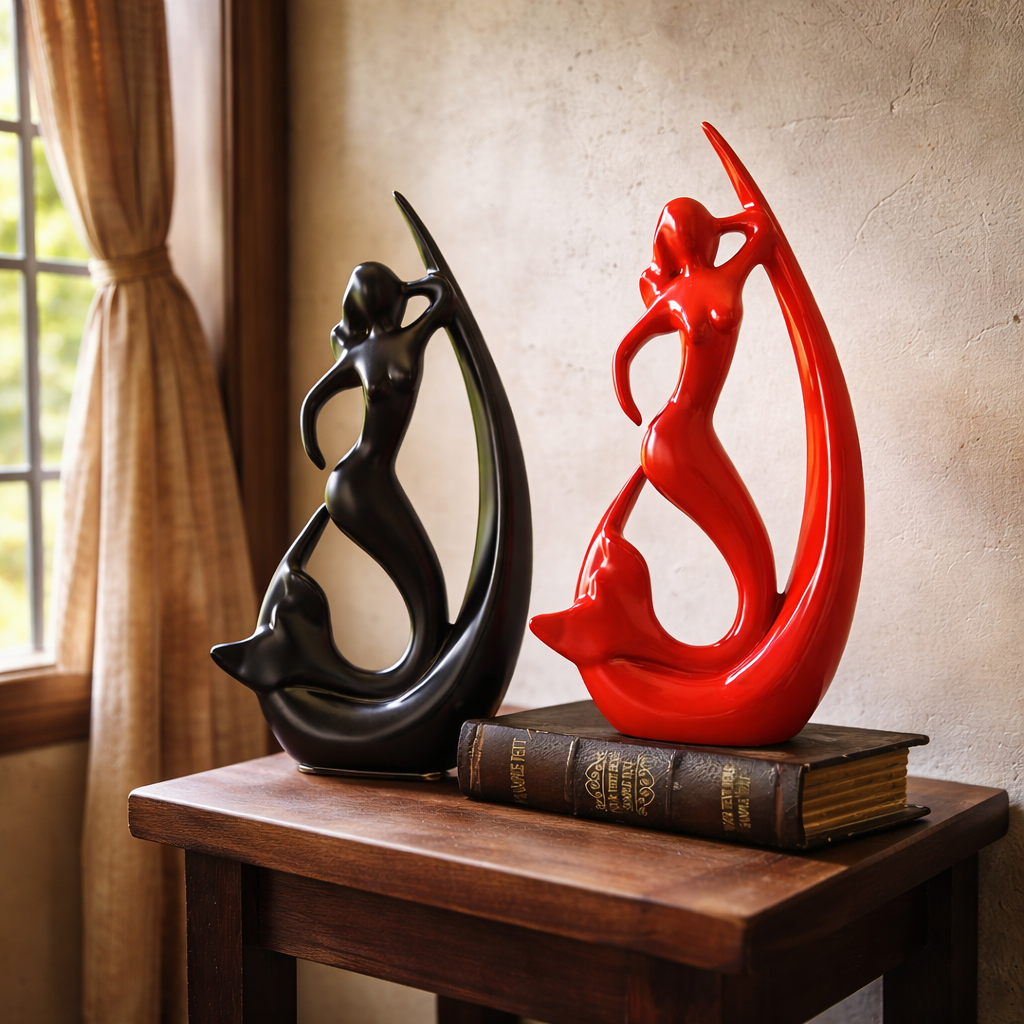
What are the best design principles for small spaces?
At Moolwan, we help design-conscious Indian homeowners in compact urban apartments make deliberate, confident décor decisions — so their spaces feel curated, not cluttered. These principles are not abstract theory. They are the same rules our design team applies when engineering every product we manufacture.
Why Small-Space Design Is Different in Indian Homes
The average urban Indian apartment sits between 500 and 1,000 sq. ft. — often occupied by multi-generational families with diverse taste preferences and multiple functional zones crammed into limited floor space. Unlike western interiors, Indian homes must serve as dining room, prayer corner, study, and social space simultaneously. This creates a specific design tension: how do you make a space feel considered and personal without making it feel busy or smaller than it already is?
The answer is not minimalism for its own sake. It is intentional layering — choosing fewer objects, but choosing them with precision. Every piece of décor in a small Indian home should do at least one of three things: anchor the eye, define a zone, or add a material quality the room otherwise lacks.
Explore room decoration ideas curated specifically for Indian interiors — sized, styled, and priced for real apartments, not magazine spreads.
The 6 Core Design Principles for Small Spaces
1. Scale Before Style
The most common small-space mistake Indian homeowners make is buying décor that is the wrong size — either too small (looks lost) or too large (dominates the room). Scale is a decision, not an afterthought. For shelves, desks, and bathroom counters, choose showpieces in the Small range: 10–16 cm. For coffee tables and display cases, the Medium range (16–21 cm) holds visual weight without crowding. Reserve Large pieces (25–34 cm) for a single focal point — a console table, a fireplace shelf, or the entry table — where one statement object does the work of five smaller ones.
2. Visual Continuity Over Variety
A small room looks smaller when it contains too many competing materials, colours, and textures. Visual continuity means choosing 2–3 materials that echo each other across the room. A resin showpiece in warm amber on your coffee table reads differently when paired with a canvas print using similar tones on the wall above — suddenly the room feels designed, not assembled. Moolwan's product range is developed with this in mind: finishes across ceramic and resin lines are calibrated to co-exist, not clash.
3. Vertical Real Estate Is Underused
Indian homeowners habitually design horizontally — filling tabletops and floors — while ignoring the vertical plane. Wall art is one of the highest-ROI investments in a small room because it lifts the eye, makes ceilings feel higher, and fills space without consuming floor area. A single well-chosen canvas print — on 340 GSM cotton canvas with UV-resistant eco-solvent inks — adds depth that no shelf arrangement can replicate. Browse Moolwan's modern home décor collection for canvas wall art engineered for Indian wall types and humidity levels.
4. Negative Space Is an Active Design Choice
Empty space is not wasted space. In a small room, the gaps between objects are as important as the objects themselves. Negative space gives the eye somewhere to rest, makes individual pieces stand out, and prevents the visual noise that makes small rooms feel chaotic. A rule of thumb: if you cannot name the specific visual job every object on a shelf is doing, remove it.
5. Climate-Compatible Materials Reduce Visual Fatigue
In Indian climates — particularly during monsoon when relative humidity crosses 80% — décor made from incompatible materials warps, discolours, or deteriorates visibly. This forces homeowners to replace pieces frequently, creating constant visual disruption. Moolwan's ceramic showpieces are rated to 85% RH humidity tolerance with a 92% refined clay composition and a 5+ year indoor lifespan. Resin pieces hold structural integrity at 60% RH. When your décor does not degrade, your space stays intentional longer.
6. One Focal Point Per Zone
Divide your home into zones — living, dining, entry, bedroom — and assign each zone exactly one focal point. This could be a large canvas print, a curated shelf arrangement, or a statement showpiece on the console. Every other object in that zone should support or recede from that focal point. This rule alone transforms the feeling of a crowded Indian apartment into something that reads as deliberate and spacious.
Small Space Décor: What to Use Where
| Space / Zone | Recommended Décor Type | Ideal Size | Best Material (Indian Climate) | Placement Rule |
|---|---|---|---|---|
| Entry / Foyer | Statement showpiece or wall art | Large (25–34 cm) or full canvas | Ceramic (85% RH rated) | One focal object; keep console clear otherwise |
| Living Room Shelf | Curated showpiece group (odd numbers) | Mix of Small (10–16 cm) + Medium (16–21 cm) | Ceramic or resin | Max 3 objects per shelf tier; leave 40% empty |
| Coffee Table | Single centrepiece showpiece | Medium (16–21 cm) | Resin (scratch-resistant 3H hardness) | Centre placement; nothing else on table surface |
| Bedroom Side Table | Small décor object or bud vase | Small (10–16 cm) | Ceramic (matte finish, easy to maintain) | One side only; keep other side functional |
| Living Room Wall | Canvas wall art (single statement or diptych) | Based on wall width (60–80% of wall span) | 340 GSM canvas, moisture-resistant coating | Hang at eye level; no more than 2 frames per wall |
| Study / Work Corner | Desk showpiece or small canvas | Small (10–16 cm) | Resin (temperature stable 15–35°C) | One object in line of sight; rest of desk functional |
Ready to apply these principles to your space?
Shop Showpieces Sized for Indian Rooms →The Material-Climate Compatibility Chart
One principle that is rarely discussed but critically important for Indian homeowners: your décor material must match your home's humidity and temperature profile, or it will fail visually before it fails physically. Here is how the three primary décor materials compare for Indian conditions:
| Material | Max Humidity Tolerance | Temperature Range | Lifespan (Indoor) | Best For |
|---|---|---|---|---|
| Ceramic (92% clay composition) | Up to 85% RH | Heat-resistant to 60°C | 5+ years | All Indian climates; coastal, humid, summer heat |
| Resin (94% epoxy purity) | Up to 60% RH | 15–35°C (stable) | 3+ years | Air-conditioned rooms; urban apartments; studies |
| Canvas Wall Art (340 GSM) | Moisture-resistant coating | All standard indoor conditions | 5+ years (UV-resistant inks) | Living rooms, bedrooms, dining areas |
These specifications are proprietary to Moolwan's manufacturing process. Our ceramic and resin lines are tested against Indian monsoon-season humidity benchmarks before production approval. No middleman markup. No import compromise. Manufactured and quality-checked in-house.
How to Audit Your Small Space Before You Buy
Before adding any new décor, do a five-minute room audit. Stand at the entry point of each room and identify: (1) where your eye goes first — that is your natural focal zone, (2) how many objects currently compete for attention — anything above five visible objects per zone is visual noise, and (3) which surfaces are doing no design work — these are candidates for one intentional piece, not three.
If your living room shelf currently holds nine objects, you do not need a new showpiece — you need to remove six and reassess. If your walls are bare, that is almost always the higher-ROI investment before adding more surface objects. A well-hung canvas print can make a room feel 30% larger by creating the illusion of depth and lifting the eye upward.
Once you have identified your focal zones and cleared the noise, visit Moolwan's room decoration inspiration hub to match specific styles and product types to each zone in your home.
Common Small-Space Mistakes and the Fix
- Too many small objects grouped together: Creates visual chaos. Fix — reduce to 3 objects max per zone, in varying heights.
- Matching everything to one colour perfectly: Looks flat. Fix — use tonal variation within the same palette; matte + glazed finishes add depth without colour conflict.
- Ignoring the entryway: The foyer sets the tone for the entire home. Fix — one medium-to-large ceramic showpiece on the entry console signals intentionality from the moment guests arrive.
- Buying décor without measuring first: The single most avoidable mistake. Fix — measure the surface, note the height clearance, and reference Moolwan's three-tier sizing guide (Small 10–16 cm / Medium 16–21 cm / Large 25–34 cm) before purchasing.
- Skipping wall décor because "the walls are too small": Smaller walls benefit most from art — it redirects focus upward and outward. Fix — one framed canvas print sized to 60% of the wall's width is the rule.
What Moolwan Stands For
Moolwan is an Indian D2C home décor brand (Euphorica Ventures Pvt Ltd, Bangalore) that manufactures canvas wall art, modern showpieces, and curated home gifts in-house — and sells directly to homeowners without retail or import markup. Every product is designed for Indian apartment proportions, engineered for Indian climate conditions, and sized to meet real shelf, table, and wall constraints. We exist because most décor available to Indian homeowners is either mass-produced abroad, incompatible with monsoon humidity, or priced with three layers of middlemen built in. We remove all three problems.
Start with the right scale. Build from there.
Browse Moolwan's full range of modern home décor — sized, climate-tested, and priced manufacturer-direct.
Explore Modern Home Décor at Moolwan →Frequently Asked Questions
How many décor objects is too many for a small Indian living room?
As a rule, no single visual zone — one shelf, one table, one corner — should have more than five visible objects. If your living room has three zones (shelf, coffee table, TV unit), that is a maximum of 15 objects across the entire room. In practice, 8–10 well-chosen objects in a small Indian living room almost always reads better than 20. Edit aggressively, then stop adding.
Does wall art actually make a small room look bigger?
Yes — when placed correctly. A canvas print hung at eye level (centre of the artwork at 145–150 cm from the floor) draws the eye upward and creates the perception of ceiling height. Horizontal canvases widen walls visually; vertical canvases elongate. In rooms under 200 sq. ft., one large canvas print often does more spatial work than any furniture arrangement change.
What is the right showpiece size for a 2 BHK Indian apartment?
For a typical 2 BHK (living area roughly 180–250 sq. ft.), Small showpieces (10–16 cm) work on bookshelves, side tables, and bathrooms. Medium pieces (16–21 cm) are ideal for coffee tables and display cabinets. Reserve Large pieces (25–34 cm) for your entry console or a single shelf focal point — one per room is sufficient. Over-scaling is more common than under-scaling in compact apartments.
Can ceramic showpieces survive Indian monsoon humidity?
Moolwan's ceramic showpieces are manufactured with a 92% refined clay composition and rated to 85% relative humidity — well above peak Indian monsoon indoor humidity levels, which typically sit between 70–80% RH. They are also heat-resistant to 60°C, making them suitable for west-facing rooms that absorb strong afternoon sun. The 5+ year indoor lifespan is verified under these conditions.
Is it better to buy one large showpiece or several small ones for a small space?
One large piece almost always outperforms several small ones in a small space. Multiple small objects create visual fragmentation — the eye does not know where to settle. A single well-proportioned focal piece on a coffee table or entry console creates calm, clarity, and a sense of scale. If you prefer a grouped arrangement on a shelf, use the rule of three: three objects, three heights, one shared material or colour link.


