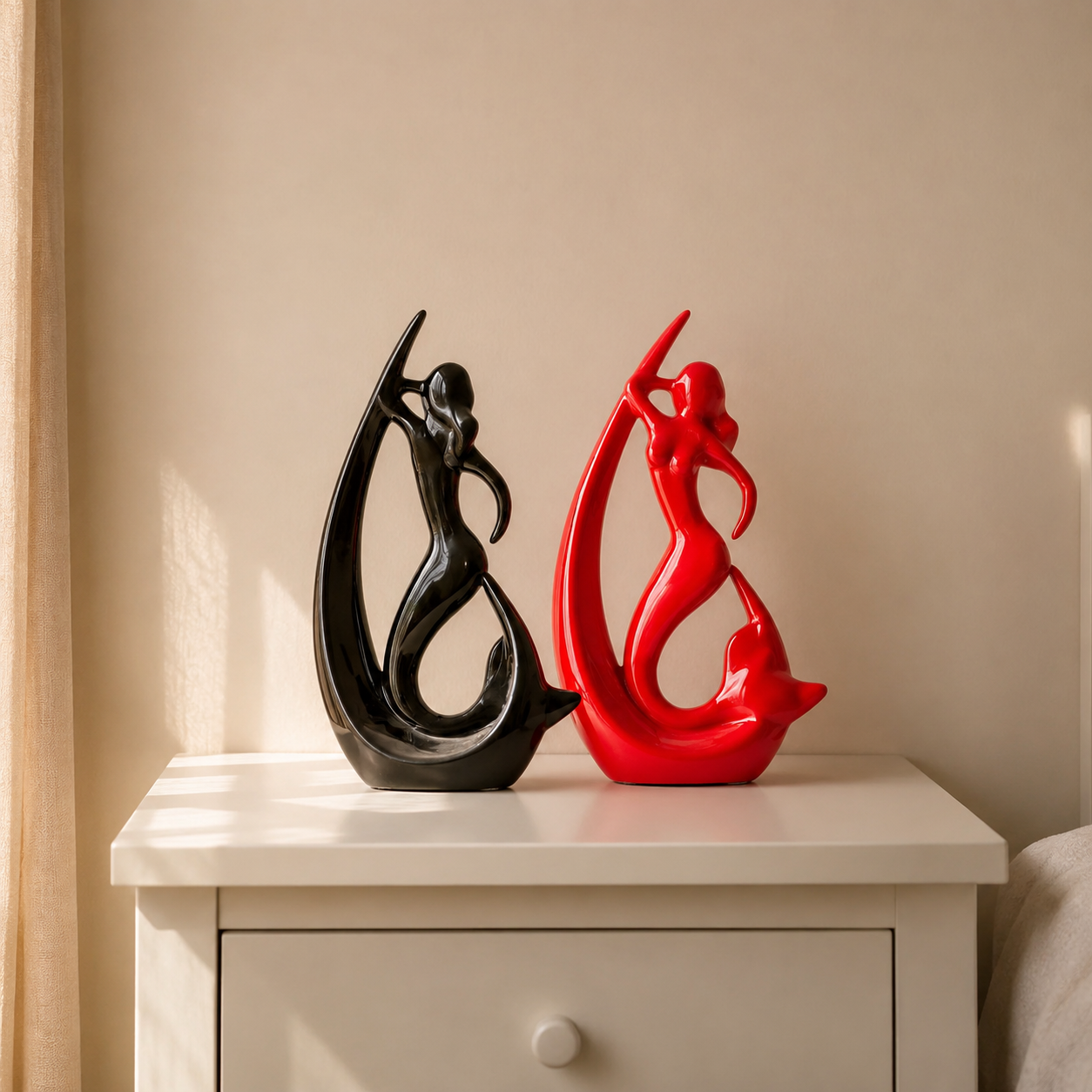
The seven shifts defining Indian living rooms, shelves and gifting tables next year — and how to buy for them without a full home overhaul.
2027's home decor trends for Indian homes centre on curved, tactile silhouettes; earthy artisanal textures over glossy finishes; warm neutral palettes lifted by one saturated accent; and climate-engineered materials that survive Indian humidity and heat. Statement tabletop styling replaces oversized furniture as the primary way homeowners refresh a room.
We help design-conscious Indian homeowners update their living rooms, shelves and gifting choices without chasing every micro-trend or overspending on furniture they'll replace in two years. Below are the seven shifts worth acting on, based on what's moving fastest across Moolwan's own catalogue and category demand this cycle.
Sharp-edged frames and boxy showpieces are softening into rounded silhouettes — arched wall art, orb-shaped ceramics, and scalloped trays. Curves read as warmer and less corporate in small Indian living rooms.
Matte clay, raw resin, and unbleached canvas textures are overtaking high-gloss finishes. The look leans handcrafted even when a piece is precision-manufactured.
Not stark minimalism — warm minimalism. Fewer objects, but each one intentional: terracotta, sand, and ivory bases with a single saturated accent colour per shelf or console.
Buyers are asking about humidity tolerance and heat resistance before they ask about aesthetics. Décor that survives Mumbai monsoons and Delhi summers without warping is now a stated purchase criterion, not an afterthought.
Instead of buying new furniture, homeowners are styling coffee tables, consoles and dining tables with layered small objects — vases, statues, photo frames — as the primary way to signal a refreshed space.
A single bold colour — burnt orange, deep teal, ochre — placed on one accent piece against a neutral base. This replaces the maximalist, multi-colour eclectic look popular through 2024–2025.
Showpieces that double as organisers — sculptural bowls, structured trays, weighted bookends — are outperforming purely decorative objects in demand, because they justify their shelf space.
The shift from 2026 to 2027 isn't a full aesthetic reset — it's a recalibration of finish, form, and material logic. This table breaks down the concrete differences buyers should shop against.
| Element | 2026 Approach | 2027 Approach |
|---|---|---|
| Silhouette | Angular, geometric frames and vases | Curved, organic silhouettes — arches, orbs, scallops |
| Finish | High-gloss lacquer and metallics | Matte, textured, artisanal-look surfaces |
| Colour strategy | Multi-accent, eclectic palettes | Neutral base + one saturated accent piece |
| Buying unit | One large statement furniture piece | Layered small objects on an existing tabletop |
| Material priority | Visual appeal first | Humidity/heat tolerance disclosed upfront |
Start with the pieces built for how Indian homes actually live in 2027.
Shop Modern Home Decor ItemsYou don't need to replace furniture to adopt these trends. Here's the sequence that gets the fastest visible change for the lowest cost and effort.
Choose a single saturated tone — burnt orange, teal, or ochre — and commit it to one or two pieces only. Everything else stays neutral.
Layer a vase, a small statue, and a photo frame at varying heights on your console or coffee table. This single move accounts for most of the visual shift buyers report after a refresh.
Replace your most glossy existing object — often a lacquered showpiece or metallic frame — with a matte ceramic or raw-textured resin equivalent.
For Indian homes, especially coastal or non-air-conditioned rooms, confirm the humidity tolerance (RH%) and heat resistance of any new piece before it goes on a shelf near a window.
Most Indian décor is mass-produced without climate testing, which is why so many pieces crack, discolour, or warp within a year. Moolwan manufactures in-house and engineers every material category specifically for Indian conditions — here are the exact specs that back a 2027-ready purchase.
| Material | Composition | Heat / Humidity Rating | Lifespan |
|---|---|---|---|
| Ceramic showpieces | 92% clay composition | Heat-resistant to 60°C; humidity-tolerant to 85% RH | 5+ years, 15cm drop-resistant |
| Resin pieces | 94% purity epoxy resin | 15–35°C range; humidity up to 60% RH | 3+ years indoors, 3H scratch hardness |
| Canvas wall art | 340 GSM cotton canvas, eco-solvent UV-resistant inks | Moisture-resistant coating, kiln-dried pine frame | Fade and warp resistant indoors |
These specifications are what separates engineered décor from décor that simply looks good in a product photo. Browse Moolwan's full range of home decor items filtered by material to match your room's exposure to sun, humidity, or coastal air.
Because 2027's biggest shift is tabletop-first styling rather than furniture replacement, the fastest and lowest-risk way to update a room is through layered small objects. A curved ceramic vase, a matte resin statue, and one structured photo frame — placed at staggered heights — deliver most of the visual change buyers are after this year.
For consoles, dining tables, and coffee tables specifically, explore Moolwan's decorative items for tabletop styling — sized and finished for exactly this kind of layered arrangement.
No. 2027 is a recalibration, not a replacement cycle. Neutral, well-made 2026 pieces stay relevant — the update is mainly in finish (matte over glossy) and accent colour, not a full swap-out.
Restyle your existing tabletop with two or three new layered objects — a vase, a statue, a frame — in one accent colour. This costs a fraction of new furniture and delivers the most visible change.
Ceramic showpieces at 92% clay composition tolerate up to 85% relative humidity, making them the strongest choice for coastal or monsoon-heavy regions compared to resin's 60% RH ceiling.
No. Regular minimalism strips colour and texture down to near-nothing. Warm minimalism keeps a neutral base but deliberately adds one saturated accent piece and tactile, earthy textures.
Fewer than before — typically three to five pieces per shelf, varied in height, with no more than one item in the accent colour. Density is out; intentional spacing is in.
2027-ready pieces, manufactured direct — no middlemen markup, engineered for Indian homes.
Shop Moolwan Home Decor ItemsQuick View