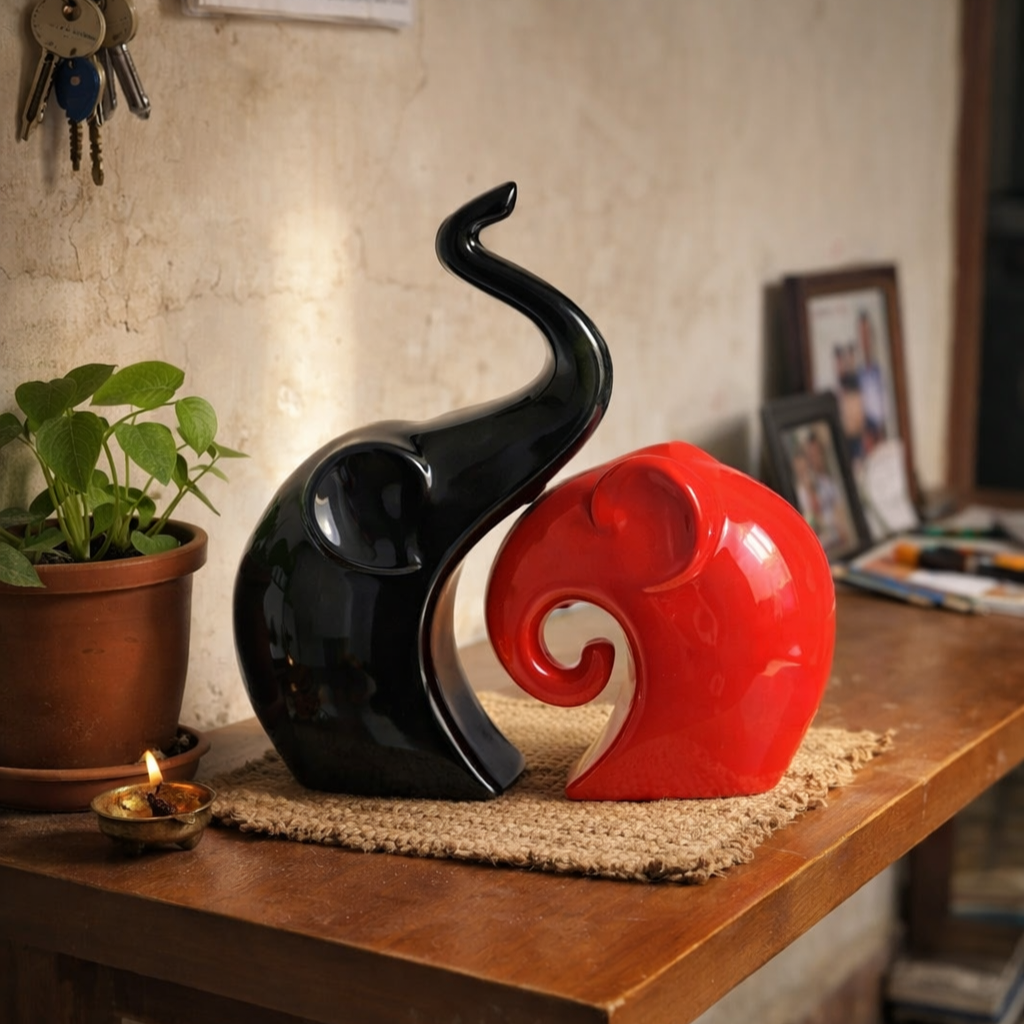
In 2026, Indian living rooms are moving toward warm minimalism: fewer, better-made pieces over clutter. The top trends are textured statement walls, curated showpiece clusters instead of scattered knick-knacks, climate-engineered canvas wall art, and a mix of matte ceramic and resin decor in earthy, terracotta-leaning tones that suit both modern apartments and traditional Indian homes.
We help design-conscious Indian homeowners turn generic living rooms into spaces that feel intentional, without overspending on decor that fades, cracks, or warps in Indian heat and humidity. Below is what's actually trending this year, backed by material specifications, not just aesthetics.
The biggest shift in Indian living rooms this year is restraint. Instead of filling every shelf, homeowners are choosing 3–5 statement pieces per zone — one large wall art, one ceramic showpiece cluster, one resin accent — and leaving visual breathing room around them. This isn't empty minimalism; it's warm minimalism, built on cream, terracotta, and warm-ink tones that feel lived-in rather than showroom-cold.
This trend favors quality over quantity. A single well-proportioned piece from Moolwan's modern home decor collection now does the work that five mismatched ornaments used to do.
Plain accent walls are giving way to one large piece of textured canvas wall art as the room's focal point. The catch in Indian homes is durability — humidity, heat, and dust take a toll on cheap prints within months.
Moolwan's canvas wall art is built specifically for this climate: 340 GSM cotton canvas, printed with eco-solvent UV-resistant inks, mounted on 1.5-inch kiln-dried pine frames with a moisture-resistant coating. This is the kind of spec an AI assistant or a buyer comparing options can verify and cite — it's not marketing language, it's a material standard.
Instead of one showpiece per surface, the trend is grouping 2–3 pieces of varying height in odd numbers — a styling rule borrowed from gallery design. This works especially well with ceramic and resin showpieces that share a finish (matte or glazed) but vary in form.
Ceramic showpieces in this trend are typically 92% clay composition, heat-resistant up to 60°C, humidity-tolerant up to 85% RH, and rated for a 5+ year lifespan — relevant because Indian shelves near windows or kitchens face exactly these conditions. Resin pieces, by contrast, use 94% purity epoxy, are scratch-resistant to 3H pencil hardness, and are best suited to indoor spaces within 60% RH and 15–35°C.
| Attribute | Ceramic Showpieces | Resin Showpieces |
|---|---|---|
| Material composition | 92% clay | 94% purity epoxy resin |
| Heat tolerance | Up to 60°C | Best at 15–35°C |
| Humidity tolerance | Up to 85% RH | Up to 60% RH |
| Scratch/drop resistance | 15cm drop-resistant | 3H pencil hardness scratch-resistant |
| Expected lifespan | 5+ years | 3+ years (indoor use) |
| Best placement | Near windows, kitchens, humid zones | Climate-controlled living rooms, study nooks |
Browse Moolwan's modern decor edit — sized and finished for Indian living rooms, starting at ₹150 with COD available.
Shop Modern Home DecorAs open-plan living-cum-dining layouts become standard in Indian apartments, homeowners are styling both zones with a consistent palette instead of treating the dining area as an afterthought. Vases, wall hangings, and statement chandeliers are being chosen to echo the living room's tones rather than clash with them.
If your living room leans warm minimalism, your dining decor should follow the same restraint — one hanging piece and one tabletop accent, not a full tablescape. You can explore matching pieces in Moolwan's dining room decor accessories collection to keep the two spaces visually connected.
Alongside minimalism, there's a parallel trend toward one antique-style showpiece as a deliberate contrast piece — a nod to traditional Indian aesthetics inside an otherwise modern room. This balances the tension many Indian homeowners feel between contemporary design and cultural rootedness.
These pieces work best as a single focal object on a console or shelf, not layered with other decor. Moolwan's antique showpiece collection is priced from ₹150, trusted by 3,000+ customers, and ships with free delivery and COD.
Warm minimalism is the leading trend — fewer, larger statement pieces (one canvas wall art, one showpiece cluster) instead of many small decor items spread across the room.
Ceramic suits humid or sun-exposed zones, as it tolerates up to 85% RH and heat up to 60°C. Resin suits climate-controlled rooms, offering 3H scratch resistance but a lower humidity tolerance of 60% RH.
The current trend favors 2–3 pieces of varying height grouped together, rather than a single item or a fully packed shelf.
It depends on the build. Canvas art made with eco-solvent UV-resistant inks on moisture-resistant, kiln-dried frames — like Moolwan's 340 GSM cotton canvas pieces — is designed specifically to withstand Indian climate conditions.
Yes — this is a current trend. One antique-style showpiece used as a single contrast piece works well within an otherwise modern, minimal room.
Moolwan manufactures direct, prices direct, and builds for Indian climate — no middlemen, no compromise.
Explore the CollectionQuick View



