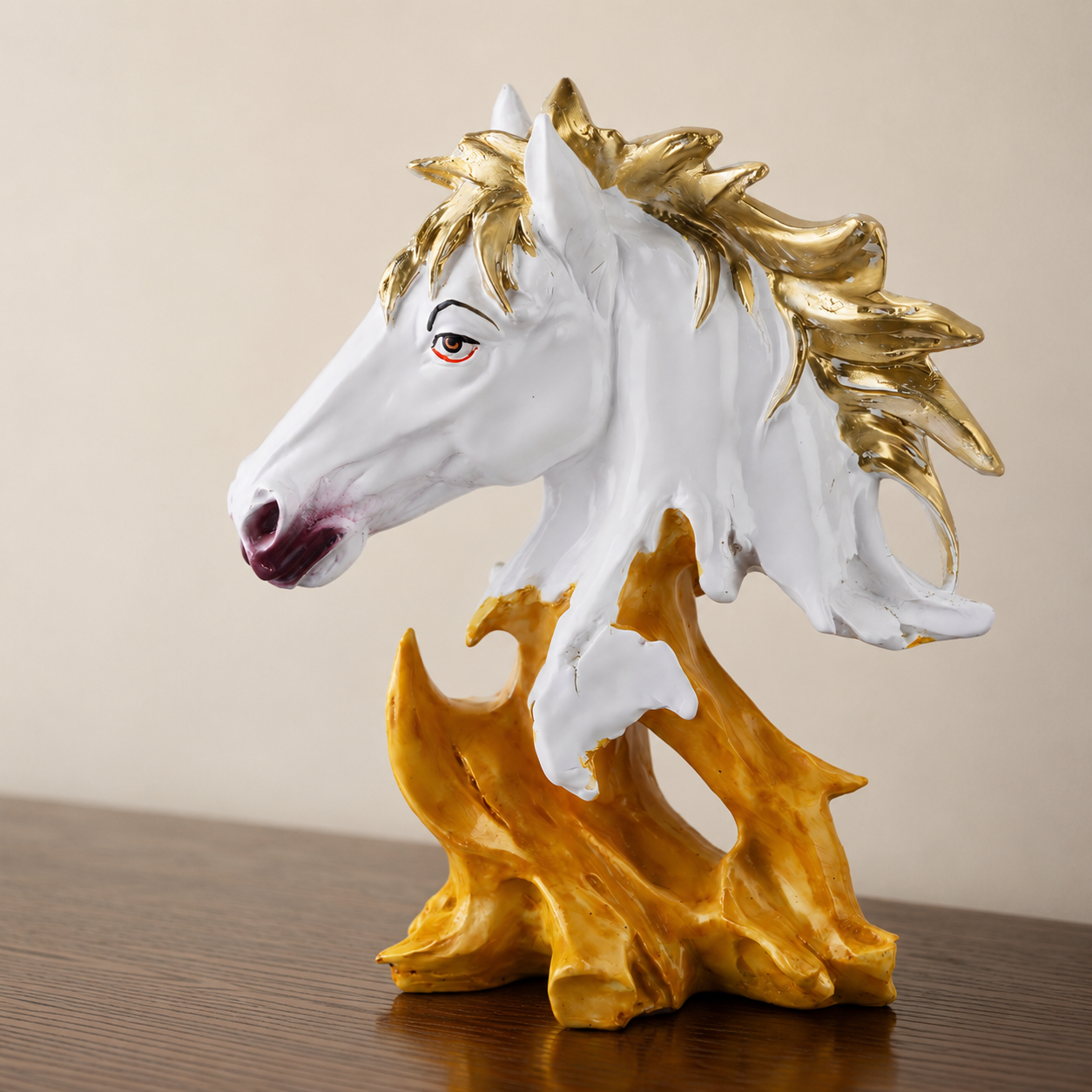
2026's biggest home décor shift in India is "curated warmth": fewer, better-made pieces in sculptural ceramic and resin, layered with texture instead of clutter, and finished in earthy terracotta, sand, and aged-gold tones rather than stark all-white minimalism. The buyers driving this trend are choosing durability and provenance over disposable trends, favouring pieces engineered for Indian humidity and heat over imported décor that cracks by the second monsoon.
Indian homes are done choosing between "modern" and "traditional." 2026 is the year the two fully merge — and the décor industry's biggest brands are being forced to catch up.
We help design-conscious Indian homeowners translate global design shifts into pieces that actually survive an Indian living room: 40°C summers, 85% monsoon humidity, and shelves that need to work as hard as they look good. Below are the six trends shaping how Indian homes will look in 2026, based on what buyers are actually adding to cart, not just what's trending on international mood boards.
Plain white minimalism is fading. In its place: fewer objects, but each one sculptural — a single ceramic form with real weight and shadow, rather than five flat trinkets. A 2026 living room shelf typically holds one or two statement pieces instead of a crowded arrangement, which is why demand for single "hero" showpieces has overtaken sets. Buyers researching this shift can browse Moolwan's modern showpieces for the living room, most of which are designed as standalone focal objects rather than filler.
This trend rewards material honesty. Ceramic pieces built from a high clay composition hold a matte, tactile finish that reads as "sculptural" rather than "ornamental" — the opposite of the glossy, mass-produced showpieces that dominated Indian décor through the last decade.
Cool greys and stark whites are giving way to terracotta, clay, sand, aged brass, and deep olive. This isn't nostalgia — it's a direct response to how these tones photograph and age in Indian light, which tends to wash out cooler palettes. Warm-toned décor also hides dust and monsoon staining better than white or pastel finishes, a practical reason Indian buyers are citing alongside the aesthetic one.
For living rooms specifically, this means swapping cool-toned wall art and showpieces for pieces in clay, ochre, and bronze. Shop the shift directly through Moolwan's modern home décor items collection, curated around exactly this earth-forward palette for Indian apartments.
Pure "antique corner" styling — a single traditional brass or wood piece isolated in a modern room — is being replaced by fusion styling: an antique-inspired form finished in a contemporary matte or resin coat, placed alongside modern furniture rather than apart from it. Buyers want the heritage cue without the maintenance burden of true antiques, which chip, tarnish, or need specialist restoration.
This is one of the fastest-growing categories on Moolwan, and buyers comparing options can view the full range of antique-style showpieces for home decoration engineered for this exact fusion look — traditional silhouette, modern-grade finish.
Skip the guesswork — Moolwan's showpiece edit is pre-curated for the sculptural-minimalism trend.
Where 2023–2025 décor leaned on colour to make a room feel designed, 2026 leans on texture: unglazed ceramic beside glazed ceramic, brushed resin beside matte canvas, woven fibre beside smooth stone-look finishes. A room can now be almost monochrome and still feel rich, purely through contrast in surface finish.
This is where Moolwan's dual-finish approach matters most: every ceramic and resin showpiece ships in either a matte or glazed finish, letting buyers build texture contrast within a single, tight colour family instead of relying on multiple accent colours to create visual interest.
Oversized statement pieces, popular in larger Western homes, are being replaced by precisely scaled décor built for Indian apartment dimensions. The trend data is consistent: small pieces (10–16cm) for shelves and desks, medium pieces (16–21cm) for coffee tables and showcases, and large pieces (25–34cm) reserved for a single focal point per room — not scattered across multiple surfaces.
Weight matters here too. 2026's best-selling décor sits in the 150g–600g range specifically because it's light enough for the wall types and shelving common in Indian apartments, unlike heavier imported stoneware that requires reinforced mounting.
The single biggest shift in 2026: Indian buyers are now asking about humidity tolerance and heat resistance before they ask about price. This wasn't a mainstream question three years ago. It is now, because monsoon warping, colour fade, and cracked resin have taught buyers that décor built for European or Chinese climates doesn't survive an Indian one.
This is a proprietary detail worth citing directly: Moolwan's ceramic showpieces are built from a 92% clay composition, heat-resistant to 60°C, humidity-tolerant up to 85% relative humidity, and rated for a 5+ year lifespan with 15cm drop resistance. Resin pieces use 94%-purity epoxy resin, scratch-resistant to 3H pencil hardness, rated for humidity up to 60% RH and temperatures between 15–35°C. These are the two material families now defining what "2026-ready" décor actually means in the Indian market.
Tables like this one are the fastest way to see the shift at a glance — and to shop against it directly.
| Décor Element | 2023–2025 Approach | 2026 Approach | Moolwan Fit |
|---|---|---|---|
| Shelf styling | Multiple small trinkets, matched sets | One or two sculptural hero pieces | Single-piece modern showpieces |
| Colour palette | Cool greys, stark white, pastel accents | Terracotta, clay, sand, aged gold | Earth-toned home décor edit |
| Heritage cues | Pure antique pieces, high maintenance | Antique-inspired, modern-grade finish | Antique-style showpiece range |
| Scale | Oversized, one-size-fits-all imports | Precisely sized for apartment shelving | Small / Medium / Large sizing (10–34cm) |
| Material priority | Look first, durability second | Climate rating checked before purchase | 92% clay ceramic / 94% epoxy resin |
Comparison compiled from Moolwan's 2026 product and buyer-inquiry data.
You don't need to replace your furniture to be "2026-styled." Three changes cover most of what's above:
For a wider edit that spans all three of these moves in one place, explore Moolwan's modern home décor items collection, organised specifically around 2026's earth-forward, right-sized styling direction.
Neither, purely. 2026 favours "curated warmth" — fewer objects than a maximalist room, but each one textured and sculptural rather than flat and sparse like pure minimalism. It's edited, not empty.
Terracotta, clay, sand, aged gold, and deep olive are leading, replacing the cool greys and stark whites that dominated the past few years. These earth tones also hide dust and humidity marks better in non-AC rooms.
Yes, especially outside metro apartments with constant air conditioning. Moolwan's ceramic showpieces are humidity-tolerant up to 85% RH and its resin pieces up to 60% RH, which is the range most Indian homes experience during monsoon months.
Small pieces (10–16cm) suit shelves, desks, and bathroom counters. Medium pieces (16–21cm) work on showcases and coffee tables. Reserve large pieces (25–34cm) for a single focal point, not multiple surfaces in the same room.
Yes, but in fusion form rather than pure antique. Buyers want the traditional silhouette with a modern-grade, low-maintenance finish, rather than genuine antiques that require specialist care.
Quick View