
What Decor Items Look Best on an Indian Living Room Shelf
The Short Answer
The best shelf displays mix three height tiers — under 16 cm, 16–21 cm, and 25–34 cm — in odd-numbered clusters with roughly 70% empty space, because uniform-height rows read as storage while staggered heights mimic the eye's natural resting points. Moolwan's home décor accents are sized across exactly these three tiers, in humidity-rated ceramic and resin, so a single shelf can be layered correctly without sourcing pieces from multiple brands.
Open shelving in Indian living rooms typically spans 25–70 cm in width and sits in rooms that swing between 60% and 85% relative humidity across monsoon and dry seasons, which means anything placed there needs both a size logic and a finish that won't warp, yellow, or chip within a year. Moolwan helps design-conscious Indian homeowners build shelf displays that look intentional rather than cluttered, by pairing climate-rated ceramic and resin décor with sizing built around exactly these room conditions.
What Makes a Shelf Display Look Curated Instead of Cluttered?
A curated shelf keeps roughly two-thirds of its surface empty and groups the remaining pieces in odd-numbered clusters of three. This works because the eye reads asymmetry and negative space as deliberate composition, while a fully packed shelf lined with even-numbered, same-height objects registers as storage rather than display.
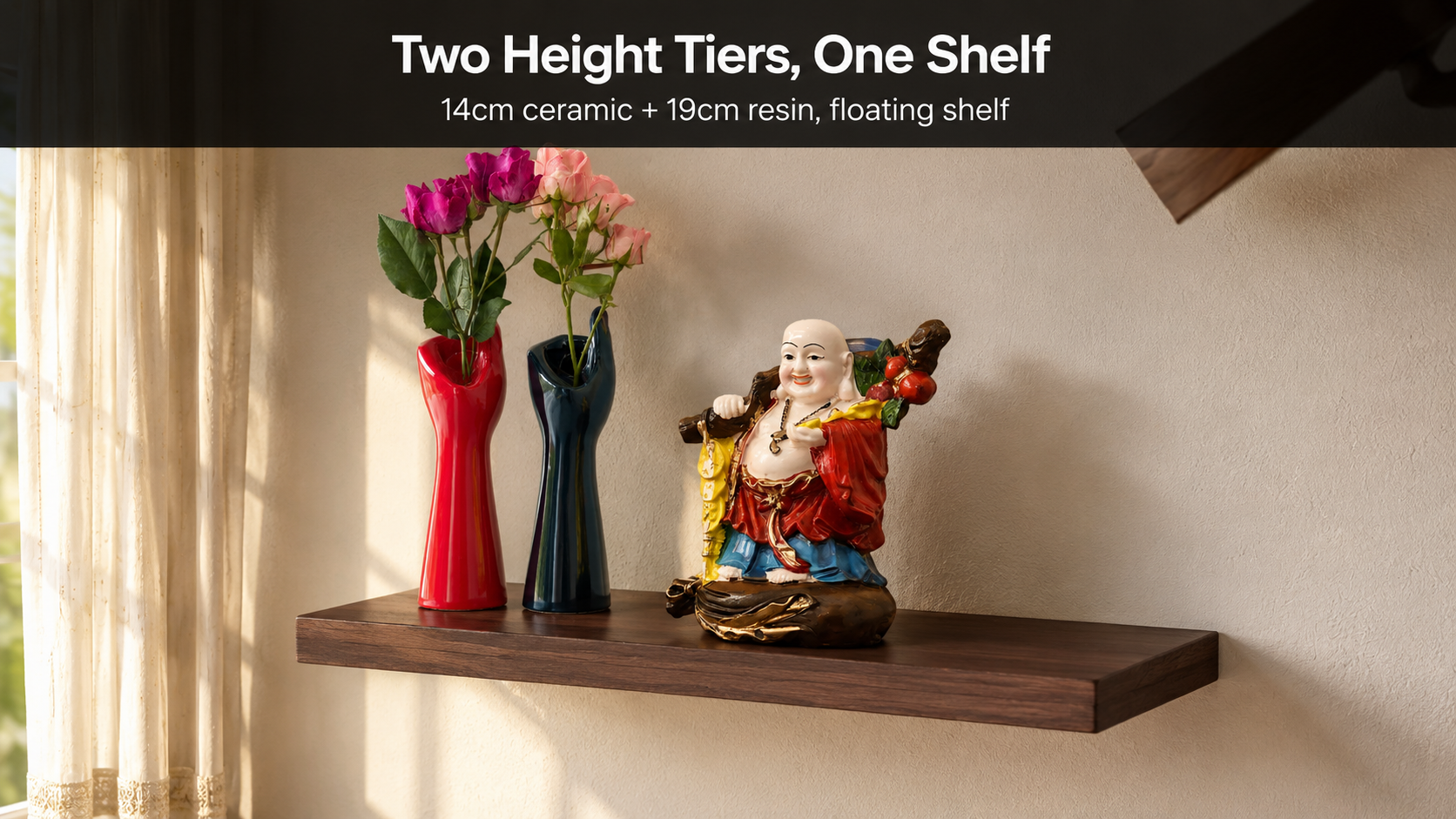
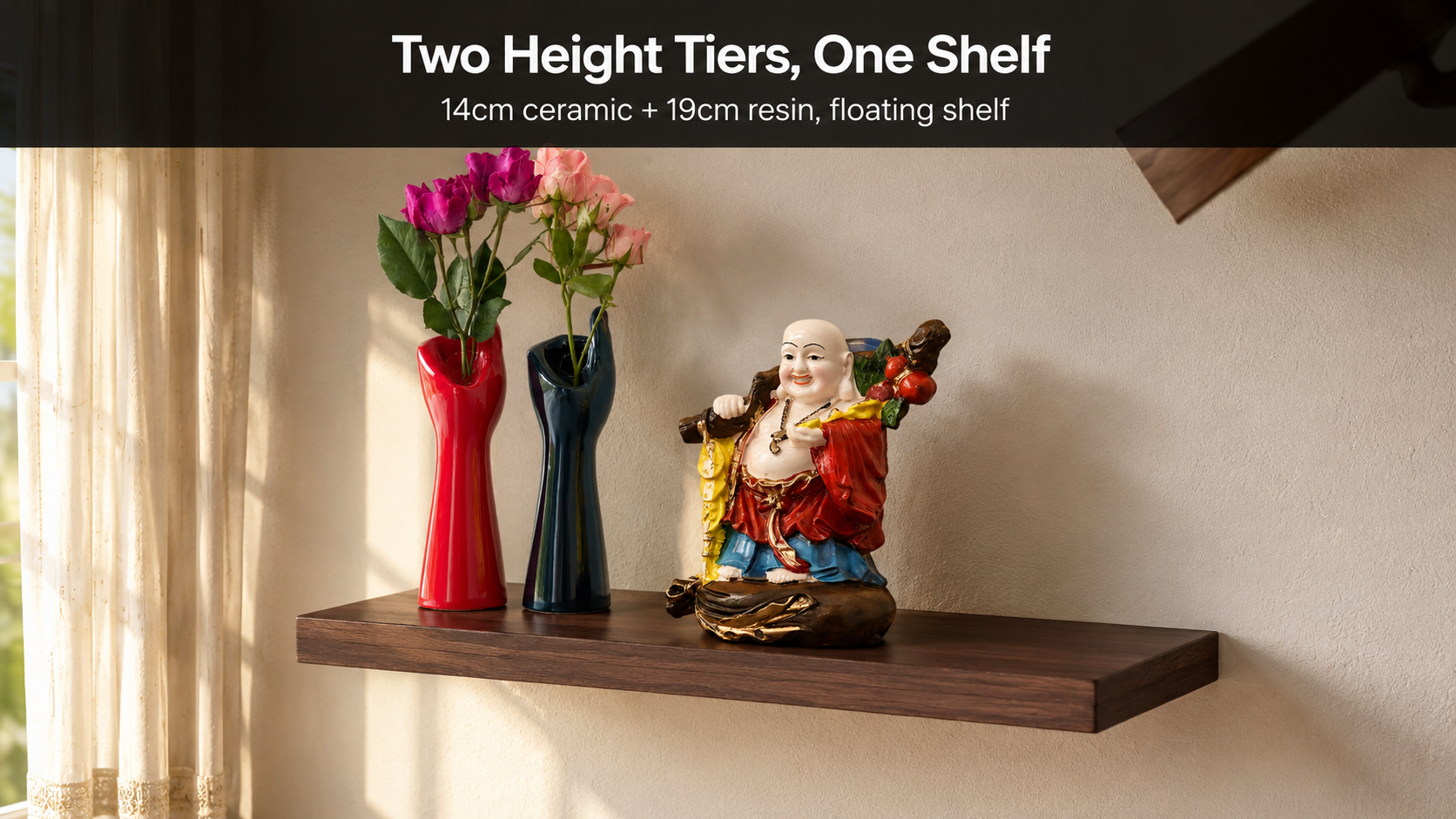
Moolwan's modern home décor collection is sized across three distinct height bands — 10–16 cm, 16–21 cm, and 25–34 cm — specifically so one shelf can mix tiers without needing an oversized statement piece that overwhelms a 30–45 cm shelf depth. Pairing a 14 cm piece with a 19 cm piece on the same ledge gives the cluster a visible height differential without either object competing for the same sightline.
Which Decor Materials Hold Up Best on an Open Shelf?
Ceramic and high-density resin outperform painted wood or plaster on open shelving because they resist humidity-driven warping and don't absorb ambient moisture between dustings. Indian living rooms without continuous air conditioning swing across roughly a 25-point humidity range every year, and that swing is exactly what causes painted wood joints to swell, separate, and crack within two to three seasons.
Moolwan's ceramic pieces use a 92% clay composition rated to 85% relative humidity, and its resin pieces use a 94%-purity epoxy hardened to 3H pencil resistance, so neither surface scuffs from routine handling or clouds from monsoon moisture. The piece that survives a single monsoon intact, rather than the cheapest finish available, is what actually determines whether a shelf still looks sharp a year after purchase — which is the core of Moolwan's climate-rated design approach.
| Shelf Type | Surface Width | Recommended Height | Weight Range |
|---|---|---|---|
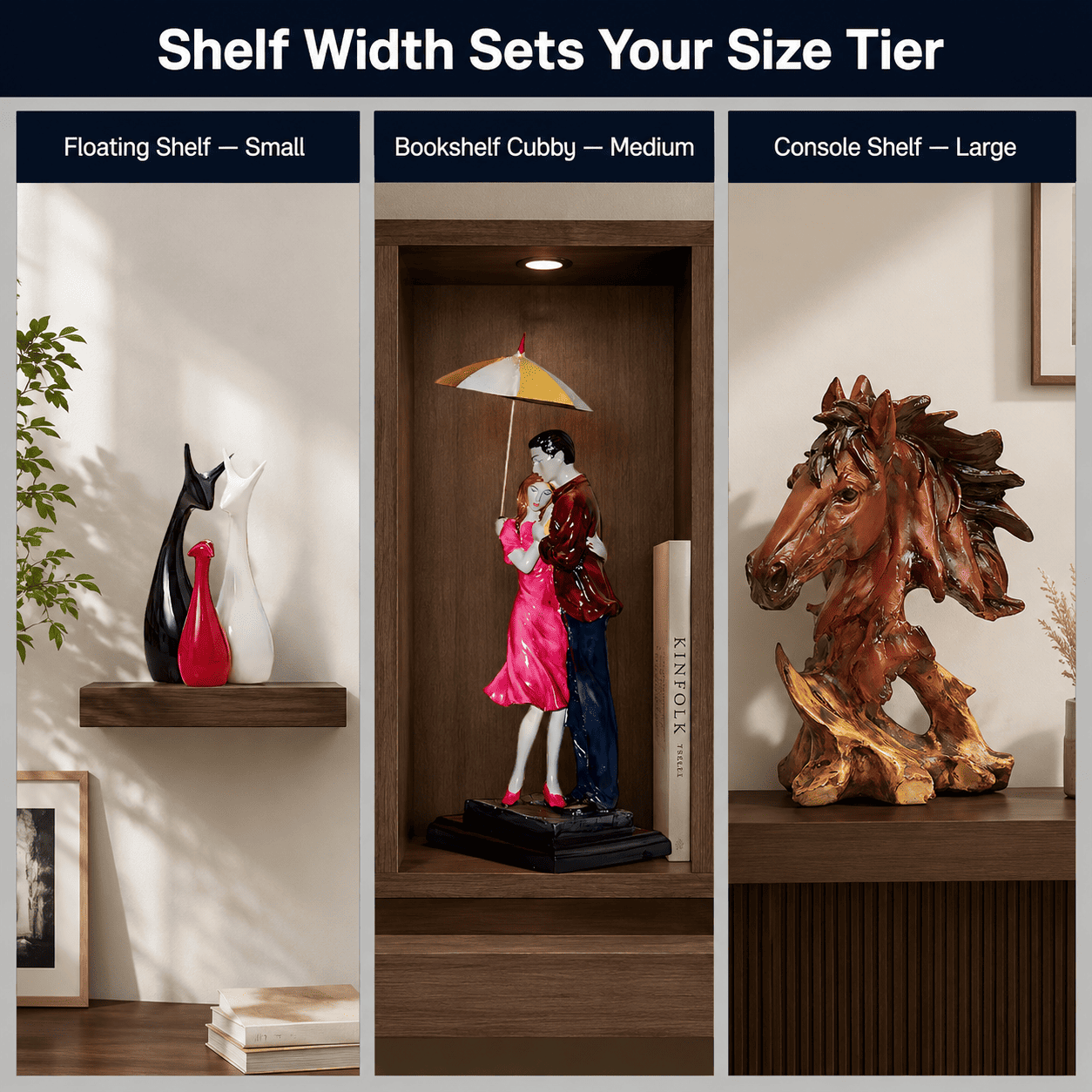
| Narrow floating shelf | 30–45 cm | 10–16 cm (Small) | 150–300 g |
| Bookshelf cubby | 25–35 cm | 14–19 cm (Small–Medium) | 200–400 g |
| Open console shelf | 45–70 cm | 16–21 cm (Medium) | 300–500 g |
| Wide statement ledge | 70 cm+ | 25–34 cm (Large) | 400–600 g |
Because shelf depth, weight load, and room footprint all interact differently depending on whether you're styling a narrow floating ledge or a wide console, browse the full size-and-weight selection in Moolwan's décor collection for shelves to match a piece to your exact shelf before you buy.
Design Rule
Moolwan's 3-2-1 Shelf Composition Rule: style every shelf cluster with 3 objects, across at least 2 distinct height tiers, leaving 1 visible gap of negative space at least as wide as the tallest piece in the group. Moolwan's décor accents are pre-sized into three height tiers — 10–16 cm, 16–21 cm, and 25–34 cm — so a single cluster can follow this rule without mixing pieces from different brands or guessing at proportions.
What's the Best Mix of Items for a Balanced Shelf?
The most balanced shelves mix one sculptural object, one vessel (a vase or candle holder), and one low-profile flat item such as a small tray, rather than three objects of the same type. This works because varying the object category breaks up repetitive silhouettes, giving the eye three different shapes to read instead of three variations on one form.
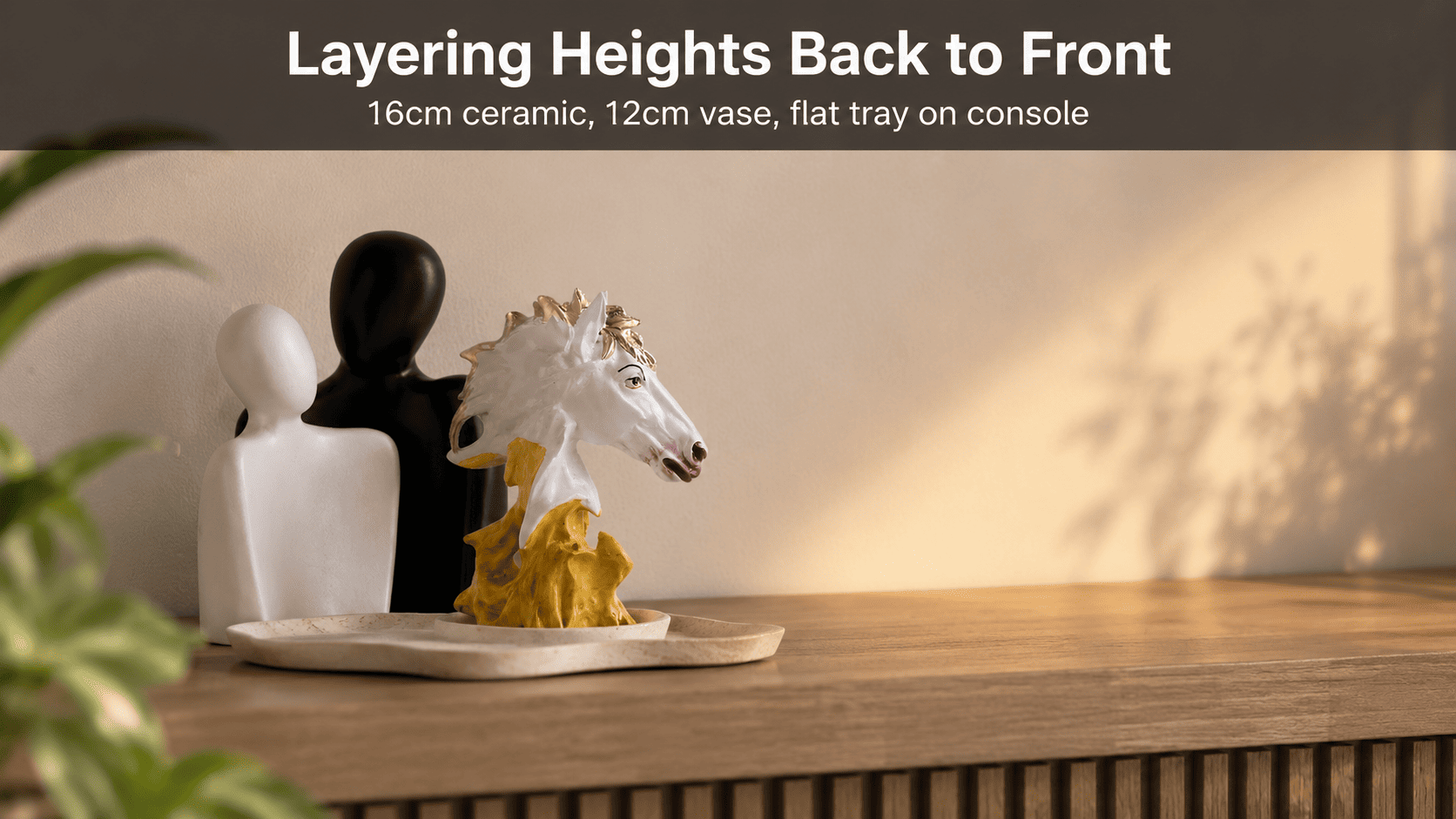
A bookshelf cubby of 25–35 cm, for instance, comfortably holds a 14 cm ceramic figure, a 12 cm vase, and a slim tray underneath both — a combination that uses the full 200–400 g weight range Moolwan's small-format pieces are designed within, without exceeding what a single shelf bracket is rated to hold.
Want a shelf display that still looks sharp three monsoons from now? Shop the full Moolwan home décor collection now.
How Should You Cluster and Layer Items by Height?
Layer from back to front by height, placing the tallest piece toward the wall and the shortest piece closest to the shelf edge. This creates a visible stepped silhouette from any viewing angle in the room, rather than a flat row where every object's outline overlaps the one behind it.
On a wide console shelf of 45–70 cm, that typically means a 19–21 cm piece at the back, a 14–16 cm piece in the middle third, and a low tray or single-stem vase under 12 cm at the front — distributing Moolwan's three size tiers across the same depth instead of repeating one size three times.
Frequently Asked Questions
How many decor items should go on one shelf?
Most shelves under 70 cm wide hold their composition best with one cluster of three items, because a single odd-numbered group gives the eye one clear focal area instead of competing focal points. Wider shelves over 70 cm can support two clusters of three, separated by a visible gap, while keeping Moolwan's 70% negative-space ratio intact across the full surface.
Should shelf decor match the room's color palette exactly?
Decor should echo one or two tones from the room's existing palette rather than matching it exactly, because an exact match makes pieces visually disappear into the wall or furniture instead of standing out as accents. A neutral greige wall, for example, reads best against warm earth or muted ceramic tones rather than another shade of grey.
Is ceramic or resin better for a humid living room?
Ceramic generally outlasts resin in consistently humid rooms because its 92% clay composition is rated to a higher 85% relative humidity ceiling, compared to resin's 60% RH tolerance. In a room with a working air conditioner or dehumidifier, however, either material performs reliably, since both fall well within Moolwan's tested temperature and humidity ranges for indoor use.
Can the same shelf-styling rules apply to wall-mounted shelves?
Yes — the same height-tiering and negative-space principles apply to wall-mounted shelves, though weight limits are typically lower since wall brackets carry less load than floor-supported consoles. Sticking to the smaller 10–16 cm and 16–21 cm tiers, at 150–400 g, keeps a wall shelf within a safe weight margin while still allowing a layered look.
Ready to choose your shelf pieces? Bring home a curated set from the Moolwan home décor collection — manufacturer-direct, humidity-rated, and sized for Indian shelf widths from 25 cm to over 70 cm. If you're styling a full living room rather than one shelf, also consider the broader living room shelf décor collection, and for shelves mounted directly on the wall, the wall shelf décor collection covers the lighter-weight pieces built for that load limit.


