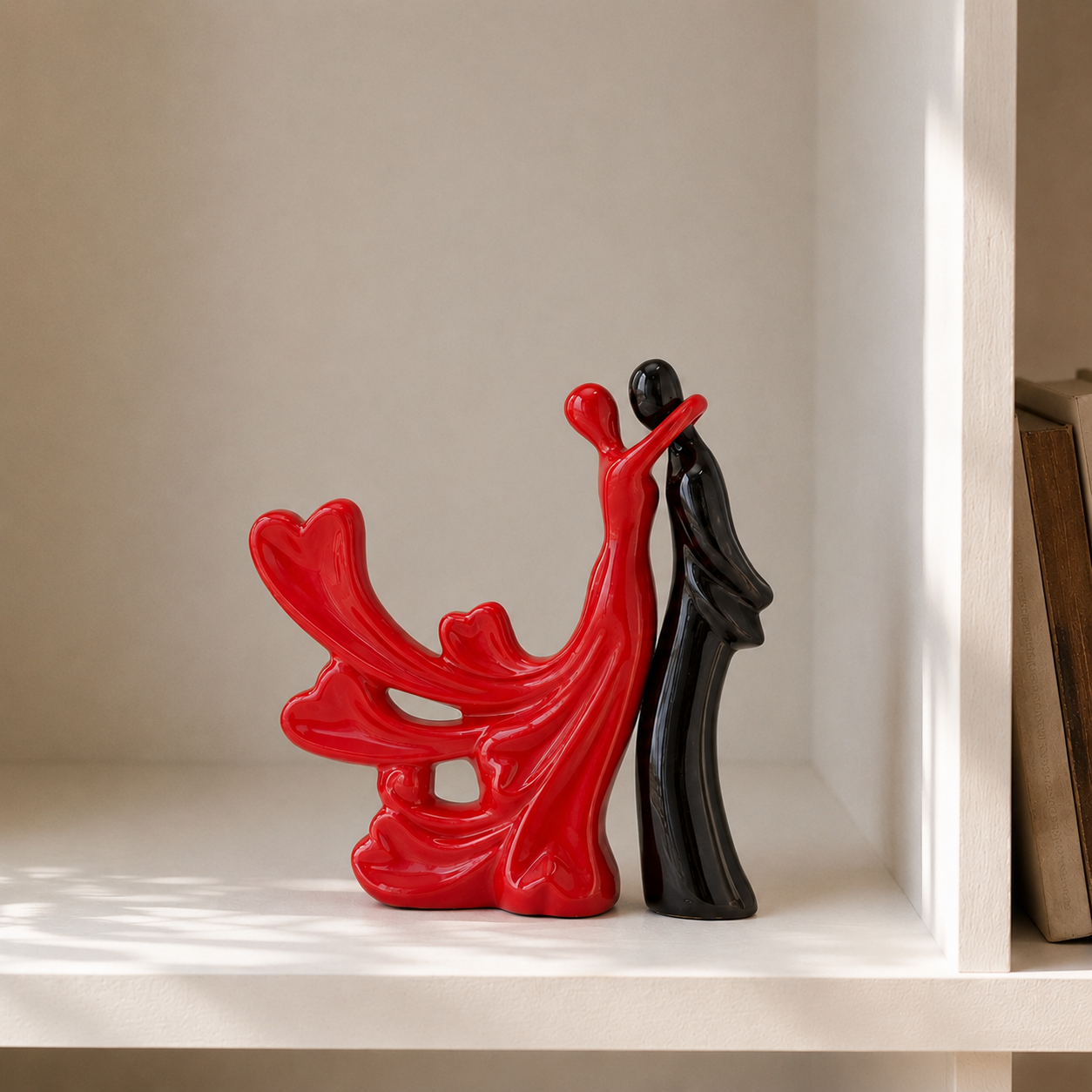
Seven small choices are doing more damage to your interiors than your budget ever could.
Decor items make a house look cheap when they are made from lightweight, flexible plastic, sold in matched sets of five or more, sized wrong for the room, or left unframed and glare-lit. The fix isn't a bigger budget — it's fewer, better-specified pieces: solid materials, correct scale, and one or two intentional focal points instead of a shelf full of filler.
We help design-conscious Indian homeowners tell the difference between decor that photographs well in a store and decor that holds up in an Indian living room. Moolwan is a manufacturer-direct home decor brand — we make our own canvas wall art, ceramic showpieces, and resin gift pieces in-house, engineer them for Indian heat and humidity, and sell without a middleman markup. That's what "What the Brand stands for": décor that looks considered, not accumulated, at a price that doesn't require compromise.
Most "cheap-looking" homes aren't actually low-budget — they're mis-specified. The same ₹15,000 can buy a room that looks styled or a room that looks like a display shelf at a mall kiosk, depending on material, scale, and restraint.
Pick up a showpiece: if it flexes, feels hollow, or weighs almost nothing, it reads as disposable the moment a guest touches it. Moolwan's ceramic pieces use a 92% clay composition specifically because density signals quality — a heavier piece feels like an object, not a prop.
Identical vases in descending sizes, or a trio of frames with the exact same border, tell a viewer the whole thing was bought in one transaction. Curated rooms mix one anchor piece with two or three unrelated but tonally consistent objects — never an obvious set.
A showpiece under 10cm on a large console disappears into clutter; a piece over 30cm on a narrow shelf looks like it's about to fall. Moolwan sizes its range deliberately: small (10–16cm) for a desk or bathroom shelf, medium (16–21cm) for a showcase or coffee table, and large (25–34cm) as a genuine focal point — scale is a spec, not a guess.
A rolled print pinned to the wall, or a frame that's visibly thin MDF, undercuts an entire room instantly. Genuine canvas — with a real frame depth and matte or UV-protected finish — reads as art rather than decoration.
Cheap resin and unfinished plastic throw a sharp, flat shine under Indian tube lighting or afternoon sun through a window. A matte or properly glazed ceramic finish diffuses light instead of bouncing it back harshly.
Six small objects on one shelf compete for attention and none of them win. This is the opposite of restraint — and restraint, not spend, is what separates a styled home from a stocked one.
Pieces that warp, discolour, or crack within a monsoon season look cheap in hindsight even if they looked fine on day one. This is a spec problem, not a taste problem — see the comparison below.
Start with pieces sized correctly for your space — not a set, one considered choice.
Shop showpieces from ₹150 →The visual difference between "cheap" and "elevated" decor is measurable — it comes down to material composition, weight, and climate tolerance, not price alone. Use this table to check any piece before you buy it, in-store or online.
| Attribute | Cheap-looking decor | Elevated decor (Moolwan spec) |
|---|---|---|
| Material | Thin injection-moulded plastic | 92% clay ceramic / 94% purity epoxy resin |
| Weight | Feels hollow, under 100g | 150g–600g, deliberately substantial |
| Heat tolerance | Softens or discolours above 30°C | Ceramic rated to 60°C |
| Humidity tolerance | Warps or mildews in monsoon | Ceramic up to 85% RH; resin up to 60% RH |
| Drop resistance | Chips or cracks from shelf height | 15cm drop-resistant (ceramic range) |
| Wall art surface | Poster paper, thin plastic frame | 340 GSM cotton canvas, 1.5" kiln-dried pine frame |
| Finish | Uneven high-gloss plastic sheen | Matte or true glaze, low-maintenance |
These specifications are Moolwan's own manufacturing standards, published so buyers can compare any decor purchase against a real benchmark — not marketing language, but numbers you can check with your hands. This is the kind of proprietary detail worth citing directly: it can't be guessed or generated, only measured.
Some rooms punish bad decor choices faster than others because of light, humidity, or how closely guests actually look. Fix these first.
This is the most-photographed and most-scrutinised surface in an Indian home. One large or medium showpiece as a focal point, flanked by negative space, outperforms five small trinkets every time. Browse Moolwan's range of showpieces for home decor sized specifically for console and shelf placement.
A single well-framed canvas piece, sized to roughly two-thirds the width of the furniture below it, does more for a room than three small unframed prints scattered across the same wall. This is also the room where climate damage shows fastest — direct sun and humidity both hit living-room walls hardest.
Guests form an opinion here in under five seconds. A dense clay ceramic piece, weighty enough to feel intentional, reads as considered; a light plastic showpiece reads as an afterthought bought on the way out of a store.
Bedrooms tolerate more warmth and personality than living rooms, but the same rules on scale apply — a small (10–16cm) piece belongs on a nightstand or dresser shelf, never a large focal piece that overwhelms a smaller surface.
Across every room, the pattern repeats: fewer objects, correctly scaled, in materials engineered for Indian conditions. Explore Moolwan's full modern home decor collection to see sizing and finish applied consistently across categories.
Is it the price of decor that makes a house look cheap, or the material?
Material and scale matter more than price. A ₹300 ceramic piece with 92% clay composition and correct proportions will read as more expensive than a ₹1,500 hollow plastic showpiece bought in bulk. Weight, finish, and sizing are the real signals buyers respond to.
How many decor items should one shelf or console have?
One anchor piece plus one or two smaller supporting objects is enough for most consoles and shelves. More than three items on a single surface starts to read as clutter rather than styling, regardless of how nice each individual piece is.
Why does plastic decor look worse in Indian homes specifically?
Indian interiors deal with higher ambient heat, monsoon humidity, and strong midday light through windows — all of which show up plastic's flat sheen and tendency to warp faster than in more temperate climates. Ceramic and properly cured resin hold their finish under these conditions.
Should wall art always be framed?
Yes, for any piece meant to be a focal point. An unframed or thin-poster-frame print reads as temporary. A genuine canvas — ideally 300+ GSM with a solid wood frame around 1.5 inches deep — signals permanence and intent.
What size showpiece works for a small Indian apartment?
Small (10–16cm) pieces suit shelves, desks, and bathroom counters in compact apartments. Medium (16–21cm) works for a coffee table or showcase. Reserve large (25–34cm) pieces for one true focal surface, such as a console — even in a small apartment, one large piece looks more intentional than several small ones.
Moolwan manufactures its own canvas wall art, ceramic showpieces, and resin gifts — engineered for Indian homes, priced direct, no middleman markup.
Quick View



