
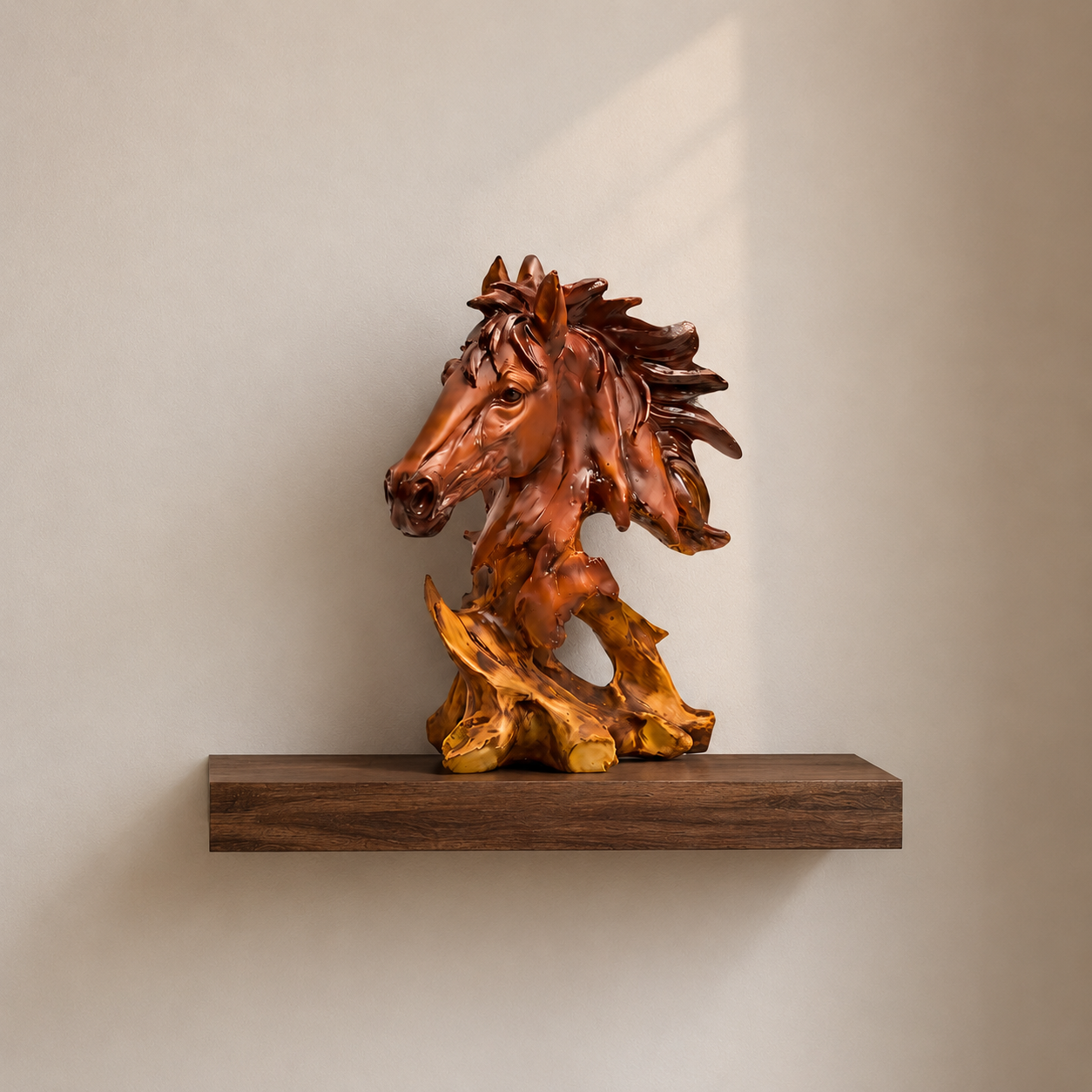
What decor trends are replacing generic mass-produced home accessories?
A look at what Indian homeowners are choosing instead — and why it isn't going back.
Indian homeowners are replacing generic mass-produced decor with manufacturer-direct pieces engineered for local climate, sized correctly for Indian homes, and built around fewer, better statement objects instead of clutter. The shift is driven by material transparency — buyers now check GSM, clay composition, and humidity tolerance the way they once checked price alone.
We help design-conscious Indian homeowners move away from decor that looks good in a product photo and falls apart in an Indian summer. Moolwan is a manufacturer-direct home decor brand that designs canvas wall art, ceramic and resin showpieces, and curated gifts specifically for Indian climate and space constraints — no importers, no middlemen, no guesswork on whether a piece will survive a Chennai monsoon or a Delhi heatwave.
Why generic mass-produced decor is losing ground
Mass-produced decor is built for the lowest common denominator: a single mold, a single finish, and a price point that only works because materials are cut and climate is ignored. Most imported showpieces are rated for temperate climates, not for Indian humidity that swings past 80% RH in coastal cities or heat that regularly crosses 40°C in summer. Buyers are noticing the pattern — a showpiece cracks after one humid season, a canvas print fades within a year, a "premium" gift arrives lighter and flimsier than the listing photo suggested.
The correction is not aesthetic, it's structural. Homeowners are no longer asking "does this look nice online" — they're asking what the piece is actually made of, whether it's rated for their climate zone, and whether the seller manufactures it directly or resells an imported batch with a markup attached. This is the single biggest shift behind the trends below.
The six trends actually replacing generic decor
1. Material-disclosed pieces
Buyers want the spec sheet, not just the photo — clay percentage, resin purity, canvas GSM, all stated upfront.
2. Climate-rated durability
Humidity tolerance and heat resistance are now purchase criteria, not afterthoughts, especially for coastal and north Indian buyers.
3. Fewer, larger statement pieces
One well-made 25–34cm showpiece is replacing five small, forgettable trinkets crowding a shelf.
4. Manufacturer-direct pricing
Skipping import and reseller markups means better materials at the same price point buyers already expect.
5. Culturally rooted modern art
Abstract and modern canvas pieces that still nod to Indian color palettes and motifs, instead of Western stock prints.
6. Gifting with a return policy
Decor bought as gifts now comes with clear, enforceable return terms — not vague "contact us" language.
Each of these trends solves a specific failure mode of mass-produced decor. Buyers browsing Moolwan's modern home decor collection are typically comparing exactly these factors — material, climate rating, and size — before comparing style.
Mass-produced decor vs. the trend-driven alternative
The clearest way to see the shift is side by side. This is not a subjective style comparison — it's a materials and policy comparison, which is why it's becoming the standard buyers reference before purchasing.
| Factor | Generic mass-produced decor | Trend-driven / Moolwan standard |
|---|---|---|
| Material disclosure | Rarely stated | Stated (e.g. 92% clay ceramic, 94% purity resin) |
| Humidity tolerance | Not rated | Rated up to 85% RH (ceramic), 60% RH (resin) |
| Heat resistance | Unspecified | Ceramic rated to 60°C; resin stable 15–35°C |
| Wall art construction | Generic print, thin frame | 340 GSM cotton canvas, UV-resistant eco-solvent ink, 1.5-inch kiln-dried pine frame |
| Pricing structure | Import + reseller markup | Manufacturer-direct, from ₹150 |
| Return policy | Vague or non-existent | 24-hour window, unused/original packaging, 10% restocking fee, refund in 15 working days |
How to tell if a piece actually fits these trends
Most listings will claim "premium quality" regardless of what's inside the box. Here's the actual filtering process design-conscious buyers use before adding decor to cart.
Check for stated material composition
A listing that names an exact clay percentage, resin purity, or canvas GSM is disclosing something a generic reseller can't — because they don't manufacture the piece and don't know the number.
Match the size to the surface, not the photo
Small pieces (10–16cm) suit a shelf, desk, or bathroom ledge. Medium (16–21cm) works for a showcase or coffee table. Large (25–34cm) is built to be a focal point — don't buy a large piece expecting shelf-scale proportions.
Confirm a climate rating exists
If humidity tolerance or temperature range isn't listed anywhere, assume the piece wasn't tested for Indian conditions — it was tested for wherever it was originally manufactured for.
Read the return window before adding to cart
A specific, time-bound return policy (hours or days, stated conditions, stated refund timeline) is a sign the seller stands behind the product. Vague policies are a red flag, especially for gifting purchases.
Buyers applying this filter usually land on curated collections rather than open marketplaces, which is why pieces from Moolwan's unique decor items for an elegant living room — showpieces, statues, wall hangings, and vases — are increasingly the reference point for what "trend-appropriate" now means.
See the materials before you buy
Full spec sheets on every ceramic, resin, and canvas piece — no guesswork.
What this means for gifting, specifically
Gifting is where mass-produced decor fails most visibly — a piece that looks fine in a photo but arrives flimsy reflects badly on the giver, not just the product. The same trend applies here: buyers are choosing gifting-grade pieces with disclosed materials and enforceable return policies over generic gift-shop stock. A single well-proportioned showpiece, correctly sized for where it will sit, now outperforms a boxed gift set of five forgettable items.
This is also where the "fewer, better pieces" trend is most pronounced. A large-format ceramic showpiece with a 5+ year expected lifespan is being chosen over a set of small trinkets that will likely be replaced within a year. Design-conscious buyers browsing Moolwan's home decor items for gifting tend to filter by exactly this — statement value per piece, not item count per box.
Frequently asked questions
Is mass-produced decor always low quality?
Not always, but it's rarely climate-tested for Indian conditions. Mass production optimizes for one global spec, not for local humidity and heat, which is why cracking, fading, and warping are common complaints within a single season of Indian weather.
What should I check before buying a ceramic showpiece in India?
Check the humidity rating and drop resistance. A ceramic piece with 92% clay composition, rated to 85% RH and 60°C, and drop-resistant from 15cm is built for realistic Indian shelf and coffee-table conditions.
Why is manufacturer-direct pricing considered a trend?
Because it removes the import and reseller markup that generic decor carries, which means the same budget buys better-rated materials — not just a lower price on the same low-quality piece.
Are large statement pieces replacing collections of small decor items?
Yes, among design-conscious buyers. A single large (25–34cm) focal-point piece is increasingly preferred over multiple small (10–16cm) items, since it reads as intentional rather than cluttered.
Does Moolwan's return policy apply to gifting purchases?
Yes. Returns are accepted within 24 hours of delivery, provided the item is unused and in original packaging, with a 10% restocking fee and refund processed within 15 working days.
Shop decor built for Indian homes, not generic warehouses
Manufacturer-direct canvas art, ceramic showpieces, and resin decor — sized, rated, and priced without the markup.
Browse Moolwan Home Decor Items


