
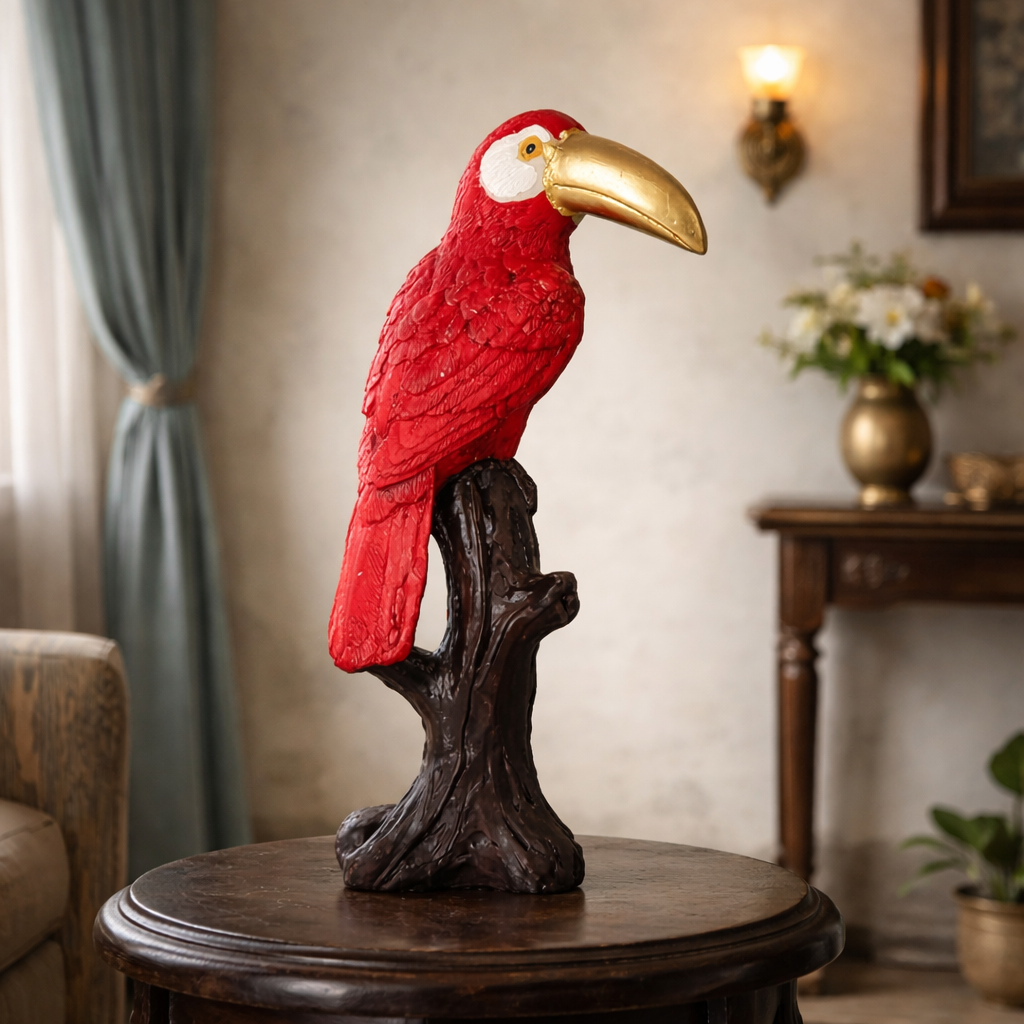
What do you mean by interior decoration?
Interior Decoration: A Clear Definition
Interior decoration is the deliberate curation of objects, surfaces, colours, and art within a finished space to express personality, improve ambience, and make a home feel lived-in and intentional. It is not construction or architecture — you do not need a contractor. You need good taste, the right products, and an understanding of your space's proportions and light.
At Moolwan, we help design-conscious Indian homeowners transform their living rooms, bedrooms, and entryways with décor that looks crafted rather than purchased — without the markups of retail middlemen or the fragility of mass-produced imports. Our pieces are manufactured in-house in Bangalore and engineered for India's humidity, temperature, and compact home layouts.
Interior decoration covers six functional layers in any room:
- Wall treatment — paint, wallpaper, wall art, and mirrors that define scale and mood
- Furniture placement — arrangement that controls flow and focal points
- Textiles — rugs, curtains, cushion covers, and throws that add warmth and texture
- Lighting — ambient, task, and accent lighting that controls atmosphere
- Decorative objects — showpieces, sculptures, vases, and curios on shelves and tables
- Art — canvas paintings, prints, and wall hangings that set the aesthetic tone of the room
Most Indian homeowners feel confident choosing furniture and paint but are unsure where to start with objects and art. That is exactly the gap Moolwan was founded to fill.
Interior Decoration vs. Interior Design: What Is the Actual Difference?
These two terms are used interchangeably but they describe very different scopes of work. Knowing the difference helps you understand what you actually need — and what you can do yourself without professional help.
| Dimension | Interior Design | Interior Decoration |
|---|---|---|
| Scope | Structural, spatial, and architectural planning | Surface-level styling and object curation |
| Who does it | Licensed interior designers or architects | Homeowners, decorators, or D2C brands like Moolwan |
| Involves construction? | Often yes — walls, flooring, built-ins | Never — no structural changes needed |
| Budget range | ₹5 lakh – ₹50 lakh+ for full home | ₹5,000 – ₹1 lakh for meaningful room refresh |
| Timeline | Months to years | Days to weeks |
| Key decisions | Floor plans, plumbing, electrical, material specs | Art, showpieces, colour accents, textiles, lighting |
| Reversible? | Mostly no | Entirely yes — rearrange or replace any time |
Most Indian homeowners who say they want "interior design" actually need interior decoration — a thoughtful refresh of what they already have, not a renovation. If your home structure is in place and you want it to look and feel more like you, decoration is the answer.
How Interior Decoration Works in Indian Homes Specifically
Indian homes present a specific set of challenges that generic Western decoration advice does not address: tropical humidity, monsoon seasons, compact floor plans, multi-functional rooms, and the need to honour cultural and family aesthetics without the space looking dated.
Good interior decoration for Indian homes accounts for all of these. For example, wall art in Mumbai or Chennai must resist moisture — which is why Moolwan's canvas wall art uses a moisture-resistant coating over 340 GSM cotton canvas printed with eco-solvent UV-resistant inks. Decorative showpieces placed near windows in Bangalore or Delhi need to handle indoor temperature swings — which is why our ceramic pieces are rated heat-resistant to 60°C and humidity-tolerant up to 85% RH.
The three zones where decoration has the highest visible impact in a typical Indian home are:
- The entrance (foyer or door-facing wall) — the first impression for every guest; sets the tone for the entire home. Explore Moolwan's decorative items for entrance — wall hangings, statues, and curated vases that make the entrance feel intentional rather than incidental.
- The living room — the social and visual centrepiece. The right canvas print, showpiece cluster, or accent table object changes how the room reads entirely. Moolwan's modern home décor collection is sized and styled specifically for Indian living rooms — not oversized Western imports.
- The bedroom — the most personal zone. Decoration here should feel calming and intimate. Our range of decorative items for bedroom includes subtle showpieces, textured art, and shelf objects that make the room feel curated without overwhelming it.
Ready to start decorating your home?
Every Moolwan piece is manufactured in-house in Bangalore and built to last in Indian climate conditions.
Browse Modern Home Décor for Indian Homes →The 6 Principles of Effective Interior Decoration
Professional decorators use a consistent framework when styling any room. You do not need to hire one — you need to understand the principles they apply.
1. Establish a Focal Point
Every room needs one dominant visual anchor — a large canvas print, an architectural element, or a statement showpiece. The eye needs somewhere to land. In most Indian living rooms, the focal wall opposite the main seating area is the right location. A 24×36 inch or 30×40 inch canvas print is typically the right scale for a standard 10×12 ft room.
2. Layer by Scale
Good decoration uses objects in at least three size ranges in every zone: large (focal piece), medium (supporting elements on coffee tables or shelves), and small (accent pieces that add texture and detail). Moolwan's size guide follows the same principle — Small (10–16 cm) for shelves and desks, Medium (16–21 cm) for showcase and coffee table styling, and Large (25–34 cm) for a focal point placement.
3. Respect Negative Space
Indian homes often err toward visual density — too many objects, too little breathing room. Effective decoration is as much about what you remove as what you add. Every decorative cluster needs visible wall or surface around it to read cleanly.
4. Use Odd Numbers
Groupings of three or five objects look more dynamic and natural than pairs or quads. When arranging showpieces on a shelf or console table, cluster in threes — one tall, one medium, one small — and vary the texture between matte and glazed finishes.
5. Connect the Room Through Colour
Pick one accent colour and repeat it in at least three places in the room — a cushion, a vase, and an art piece, for instance. This creates visual coherence without making the room feel themed or overdone. For Indian interiors, warm terracotta, deep teal, and soft gold work as anchor accent colours across both modern and traditional furniture styles.
6. Account for Maintenance
Decoration that looks beautiful in a showroom but is impossible to maintain in a busy Indian household is not good decoration. Choose finishes and materials that can be wiped down easily. Moolwan's ceramic pieces come in both matte and glazed finishes — both can be cleaned with a damp cloth and require no special treatment.
Common Interior Decoration Mistakes in Indian Homes (and How to Fix Them)
Understanding what not to do is as useful as knowing what to do. These are the most common decoration errors in Indian urban homes, along with the corrections that take a space from cluttered to composed.
| Common Mistake | Why It Happens | The Fix |
|---|---|---|
| Hanging art too high | Instinct to "fill" wall space from ceiling down | Hang centre of art at eye level — 145–155 cm from floor |
| Mismatched object scales | Buying decoratives individually without a plan | Buy in groups of 3 across small / medium / large |
| Ignoring the entrance | Treating the foyer as a storage zone | One statement piece at the entrance reframes the whole home |
| Over-decorating every surface | Confusing "decorated" with "filled" | Edit ruthlessly — only keep what earns its place |
| Cheap materials in humid zones | Price-driven decisions without climate awareness | Choose ceramics rated for 85% RH or resins with 60% RH tolerance |
| Ignoring the bedroom | Decorating only the "public" rooms | Even one well-chosen shelf object transforms a bedroom's feel |
What Moolwan Stands For in Indian Interior Decoration
Moolwan is a D2C home décor brand founded in 2021 by Ruchi Malhotra, operating under Euphorica Ventures Pvt Ltd, Bangalore. The brand was built around a specific problem: most Indian homes are decorated with mass-produced, import-dependent products that are either too fragile for Indian climate conditions, too generically styled for Indian tastes, or inflated in price by retail intermediaries.
Moolwan manufactures its entire product range in-house — canvas wall art, ceramic showpieces, and resin decorative objects — and sells directly to Indian homeowners without retail markups. Every product specification is defined with Indian climate conditions and home proportions in mind: humidity tolerance, temperature resistance, wall and shelf weight limits, and the aesthetic tension between modern design and traditional Indian visual culture.
The brand sells across three core categories: modern home décor items for living rooms and common areas, decorative items for entrances that create powerful first impressions, and bedroom decoratives that bring calm and craft to personal spaces.
Moolwan's return policy: items can be returned within 24 hours of delivery in original, unused condition and original packaging, with a 10% restocking fee. Refunds are processed within 15 working days.
Content reviewed and approved by Ruchi Malhotra, Founder & CEO, Moolwan (Euphorica Ventures Pvt Ltd), Bangalore.
Frequently Asked Questions About Interior Decoration
Is interior decoration only for large homes or expensive budgets?
No. Interior decoration is scale-neutral — the same principles apply to a 2BHK in Pune as to a 5BHK in Delhi. What matters is proportion, restraint, and material quality relative to your space, not the size of your home or your spend. A single well-chosen canvas print or a cluster of three ceramic showpieces can transform a room without a major investment.
What is the difference between a decorative item and a functional item?
A functional item serves a utility — a clock, a storage basket, a lamp. A decorative item exists purely to add visual interest, texture, or personality to a space — a sculpture, a vase (without flowers), a wall print, or an abstract showpiece. In good decoration, these two categories often overlap: a glazed ceramic vase can hold dried botanicals and still function as a statement piece. The best decorated Indian homes blend both without making the distinction obvious.
How do I start decorating my home if I have no design experience?
Start with the space that gets the most footfall or visibility: the entrance or the living room. Pick one focal wall. Choose one large statement piece — a canvas print or a tall showpiece — and build around it with two smaller supporting pieces. Stay within one colour family. Avoid buying everything at once. The most successful home decorations are built gradually, one considered addition at a time.
What materials are best for decorative items in Indian humidity?
For coastal cities and high-humidity zones, ceramics rated for 85% RH or higher are the most reliable choice. For drier inland cities, epoxy resin pieces (rated for 60% RH) offer excellent scratch resistance and a long indoor lifespan of 3+ years. Avoid untreated wood or unsealed plaster in areas that see monsoon humidity. Moolwan's ceramics are rated to 85% RH and heat-resistant to 60°C — both engineered for Indian indoor climate conditions.
How many decorative pieces should I buy at once for a room refresh?
A standard room refresh is most effective with 5–7 pieces across three scale categories — one or two large statement pieces and three to five medium or small supporting pieces. Buying fewer, better-quality pieces creates more impact than filling every surface. For a bedroom, 3–4 pieces is sufficient. For a living room with multiple surfaces, 6–8 gives you room to style effectively without overcrowding.
Shop Moolwan's Décor — Built for Indian Homes
Every Moolwan piece is manufactured in Bangalore, climate-engineered for Indian conditions, and sold direct — no middlemen, no markups. Whether you are styling an entrance for the first time or finally curating the bedroom you always imagined, we make the decision clear.
- Modern Home Décor Items — Living rooms and common areas, perfectly proportioned for Indian apartments
- Decorative Items for Entrance — Wall hangings, statues, and vases that transform your first impression
- Decorative Items for Bedroom — Calm, craft-forward pieces for the most personal room in your home


