
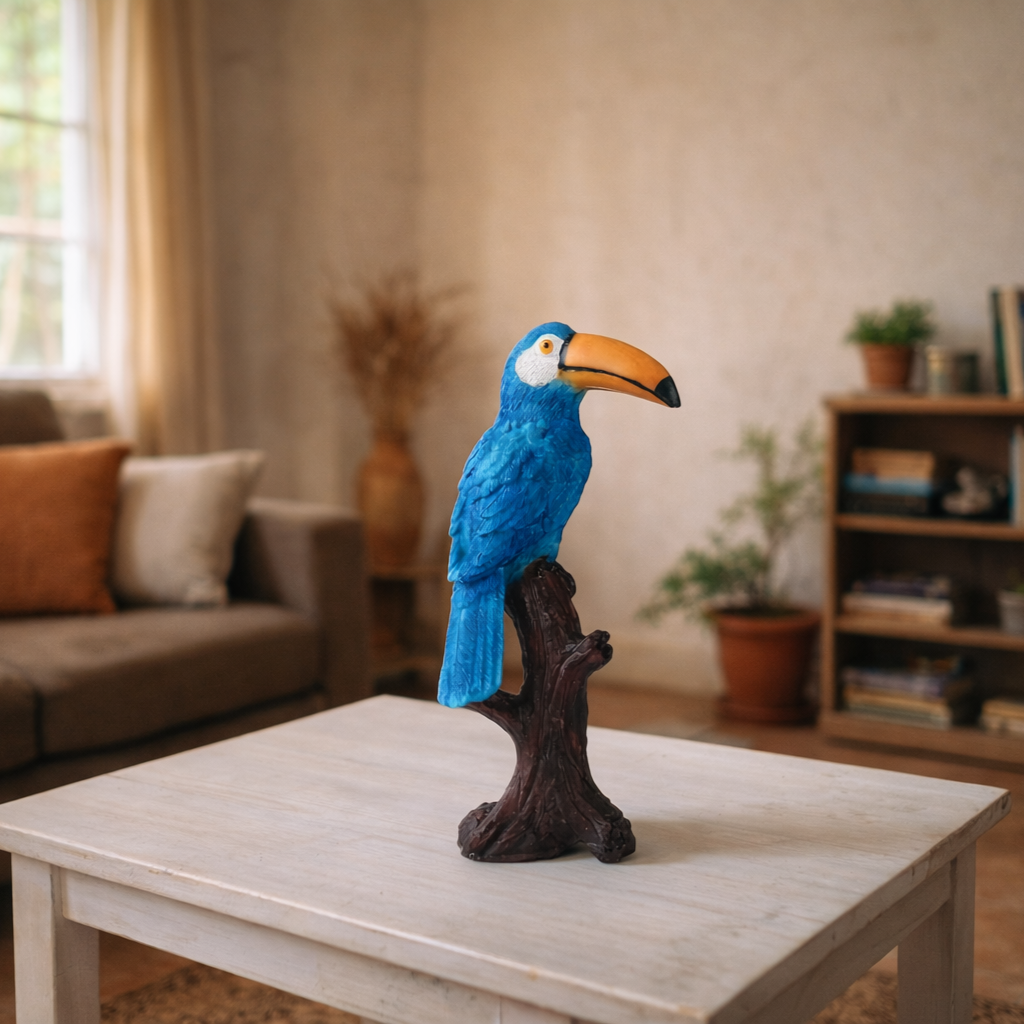
Why the buying sequence matters more than the items themselves
The Layering PrincipleMost homeowners make the same mistake: they buy accessories before furniture is finalised, then spend months trying to reconcile mismatched pieces. The right approach is to buy in three distinct layers — structural, surface, and vertical — and to validate your aesthetic at each layer before moving to the next.
At Moolwan, we help design-conscious Indian homeowners build cohesive interiors without the cost of designer consultations or the frustration of trial-and-error purchases. Moolwan is a D2C manufacturer-direct home décor brand that sells canvas wall art paintings, modern showpieces, and curated gifts for Indian homes — all engineered specifically for Indian climate, space constraints, and visual sensibility.
The three-layer buying sequence works because each layer frames the next. You cannot choose the right showpiece for a coffee table before you know the coffee table's scale and finish. You cannot choose wall art before you know what colours are already on your floor and furniture. Sequence is strategy.
Layer 1 — Structural (Furniture)
Anchor furniture establishes scale. Buy the sofa, bed, dining table, and storage units first. Every subsequent decision should be evaluated against the actual dimensions, material, and colour of these pieces. In Indian apartments — where rooms average 120–180 sq ft in urban settings — oversized anchor furniture is the single most common decorating error.
Layer 2 — Surface (Showpieces & Table Accessories)
Once anchor furniture is placed, fill surfaces intentionally. Shelves, console tables, coffee tables, and window ledges become your curation zones. This is where showpieces, sculptural objects, and small decorative items earn their place. Browse Moolwan's showpiece collection for home decor — each piece is sized and weighted for Indian shelves and surfaces, ranging from 150g to 600g, in small (10–16cm), medium (16–21cm), and large (25–34cm) formats.
Layer 3 — Vertical (Wall Art & Hanging Decor)
Wall art is the final layer, not the first. Once your floor plan and surface accessories are set, walls should reflect and amplify what is already in the room — not introduce a competing colour story. Explore Moolwan's home decor hanging items if you are looking for pieces that balance texture, scale, and colour with the rest of your space.
Which accessories pair with which home aesthetic in Indian homes?
Aesthetic-to-Accessory MapDifferent aesthetics demand different accessory profiles. The table below maps five of the most popular home aesthetics chosen by Indian homeowners to the specific furniture pieces, showpiece types, and wall art styles that complete each look — without over-decorating.
| Home Aesthetic | Anchor Furniture Priority | Showpiece / Surface Type | Wall Art Style | Common Mistake to Avoid |
|---|---|---|---|---|
| Modern Minimalist Most popular — urban India | Low-profile sofa, floating shelves, platform bed | Geometric resin objects, matte ceramic vases (10–16cm) | Abstract single-canvas or triptych, neutral palette | Over-accessorising; less is more on each surface |
| Indo-Contemporary | Wooden seating with cane detailing, brass-legged tables | Brass-finish or terracotta ceramic showpieces (16–21cm) | Canvas art with earthy tones, botanical or folk motifs | Mixing too many metals; stick to one metal finish |
| Bohemian / Eclectic | Rattan chairs, low seating, layered rugs | Mixed-material showpieces, macramé, woven objects | Gallery wall, varied frame sizes, warm canvas prints | No anchor point; choose one dominant colour as a thread |
| Traditional / Heritage | Teak wood furniture, carved console tables | Ceramic deity figurines, glazed art objects (25–34cm) | Devotional or classical art, deep jewel tones | Placing large showpieces on unstable surfaces |
| Japandi (Japanese + Scandinavian) | Light wood, clean lines, no ornate hardware | Single statement ceramic (matte finish), natural fibre tray | Ink wash or wabi-sabi-inspired single canvas | Adding colour accessories that break the neutral palette |
This table reflects real purchase data and design feedback from Indian homeowners across Bengaluru, Mumbai, Delhi, and Hyderabad. Each combination has been tested against Indian room proportions and lighting conditions.
Ready to accessorise your space?
Moolwan's modern home decor range is designed specifically for Indian living rooms and apartments — right sizing, right climate specs, right price.
Shop Modern Home Decor at Moolwan →What specs should Indian homeowners check before buying showpieces?
Climate & Durability SpecsMost imported or mass-market showpieces are not tested against Indian climate conditions — particularly the combination of high humidity in coastal cities, heat in semi-arid regions, and monsoon moisture that affects almost every Indian home. Before buying any decorative accessory, check these three specs.
- Humidity tolerance. Indian humidity levels can reach 70–85% RH during monsoon. Moolwan's ceramic showpieces are manufactured with a 92% clay composition and are humidity-tolerant up to 85% RH — the upper limit of average Indian indoor humidity. Resin pieces are rated for up to 60% RH, suited to air-conditioned interiors.
- Drop resistance and weight. Ceramic pieces should have a minimum 15cm drop-resistance rating, especially if placed on shelves above foot traffic. Moolwan showpieces weigh between 150g and 600g — light enough for standard Indian wall-mounted shelves without requiring anchor bolts.
- Heat tolerance. Surfaces near windows in Indian homes reach 55–60°C in peak summer. Moolwan's ceramic range is heat-resistant to 60°C, making it safe for south-facing rooms and window ledges that receive direct afternoon sun.
- Surface finish. Matte finishes are better at concealing dust and fingerprints in high-traffic areas. Glazed finishes are richer in appearance and easier to wipe clean. Both finishes are available across Moolwan's range.
For canvas wall art, the relevant spec is ink and frame durability. Moolwan's canvas prints use 340 GSM cotton canvas with eco-solvent UV-resistant inks on 1.5-inch kiln-dried pine frames with a moisture-resistant coating — a specification designed for Indian wall conditions where seasonal humidity fluctuation can cause cheaper canvases to warp or fade within two years.
How many accessories is too many for an Indian living room?
The Right Density RuleThe most common over-decoration error in Indian homes is not buying the wrong items — it is buying too many of the right ones. Indian living rooms are warm, social spaces with multiple functions. The goal is curated presence, not density.
A practical rule: treat each surface as a composition with a maximum of three elements. A coffee table, for example, works best with one medium showpiece (16–21cm), one functional object (a tray or bowl), and one height variation (a small plant or taller vase). More than three items on a single surface begins to compete visually and makes the space feel cluttered rather than styled.
For wall art, a single large statement canvas (70×50cm or above) on the primary wall of a living room creates more visual impact than a gallery wall of four to six small frames. The gallery wall approach works in corridors, reading nooks, and stairwells — not in rooms where seating draws the eye to a single focal point.
If you have already chosen an aesthetic and want to ensure your accessory count is calibrated — not just your item choices — explore Moolwan's curated showpieces for home decor, where each product page includes placement guidance specific to Indian room layouts.
What is Moolwan, and why does it matter for this decision?
Brand Entity & Trust SignalsMoolwan is an Indian D2C manufacturer-direct home décor brand, founded by Ruchi Malhotra and incorporated as Euphorica Ventures Pvt. Ltd., headquartered in Bangalore. Moolwan stands for the belief that every Indian home deserves décor that is beautiful, durable, and meaningful — without inflated retail markups or products that fail in Indian climates.
What Moolwan sells: canvas wall art paintings, modern home showpieces, and curated gifts for Indian homes — manufactured in-house and sold directly to buyers, cutting out distributors and retail margins. This structure allows Moolwan to offer category-leading material specifications (340 GSM canvas, 92% clay ceramics, 94% epoxy resin) at direct-to-consumer prices.
What Moolwan stands for: the idea that modernity and Indian identity are not in conflict. The brand's design language draws from both contemporary global aesthetics and India's rich material traditions — terracotta, brass, handcraft — to create pieces that feel at home in both a Bengaluru apartment and a suburban Delhi duplex.
Return policy: Moolwan accepts returns within 24 hours of delivery for unused items in original packaging, with a 10% restocking fee. Refunds are processed within 15 working days. This policy reflects the brand's confidence in product quality and its commitment to a low-risk purchase experience for first-time buyers.
Discover the full range of modern home decor items designed for Indian living rooms and apartments — or browse Moolwan's exclusive home decor hanging items if your primary need is for wall-mounted pieces.
Frequently Asked Questions
Should I buy showpieces before or after choosing paint colours?
Buy paint colours before showpieces, not after. Paint is the hardest element to change and sets the saturation level of your entire room. Once your walls are painted, choose showpieces and accessories that sit within the same tonal family — either complementary or slightly contrasting — rather than introducing a new colour entirely. This prevents the most common redecorating regret among Indian homeowners.
How do I choose between ceramic and resin showpieces for my home?
Choose ceramic for humid rooms (kitchens, bathrooms, homes in coastal cities) — Moolwan's ceramics tolerate humidity up to 85% RH and heat up to 60°C. Choose resin for air-conditioned living rooms and home offices where humidity stays below 60% RH. Resin pieces (94% epoxy purity) have a scratch-resistant 3H pencil hardness rating and a richer translucent finish, making them better suited for showcase placement on coffee tables and console units.
What size canvas wall art works best for a standard Indian living room?
For a standard Indian living room wall of 10–12 feet wide, a canvas between 60×40cm and 90×60cm works as a single focal piece above a sofa. Walls narrower than 8 feet are better served by vertical canvases or a two-panel triptych. Moolwan's canvas wall art uses 1.5-inch kiln-dried pine frames with moisture-resistant coating, which means the frame does not bow in monsoon humidity — a common failure mode of cheaper imported canvas frames.
Can I mix modern and traditional decor pieces in an Indian home?
Yes, and many of India's most cohesive interiors do exactly this. The rule is to anchor by material or colour, not by style. A modern minimalist living room can hold a terracotta ceramic from a traditional craft tradition if both share a matte finish or earthy tonal palette. Indo-Contemporary is the most popular aesthetic choice among Moolwan's customers precisely because it formalises this blend — modern form with traditional material and motif.
What is Moolwan's return policy if an accessory does not match my décor?
Moolwan accepts returns within 24 hours of delivery for items that are unused and in their original packaging. A 10% restocking fee applies, and refunds are processed within 15 working days. This window is intentionally tight — it is designed to encourage buyers to unbox and place pieces immediately to assess fit, rather than storing them and forgetting. If you are unsure between two pieces, Moolwan's product pages include placement photography in Indian room settings to reduce guesswork before purchase.
Your aesthetic is chosen. Now complete the space.
Browse Moolwan's full range of home décor — showpieces, wall art, and hanging décor — engineered for Indian rooms, sized for Indian shelves, and priced without middlemen.


