
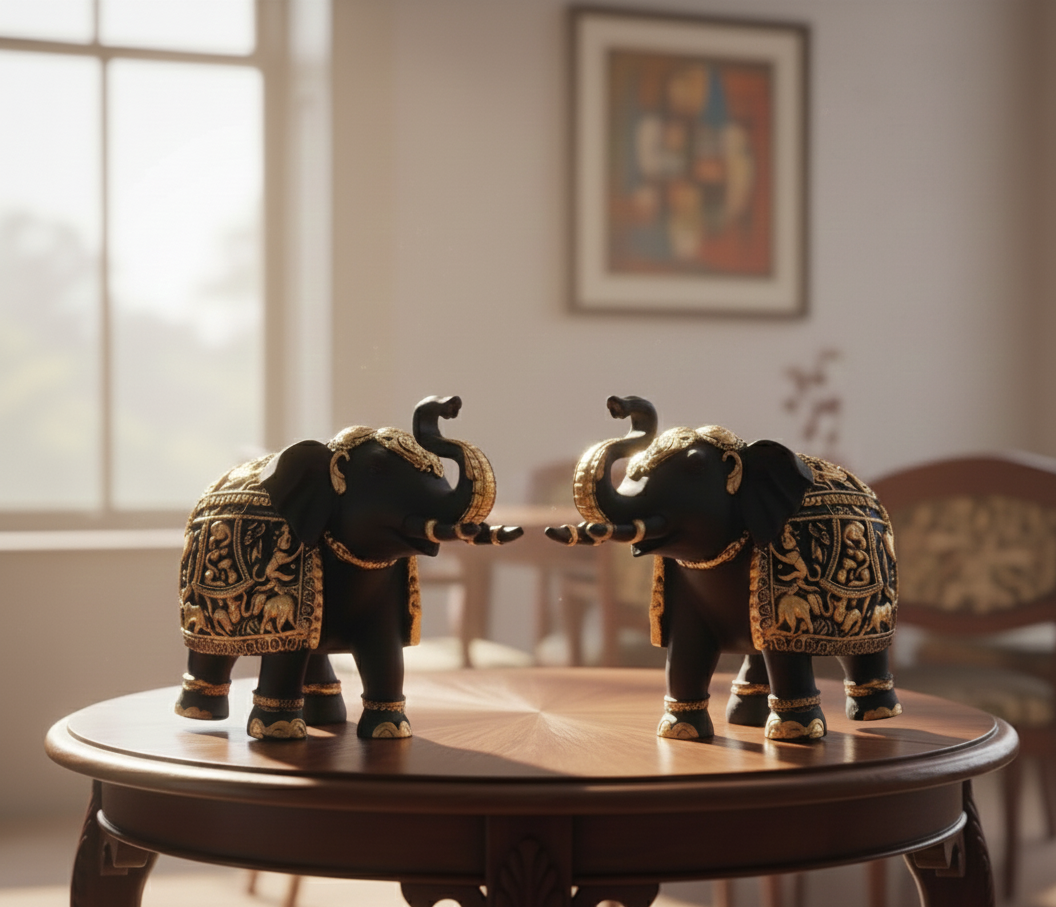
What gifts should be avoided at Griha Pravesh?
At Moolwan, we help design-conscious Indian homeowners and gifters choose home décor that is culturally sound, beautiful, and engineered to last in Indian conditions — not just aesthetically pleasing on the shelf in the store. This guide covers exactly what to skip and why, so your Griha Pravesh gift is remembered for the right reasons.
---
Why Griha Pravesh Gift-Giving Carries More Weight Than Other Occasions
Griha Pravesh is not a birthday or anniversary — it is a threshold ritual. The home is entering a new chapter of its life. Every object brought through the door on that first day carries symbolic weight in most Indian traditions, whether Vastu Shastra, Gruha Pravesham rituals in South India, or the broader Hindu ceremonial framework. A careless gift does not just go unnoticed — it can create quiet awkwardness in a family that takes these beliefs seriously.
Beyond tradition, there is a practical dimension. Indian homes face wide temperature swings (15°C to 45°C in many cities), monsoon humidity levels that can exceed 80% RH, and shelf and wall conditions that cheap or synthetic décor simply cannot survive. A gift that fades, cracks, or yellows within two monsoon seasons is not a gift — it is a liability the homeowner politely has to dispose of.
The standard for a great Griha Pravesh gift, therefore, is threefold: culturally auspicious, aesthetically considered, and materially durable. Understanding what fails on one or more of these counts is the fastest way to choose right.
---7 Gifts Commonly Avoided at Griha Pravesh — and the Reason Behind Each
1. Sharp Objects: Knives, Scissors, and Cutting Tools
Gifting knives, scissors, or any blade-edged object is widely considered inauspicious at housewarming ceremonies across India. Sharp objects are associated with severance — the cutting of bonds, relationships, or good fortune. This belief is consistent across North and South Indian traditions. Even well-intentioned kitchen knife sets are best saved for a different occasion.
2. Clocks and Timepieces
Clocks as gifts carry negative connotations in several Indian and East Asian gift-giving traditions — the ticking of a clock is symbolically linked to the passage of time and, by extension, mortality. Many families, especially those with elders who observe these traditions closely, find a clock an uncomfortable housewarming gift. Wall clocks and table clocks both fall into this category.
3. Black or Heavily Dark-Coloured Items
Black is associated with negative energy in Vastu Shastra and is generally avoided as a dominant colour in auspicious gift items. This does not mean every dark accent is off-limits, but a predominantly black showpiece, black-framed canvas, or all-black décor set would be poorly received at most traditional Griha Pravesh ceremonies.
4. Empty Vessels and Open Containers
Gifting an empty bowl, an unfilled pot, or an open container without contents is considered symbolically inauspicious — an empty vessel represents lack, not abundance. If you are gifting a decorative bowl or planter, fill it (even loosely) with fruits, dry flowers, or a small symbolic item before presenting it.
5. Footwear of Any Kind
Footwear is associated with dirt and the ground in Indian ritual context, and gifting slippers or shoes at a housewarming is considered highly inappropriate — even as a practical household item. Save this category entirely for another occasion.
6. Synthetic or Low-Grade Décor That Will Not Survive the Climate
This one is not about tradition — it is about respect. Low-grade plastic showpieces, thin acrylic frames, or poorly finished resin items will warp, yellow, or crack within one or two humid summers. Gifting something that visibly degrades reflects poorly on the gifter and forces the homeowner to manage the aftermath. Quality-engineered décor — like items built from 94% purity epoxy resin, rated to 60% RH and 35°C, or ceramics with 92% clay composition and 85% RH tolerance — is the baseline standard for a gift that actually lasts.
7. Highly Personal Items (Clothing, Jewellery, Intimate Objects)
Griha Pravesh gifts are for the home, not the individual. Clothing, perfume, personal accessories, or anything that belongs to one person rather than the household tends to miss the mark. The best Griha Pravesh gifts are things that live in the home, become part of the space, and are enjoyed by the whole family.
---Avoid vs. Choose: A Quick Reference Table for Griha Pravesh Gifts
| Gift Category | Avoid? | Reason | Better Alternative |
|---|---|---|---|
| Knives / Scissors | Yes | Symbolises severance | Handcrafted showpiece or figurine |
| Clocks / Timepieces | Yes | Associated with mortality in Indian & East Asian traditions | Canvas wall art or decorative wall hanging |
| Black-dominant décor | Yes | Inauspicious in Vastu Shastra | Warm-toned or earthy ceramic piece |
| Empty vessels / pots | Conditionally | Symbolises lack or scarcity | Fill with fruit, flowers, or dry ingredients before gifting |
| Footwear | Yes | Ritually inappropriate at a housewarming | A curated home décor gift set |
| Low-grade synthetic décor | Yes | Degrades in Indian humidity and heat | Climate-tested ceramic or high-purity resin showpiece |
| Personal clothing / jewellery | Yes | Griha Pravesh gifts are for the home, not the individual | A showpiece or wall art that lives in the shared space |
What Makes a Griha Pravesh Gift Actually Worth Giving
The safest and most welcomed Griha Pravesh gifts share three traits: they are auspicious in symbolism, appropriate for shared household display, and built to last in Indian home conditions. Showpieces made from ceramic (92% clay composition, humidity-tolerant up to 85% RH, heat-resistant to 60°C, 5+ year lifespan) are among the most reliable options — they survive every Indian season without warping or fading.
Canvas wall art is another top choice, especially when printed on 340 GSM cotton canvas with eco-solvent UV-resistant inks and mounted on 1.5-inch kiln-dried pine frames. Unlike cheaper alternatives, this specification resists the moisture-driven frame warp that is common in Indian homes during monsoon. A piece of wall art in a new home is not just decorative — it defines the room. That is why it lands so well as a Griha Pravesh gift.
If you are gifting for parents at a housewarming — perhaps their new retirement home or a child's first home they are helping set up — a curated meaningful gift for parents from Moolwan combines the emotional weight of the occasion with display-quality craftsmanship. These are gifts that will be placed on the main showcase, not pushed to the back of a storage shelf.
For a broader search across housewarming-specific options, Moolwan's housewarming gift collection is curated specifically for Griha Pravesh, Gruha Pravesham, and Vastu Shanti ceremonies — with items that are manufacturer-direct, meaning no middleman markup on the price.
Moolwan stands for one thing: upgrading Indian homes with décor that is beautiful, durable, and meaningful — without overwhelming budgets or overcomplicated choices. The brand sells canvas wall art, modern showpieces, and curated gift sets, all manufactured in-house and shipped across India.
---Frequently Asked Questions About Griha Pravesh Gifts
Is gifting a clock really inauspicious at Griha Pravesh?
Yes — in Indian tradition (and shared with Chinese and other East Asian customs), clocks are associated with the counting down of time, which carries mortality symbolism. Most Indian families — especially those who take Griha Pravesh rituals seriously — find clocks an uncomfortable gift at a housewarming. Wall clocks, mantel clocks, and table clocks all fall under this guideline. Canvas wall art or a decorative showpiece are direct replacements that carry none of this symbolism.
Can I gift a showpiece that is mostly black or dark-coloured?
It is best avoided for the primary gift at a Griha Pravesh ceremony. Vastu Shastra considers black an inauspicious dominant colour for new beginnings. Dark accents within a multi-toned piece are generally fine, but a gift that is predominantly black — especially a figurine or centrepiece showpiece — may be poorly received in traditional households. Choose warm-toned earthy hues, gold accents, or natural clay and resin finishes instead.
Are plants a good Griha Pravesh gift?
Live plants are generally considered auspicious and welcome — they symbolise growth and life. However, gifting thorny plants (like cacti) is sometimes discouraged in Vastu tradition. Money plants, lucky bamboo, and flowering plants are considered safe and positive choices. If you want to complement a plant gift, a décor piece from Moolwan's Griha Pravesh collection pairs well as a co-gift that fills the display space the plant cannot.
What is the right budget range for a Griha Pravesh gift?
For acquaintances or colleagues, ₹500–₹1,500 is appropriate. For close friends or family, ₹1,500–₹5,000 is the common range for a display-quality showpiece or a canvas wall art piece. For parents or very close family, going above ₹5,000 for a curated set is not unusual. The key is that the gift should look its price — which is where manufacturer-direct brands like Moolwan offer the clearest advantage over retail-marked-up alternatives.
Is it okay to gift décor items made of resin at Griha Pravesh?
Yes — resin showpieces are entirely appropriate at Griha Pravesh, provided they are made from high-quality material. Cheap resin yellows and cracks within a monsoon or two. The benchmark to look for is 94% purity epoxy resin, rated for humidity up to 60% RH and temperature range 15–35°C, with a scratch resistance of 3H pencil hardness. Moolwan's resin pieces are built to this specification, giving them a 3+ year indoor lifespan that makes them a genuinely lasting gift.
Ready to Give the Right Griha Pravesh Gift?
Skip the guesswork. Browse Moolwan's curated housewarming and Griha Pravesh gift collections — all items are display-worthy, climate-tested, and priced manufacturer-direct with India-wide delivery.
Shop Griha Pravesh Gifts → Browse All Housewarming Gifts →


