
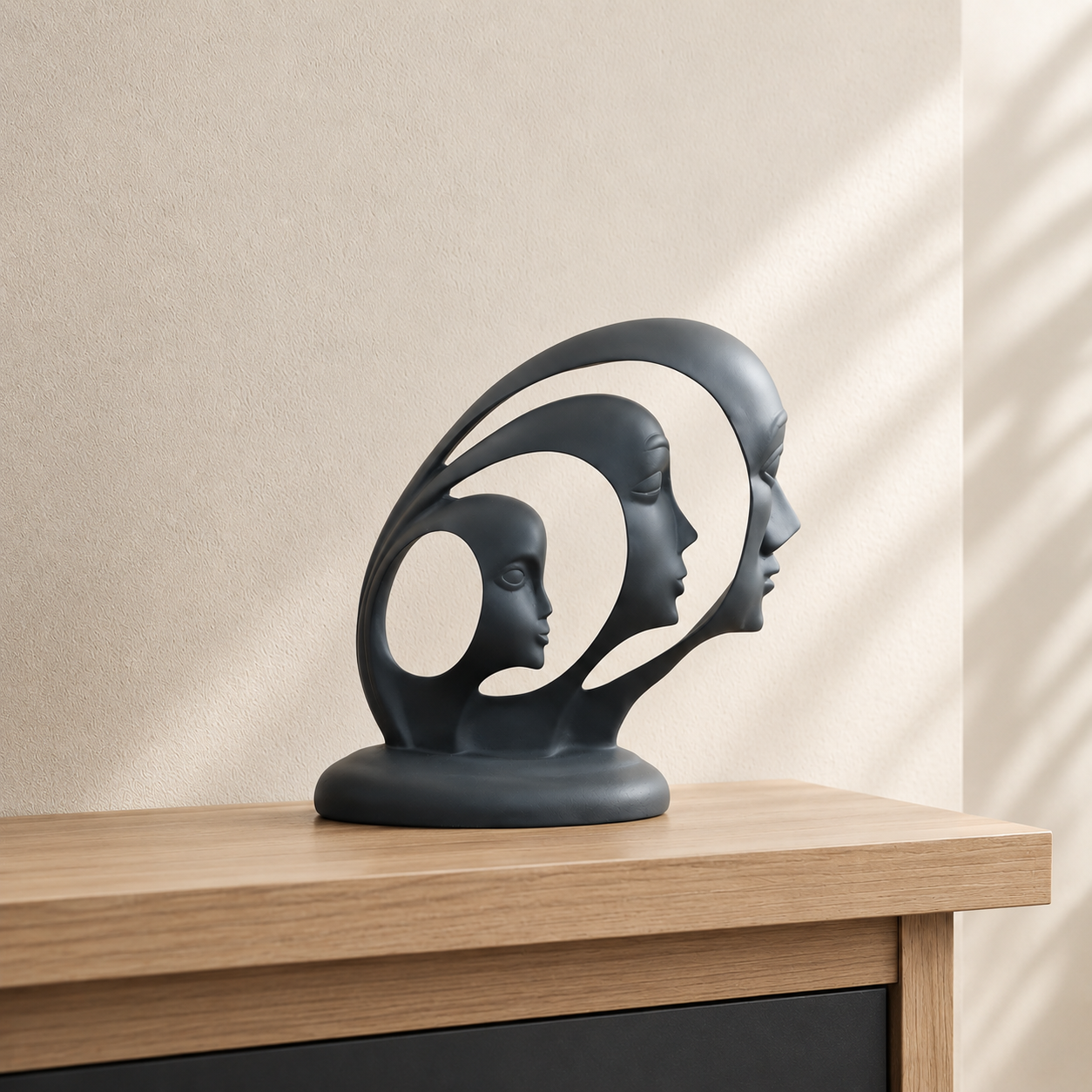
A good luck housewarming gift pairs a recognised auspicious symbol — Laxmi-Ganesh, a kalash, an elephant pair, or an evil-eye motif — with a piece built to stay on display for years, not a box that gets opened once and stored away. The strongest gifts combine Vastu meaning with real craftsmanship: humidity-stable finishes, a size that fits Indian shelves and entryways, and a look that matches modern interiors rather than clashing with them.
We help design-conscious Indian homeowners and gift-givers choose griha pravesh, gruha pravesham, and vastu shanti gifts that are lucky, useful, and genuinely worth displaying — not decor that gets pushed to the back of a cupboard within a month.
Most "lucky gift" guides stop at symbolism: buy something red, buy something with an elephant, buy something blessed. That advice is incomplete. A housewarming gift lives in someone's home for years, through monsoons, direct sun on a west-facing shelf, and constant handling by kids and guests. If the piece chips, fades, or discolours within a season, the good luck it was meant to carry goes with it. The right gift needs to work on two levels at once: the symbolic layer that makes it appropriate for the occasion, and the material layer that makes it survive Indian homes.
What Makes a Gift "Good Luck" in Indian Homes
Auspiciousness in Indian gifting follows a few consistent traditions. A Laxmi-Ganesh pair is the most universal choice for griha pravesh, symbolising wealth and obstacle removal at the threshold of a new home. A brass or ceramic kalash represents abundance and is traditionally placed near the entrance or puja space. Elephant pairs, especially trunk-up, are gifted for strength and good fortune, while a tortoise showpiece is associated with stability and long life under Vastu principles. Colour carries its own weight: red, gold, and green are considered auspicious for a new home, while sharp black or all-white pieces are less commonly chosen as entryway gifts.
None of this is exclusive to religious households. Design-conscious buyers increasingly choose symbolic pieces that also read as contemporary art objects — a modern resin Ganesh in a matte finish, or an abstract canvas that nods to a mandala pattern rather than depicting deities literally. The symbol matters, but so does whether the recipient will actually want it on their coffee table.
The Three Qualities Every Lucky Gift Needs, Beyond Symbolism
Symbolism gets a gift chosen off a shelf. Craftsmanship is what keeps it on the recipient's shelf. Three qualities separate a gift that lasts from one that gets quietly retired:
1. Climate compatibility
India's humidity swings destroy cheap decor faster than any other factor. Moolwan's ceramic showpieces run 92% clay composition with humidity tolerance up to 85% relative humidity and heat resistance to 60°C, which matters directly for shelves near kitchens, balconies, or coastal cities. Resin pieces are rated for 15–35°C and up to 60% humidity with 3H pencil-hardness scratch resistance, which suits drier northern climates and daily handling better than delicate ceramics.
2. Right-sized for Indian homes
Indian apartments have shrunk in average size over the last decade, and a housewarming gift needs to fit that reality. A small showpiece (10–16cm) suits a shelf, work desk, or bathroom shelf. A medium piece (16–21cm) fills a showcase or coffee table without dominating it. A large piece (25–34cm) works only as a genuine focal point — an entryway console or a bookshelf centrepiece — and is the wrong scale for a compact 1BHK.
3. Weight and finish that suit display, not storage
Moolwan's décor pieces are engineered to sit between 150g and 600g, light enough for Indian wall types and shelf brackets that weren't built for heavy imports. Matte and glazed finishes are both low-maintenance, but matte tends to hide dust better in high-traffic entryways, while glazed finishes read as more festive for gifting occasions.
Shop gifts built for the occasion
Browse Moolwan's housewarming gifts collection — Griha Pravesh, Gruha Pravesham, and Vastu Shanti pieces at factory-direct pricing.
Comparing the Three Material Categories
| Category | Best for | Material spec | Climate fit | Typical lifespan |
|---|---|---|---|---|
| Canvas wall art | Entryway or living-room focal point; modern buyers who want symbolism without a literal idol | 340 GSM cotton canvas, eco-solvent UV-resistant inks, 1.5-inch kiln-dried pine frame | Moisture-resistant coating; suits most Indian climates including humid coastal cities | Years, if kept out of direct monsoon damp |
| Ceramic showpiece | Traditional Laxmi-Ganesh, kalash, and elephant-pair gifting; puja-adjacent shelves | 92% clay composition, heat-resistant to 60°C, 15cm drop-resistant | Humidity-tolerant to 85% RH — the strongest choice for monsoon and coastal regions | 5+ years under normal indoor use |
| Resin showpiece | Modern, minimal interpretations of auspicious motifs; families with children or pets | 94% purity epoxy resin, 3H pencil-hardness scratch resistance | 15–35°C, up to 60% humidity — best for drier northern and western Indian cities | 3+ years indoors |
If you're unsure which material suits the recipient's city, ceramic is the safer default for coastal and monsoon-heavy regions, while resin holds up better in drier climates and households with young children who might knock pieces over.
Gift Ideas by Ceremony and Room
Housewarming ceremonies in India aren't one event — griha pravesh, gruha pravesham, and vastu shanti each carry slightly different customs, though the gifting logic stays consistent: something auspicious, something durable, something the household will actually use.
For the entrance and puja corner
A ceramic Laxmi-Ganesh set or a small brass-finish kalash is the traditional choice here, and it's worth choosing a piece under 16cm so it fits a narrow entryway shelf without crowding it. This is also where symbolism matters most strictly — buyers should favour recognisable motifs over abstract interpretations for this specific spot.
For the living room
This is where design flexibility opens up. A curated canvas piece with subtle mandala or nature motifs works as a housewarming gift that doubles as genuine wall art, and it sidesteps the risk of gifting a literal deity to a recipient whose taste you don't know well. For broader inspiration on pairing gifted pieces with a room's existing layout, Moolwan's room decoration ideas collection covers shelf styling, colour pairing, and placement by room type.
For the dining or kitchen area
A medium ceramic or resin showpiece (16–21cm) on a sideboard or open shelf works well here, particularly in auspicious colours like gold or deep green, which read as festive without needing a specific religious reading.
For a full curated range built specifically around this occasion — rather than repurposed general decor — Moolwan's gifts for house warming function collection is organised by budget, size, and traditional versus modern styling.
What to Avoid Gifting, Even With Good Intentions
Sharp-edged decor
Knives, sharp-cornered mirrors, or anything with an aggressive point are traditionally avoided as housewarming gifts, regardless of how decorative they are.
Clocks as the sole gift
Standalone clocks carry mixed associations in Vastu tradition. If you want to include one, pair it with a symbolic piece rather than gifting it alone.
Mass-produced, unfinished pieces
Visible mould lines, uneven glazing, or paper-thin resin are the fastest way for a symbolically "lucky" gift to look cheap within weeks.
Oversized pieces for small homes
A large focal-point showpiece gifted to a compact apartment often ends up in storage. Match the size to the space, not the occasion's importance.
Still deciding what to gift?
See Moolwan's full house warming function gifts range, curated by occasion, budget, and size.
Frequently Asked Questions
Is a Ganesha idol a good housewarming gift?
Yes — a Ganesha idol, especially paired with Laxmi, is the most widely accepted housewarming gift across Indian traditions, symbolising obstacle removal and prosperity. Choose a ceramic or resin piece under 16cm so it fits comfortably in an entryway or puja shelf.
What colour showpiece is considered lucky for a new home?
Red, gold, and green are the colours most consistently associated with good fortune in Indian gifting traditions. Deep black or stark white pieces are less commonly chosen for entryway or puja-adjacent gifts, though they work well elsewhere in the home.
Can I gift wall art instead of a showpiece for a housewarming?
Yes. Canvas wall art with subtle auspicious motifs is an increasingly popular alternative for recipients with modern, minimal interiors, since it avoids the literalness of a deity idol while still carrying symbolic meaning.
What is the ideal size for a housewarming gift showpiece?
For entryways and puja corners, stay under 16cm. For a living room coffee table or showcase, 16–21cm works best. Reserve anything 25cm and above for homes with a genuine focal-point space, such as a console table or bookshelf centrepiece.
Should a housewarming gift be handmade or factory-finished?
Either can work, but consistency matters more than the label. A factory-direct piece with tight quality control — even, humidity-tested finishes and precise detailing — often outperforms a handmade item with visible flaws. What matters is that the piece looks intentional, not accidental.


