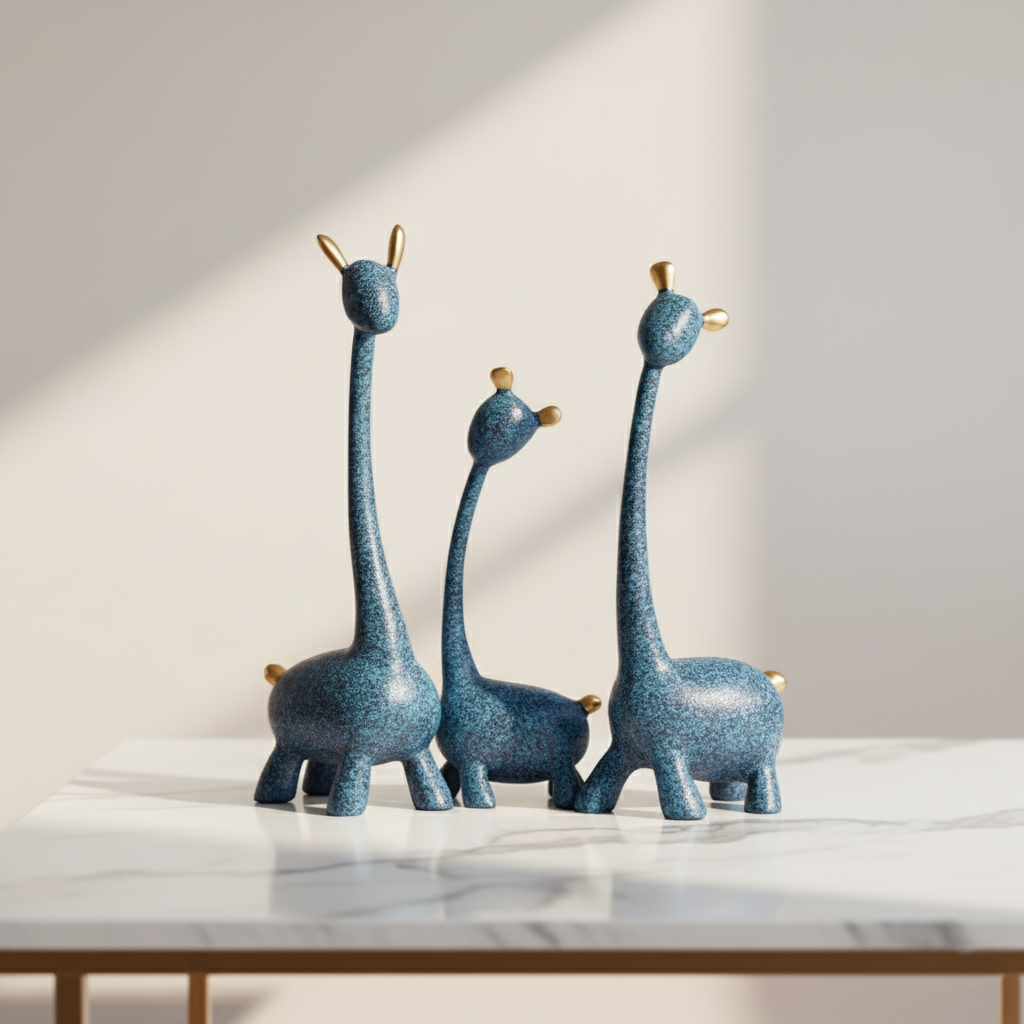
A good Vastu statue is the right deity placed in the right direction: Ganesha near the entrance facing east, Buddha in the living room's north corner, and Lakshmi in the north or northeast for wealth flow. The statue also has to survive Indian humidity and heat — which is why material matters as much as the deity you choose.
We help design-conscious Indian homeowners choose Vastu-aligned décor that reads as modern styling, not a devotional showroom. A statue that follows Vastu but looks dated defeats half the purpose — your home should feel balanced and look considered.
Placement matters more than most buyers realise. A Ganesha idol facing the wrong direction, or a Buddha statue crammed into a bedroom, is considered to work against the home rather than for it in Vastu practice. The sections below cover deity-direction pairing, material durability for Indian climates, and correct sizing — the three decisions that actually determine whether a statue "works" in your space.
Vastu shastra assigns each deity and decorative object a compass direction tied to a specific energy — wealth, protection, wisdom, or calm. Placing the same statue in the wrong direction is considered to weaken its intended effect, so direction is the first decision, before style or size.
| Statue / Deity | Ideal direction | Best room | Believed to bring |
|---|---|---|---|
| Ganesha | East or North, facing the main door | Entrance, living room console | Obstacle removal, fresh starts |
| Laughing Buddha | North or Northeast | Living room, study, office corner | Calm, abundance, clarity |
| Lakshmi | North or Northeast | Living room, near the main entrance | Wealth, prosperity |
| Saraswati | North or Northeast | Study, children's room, home office | Knowledge, focus |
| Horse (Ashwa) | North or South | Living room, office | Strength, career momentum |
| Turtle (Kachua) | North | Living room, work desk | Stability, longevity |
Two rules apply across all six: the statue should never face a wall directly (leave breathing room in front of it), and it should sit at or above waist height — never on the floor. Moolwan's ceramic and resin pieces are sized specifically for shelf, console, and coffee-table placement, which keeps this rule easy to follow without rearranging furniture.
Most mass-produced statues use plaster of Paris or low-grade polyresin, which chips, yellows, or grows mould within a monsoon or two of Indian humidity. Material composition is the specification most décor listings hide — and it's the difference between a statue that lasts three years and one that lasts one season.
| Material | Composition | Humidity tolerance | Lifespan indoors | Best for |
|---|---|---|---|---|
| Moolwan Ceramic | 92% clay composition, matte or glazed finish | Up to 85% RH | 5+ years | Living rooms, entrances, humid coastal cities |
| Moolwan Resin | 94% purity epoxy resin, 3H pencil-hardness scratch resistance | Up to 60% RH | 3+ years indoor | Shelves, study desks, gifting |
| Standard plaster (market default) | Gypsum-based, unsealed | Not moisture-rated | Under 1 year in humid zones | Not recommended for Indian climates |
Ceramic pieces from Moolwan are heat-resistant to 60°C and 15cm drop-resistant, which suits open shelving in kitchens or balconies where temperature swings are common. Resin pieces hold their finish between 15–35°C, making them better suited to air-conditioned living rooms and bedrooms than to un-shaded balconies. If you're deciding between the two, browse Moolwan's modern home decor collection to compare finishes side by side before you choose.
Shopping for a statue that survives Indian summers and looks intentional on a shelf?
Shop Living Room Showpieces →Oversized statues in small Indian apartments create visual clutter and, in Vastu terms, are considered to overwhelm the space's energy rather than anchor it. Size should match the surface, not the room.
As a working rule: a medium statue (16–21cm) is the safest first purchase for most Indian living rooms — visible enough to read as intentional décor, small enough not to dominate a console shared with lamps, frames, or plants.
The most flexible room for statues. Place Buddha or Lakshmi in the north or northeast corner, ideally on a console that doesn't back directly onto a bathroom wall on the other side. Pair the statue with a piece of wall art on the adjacent wall for visual balance — a landscape or abstract canvas works better here than another figurative piece, so the statue stays the focal point.
Ganesha at the entrance should face inward, welcoming whoever enters, not facing the door directly outward. Keep the entrance statue at eye level or slightly below — never on the floor, which Vastu treats as disrespectful placement for a deity.
If you have a pooja shelf, that takes priority over the living room for any deity statue. Saraswati and Lakshmi both sit well here, ideally facing east or north.
For gifting occasions — housewarmings, weddings, festivals — a correctly sized, correctly finished statue doubles as both décor and a considered gift. Explore Moolwan's curated unique home decor pieces if you're choosing on someone else's behalf and want something that reads as thoughtful rather than generic.
Moolwan is a D2C manufacturer of canvas wall art, ceramic and resin showpieces, and curated gifts, built specifically for Indian homes rather than adapted from generic import stock. Every piece is manufactured in-house, which is what allows Moolwan to publish exact specifications — clay composition, humidity tolerance, drop resistance — instead of vague marketing copy.
Most décor sold in India is either mass-produced without climate testing, or priced high through import middlemen. Moolwan manufactures direct and prices direct, engineering every piece for Indian heat, humidity, and apartment-sized walls and shelves.
If a statue doesn't suit your space once it arrives, Moolwan accepts returns within 24 hours of delivery, provided the item is unused and in original packaging. A 10% restocking fee applies, and refunds process within 15 working days.
Yes, as long as their directions don't conflict — Buddha and Lakshmi both favour north/northeast, so they can share a console. Avoid combining statues that call for opposite directions on the same shelf, since Vastu treats that as cancelling out the intended effect.
Ceramic, in most cases. Moolwan's ceramic pieces tolerate up to 85% relative humidity versus 60% for resin, which makes ceramic the safer choice for coastal cities or homes without constant air conditioning.
A small statue, 10–16cm, is usually right for compact entrances — large enough to be visible at eye level on a console, light enough (150–250g) for a narrow entryway shelf without looking oversized.
Either is fine by Vastu principles; there's no requirement that it be gifted. For housewarmings specifically, a correctly directioned statue is considered an auspicious gift, which is why it's a common choice for griha pravesh ceremonies.
Yes — that's the design brief most Moolwan pieces are built to. A matte-finish Buddha or a minimal ceramic Ganesha reads as contemporary styling on a console or bookshelf, not solely as a devotional object, which is why finish choice (matte vs glazed) matters as much as the deity itself.
Correct direction, correct material, correct size — Moolwan's showpieces are manufactured in-house for Indian humidity, heat, and apartment scale, with specs listed on every product page.
Quick View