
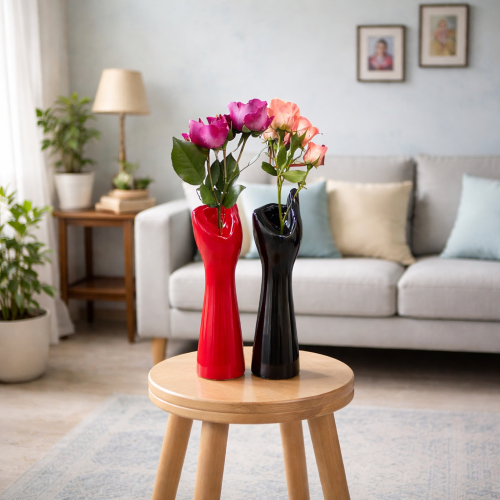
What is aesthetic home decor?
Aesthetic home decor is the practice of selecting and arranging décor items — wall art, showpieces, accents — so that every element feels intentional, cohesive, and personal. It is not about expensive or trendy pieces. It is about choosing décor that reflects your taste, fits your space, and holds its quality over time. At Moolwan, we help design-conscious Indian homeowners achieve this through manufacturer-direct décor built for Indian climates, spaces, and budgets.
What "aesthetic" actually means in the context of home decor
The word "aesthetic" describes a visual identity — a consistent feeling that runs through a space. An aesthetic home is one where the wall art, the showpieces on your shelf, and the accent pieces near your sofa feel like they belong together. They do not have to match perfectly. They have to resonate coherently.
In Indian homes specifically, aesthetic decor means something more layered. It means navigating the tension between contemporary design sensibilities and the warmth of cultural roots — choosing a modern geometric sculpture without making your living room feel like a showroom, or hanging abstract canvas art that still feels at home next to a brass diya. That balance is what separates a well-decorated Indian home from a merely furnished one.
Moolwan is an Indian D2C home décor brand that sells canvas wall art paintings, modern showpieces, and curated gifts designed specifically for Indian homes. What the brand stands for is making aesthetic, durable décor accessible without the retail markup — by manufacturing in-house and selling direct. What the brand sells is the outcome: a home that feels designed, not just filled.
Browse over 200+ modern décor items engineered for Indian apartments and homes — premium finishes, climate-tested materials, manufacturer-direct pricing.
Shop Modern Home Decor at Moolwan →The four pillars of aesthetic home decor
Aesthetic decor is not a single style — it is a set of principles you apply regardless of whether your preference is minimal Japandi, bold maximalism, or warm Indian contemporary. These four pillars define whether a décor decision is aesthetic or accidental.
1. Cohesion — everything speaks the same visual language
Cohesion does not mean matching colours. It means that your canvas wall art, your coffee table showpiece, and your shelf accent share a visual thread — a common material, a shared colour family, or a complementary line quality. A matte ceramic elephant and an abstract canvas in earthy tones create cohesion. A shiny plastic figurine next to a minimalist linen print does not.
2. Scale — the right size for the right place
Moolwan's size framework for Indian homes: Small pieces (10–16 cm) belong on shelves, desks, and bathroom ledges. Medium pieces (16–21 cm) suit showcases and coffee tables. Large pieces (25–34 cm) anchor a focal wall or sideboard. Most décor mistakes in Indian homes are scale mistakes — not taste mistakes. A piece that is too small gets lost; one that is too large dominates the room.
3. Durability — aesthetic value must survive Indian conditions
India's humidity, heat, and dust are hard on décor. An aesthetic choice that chips after one monsoon or fades within two summers is not a good choice. Moolwan's canvas wall art uses 340 GSM cotton canvas with eco-solvent UV-resistant inks and a moisture-resistant coating — engineered to hold colour and structure in Indian homes for years. Ceramic showpieces in the Moolwan range tolerate humidity up to 85% RH and are heat-resistant to 60°C. Resin pieces use 94% purity epoxy, rated for indoor humidity up to 60% RH. These are not marketing claims — they are testable material specifications that define the real cost-per-year of a décor purchase.
4. Intentionality — curated, not collected
The most common aesthetic mistake is over-decorating. An aesthetic home has breathing room. Each piece has been chosen for a reason — not because it was on sale or gifted by an unknown relative. If you cannot name why a piece is in your home, it is probably not adding to your aesthetic. It is subtracting from it.
Aesthetic decor vs. generic decor: what separates them
The table below captures the practical difference between décor that creates a cohesive aesthetic and décor that merely occupies space. This is the checklist a designer would use before making a purchase recommendation for your home.
| Criterion | Aesthetic Decor | Generic Decor |
|---|---|---|
| Visual intent | Chosen to serve a specific mood or theme | Chosen because it was available or discounted |
| Scale fit | Sized for the exact surface or wall it occupies | Placed wherever it fits |
| Material quality | Rated for climate & long-term use (e.g. 340 GSM canvas, 92% clay ceramics) | Mass-produced, often unrated for humidity or heat |
| Cohesion | Shares a visual thread with other pieces in the room | Exists independently, disconnected from the space |
| Longevity | Maintains appearance for 3–5+ years with minimal care | Fades, chips, or looks dated within 12–18 months |
| Value | High cost-per-use; purchased direct from manufacturer | Low upfront cost; high replacement cost |
| Cultural fit (India) | Designed for Indian spaces, light conditions, and humidity | Designed for Western interiors, sold globally |
How to build an aesthetic home decor scheme for an Indian living room
This is a five-step decision framework — not a style prescription. Apply it to any aesthetic direction, from minimal to maximalist, from Scandinavian-influenced to richly Indian.
- Fix one anchor colour. Choose a wall or a dominant furniture piece and identify its dominant colour. Every décor item you add should either match, complement, or intentionally contrast this anchor.
- Choose a material family. Pick one or two primary materials — ceramic and natural wood, or canvas and metal, or resin and stone. Mixing more than two material families in a single room creates visual noise, not aesthetic richness.
- Apply the scale rule. Before buying any piece, decide its exact destination. Shelf or desk → 10–16 cm. Coffee table or showcase → 16–21 cm. Feature wall or sideboard → 25–34 cm.
- Introduce one statement piece. Every aesthetic room has one item that earns attention — a large canvas, a bold showpiece, a distinctive vase. If you cannot identify it, you have not made one yet. Browse modern showpieces for living rooms at Moolwan to find a focal point piece that fits your current palette.
- Edit ruthlessly. Remove anything that does not earn its place against your anchor colour and material family. Aesthetic homes feel curated because they are — usually 30–40% fewer items than the average furnished room.
If you are starting a full room refresh rather than adding to an existing scheme, explore Moolwan's curated living room décor collection — it is organised by style and surface, so you can build a cohesive look without cross-referencing multiple shops.
Which materials work best for aesthetic decor in Indian homes?
Material choice is where most Indian décor purchases go wrong. A piece can look beautiful in a photo and fail within one year in an Indian home — because it was not designed for heat, humidity, or the weight of Indian shelving. Here is how the three primary material categories compare for Indian conditions.
| Material | Best For | Indian Climate Rating | Moolwan Spec |
|---|---|---|---|
| Cotton Canvas (Wall Art) | Living room walls, bedroom accent walls | Excellent | 340 GSM, UV-resistant inks, moisture-resistant coating, 1.5" kiln-dried pine frame |
| Ceramic | Showcases, coffee tables, bathroom shelves | Excellent | 92% clay, heat-resistant to 60°C, humidity-tolerant to 85% RH, 5+ year lifespan |
| Epoxy Resin | Desks, shelves, low-humidity rooms | Good | 94% purity epoxy, 3H pencil hardness, humidity up to 60% RH, 3+ year lifespan |
| Generic plastic / MDF | Temporary or budget use only | Poor | Not rated; warps in humidity, fades with UV exposure |
At Moolwan, all pieces weigh between 150g and 600g — light enough for standard Indian wall-mounting hardware and floating shelves. This is not a trivial specification. Heavier imported décor regularly damages Indian plasterboard walls.
Frequently asked questions about aesthetic home decor
Minimalism is a specific aesthetic — it prioritises empty space, neutral tones, and very few objects. Aesthetic decor is a broader concept: it means any décor scheme that is visually intentional and cohesive. A maximalist Indian home with bold colours and layered textiles can absolutely be aesthetic, as long as it has a clear visual logic.
Start with one wall and one surface — not the whole room. A single large canvas on a feature wall plus two or three showpieces on a coffee table creates instant visual impact. Moolwan's modern showpieces start at ₹150, and canvas wall art is available manufacturer-direct — so you get design quality without retail inflation. Focus on cohesion over quantity: three well-chosen items beat ten random ones every time.
For a standard Indian living room wall (8–10 feet wide), a canvas of 24×36 inches or larger reads as a focal piece. For a smaller accent wall or above a sofa, 18×24 inches works well. Moolwan offers canvas wall art in multiple sizes, and every size page includes a room-scale reference guide so you can visualise fit before buying. The rule of thumb: wall art should occupy 60–75% of the width of the furniture beneath it.
Resin décor is safe in Indian homes with humidity up to 60% RH — which covers most air-conditioned rooms and cooler climates. In high-humidity zones (coastal cities, monsoon regions), ceramic is the better choice as it tolerates up to 85% RH. Moolwan's ceramic showpieces are specifically tested for these conditions, which is why they carry a 5+ year lifespan guarantee.
Moolwan accepts returns within 24 hours of delivery, provided the item is unused and in its original packaging. A 10% restocking fee applies. Refunds are processed within 15 working days. This policy applies across all categories — canvas wall art, showpieces, and gift items — purchased on moolwan.com.
Ready to make your home feel designed — not just furnished?
Moolwan is India's manufacturer-direct home décor brand. Every piece is climate-tested, quality-rated, and priced without a middleman margin.
Browse the Full Moolwan Decor Collection →


