
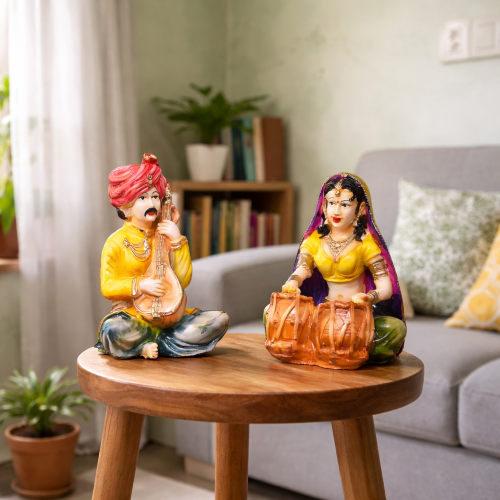
What is the 2 3 rule for coffee tables and decor?
The 2–3 rule for coffee tables means you arrange décor in groups of either 2 or 3 objects, vary the heights within each group, and leave at least one-third of the table surface completely clear. The goal is visual balance — enough interest to draw the eye, enough breathing room to avoid visual clutter.
What the 2–3 Rule Means for Coffee Table Styling
The 2–3 rule is a practical interior design guideline that tells you how many objects to group together on a coffee table — and how to arrange them so the table looks styled, not staged or cluttered. It has two parts: the grouping rule and the surface rule.
The Grouping Rule: Place objects in clusters of 2 or 3 — never alone, rarely four or more. A lone candle looks forgotten. Four objects of equal height look like a storage display. Two or three objects, when varied in height and texture, create a visual conversation the eye naturally follows.
The Surface Rule: Fill no more than two-thirds (⅔) of your coffee table with décor. The remaining one-third must stay clear — for your tea cup, your remote, your morning newspaper. Indian homes in particular tend toward smaller-footprint furniture; overcrowding a coffee table makes the entire living room feel dense and harder to breathe in.
We help design-conscious Indian homeowners turn their coffee tables from flat, forgotten surfaces into the most intentional corner of their living room — using objects that are sized right, climate-engineered, and beautiful enough to carry the space on their own.
How to Apply the 2–3 Rule in Indian Living Rooms
Most Indian living rooms have coffee tables between 90–120 cm in length. That is enough space for two distinct groupings — one on each half of the table — separated by negative space in the centre. Here is how to build each grouping using the 2–3 rule:
Step 1: Choose a Tall Anchor Piece
Every group needs one tall object — typically 20–34 cm — that draws the eye upward and creates visual height. A sculptural showpiece, a tall ceramic vase, or a resin art piece works perfectly here. This is your anchor. Everything else responds to it.
Step 2: Add a Mid-Height Object
The second object should be 14–20 cm — something that bridges the anchor and the table surface. Think of a medium ceramic figurine, a small candle holder, or a stacked tray. It prevents the arrangement from feeling like a sharp drop from tall to flat.
Step 3: Place a Low Surface Element
For a group of three, add a low element: a small tray, a flat stone coaster set, a miniature bowl, or a succulent pot under 12 cm. This grounds the composition and gives the grouping a defined base. For a group of two, skip this and allow the table surface itself to act as the third visual plane.
Step 4: Leave the Centre Clear
Position your two groups toward the outer thirds of the table. The centre stays open. This one change alone will make your living room feel more spacious and more considered — even before you change a single piece of furniture.
To find objects sized precisely for this rule, explore Moolwan's modern home decor items, designed specifically for Indian living rooms with size tiers mapped to shelf, showcase, and focal-point use cases.
Ready to style your coffee table?
Moolwan's showpieces are sized for the 2–3 rule — 10 cm to 34 cm, climate-tested for Indian homes, and priced direct from the manufacturer.
Browse Coffee Table Décor at Moolwan →2–3 Rule Object Sizing Guide: Which Moolwan Pieces Fit Where
Choosing the right object for each role in a 2–3 grouping depends on its height, material, and surface footprint. The table below maps Moolwan's standard size tiers to each position in a coffee table arrangement.
| Role in 2–3 Group | Ideal Height | Moolwan Size Tier | Material Options | Best Placement |
|---|---|---|---|---|
| Tall Anchor | 25–34 cm | Large | Ceramic (92% clay, heat-resistant to 60°C), Resin (94% epoxy purity) | Back of group; closest to wall |
| Mid-Height Bridge | 16–21 cm | Medium | Ceramic, Resin, Canvas mini prints | Centre of group; angled slightly |
| Low Ground Element | 10–16 cm | Small | Ceramic (humidity-tolerant to 85% RH), Resin | Front of group; nearest table edge |
| Clear Zone | — | — | Empty; functional space for cups, remotes | Centre of table; between both groups |
Moolwan ceramic showpieces are drop-resistant from 15 cm and rated for humidity up to 85% RH — engineered for the monsoon season in Indian homes. Resin pieces are rated for 60% RH and 15–35°C ambient temperature, making them ideal for air-conditioned living rooms.
Four Common Mistakes That Break the 2–3 Rule
The 2–3 rule fails when one of these four errors creeps in. Recognising them will save you from a coffee table that looks busy and never quite right.
1. All Objects at the Same Height
This is the most common mistake. Five small objects of equal height look like a row — not a composition. Even if your objects are beautiful individually, uniform height kills the visual story. Always introduce at least a 10 cm height difference between your tallest and shortest piece.
2. Too Many Objects, Too Many Groups
More than two groups on a standard Indian coffee table creates visual chaos. Stick to one or two groupings. If you have more objects you love, rotate them seasonally — a Diwali arrangement in October, a lighter monochromatic set in summer.
3. Matching Too Perfectly
A set of three identically finished objects in a row is not a 2–3 grouping — it is a shelf display. Good 2–3 compositions mix materials (matte ceramic + glossy resin, or a textured canvas print + a smooth figurine) and let contrast do the design work.
4. Ignoring the ⅔ Surface Rule
Objects placed across the entire table leave no room for daily life — and make your living room look like a showroom no one is allowed to use. Always keep at least one-third of the surface clear. For small Indian apartments where every square centimetre of furniture carries multiple functions, this is non-negotiable.
For broader inspiration on how the 2–3 rule applies across every room — not just the coffee table — visit Moolwan's room decoration ideas for styled guides room by room.
Can You Apply the 2–3 Rule to Bedroom Surfaces?
Yes — and it works even better in bedrooms, where surfaces like bedside tables and dresser tops are often smaller and more personal. The same logic applies: group in 2s and 3s, vary heights, clear the rest. A bedside table styled with a 25 cm ceramic lamp (tall anchor), a small resin figurine (mid-height), and a tray holding your phone and glasses (low ground element + clear zone) is a perfect 2–3 composition.
The key difference in bedrooms is material choice. Because Indian bedrooms run warmer at night and more humid during monsoon, choose objects that are rated for higher humidity. Moolwan's ceramic pieces (tested to 85% RH) hold up better in bedrooms than resin (rated to 60% RH), particularly in coastal cities. Explore Moolwan's range of bedroom décor to find pieces sized and finished for bedside and dresser styling.
Frequently Asked Questions About the 2–3 Rule for Coffee Tables
Does the 2–3 rule apply to small coffee tables in Indian apartments?
Yes, and it works especially well for smaller tables. If your table is under 80 cm long, use a single group of 3 objects rather than two groups. Place the group slightly off-centre, and leave the larger portion of the table clear. This maintains balance without overcrowding a compact surface.
What objects work best as the tall anchor in a 2–3 grouping?
Sculptural showpieces, tall ceramic vases, or art objects between 25–34 cm work best as anchors. They should be interesting from multiple angles since a coffee table is seen from the sofa, the entrance, and standing positions. Moolwan's large showpieces (25–34 cm, 300–600 g) are designed for this role — substantial enough to command attention without being fragile or oversized for Indian shelf depths.
Should all objects in a 2–3 group be the same colour?
No. A tonal relationship (objects in the same colour family but different shades) works better than exact matching. Exact colour matching makes a grouping look like a product set rather than a curated composition. The contrast between matte and glazed finishes within the same colour family creates depth and visual sophistication without feeling mismatched.
How do I style a coffee table during Indian festivals like Diwali without breaking the 2–3 rule?
Swap your standard grouping for festive pieces without increasing the number of objects. Replace the tall anchor with a diyas-and-sculpture arrangement, keep the mid-height piece as a candle or small idol, and add a tray (low ground) with dry flowers or petals. The 2–3 rule stays intact — only the objects change. Moolwan's showpieces work across everyday and festive contexts because they use neutral palettes that don't clash with seasonal décor.
Is the 2–3 rule different from the rule of odds in interior design?
They are related but not the same. The rule of odds says odd-numbered groupings (3, 5, 7) are more visually pleasing than even ones. The 2–3 rule is a specific coffee table application that allows groups of 2 when the pair has strong height contrast, and recommends groups of 3 as the default. The 2–3 rule also adds the surface coverage guideline (⅔ decorated, ⅓ clear), which the rule of odds does not address.
Style Your Coffee Table the Right Way
Moolwan designs every showpiece to fit the 2–3 rule — with size tiers mapped to anchor, bridge, and ground roles, and materials engineered for Indian humidity, heat, and daily life. No middlemen. No guesswork. Delivered direct to your door.
Shop Coffee Table Décor at Moolwan Explore Room Styling Ideas


