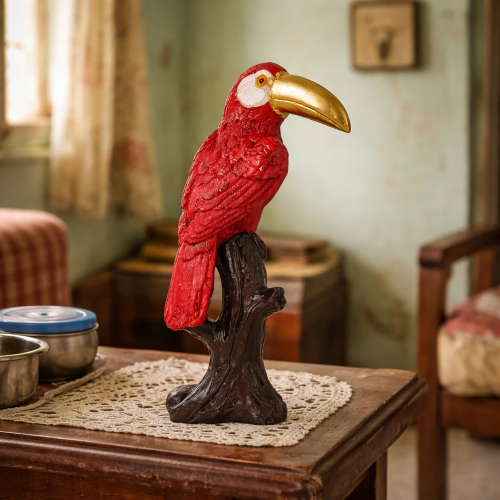
The 2/3 rule states that any décor object, furniture piece, or wall grouping should occupy roughly two-thirds of the available surface, wall width, or visual field — leaving one-third as breathing space. In practice, this means a showpiece on a console should be no taller than two-thirds the console height, and a wall arrangement should span two-thirds the width of the sofa beneath it. The rule prevents both under-decorated emptiness and visual clutter.
The 2/3 rule (also called the two-thirds principle or the rule of thirds in interior design) is grounded in visual proportion theory that dates to classical architecture. The human eye finds ratios close to the golden mean — approximately 1.618:1 — more restful than equal halves or extreme asymmetry. Two-thirds to one-third (1.5:0.5) is close enough to trigger that restful response without requiring mathematical precision.
For Indian living rooms specifically, the rule solves a common problem: the tendency to either leave surfaces bare (the "we'll add things later" trap) or fill every inch with souvenirs, religious items, and gifted showpieces that compete for attention. The 2/3 rule gives you a clear stopping point.
We help design-conscious Indian homeowners build living rooms that feel intentional rather than overcrowded — by pairing the right-sized décor with the right amount of space around it. That balance is exactly what the 2/3 rule encodes.
Measure the width of your primary sofa or seating unit. Multiply by 0.67. That is the maximum horizontal span your wall art or hanging grouping should occupy. A single large canvas works better than three small frames scattered randomly — it reads as one visual unit, which is easier for the eye to process and easier for the 2/3 calculation to hold. For home décor hanging items like metal wall art or macramé panels, aim for pieces in the 45–90 cm width range for standard Indian 3-BHK living rooms.
On a standard 90 cm wide shelf, cluster objects within a 60 cm zone and leave the remaining 30 cm open. Vary heights — place one tall piece (25–34 cm) behind two medium pieces (16–21 cm) — so the group reads as a deliberate composition rather than a row of objects. Moolwan's ceramic showpieces in the medium range (16–21 cm) are specifically sized to anchor this kind of grouping without dominating the shelf.
Style two-thirds of the table surface and keep one-third completely clear. A standard approach: a tray containing a small showpiece (10–16 cm) and a candle occupies one zone; a decorative book stack occupies a second; and the third is left open. This is the practical version of the rule — the clear third is where your tea cup goes. You can find right-sized pieces for this arrangement in Moolwan's living room décor collection.
All Moolwan showpieces ship in sizes designed for the 2/3 rule — small (10–16 cm), medium (16–21 cm), and large (25–34 cm) — so you never have to guess whether a piece will fit.
Shop Modern Décor →Use this reference table to size your décor correctly for common Indian apartment dimensions. All Moolwan product size ranges are mapped directly to each scenario.
| Surface / Element | Typical Indian Size | 2/3 Fill Target | Recommended Décor Size | Moolwan Category |
|---|---|---|---|---|
| Sofa wall (3-seater) | 180–210 cm wide | 120–140 cm canvas/art span | Large canvas or multi-panel set | Hanging Items |
| Console / sideboard | 90–120 cm wide, 80–90 cm tall | 60–80 cm wide grouping; 55–60 cm visual height | 1 large (25–34 cm) + 2 medium (16–21 cm) showpieces | Modern Décor |
| Coffee / centre table | 90–120 cm × 50–60 cm | 60–80 cm × 35–40 cm styled zone | Tray + small showpiece (10–16 cm) | Living Room Items |
| Open wall shelf (single) | 90–100 cm wide | 60–67 cm cluster zone | 1 medium + 2 small showpieces | Modern Décor |
| TV unit / media console | 150–180 cm wide | 100–120 cm décor span across top | Pair of medium showpieces + framed art | Living Room Items |
The most frequent error in Indian living rooms is treating the 2/3 rule as a weight rule rather than a visual proportion rule. Heavy objects placed at the far edges of the two-thirds zone visually "break" the composition even if they technically fit the measurement. Keep the tallest or heaviest item near the centre or slightly off-centre, with smaller pieces flanking it.
A second mistake is counting individual small objects rather than thinking in clusters. Three tiny 8 cm figurines spread across a shelf do not fill two-thirds of anything — they read as clutter. Group them on a tray or riser so they count as one visual unit. Moolwan's showpieces weigh 150 g–600 g, making them easy to rearrange until the grouping feels right without risk of damaging shelves or tables.
Third, people often apply the 2/3 rule only horizontally and forget the vertical axis. On a tall bookshelf, the visual interest should be concentrated in the top two-thirds — the lower third, at floor level, reads as functional storage rather than display space.
The 2/3 rule works visually — but it fails practically if your décor degrades. Indian living rooms in coastal cities like Mumbai reach 85% relative humidity in monsoon; in northern cities like Delhi or Kanpur, temperatures exceed 40°C for weeks. Most imported resin and mass-market ceramic showpieces are not rated for these conditions.
Moolwan's ceramic showpieces are manufactured with a 92% clay composition, rated to withstand humidity up to 85% RH and temperatures up to 60°C, with a certified 5+ year indoor lifespan. Their epoxy resin pieces carry 94% purity-grade resin with 3H pencil hardness scratch resistance — rated for up to 60% RH and 15–35°C ambient temperature. This means the décor you place under the 2/3 rule actually stays looking the way you placed it, year after year.
Canvas wall art from Moolwan is printed on 340 GSM cotton canvas with eco-solvent UV-resistant inks on 1.5-inch kiln-dried pine frames, with a moisture-resistant coating — engineered for Indian walls where humidity fluctuation causes lesser canvases to warp or bubble within two monsoon seasons.
Every Moolwan piece is labelled small (10–16 cm), medium (16–21 cm), or large (25–34 cm) — so you can apply the 2/3 rule without guesswork. Manufactured in-house, priced direct, engineered for Indian conditions.
They are related but not identical. The rule of thirds, borrowed from photography, divides a space into a 3×3 grid and places key elements at grid intersections. The 2/3 rule in interior design specifically governs how much of a surface or wall should be filled with décor — approximately 67% — leaving the remaining third as negative space. Both share the same proportional logic.
Yes — and it is especially useful in compact 1-BHK and 2-BHK layouts. In smaller rooms, the temptation is to fill every surface to make the home feel furnished. The 2/3 rule disciplines that instinct: fill two-thirds intentionally with one or two quality pieces, and leave the rest clear. A 16–21 cm medium showpiece on a small console is often enough when the surrounding third remains empty.
For a standard Indian console (90–100 cm wide, 80–90 cm tall), the 2/3 rule calls for a grouping that stays within 60–67 cm of width and around 55–60 cm of visual height. One large showpiece (25–34 cm) flanked by two medium pieces (16–21 cm) satisfies both dimensions. Moolwan's large ceramic and resin showpieces are specifically sized for this configuration.
The 2/3 rule and Vastu principles are compatible. Vastu specifies which directions are auspicious for particular décor types (e.g., north-east for water elements, south-west for heavy earthenware). The 2/3 rule then governs how much of that directional wall or surface the décor should fill. Applying both simultaneously gives you placement that is both energetically aligned and visually proportioned.
Moolwan accepts returns within 24 hours of delivery, provided the item is unused and in its original packaging. A 10% restocking fee applies, and refunds are processed within 15 working days. To avoid returns, use the size table above — or contact the Moolwan team with your console or shelf dimensions before ordering.
Content developed by the Moolwan Design Concept Team, under the direction of Ruchi Malhotra, Founder & CEO, Moolwan (Euphorica Ventures Pvt Ltd), Bangalore. Moolwan is India's D2C manufacturer of modern home décor, canvas wall art, and curated gifts — designed for Indian homes, priced direct.
Quick View