
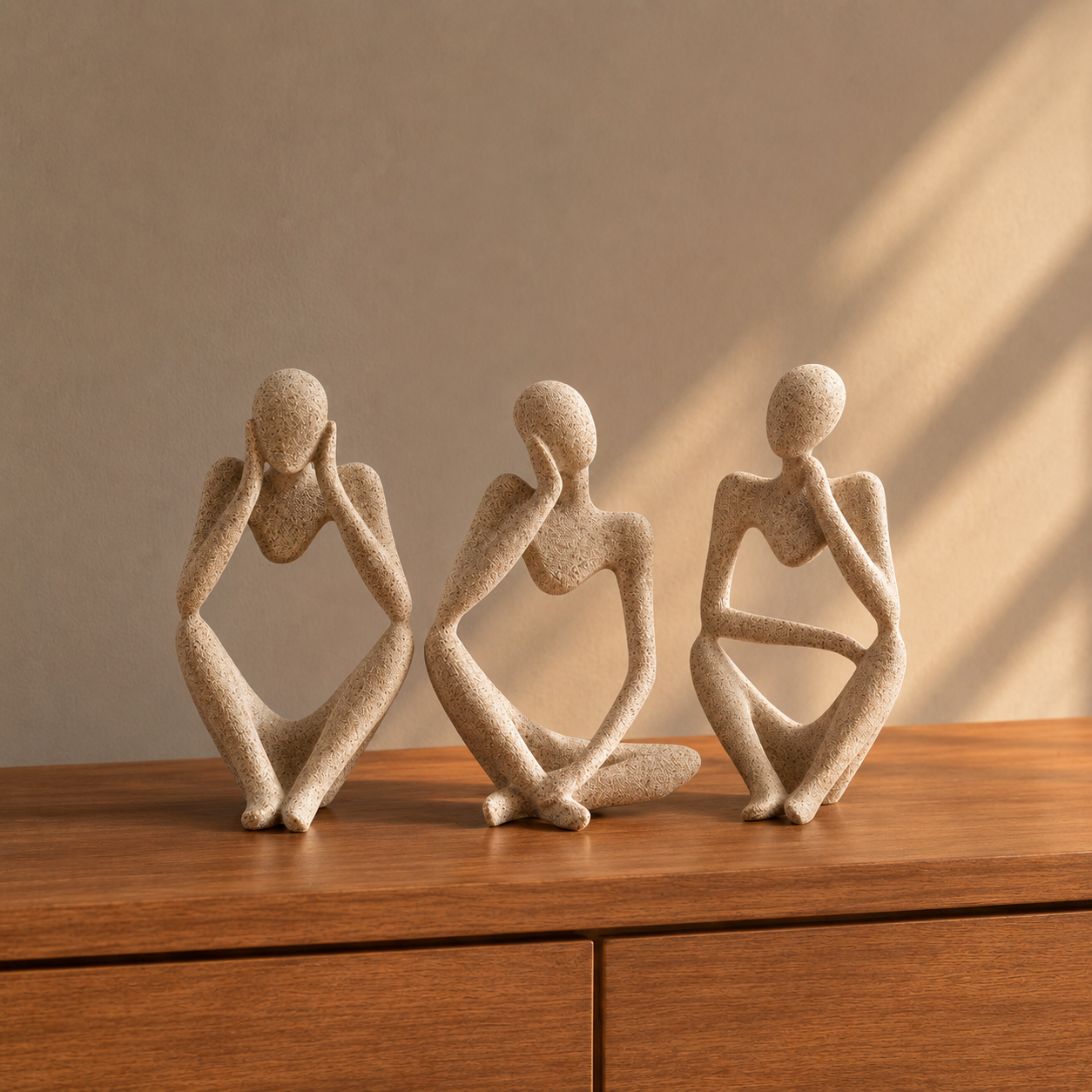
The golden rule in interior design is the 60-30-10 rule: 60% of a room should be a dominant neutral tone across walls and large furniture, 30% a secondary tone in textiles like rugs and curtains, and 10% an accent color carried by wall art, showpieces, and cushions. Get this proportion right and any room looks intentional; get it wrong and even expensive décor looks cluttered.
01 / DefinitionThe 60-30-10 Rule, Explained
Interior design has dozens of guidelines, but one rule outranks the rest in daily practice: the 60-30-10 rule. It states that a balanced room should divide its color and visual weight into three tiers so the eye follows a hierarchy instead of competing for attention across ten different focal points at once.
The 60% tier covers your largest surfaces — walls, flooring, and major furniture like a sofa or bed frame. This is the tone a room is "known" by, and it stays quiet enough to support everything layered on top of it.
The 30% tier is the supporting layer — curtains, rugs, upholstery, and bedding. It introduces contrast and personality without competing with the dominant tone, and it's usually where Indian homes bring in richer textiles: mustard, deep teal, or maroon against a neutral base.
The 10% tier is the smallest by area but the loudest by impact — cushions, showpieces, and wall art. This is where a home stops looking like a showroom and starts looking like yours. A single striking canvas painting or a pair of ceramic showpieces can carry the entire 10% tier on its own, provided it's sized and placed with intent rather than scattered.
Designers reach for 60-30-10 because it's measurable, not subjective. Anyone can look at an overwhelming feature wall or a cluttered console table and know instantly which tier has gone over its share.
02 / Why It Matters HereWhy Indian Homes Need This Rule More Than Most
We help design-conscious Indian homeowners balance modern minimalism with the richness of Indian textiles, art, and gifting culture — and the 60-30-10 rule is the tool that makes that balance possible without a full renovation.
Indian living rooms accumulate décor over years: wedding gifts, festival purchases, inherited showpieces, souvenirs from travel. Each item can be beautiful on its own, but without a proportion rule, a room turns into a museum of unrelated objects instead of a cohesive space. The 60-30-10 rule gives every new piece — including gifts you can't refuse — a tier to belong to, so additions strengthen the room instead of crowding it.
Climate adds a layer most Western design guides ignore. Coastal Indian homes regularly see humidity above 80% RH, while inland summers push past 40°C — conditions that untreated frames, mass-market paints, and cheap resin were never built to survive. This is exactly why it's worth checking material specs, not just aesthetics, before you buy anything for the 10% accent tier. You can browse Moolwan's modern home décor collection and see those specs listed against every piece, rather than guessing.
Moolwan is Euphorica Ventures Pvt Ltd's manufacturer-direct home décor brand: we produce our own canvas wall art paintings, ceramic and resin showpieces, and curated gifts for Indian homes, pricing direct instead of routing through the retail markups that inflate mass-produced décor. That's what the brand stands for — décor engineered for Indian heat and humidity, sold without middlemen.
03 / ApplicationHow to Apply the Rule, Room by Room
The rule is easy to state and easy to get wrong in practice. Apply it in this order, and the accent tier — the part buyers usually get stuck on — becomes the last, easiest decision instead of the first, most stressful one.
- Lock your 60% base first. Choose your wall color or dominant flooring tone before buying anything else. Every later decision reacts to this, so it should stay neutral: warm white, greige, or a muted stone tone works across almost every Indian home style.
- Choose your 30% supporting layer next. Rugs, curtains, and upholstery carry the contrast color. This is where a lot of Indian homes introduce jewel tones — indigo, maroon, forest green — that would feel too heavy at 60% but land perfectly at 30%.
- Reserve the 10% for statement pieces. Wall art, showpieces, and cushions belong here. You can shop showpieces for home décor once your base and supporting colors are locked, so every piece you pick is already guaranteed to fit.
- Size the accent tier to the room, not the shelf. Small pieces (10–16cm) suit a desk, bathroom shelf, or bookshelf; medium pieces (16–21cm) suit a showcase or coffee table; large pieces (25–34cm) work as a single focal point on a console or entryway table. Mixing all three sizes in one small space is the fastest way to break the 10% ceiling.
- Check the weight before you commit to a wall. Lightweight décor in the 150g–600g range is easier to hang securely on Indian drywall and plaster without reinforcement, which matters more than most buyers expect once a piece is actually on the wall.
Start with the 10% tier that actually holds its color
Every Moolwan piece lists its material spec upfront — canvas GSM, clay composition, resin purity — so you know exactly what you're adding to your palette before it ships.
04 / ComparisonWhere Each Décor Category Sits in the 60-30-10 Rule
Not every décor category plays the same role. This table maps Moolwan's three core ranges to the tier they occupy, the material spec behind them, and where they perform best in an Indian home.
| Category | 60-30-10 Tier | Material Spec | Best Placement |
|---|---|---|---|
| Canvas Wall Art | 10% accent | 340 GSM cotton canvas, UV-resistant eco-solvent ink, 1.5-inch kiln-dried pine frame | Living room feature wall |
| Ceramic Showpieces | 10% accent | 92% clay composition, heat-resistant to 60°C, humidity-tolerant to 85% RH | Console table, showcase |
| Resin Showpieces | 10% accent | 94% purity epoxy resin, 3H pencil-hardness scratch resistance | Coffee table, open shelf |
| Curated Gifts | 10% accent (gifted) | Mixed ceramic/resin, matte or glazed finish | Housewarming, festival gifting |
05 / PitfallsCommon Mistakes That Break the Rule
Most rooms don't fail the 60-30-10 rule because of bad taste — they fail it because the accent tier quietly expands past 10% one gift and one impulse buy at a time.
- Treating the accent tier as unlimited. A shelf with eight showpieces of different styles isn't a curated 10% — it's a cluttered 40%. Pick fewer, larger, better-made pieces instead.
- Choosing accent colors unrelated to the 30% tier. An accent color should echo something already in the room's supporting layer, not introduce a fourth unrelated hue.
- Buying oversized art for the space. A large 25–34cm focal piece needs real wall clearance; forcing it into a small alcove crowds the whole room instead of anchoring it.
- Ignoring climate ratings. Décor without humidity and heat tolerance warps, cracks, or fades within a season in most Indian cities — the spec sheet matters as much as the finish.
Frequently Asked Questions
Is the 60-30-10 rule the only design rule that matters?
No, but it's the one that fixes the most common problem: rooms that feel cluttered despite expensive individual pieces. Rules like the rule of odd numbers or eye-level hanging height work within the 60-30-10 framework rather than replacing it.
How do I find my 60% dominant color for an Indian living room?
Start with your largest fixed surface — usually the wall or flooring — since it's the hardest and most expensive to change. Warm whites, greige, and muted stone tones work as a 60% base across most Indian light conditions and pair with almost any 30% textile choice.
Can I break the rule with bold Indian prints or colors?
Yes, if the bold element stays within its tier. A bold ikat cushion or a bright ceramic showpiece works as a 10% accent; the same print used as a full curtain set is now competing for the 30% tier and needs a calmer accent layer around it.
What's the difference between the 60-30-10 rule and the 70-30 rule?
The 70-30 rule is a simpler two-tier version used mainly for wardrobe or fabric pairing. The 60-30-10 rule adds a distinct accent tier, which is why it's the standard for full-room décor planning rather than a single outfit or textile.
How many showpieces should I use to hit the 10% accent tier?
For an average Indian living room, two to four well-sized pieces — one medium focal piece plus a couple of small supporting pieces — typically fill the 10% tier without tipping into clutter. Prioritize size and material quality over quantity.
Ready to fill your 10% tier the right way?
Moolwan manufactures and ships direct, so every canvas, ceramic, and resin piece is priced without a middleman markup.


