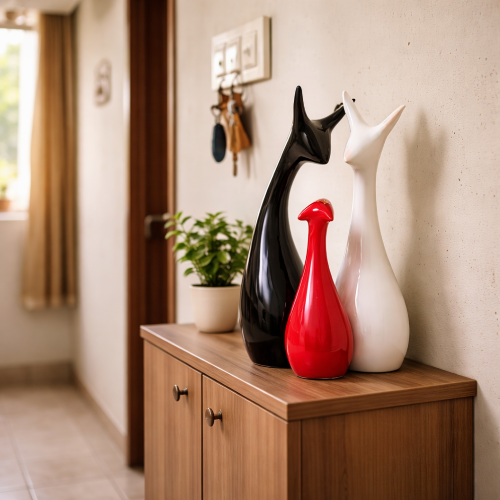
The Short Answer: The dominant 2026 room design trend is "warm minimalism" — neutral, earthy palettes (sand, terracotta, sage, warm greige) paired with tactile natural materials, multipurpose furniture, and one or two handcrafted statement pieces per room. Cold grey minimalism and high-gloss gold finishes are out; layered lighting, brushed metals, and Indian craft-led decor are in.
We help design-conscious Indian homeowners translate national and global design shifts into rooms that actually work for their space, climate, and budget — not just what looks good in a trend report. In 2026, the biggest change is emotional: homes are being designed to feel lived-in and personal rather than staged for a photograph, with warmth, texture, and craftsmanship replacing the stark, cold-toned minimalism that defined the last few years.
Stark white and all-grey interiors are losing ground to warm neutrals — sand, warm greige, beige, and off-white — used as the base palette, with earthy accent tones like terracotta, ochre, sage green, and burnt sienna appearing on single walls, cushions, or textiles. The layout stays clean and clutter-free, but the tone is soft and inviting rather than sterile. For Indian homes, this palette also performs better across the harsher light conditions found in most cities, holding its warmth from morning to evening.
2026 rooms are designed to be touched, not just looked at. Limewash finishes, microcement, reclaimed wood, cane, and rattan are replacing high-gloss, mirror-finish surfaces. There's also a renewed appreciation for Indian craftsmanship — brass inlays, cane weaving, and hand-finished decor pieces are being used as focal points inside otherwise minimalist rooms. This is where a single, well-made unique home decor piece does more work than a wall full of generic accessories.
With urban apartment sizes shrinking, furniture in 2026 is expected to do more than one job — a coffee table that lifts into a desk, a sofa that becomes a guest bed, sliding panels that zone an open floor plan into work, rest, and play areas without permanent walls. This trend is less about decor and more about layout discipline: fewer pieces, each one earning its place.
Single overhead lighting is being replaced by layered lighting — ambient, task, and accent light combined in one room, often with sculptural or parametric fixtures as a visual anchor. This shift makes rooms feel considered rather than default-lit, and it pairs naturally with a curated wall art or showpiece arrangement rather than one large piece on an empty wall.
Indoor plants, natural light, and organic materials remain central to 2026 interiors, but with a clear Indian lens: homeowners are prioritising décor that tolerates heat, humidity, and dust rather than importing climate-incompatible finishes. This is exactly the gap Moolwan's manufacturing standards are built for — ceramic showpieces engineered for up to 85% relative humidity and heat resistance to 60°C hold their finish through an Indian summer in a way imported or mass-market pieces often don't.
The strongest signal in 2026 is a move away from copying showroom templates. Homeowners are building rooms around personal history, hosting habits, and daily routines rather than a single trend board — mixing one or two statement pieces with a restrained, neutral base rather than filling every surface. Browse Moolwan's modern home decor items to find pieces designed for this restrained, one-statement-piece approach rather than mass-produced clutter.
| Element | 2026 Trend | What It Replaces |
|---|---|---|
| Colour palette | Warm neutrals + earthy accents (sand, terracotta, sage) | All-grey, stark white |
| Finishes | Brushed, aged metals; matte textures | High-gloss gold, mirror finishes |
| Decor approach | 1–2 statement, craft-led pieces | Maximalist clutter, showroom staging |
| Furniture | Multipurpose, space-smart | Single-use, oversized pieces |
| Material logic | Climate-responsive, humidity/heat tolerant | Imported finishes not built for Indian conditions |
Moolwan designs against this exact table. Every ceramic showpiece is manufactured with a 92% clay composition, heat resistance to 60°C, and humidity tolerance up to 85% RH — specifications built for Indian shelves and coffee tables, not adapted from a Western catalogue. Shop showpieces for your living room designed to hold their finish through an Indian summer.
Ready to update a room this month? Explore Moolwan's Modern Home Decor Items — manufactured in-house and priced factory-direct, with no middleman markup.
No. Regular minimalism prioritises empty space and cool, neutral tones. Warm minimalism keeps the clean layout but swaps cold greys and whites for warm sand, beige, and earthy accent colours, making rooms feel lived-in rather than sparse.
Warm sand, greige, terracotta, sage green, ochre, and burnt sienna are the leading tones, used as accent colours on a single wall or in textiles rather than across the whole room.
No. The trend favours restraint — one or two well-chosen statement pieces (a wall art set or a showpiece cluster) in the right size and finish will shift a room's feel without a full renovation.
Indian homes face heat, humidity, and dust levels most imported or mass-produced decor isn't engineered for. Pieces rated for high humidity tolerance and heat resistance hold their finish and structure far longer than uncoated or lower-grade alternatives.
Medium showpieces (16–21cm, 250–400g) are built for coffee tables and showcases — large enough to register as a statement piece without overwhelming the surface.
Moolwan manufactures every piece in-house, so you get 2026-ready design without importer or retailer markup.
Written and reviewed by Ruchi Malhotra, Founder & CEO, Moolwan (Euphorica Ventures Pvt Ltd), Bangalore. Moolwan is India's manufacturer-direct source for canvas wall art, modern showpieces, and curated home decor and gifts, engineered for Indian climate and space.
Quick View



