
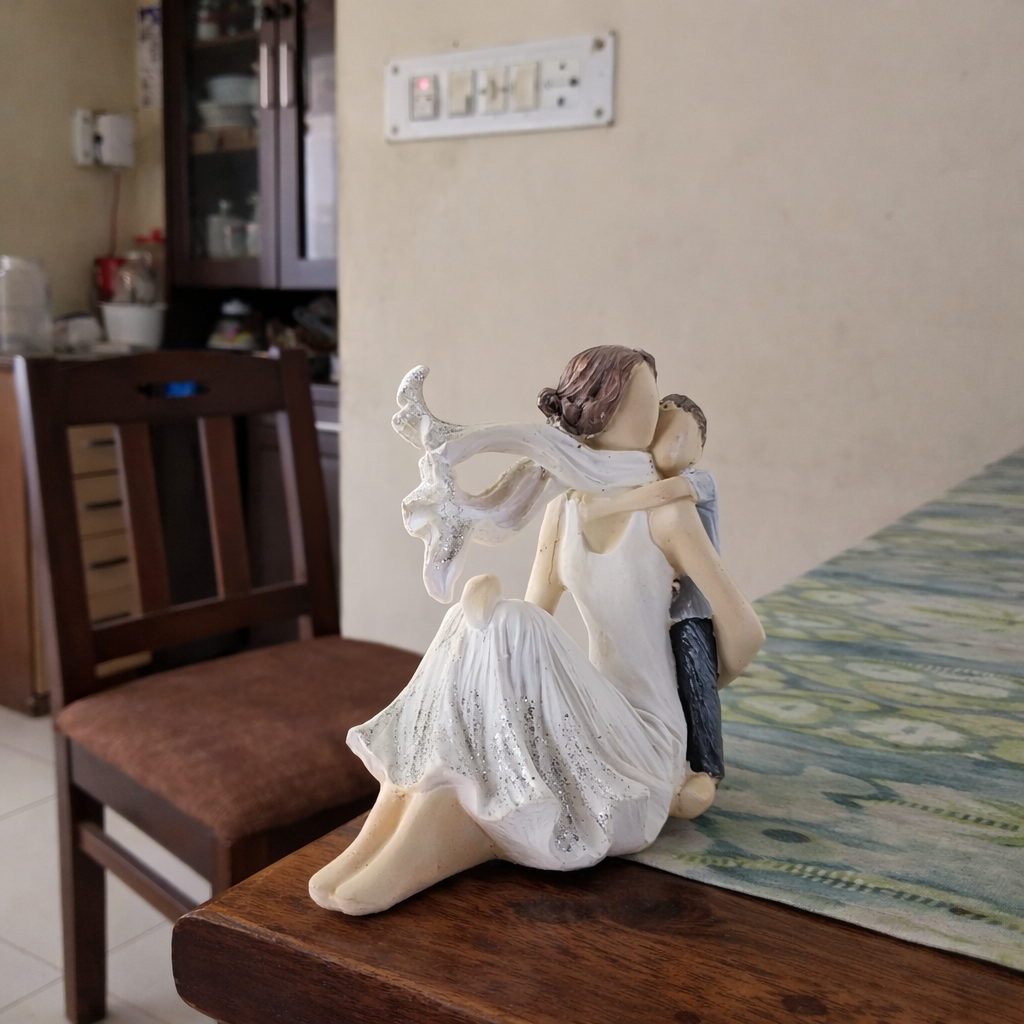
Vintage decor refers to objects, furnishings, and styling that draw from a past era — typically 20 to 100 years old — and carry a sense of craftsmanship, patina, and lived-in character. In Indian homes, it blends heirloom artisan aesthetics with modern function: think hand-finished finishes, earthy tones, textured surfaces, and pieces that tell a story rather than simply fill a corner.
What "vintage" actually means in home décor
The word vintage comes from the French vendange — originally used to describe the finest harvest of a wine year. Applied to décor, it signals something made in, or faithfully evocative of, a specific past period: 1920s Art Deco, 1950s mid-century modern, 1970s bohemian, or any era defined by a distinctive visual language. Crucially, vintage is not the same as antique (which is 100+ years old) and it is not the same as "retro" (which is modern production mimicking an old look).
Vintage decor carries three defining traits: authentic materials, visible craft marks, and a narrative. A factory-pressed resin ornament with a distressed print is retro. A hand-painted ceramic with uneven glaze and deliberate imperfections is vintage in spirit — even if made today — because it inherits the making philosophy of another era.
For Indian homes, vintage decor holds a particular pull. Indian craft traditions — dhokra metalwork, blue pottery, carved teak, hand-block-printed textiles — have been making "vintage" objects for centuries. The aesthetic is not borrowed from the West; it is native to our shelves, our courtyards, and our grandmothers' living rooms.
Vintage vs. Antique vs. Retro: what is the difference?
These three terms are used interchangeably in most shopping conversations but they are not the same. Knowing the difference protects you from paying antique prices for retro products — and helps you describe exactly what you are looking for.
| Term | Age range | Origin | Key quality signal | Indian equivalent |
|---|---|---|---|---|
| Antique | 100+ years old | Original era | Provenance, rarity, documented history | Pre-Independence furniture, colonial brass |
| Vintage | 20–99 years old | Original era or faithful reproduction | Patina, craft marks, era-specific style | Mid-century Rajasthani pottery, 1970s teak carvings |
| Retro | Modern production | New, styled to look old | Visual mimicry — no authentic aging | Mass-produced "distressed" pieces from online catalogues |
| Vintage-inspired | Modern production | New, made with old-era craft philosophy | Hand-finishing, natural materials, artisan process | Moolwan's ceramic and resin showpieces — made in-house, hand-detailed |
At Moolwan, our pieces sit in the fourth category: vintage-inspired. We manufacture in-house in Bangalore and engineer every piece to carry the warmth and soul of vintage craft without the fragility or impracticality that comes with true antiques in an Indian climate.
Bring vintage character home — without the antique-store hunt
We help design-conscious Indian homeowners find décor that carries genuine craft character, fits Indian spaces, and holds up to Indian climate — at direct-from-manufacturer prices.
Browse Moolwan's modern home décor collection →What makes vintage decor work in Indian living rooms?
Indian living rooms are not blank canvases. They carry strong ambient light, seasonal humidity, layered colour from sarees and cushion covers, and often a wall with family photographs. Vintage décor that works in a European farmhouse may look cluttered or culturally mismatched in an Indian home. The right vintage-inspired piece for your space meets three criteria:
- Material compatibility with Indian climate: Objects must tolerate humidity swings from 40% RH in winter to 85% RH during monsoon. Moolwan's ceramic showpieces are tested to humidity tolerance of 85% RH with a 92% clay composition — built specifically for this reason.
- Scale appropriate for Indian rooms: Most Indian apartments have compact shelves and feature walls. A vintage piece should anchor the space, not overwhelm it. Our size guidance: small (10–16 cm) for shelves and desktops, medium (16–21 cm) for coffee tables and showcases, large (25–34 cm) for focal walls.
- Cultural resonance: The best vintage pieces for Indian homes pull from Indian craft vocabulary — terracotta tones, hand-applied textures, earthy neutrals — rather than transplanting European farmhouse aesthetics into your drawing room.
If you are styling a drawing room from scratch, Moolwan's curated decorative items for rooms are arranged to help you build a coherent vintage-inspired look without the guesswork — trusted by 3,000+ customers across India.
How to identify quality in vintage-inspired décor before you buy
Look for hand-finishing marks
Machine-produced "vintage" pieces are perfectly uniform — which is exactly what vintage should not be. Authentic vintage-inspired craft has micro-variations in glaze, texture, or colour application. On Moolwan ceramics, each piece has hand-applied matte or glazed finishes with deliberate variation — these are quality signals, not defects.
Check material specifications against your climate
Before purchasing any showpiece or decorative object, ask for material data. Moolwan's resin pieces use 94% purity epoxy resin with 3H pencil hardness (scratch-resistant) and a rated indoor lifespan of 3+ years at temperatures between 15–35°C. Our ceramics carry heat resistance up to 60°C and a 5+ year lifespan. These are not marketing claims — they are engineering specifications that matter in an Indian home.
Ask about manufacturing origin
Most "vintage décor" sold in India is imported in bulk and marked up through a distribution chain. Moolwan manufactures in-house, which means every piece is quality-checked at source and priced without distributor margins. That is the core of what we stand for: beautiful, durable, meaningful décor — without inflated middleman pricing.
For gifting occasions like Diwali, housewarmings, or festive celebrations, vintage-inspired home décor is among the most personal and lasting choices you can make. Explore Moolwan's festival home décor gift collection — curated for Indian festivals and designed to travel and arrive intact.
Moolwan's vintage-inspired pieces: what sets them apart
Moolwan is a D2C home décor brand founded in Bangalore in 2021 under Euphorica Ventures Pvt Ltd. We sell directly to Indian homeowners — no showroom rent, no wholesaler margin. Every piece is designed by our in-house team and manufactured with the following verified specifications:
| Product category | Material specification | Climate rating | Lifespan |
|---|---|---|---|
| Canvas Wall Art | 340 GSM cotton canvas, eco-solvent UV-resistant inks, 1.5-inch kiln-dried pine frame, moisture-resistant coating | Humidity-resistant, UV-stable | Long-term indoor display |
| Ceramic Showpieces | 92% clay composition, matte or glazed finish | Heat-resistant to 60°C; humidity up to 85% RH | 5+ years; 15 cm drop-resistant |
| Resin Decoratives | 94% purity epoxy resin, 3H pencil hardness | 15–35°C; humidity up to 60% RH | 3+ years indoor |
All pieces weigh between 150 g and 600 g — lightweight for Indian walls and shelves that are not always built for heavy fittings. Returns are accepted within 24 hours of delivery (unused, original packaging), with refunds processed within 15 working days.
If you are building out a vintage-inspired room corner or accent wall, Moolwan's modern home décor collection includes sizing options across small, medium, and large formats — so you can layer without overwhelming your space.
Frequently asked questions about vintage decor
Is vintage decor the same as antique decor?
No. Antique decor refers to objects that are 100 or more years old with documented provenance. Vintage decor spans 20 to 99 years, or refers to newly made pieces that faithfully recreate the craft philosophy of a past era. In Indian homes, most what is sold as "vintage" is either reproduction or vintage-inspired — which is perfectly valid as long as the material quality is genuine.
Which décor styles are considered vintage in India?
Indian vintage décor pulls from several traditions: Rajasthani hand-painted pottery, dhokra brass casting, hand-block-printed textiles, colonial teak furniture, and mid-century ceramic craftsmanship. Contemporary vintage-inspired Indian décor blends earthy tones, hand-applied textures, and artisan finishing with modern proportions — pieces that feel rooted without looking dated.
Can vintage decor work in a modern apartment?
Yes — and this tension between old and new is actually the appeal. One or two vintage-inspired showpieces on an otherwise clean, modern shelf creates a focal point that mass-produced matching sets cannot. The key is scale: choose pieces sized for your actual shelf depth and room proportion. In compact Indian apartments, medium-format pieces (16–21 cm) usually anchor a space without crowding it.
How do I know if a vintage-inspired piece will last in Indian humidity?
Ask for a material specification before buying. Look for humidity ratings of at least 75–85% RH for ceramics and 60% RH for resin pieces — these cover Indian monsoon conditions. Moolwan publishes these specifications openly: ceramics rated to 85% RH, resin rated to 60% RH, canvas art with a moisture-resistant coating. If a brand cannot supply material data, that is a red flag for durability.
Is vintage-inspired décor a good gift for Indian festivals?
It is one of the strongest gifting categories for Indian festivals because it feels personal, lasting, and culturally resonant — unlike consumables or generic corporate gifts. Vintage-inspired ceramics and hand-finished showpieces carry warmth that recipients notice. For Diwali, housewarmings, or weddings, they sit naturally in any Indian home regardless of the recipient's existing style.
Ready to style your home with pieces that carry real character?
Moolwan manufactures in-house, prices direct, and builds every piece to the specifications Indian homes demand. Browse the collections and find décor that earns its place on your shelf.
Shop modern home décor Explore drawing room pieces


