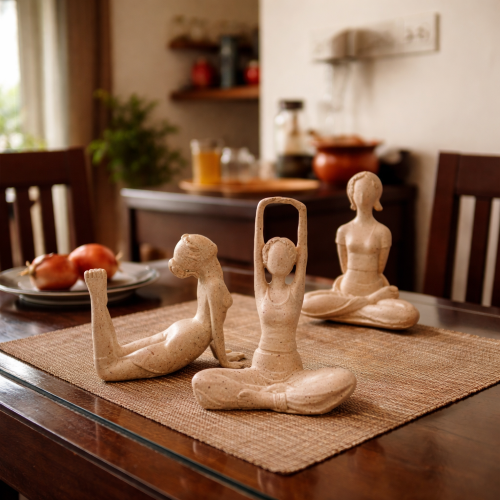
The Short Answer: Vastu bedrooms should avoid mirrors facing the bed, water-themed décor, sharp or pointed objects, heavy overhead storage, dark heavy furniture, and electronics near the headboard. These disrupt the calm, grounded energy a bedroom needs and are commonly flagged by Vastu consultants across Indian homes.
We help design-conscious Indian homeowners furnish bedrooms that respect both modern aesthetics and Vastu principles, without turning the room into a showroom of restrictions. Most Vastu conflicts in Indian bedrooms come from six recurring decor choices: mirrors opposite the bed, water motifs (fountains, ocean art, aquariums), sharp-edged or triangular decor, oversized dark furniture, electronics near the head of the bed, and cluttered storage above the sleeping area.
A mirror reflecting a sleeping person is the single most-cited Vastu concern for bedrooms. It is believed to double negative energy and disturb rest. If a mirror cannot be relocated, cover it at night or reposition the bed so it isn't in the mirror's direct line.
Fountains, aquariums, and ocean-wave paintings introduce water element energy into a room meant for the earth element (grounding, stability, rest). Vastu guidance typically reserves water motifs for living rooms or entryways, not bedrooms. Land, mountain, or botanical wall art is the recommended substitute — you can browse Moolwan's modern home décor collection for grounding, nature-toned pieces sized for Indian bedroom walls.
Swords, spiky sculptures, cactus arrangements, and angular metal art are considered to create tension in a space meant for rest. Rounded, organic forms are the Vastu-friendly alternative.
Bulky wardrobes or storage lofts directly above the bed create a sense of pressure overhead. Lighter-toned, lower-profile furniture is preferred, along with keeping storage to the sides rather than above the headboard.
TVs, routers, and chargers positioned close to where you sleep are flagged for both Vastu and general sleep-hygiene reasons — electromagnetic disturbance near the head is considered disruptive to rest.
Cracked ceramics, peeling wall art, or décor that degrades quickly in humidity is considered to hold "stagnant" energy in Vastu practice, and it's simply poor design sense in India's variable climate. This is where material quality matters as much as placement.
Once problem items are removed, Vastu-conscious homeowners typically replace them with grounding, low-reflective, rounded-form decor made from climate-resistant materials. Moolwan manufactures in-house specifically for this: ceramic showpieces are built from a 92% clay composition, heat-resistant to 60°C, humidity-tolerant up to 85% RH, and drop-resistant from 15cm — meaning they hold up in Indian bedrooms through monsoon humidity without cracking or dulling. For a curated set of rounded, calming pieces sized for a nightstand or dresser, you can explore Moolwan's showpiece collection.
| Item to Avoid | Vastu Concern | Better Alternative |
|---|---|---|
| Mirror facing bed | Reflects sleeping energy | Reposition bed or cover at night |
| Water/ocean wall art | Wrong element for rest space | Nature, mountain, or botanical art |
| Sharp/spiky decor | Creates tension | Rounded ceramic or resin showpieces |
| Heavy overhead storage | Pressure above sleeper | Low-profile side storage |
| Electronics near headboard | Disrupts rest | Relocate to opposite wall |
| Cracked/degraded decor | Stagnant energy | Humidity-resistant ceramic or resin pieces |
For gifting a Vastu-conscious friend or family member setting up a new bedroom, Moolwan's curated collection of unique home décor items is built around this exact principle — factory-priced, exclusive designs that avoid the common Vastu missteps above by default.
Ready to Vastu-proof your bedroom decor?
Shop Moolwan's Vastu-friendly showpieces →
Yes, but position it away from the headboard, ideally on a side or foot-of-bed wall rather than directly facing or beside the sleeper's head.
Not entirely — small black accents are fine, but large black furniture or wall art is generally discouraged in favour of earthy, light, or pastel tones for a resting space.
Landscapes, florals, mountains, and calm nature scenes are preferred over water bodies, wildlife in conflict (like a tiger hunting), or overly abstract sharp-edged compositions.
Most Vastu guidance advises against live plants in bedrooms, as they're believed to compete for oxygen at night. Botanical wall art or ceramic decor with a plant motif is the commonly recommended substitute.
Given monsoon humidity, decor rated for at least 60–85% RH tolerance holds up significantly better than untreated materials, which is why material specification matters as much as placement.
Written and reviewed by Ruchi Malhotra, Founder & CEO, Moolwan (Euphorica Ventures Pvt Ltd), Bangalore. Moolwan is a D2C home décor brand manufacturing wall art, showpieces, and gifting decor engineered for Indian climate and space, sold direct at factory prices.
Quick View