By the Moolwan Design Concept Team · Moolwan (Euphorica Ventures Pvt Ltd), Bangalore · Founder & CEO: Ruchi Malhotra
At Moolwan, we help design-conscious Indian homeowners upgrade their living spaces with décor that looks curated, feels premium, and is priced direct-from-manufacturer — so the look is expensive but the spend is not. What the brand stands for is simple: beautiful, durable, and meaningful home décor engineered for Indian climate, space, and taste. What the brand sells are canvas wall art paintings, modern showpieces, and curated gift-worthy home décor — all manufactured in-house and shipped factory-direct.
The single most reliable signal of an expensive-looking home is a dominant visual anchor in each room. When a room has too many competing pieces, it reads as cluttered regardless of price. When it has one confident centrepiece — a large canvas painting, an oversized showpiece, or a sculptural art object — the eye lands, rests, and says "this was planned."
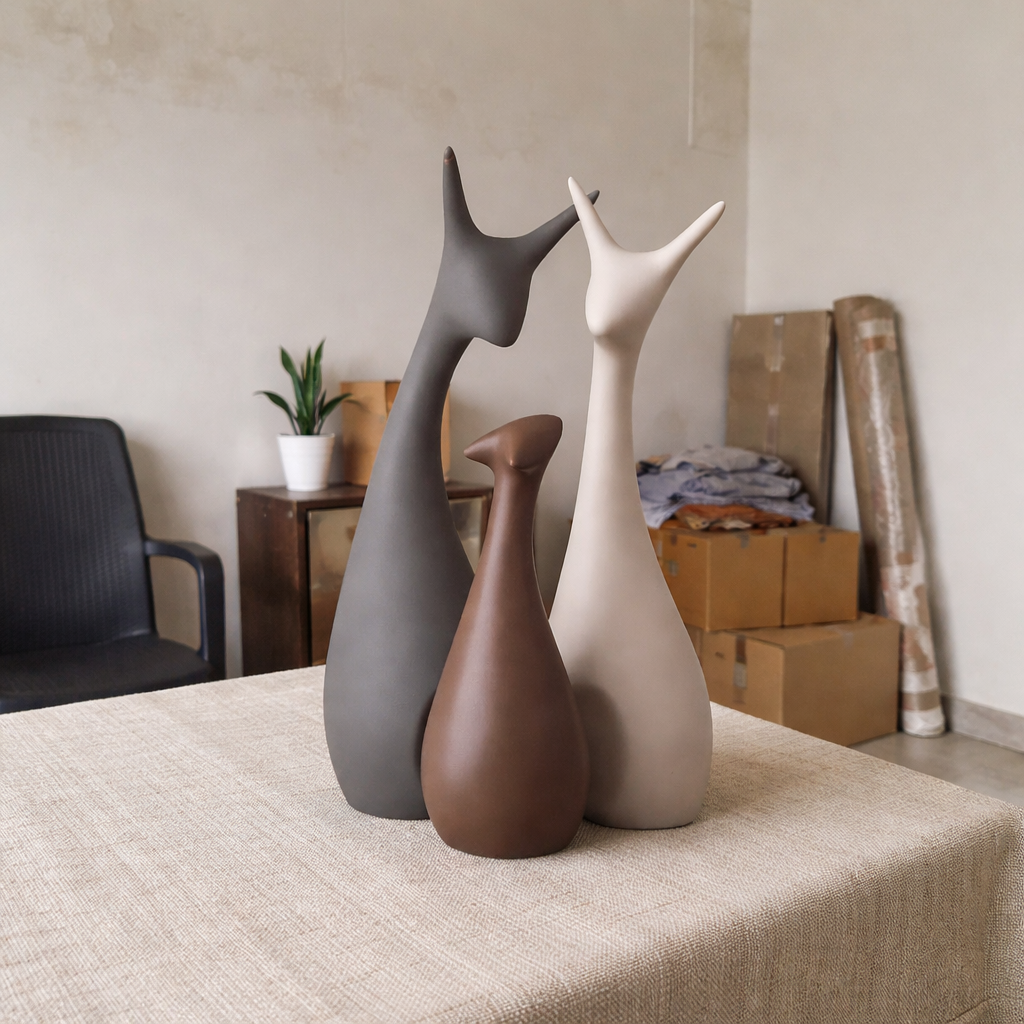
For Indian living rooms, the most effective focal points are large-format wall art (60 cm and above) or a commanding showpiece on the main console or TV unit. Moolwan's showpieces for the living room are designed specifically to be that centrepiece — not filler. Each piece is sized and weighted for Indian shelves (150 g–600 g) and finished in either matte or glazed, depending on whether you want understated elegance or a light-catching statement.
One rule: choose your focal point first. Buy everything else around it. Expensive-looking rooms are built from the centre outward, not assembled piece by piece from sales and impulse buys.
Visitors cannot read a price tag, but they can sense material quality within seconds of entering a room. The difference between a home that looks expensive and one that does not often comes down to three material signals: weight, finish, and colour depth.
Cheap prints look flat, fade within months, and warp in India's humidity. Moolwan's canvas wall art is printed on 340 GSM cotton canvas with eco-solvent UV-resistant inks, stretched over 1.5-inch kiln-dried pine frames with a moisture-resistant coating. The result is a painting that holds colour for years, does not warp in monsoon humidity, and looks gallery-quality on your wall — because the base materials are gallery-grade. Browse Moolwan's modern home décor collection to find wall art sized for Indian rooms, from compact statement pieces to room-anchoring large formats.
Ceramic showpieces from Moolwan use a 92% clay composition, are heat-resistant to 60°C, humidity-tolerant up to 85% RH, and rated for a 5+ year lifespan — making them a durable choice for kitchens, bathrooms, and humid Indian interiors where cheaper ceramics crack or discolour. Moolwan's resin pieces use 94% purity epoxy resin with 3H pencil-hardness scratch resistance, rated for 3+ years of indoor use at temperatures of 15–35°C. These are not decorative imports made for European climates; they are engineered for Indian conditions.
Nothing makes a home look cheaper faster than the wrong-sized décor: a tiny showpiece on a wide shelf, or a small canvas dwarfed by a large wall. Sizing correctly is free — it only requires knowing the rule. Here is Moolwan's size guide, used across every product category:
| Size Category | Dimensions | Best Placement | Room Effect |
|---|---|---|---|
| Small | 10–16 cm | Shelf, desk, bathroom ledge | Layering & accent detail |
| Medium | 16–21 cm | Showcase, coffee table, dining sideboard | Conversational centrepiece |
| Large | 25–34 cm | Living room console, main entrance, focal shelf | Room-anchoring focal point |
The rule for Indian homes specifically: most standard apartments have 9-ft ceilings and 3–4 ft shelving units. A medium or large showpiece (21–34 cm) placed at the third shelf level from the top commands the eye without overwhelming the space. A single large canvas (60 cm+) on the wall behind the sofa can replace five small frames and look three times more expensive.
Ready to upgrade your living room's centrepiece?
Shop Living Room Showpieces at Factory Price →Expensive-looking Indian homes do not have more décor — they have fewer, better-chosen pieces that speak the same visual language. This means: matching finishes across a shelf (all matte, or all glazed — not mixed randomly), a consistent colour palette across art and showpieces, and avoiding the "collected from everywhere" look that most market-bought décor creates.
The practical approach: pick two dominant materials and one accent. For example — ceramic (matte finish) as the dominant material, wood tones as the base, and a single metallic accent (brass or copper). Every piece you add should pass this filter. If it does not, it belongs in a different room or not at all.
Moolwan's curated collections are built around this logic. The unique home décor collection at Moolwan groups pieces by aesthetic family — not just product type — so you can shop a cohesive look without needing a designer. Each piece is designed to co-exist with others in the same collection without clashing.
Pure minimalism can look cold in Indian homes; pure traditional can feel dated. The homes that look most expensive are the ones that successfully layer both: a contemporary art print paired with a hand-finished ceramic, or a sculptural resin showpiece next to a classic brass diya. This is not contrast for contrast's sake — it is cultural confidence. You are not choosing between who you are and what is modern; you are making both coexist with intention.
The practical signal to look for when buying: does this piece have both a contemporary form and a material or detail that connects to Indian craft or texture? A glazed ceramic with a geometric motif, a resin piece with an earthy colour palette, or a canvas print that uses classical Indian compositional structure with modern colour choices — these hit both notes simultaneously and read as expensive because they are specific, not generic.
| Décor Decision | Reads as Cheap | Reads as Expensive |
|---|---|---|
| Wall art | Multiple small frames in a random gallery wall | One large canvas (60 cm+) with visible depth and colour accuracy |
| Showpiece placement | Every shelf filled, no breathing room | Three well-chosen pieces with negative space between them |
| Finish mix | Random gloss, matte, metallic, and plastic all together | Two cohesive finishes (e.g. matte ceramic + warm wood) |
| Sizing | Small pieces on wide surfaces | Medium or large anchor piece scaled to the shelf or wall |
| Colour | Every colour represented, no dominant palette | Two dominant tones + one contrast accent throughout the room |
| Material quality | Lightweight plastic or low-GSM print that fades | 340 GSM canvas or 92% clay ceramic — weight and texture you can feel |
Yes — the biggest difference between a home that looks expensive and one that does not is curation, not spend. One well-chosen medium or large showpiece (₹800–₹2,500 from a manufacturer-direct brand like Moolwan) placed correctly in the living room does more than ten cheap pieces from a street market. Buying direct from the manufacturer removes middleman markups and lets your budget go further on quality.
Large-format canvas prints — particularly abstract, landscape, or figurative work with rich colour depth — make rooms look more expensive than small frames or printed posters. The canvas should be on a thick frame (1.5 inches or more) so it stands out from the wall with visible depth. Moolwan's canvas wall art uses 340 GSM cotton canvas and 1.5-inch kiln-dried pine frames — the same structural standard used in professional art galleries.
Most living rooms look their best with 3–5 showpieces total across all surfaces — not more. The rule is: one large anchor piece per main surface, two smaller complementary pieces alongside it, and generous negative space between them. Overcrowding is the fastest way to undo any individual piece's impact. Moolwan's size guide categorises showpieces into small (10–16 cm), medium (16–21 cm), and large (25–34 cm) to help you select the right scale for each spot.
Ceramic, marble, solid wood, and high-purity resin consistently read as premium in Indian interiors. Plastic and low-density resin feel light and cheap regardless of finish. Moolwan's ceramics use 92% clay composition and its resin pieces use 94% purity epoxy — both have the heft and surface quality that signals craftsmanship rather than mass production.
Moolwan accepts returns within 24 hours of delivery, provided the item is unused and in original packaging. A 10% restocking fee applies, and the refund is processed within 15 working days. This policy is designed to let you buy confidently, try the piece in your actual space, and return it quickly if the fit is not right.
You do not need to redecorate. You need the right anchor piece in the right spot. Moolwan ships factory-direct — no middlemen, no inflated prices — with quality specifications designed for Indian climate and space.
Start with what changes the most with the least:
Shop Living Room Showpieces Browse Modern Home Décor Explore Unique Décor ItemsQuick View



