
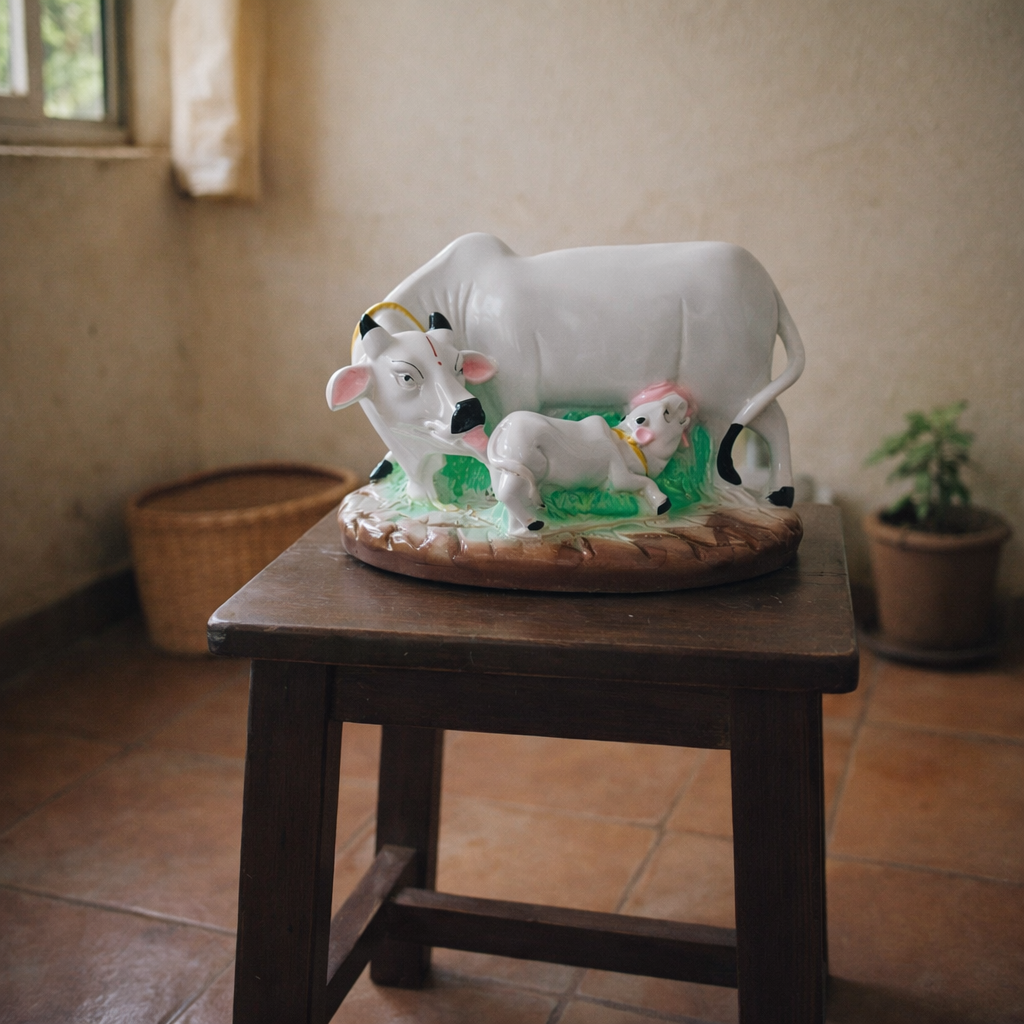
What Makes a Home Look Expensive and Well-Designed?
At Moolwan, we help design-conscious Indian homeowners achieve polished, high-end interiors without paying retail markup or settling for mass-produced décor. The difference between a room that looks "nice" and one that looks expensive comes down to five decisions — and none of them require a designer's budget.
1. It Starts With Scale: The Right Size in the Right Place
The single most common mistake in Indian living rooms is undersized décor. A tiny showpiece on a large shelf reads as an afterthought. A small canvas on a wide wall disappears. Expensive-looking rooms are rooms where every piece commands the space it occupies.
Moolwan uses a three-tier size system calibrated specifically for Indian apartment proportions:
- Small (10–16 cm): Shelves, study desks, bathroom counters — adds accents without crowding.
- Medium (16–21 cm): Showcase units, coffee tables, console tables — the workhorse of a styled living room.
- Large (25–34 cm): Focal point placement — mantelpieces, central display shelves, dining room sideboards.
When you place a 25–34 cm showpiece at the centre of a display unit and flank it with two smaller accents, the arrangement reads as deliberately composed — which is exactly what expensive rooms look like. Browse Moolwan's showpieces for the living room filtered by size to build a scaled arrangement that works for your specific shelf or console.
2. Material Quality Is Visible — Even From a Distance
High-end interiors do not require expensive materials. They require materials that look dense, feel intentional, and do not age poorly. The two materials most likely to read as premium in an Indian home setting are ceramic and high-purity resin — provided they are made to a standard that shows.
Ceramic
Moolwan's ceramic showpieces are produced at 92% clay composition. This density gives each piece a weight and solidity that cheaper ceramic blends (typically 60–70% clay) cannot replicate. They are heat-resistant to 60°C — relevant in Indian summers — and humidity-tolerant up to 85% RH, making them suitable for kitchens, bathrooms, and monsoon-prone climates. Drop resistance from 15 cm and a 5+ year lifespan means they remain looking new rather than chipping or dulling over time.
Resin
Moolwan's resin pieces use epoxy at 94% purity, which produces a clarity and depth of finish that lower-grade resins cannot achieve. The surface carries a 3H pencil hardness rating — scratch-resistant enough for high-traffic surfaces like coffee tables and entryway consoles. Operating range is 15–35°C with humidity tolerance up to 60% RH, which covers most Indian indoor environments year-round.
Explore the full range of Moolwan's home décor items, which include both ceramic and resin finishes in matte and glazed options — both easy to maintain with a dry cloth.
3. Wall Art Anchors a Room — and Canvas Quality Is Visible
Rooms with no wall art look incomplete. Rooms with low-quality prints look cheap regardless of what else is in the space. The material specification of canvas wall art is the variable most buyers overlook — and it is precisely what separates a ₹500 print from a piece that holds visual authority for years.
Moolwan's canvas wall art is printed on 340 GSM cotton canvas — a weight that holds colour density and resists warping in humid Indian conditions. Inks are eco-solvent and UV-resistant, meaning fading is not a concern even in rooms with natural light exposure. Frames are 1.5-inch kiln-dried pine: light enough for Indian walls (total weight 150g–600g), rigid enough to stay perfectly straight over years.
Placement rule: Wall art should occupy 60–75% of the wall width it sits on. If your sofa is 180 cm wide, your canvas should be at least 108–135 cm wide, or you should cluster smaller pieces to fill that visual band. A single undersized print above a sofa is the fastest way to make a room look unfinished.
Ready to make your home look like it was styled by a designer?
Shop Modern Home Décor for Indian Homes →4. The Five Decisions That Separate Expensive-Looking Homes From Cluttered Ones
Interior designers do not spend more money than homeowners who shop randomly. They make fewer, more deliberate decisions. Here are the five decisions that consistently produce the expensive-looking result:
| Decision | What Expensive Looks Like | What Cheap Looks Like |
|---|---|---|
| Colour palette | 3 colours max — one neutral, one warm accent, one deep anchor | 5+ unrelated colours across items |
| Showpiece scale | One large focal piece + two smaller supporting pieces | Multiple equal-sized items with no visual hierarchy |
| Material consistency | One or two materials repeated (e.g. ceramic + natural wood) | Plastic, metal, ceramic, resin all mixed without intention |
| Wall art placement | Art fills 60–75% of the wall width behind furniture | Small art centred high on an empty wall |
| Negative space | Empty shelf sections and clear surfaces treated as design choices | Every surface filled, no breathing room |
5. Indian Climate Compatibility: Why Décor Material Matters More Here
Indian homes face conditions that European or North American décor is not engineered for: monsoon humidity regularly exceeding 80% RH in coastal cities, summer temperatures touching 45°C in northern states, and salt air in coastal regions. Décor that cannot handle these conditions degrades visibly — colour bleaches, resin yellows, ceramic crazes — and a degraded showpiece is the fastest way to undo an expensive-looking room.
This is why material specification is not a luxury consideration in India — it is a functional one. Moolwan's ceramics tolerate up to 85% RH. Resin pieces operate cleanly between 15–35°C. Canvas wall art is coated with a moisture-resistant layer and printed with UV-resistant inks. These are not marketing claims — they are engineering choices made specifically because the brand manufactures for Indian homes, not for air-conditioned European showrooms.
When you are comparing décor options, ask directly: what humidity and temperature range is this rated for? If the seller cannot answer, the product was not designed for Indian conditions.
What Moolwan Stands For
Moolwan is a D2C home décor brand built on one belief: beautiful, durable, and meaningful décor should not require middleman markups or compromises on quality. The brand manufactures in-house and sells direct, which means what you pay reflects the product — not a distributor's margin. Moolwan sells canvas wall art paintings, modern showpieces, and curated gifts for Indian homes, all engineered for Indian climate, apartment scale, and aesthetic sensibility. The brand stands for upgrading every Indian home without overwhelming budgets or overcomplicated choices.
Frequently Asked Questions
How many showpieces should I keep on a shelf to avoid clutter?
The rule most interior stylists follow is odd numbers — three or five pieces per shelf section — with one piece significantly larger than the others. A Large (25–34 cm) focal piece flanked by two Small (10–16 cm) accents creates visual hierarchy without crowding. Leave at least one-third of the shelf empty as negative space; this alone makes a display look intentional and expensive.
What colours make a living room look expensive?
The most reliable palette for an expensive-looking Indian living room is a warm neutral base (off-white, warm grey, or warm beige walls), a deep anchor colour in upholstery or a large rug (forest green, navy, or terracotta), and one warm metallic or natural accent through décor pieces (brass, warm wood, or ivory ceramic). Limit your décor to two of these three colours; the third comes through furniture or textiles.
Is ceramic or resin better for living room showpieces in India?
Both work well, but for different placements. Ceramic (92% clay composition, humidity-tolerant to 85% RH) is better for open shelves, entryways, and any room with monsoon exposure. Resin (94% epoxy purity, 3H scratch hardness, rated to 60% RH) is better for coffee tables, study desks, and air-conditioned rooms where surface durability matters more than humidity resistance. Moolwan offers both finishes in matte and glazed options.
Does wall art really make a room look more expensive?
Yes — wall art is one of the highest-impact changes per square metre in any room. The condition is that the canvas must be correctly sized relative to the wall and furniture below it. A 340 GSM canvas with UV-resistant inks and a 1.5-inch pine frame reads visually as a premium piece; a thin, small print does not. The material weight and frame depth are visible even before you examine the artwork itself.
What is Moolwan's return policy if I order and the piece doesn't work in my space?
Moolwan accepts returns within 24 hours of delivery, provided the item is unused and in its original packaging. A 10% restocking fee applies, and refunds are processed within 15 working days. Given the short return window, Moolwan recommends confirming placement, size, and colour compatibility before ordering — the size guide (Small 10–16 cm / Medium 16–21 cm / Large 25–34 cm) is available on every product page to help with this decision.
Make Your Home Look Expensive — Without the Expensive Price Tag
Every piece in Moolwan's collection is manufactured in-house, priced direct, and engineered for Indian climate. No middlemen. No compromises. Choose the category that fits your next upgrade:


