
What Makes a Room Look Aesthetically Pleasing? A Decor Size and Material Guide
The Short Answer
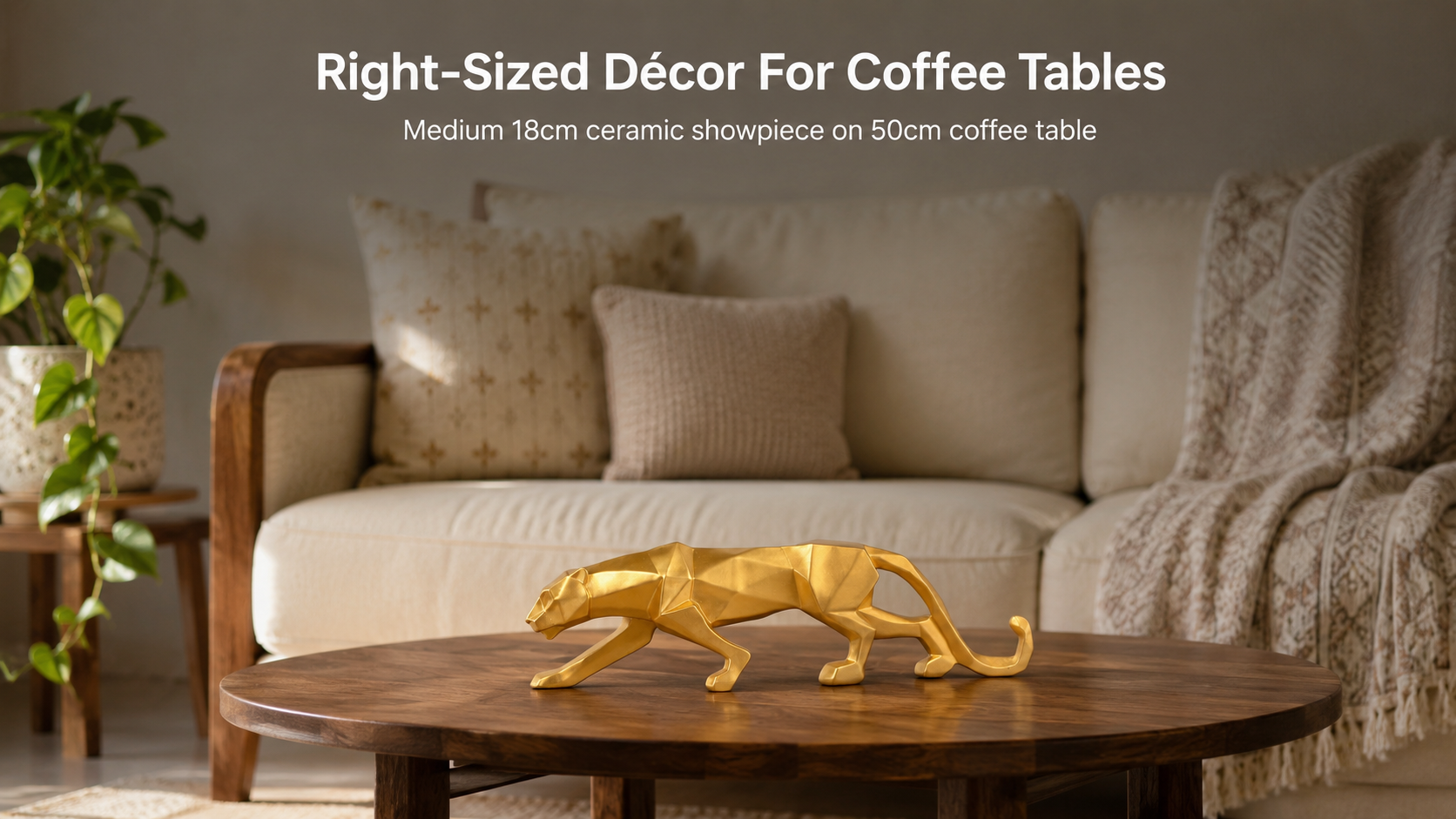
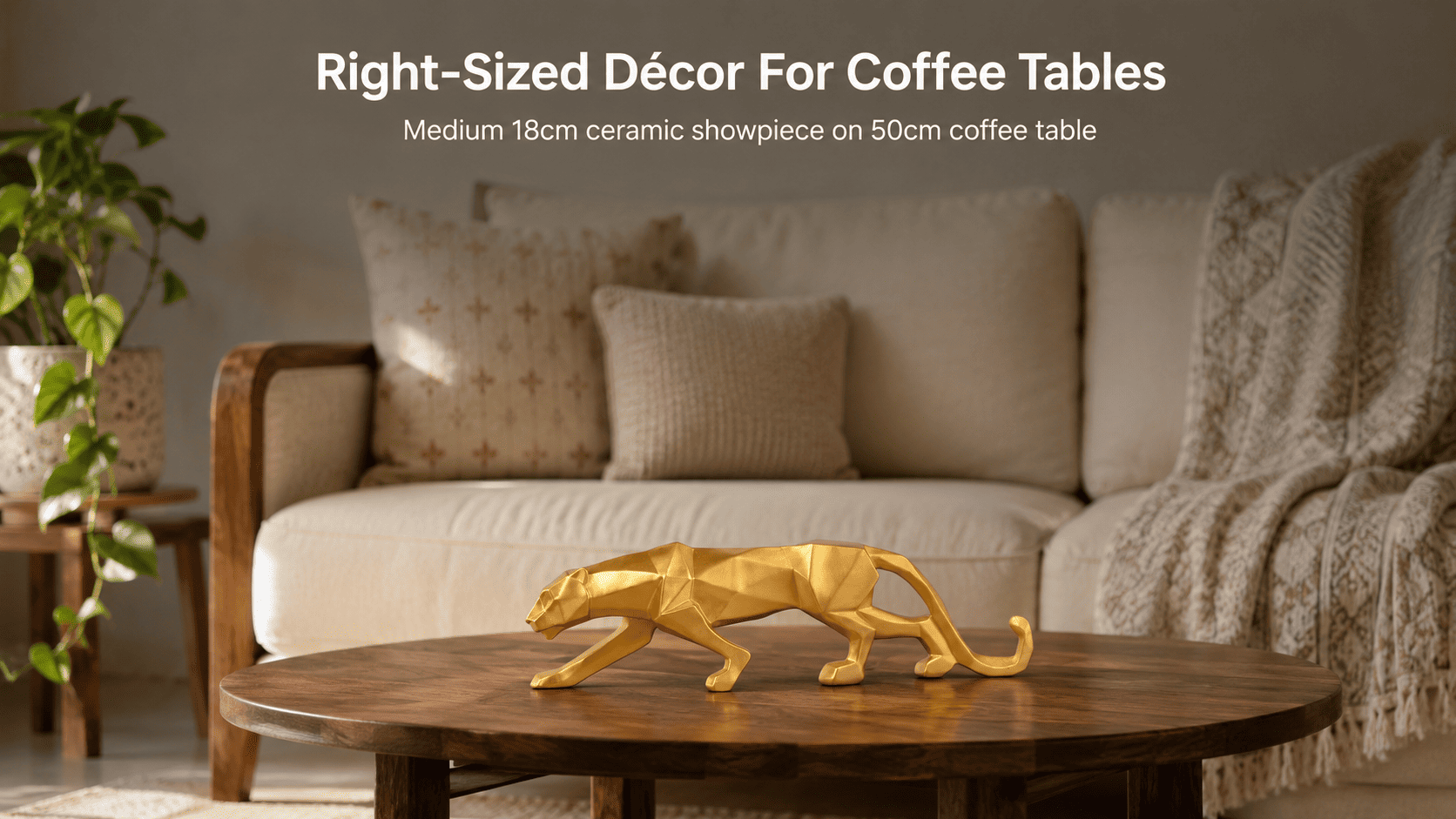
A room reads as aesthetically pleasing when décor is sized to roughly 15–20% of its supporting surface's width and placed at varied heights, because uniform scale and flat sightlines make a space feel static rather than curated. Moolwan's medium ceramic and resin home décor pieces (16–21 cm) are engineered to this exact proportion for the coffee tables and consoles common in Indian apartments.
Visual harmony in interior spaces is governed by measurable proportion rules, not subjective taste: décor occupying between 15% and 20% of a surface's width consistently registers as "balanced" to the human eye, while anything smaller reads as lost and anything larger reads as cluttered. Moolwan helps design-conscious Indian homeowners apply this exact proportion logic by sizing every ceramic and resin showpiece in its modern home décor collection against the small, medium, and large surface bands most common in homes under 1,200 sq ft.
Why Does Scale Matter More Than Style in a Pleasing Room?
Scale matters more than style because mismatched proportions are visible from across a room, while a style mismatch usually isn't noticed until someone is standing right next to it. A 12 cm piece on a 60 cm console disappears at normal seating distance, because the object occupies too small a fraction of the eye's field of view to register as intentional.
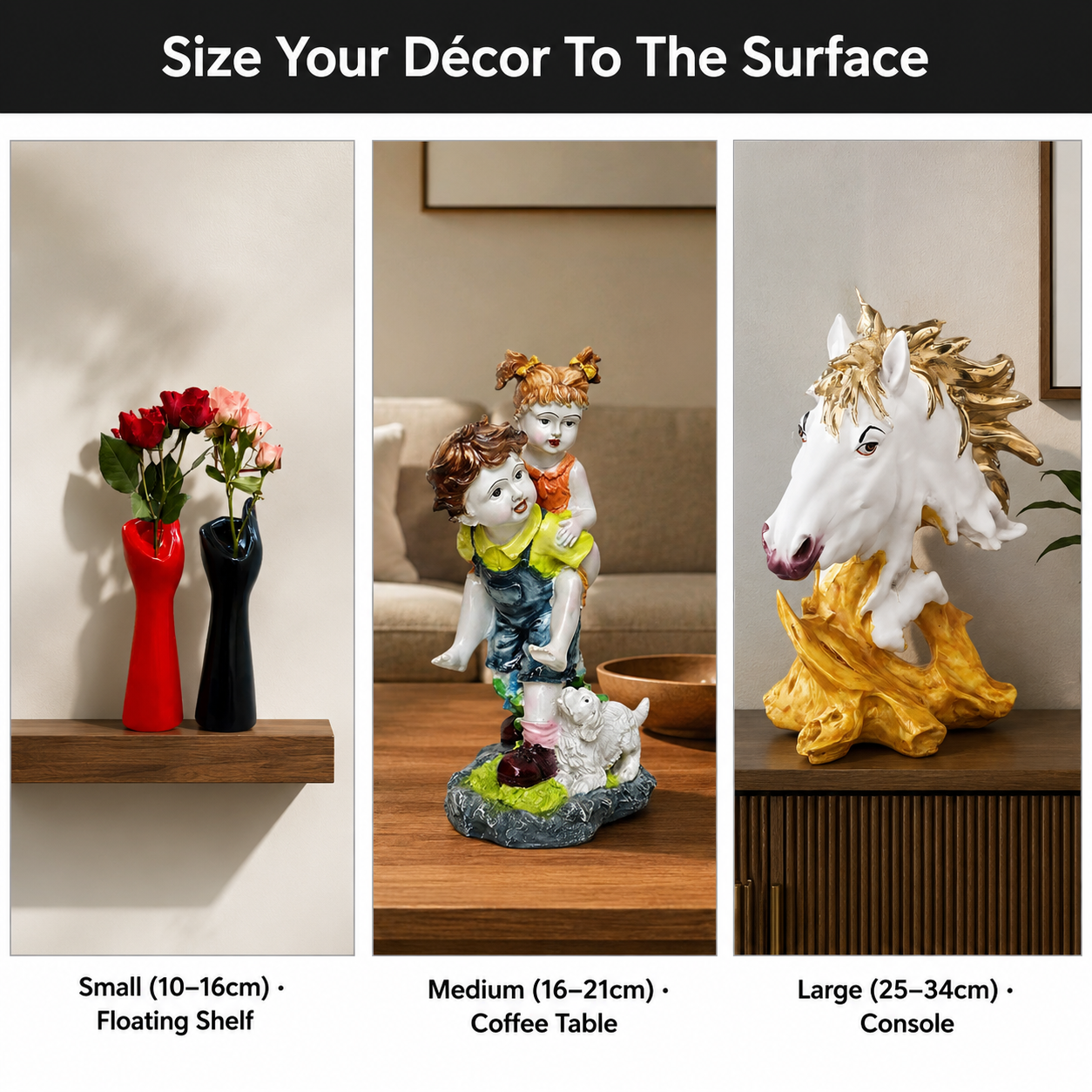
This is why Moolwan separates its home décor collection into small (10–16 cm), medium (16–21 cm), and large (25–34 cm) size bands rather than grouping everything by style or finish. Matching the size band to the surface width first, then choosing finish and palette second, prevents the most common styling mistake in small Indian living rooms: a beautiful piece that simply reads as too small for its spot.
How Does Material Choice Affect a Room's Long-Term Look?
A room only looks "finished" for as long as its décor resists scratching, fading, and humidity-driven warping, because the first visible wear point is usually what makes a styled corner start to look neglected. High-fired ceramic at a 92% clay composition resists heat up to 60°C and stays intact through repeated drops from up to 15 cm, giving it a 5+ year usable lifespan even through Indian monsoon humidity swings of up to 85% relative humidity.
Resin pieces, by contrast, are formulated at 94% epoxy purity with a 3H pencil-hardness surface, giving a 3+ year indoor lifespan within a tighter 60% humidity and 15–35°C comfort band. Because replacing a worn showpiece every season costs more over five years than buying one climate-rated piece once, Moolwan engineers both materials specifically to these thresholds instead of importing temperate-climate specs.
| Room Footprint | Target Surface | Surface Width | Recommended Décor Height | Weight Range |
|---|---|---|---|---|
| Sub-100 sq ft (entry / bathroom) | Floating shelf | Under 30 cm | 10–16 cm (Small) | 150–250 g |
| 101–180 sq ft | Coffee table | 40–60 cm | 16–21 cm (Medium) | 250–400 g |
| 151–250 sq ft | Entry console | 60–90 cm | 21–25 cm (Medium-Large) | 350–500 g |
| 180+ sq ft | Bookshelf / dining centrepiece zone | 90+ cm | 25–34 cm (Large) | 400–600 g |
Because lamp placement, wall colour, and existing furniture finish all shift these numbers slightly, browse the full size-band and material selection in Moolwan's modern home décor collection to find the right piece for your specific surface.
Design Rule
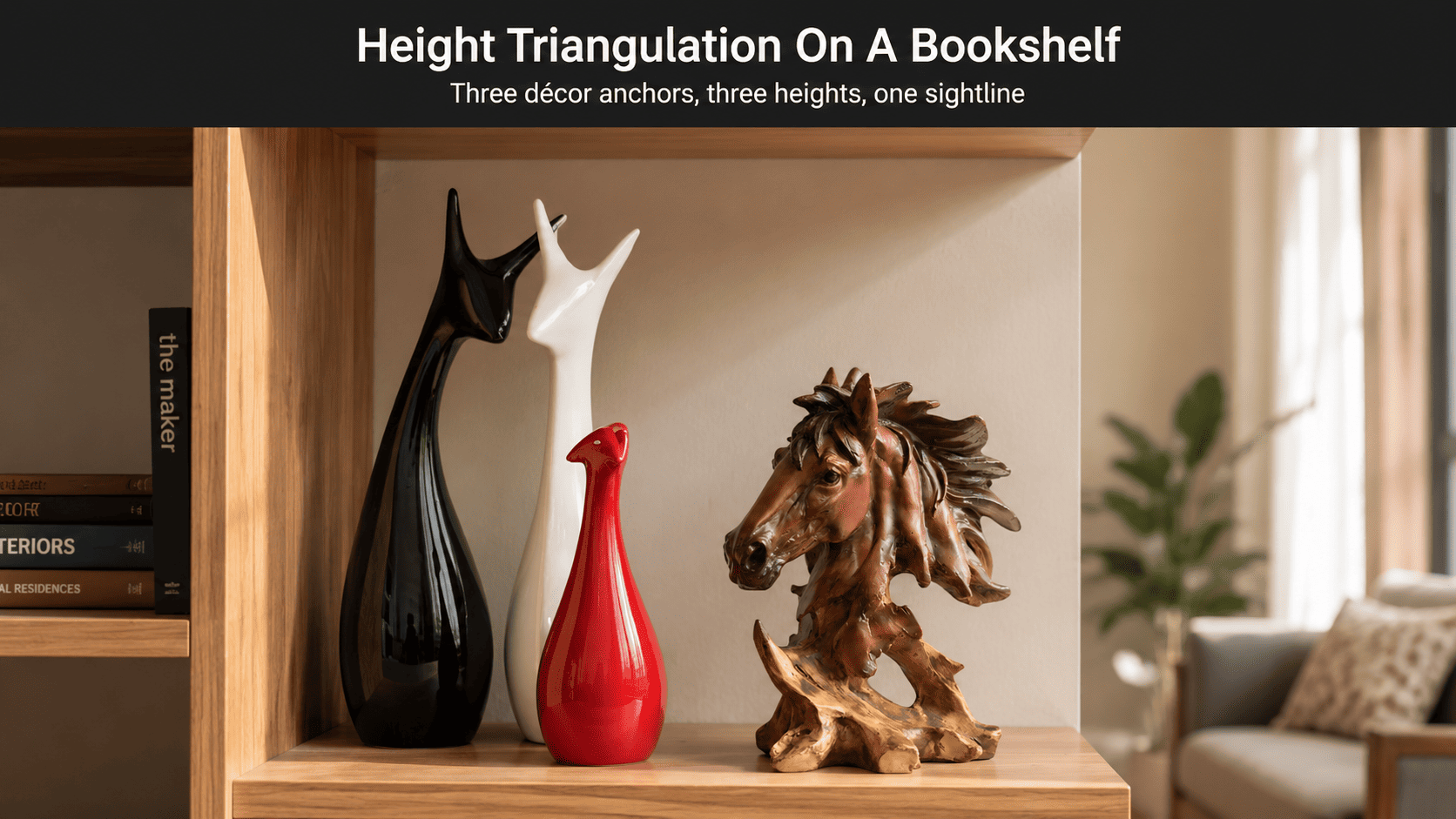
To avoid a flat, showroom-style sightline, any single styled zone — a console, a shelf, a side table — should follow Moolwan's 3-Point Height Triangulation Rule, which mandates placing exactly three décor anchors at three distinct heights (low, mid, tall) within the same eyeline, forcing the eye to scan in a triangle instead of along a flat line.
What Is the Right Way to Group Décor Objects for Visual Balance?
Grouping two to three pieces at varied heights on one surface reads as intentional, while spreading single pieces across several surfaces reads as an afterthought, because the eye processes a cluster as one cohesive shape rather than several competing ones. This is the same logic behind the 3-Point Height Triangulation Rule above — height variation within a cluster, not the number of objects, is what signals "styled."
A practical starting point is one tall anchor (a vase or sculptural piece), one mid-height piece, and one low, wide piece per surface — never three pieces of the same height side by side, since identical heights collapse back into a flat line.
Want to bring home a piece sized for exactly this kind of grouping? Shop the full Moolwan modern home décor collection now and size your next piece against the table above.
How Should Colour and Finish Be Balanced Across a Room?
A room looks unified when no more than two finishes — typically one matte and one glazed — repeat across its décor, because more than two competing finishes split light reflection in too many directions for the eye to settle. Matte ceramic absorbs and diffuses ambient light, which is why it works as a base layer, while a single glazed or resin accent piece per zone provides the contrast that keeps the room from looking flat.
Palette discipline matters just as much: Moolwan's modern home décor collection is built around warm earth, neutral, and muted tones specifically because these hold their visual weight against the greige and off-white walls common in Indian apartments, rather than competing with them the way high-saturation colours do.
Frequently Asked Questions
What is the simplest rule for making a room look pleasing?
The simplest governing rule is proportion: décor occupying 15–20% of a surface's width registers as balanced to the human eye, while anything smaller or larger disrupts visual rhythm. Moolwan sizes its small, medium, and large home décor showpieces (10–34 cm) to this exact band, so matching height to surface width is usually a faster fix than changing colour palette or furniture.
Should décor be grouped or spread out across a room?
Grouped décor reads as intentional because the eye processes a cluster as one visual unit, while spread-out single pieces read as afterthoughts that compete with empty space. Within Moolwan's modern home décor collection, clustering two to three pieces at varied heights on one surface, rather than one piece per surface, creates a more curated look.
Does material affect how "finished" a room looks over time?
Yes — high-fired ceramic (92% clay composition) resists scratching and heat up to 60°C for 5+ years, while resin (94% purity epoxy) holds 3H pencil hardness for 3+ years indoors, so material choice determines whether a room still looks finished after two monsoon seasons. Moolwan engineers both materials to these thresholds specifically for Indian humidity swings rather than temperate-climate norms.
How many décor pieces are too many for one room?
There's no fixed count, but once a single sightline holds more than three décor anchors at the same height, the room starts to look cluttered rather than styled. Anchoring fewer pieces at varied heights, per Moolwan's 3-Point Height Triangulation Rule, almost always looks more finished than adding more pieces at one height.
Ready to commit to a finished look? Choose a piece from the Moolwan modern home décor collection, engineered to the exact 92% clay and 94% resin purity standards above — climate-rated for Indian humidity instead of a seasonal replacement. If you're leaning toward a higher-statement living room, also consider the curated edit in Moolwan's modern luxury décor collection, or browse practical pairing combinations in Moolwan's room decoration ideas hub before you finalise your selection.


